A step-by-step, research-driven bedtime routine you can personalize. Learn the key levers that help your brain and body transition into deeper, more consiste...
The Rest Pact
Updated October 18, 2026
Created October 18, 2026
10 Gentle Pre-Sleep Stretches for Better Rest

Maya Caldwell
Maya Caldwell is a certified sleep science coach and the lead researcher at RestPact. After overcoming years of chronic insomnia, she dedicated herself to making evidence-based sleep strategies accessible, helping others build bedtime routines that lead to deep, restorative rest.
If your brain is ready for bed but your body feels like it is still gripping the day, you are not alone. When I was a chronically sleep-deprived project manager, I could do everything “right” on paper (dim lights, no email, chamomile tea) and still lie there with tight shoulders and a clenched jaw.
The goal of pre-sleep stretching is not flexibility or performance. It is downshifting. Done gently, stretching may help reduce physical tension, promote a calmer breathing pattern, and create a consistent cue that bedtime is here. Think of it as turning the volume down on your nervous system.
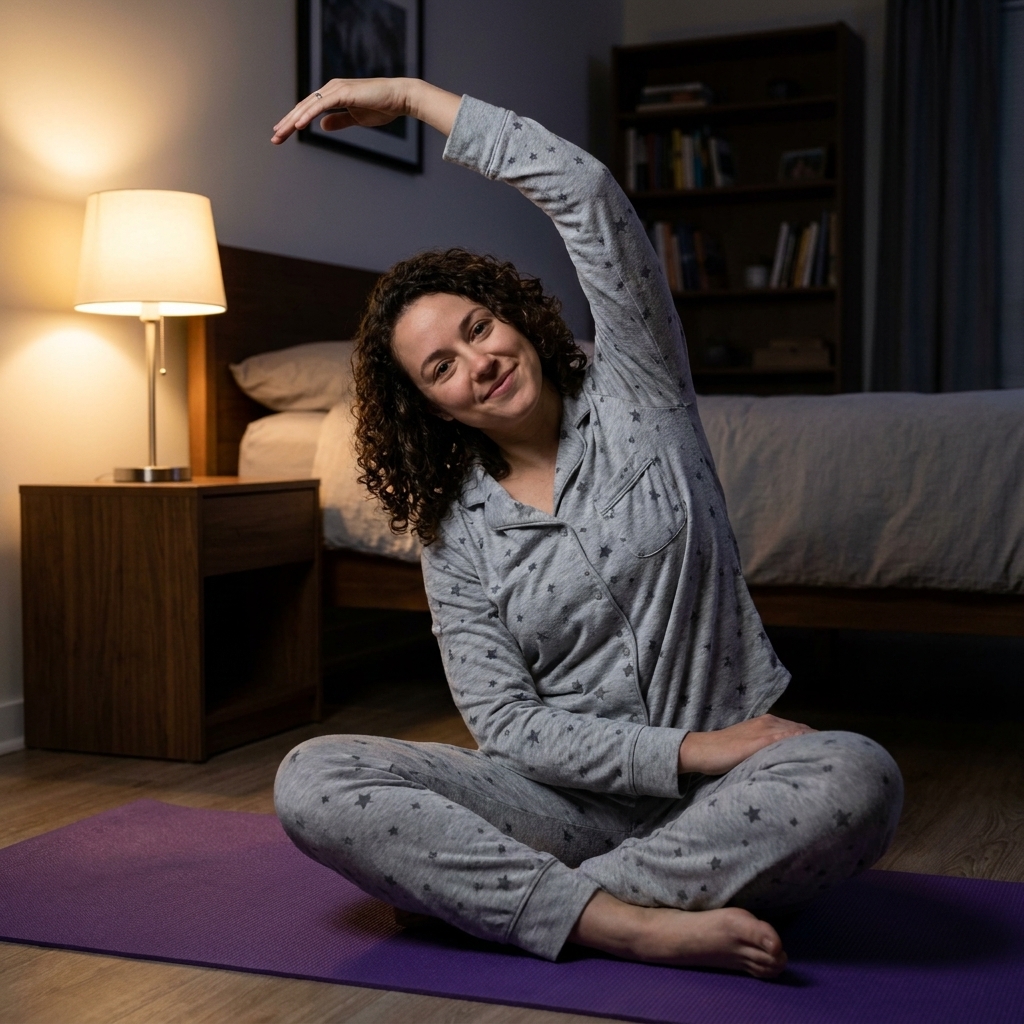
Before you start: Keep this easy. Stretching should feel like mild to moderate sensation, not pain. Breathe slowly, avoid bouncing, and stop if you feel sharp pain, numbness, or tingling. If you are pregnant, have recent injuries, or a chronic condition, check with a clinician or physical therapist for modifications.
How to use this routine
- Timing: 5 to 12 minutes total, ideally after you brush your teeth and before you get into bed.
- Intensity: About a 3 to 5 out of 10. You should still be able to breathe slowly and talk comfortably. If you are gritting your teeth, it is too much.
- Breath rule: Inhale through the nose for 3 to 4 seconds, exhale longer for 4 to 6 seconds. For many people, longer exhales help the body settle.
- Hold times: 20 to 45 seconds per stretch, 1 to 2 rounds.
- Environment: Low light, warm socks if your feet run cold, and no cold floor. A rug or folded towel helps.
10 gentle pre-sleep stretches
You can do these in order, or pick 4 to 6 that match where you hold tension. I built this list around the most common “desk day” tight spots: neck, chest, hip flexors, glutes, hamstrings, and calves.
1) Diaphragmatic breathing with rib stretch
Best for: easing whole-body tension and signaling safety to your nervous system.
How: Lie on your back with knees bent and feet on the floor. Rest one hand on your belly and one on your chest. Inhale and feel the belly expand gently. Exhale slowly and let your shoulders melt down.
Do: 6 to 10 slow breaths.
Make it gentler: Place a pillow under your knees.
2) Neck side stretch
Best for: tight neck from screens, stress, or clenching.
How: Sit tall on the edge of the bed or a chair. Let your shoulders drop. Tip your right ear toward your right shoulder. Keep your face pointing forward, not down. For a touch more sensation, rest your right hand lightly on the left side of your head, no pulling.
Hold: 20 to 30 seconds each side.
Sleep-friendly cue: Exhale as you settle deeper, inhale to soften the jaw.
3) Upper trapezius and shoulder release (self hug)
Best for: shoulder tension and that “carrying the world” feeling.
How: Stand or sit. Reach your arms across your chest and grab opposite shoulders like a gentle hug. Let your elbows hang. Take a slow breath in. As you exhale, imagine your shoulder blades sliding down your back.
Hold: 30 seconds, then switch which arm is on top.
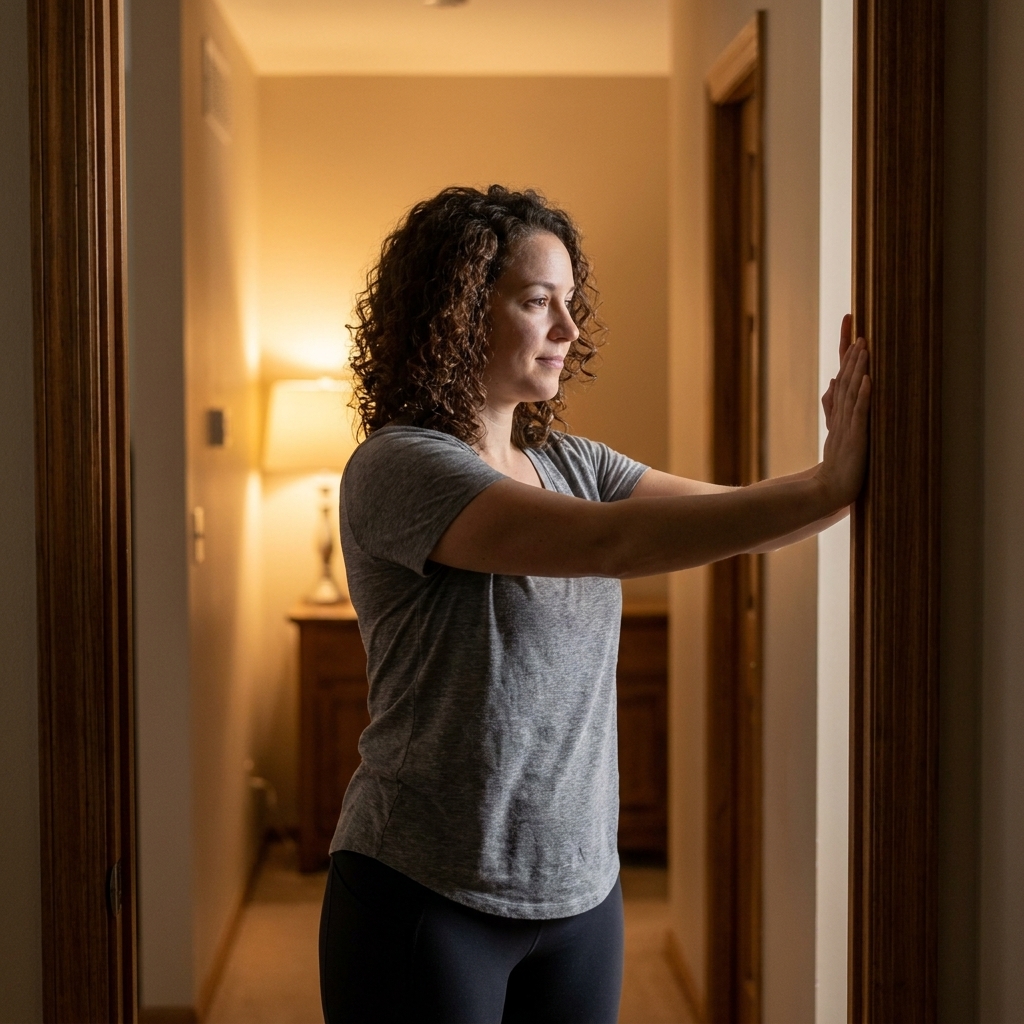
4) Doorway chest opener (very gentle)
Best for: rounded shoulders and tight chest from sitting.
How: Stand in a doorway. Place forearms on the doorframe at about shoulder height. Step one foot forward slightly until you feel a mild stretch across the chest and front shoulders. Keep ribs down, do not arch your lower back.
Hold: 20 to 30 seconds.
Make it gentler: Lower your arms or reduce the step forward.
5) Cat-cow (slow version)
Best for: decompressing the spine after sitting and calming the body through rhythm.
How: Come to hands and knees. Inhale, lift the chest slightly and tip the tailbone back. Exhale, round the back and gently tuck the chin. Move slowly, matching breath to movement.
Do: 6 to 8 cycles.
Sleep note: Keep it small and smooth. This is not a workout.
6) Child’s pose with side reach
Best for: lower back, lats, and bracing or held-breath tension.
How: From hands and knees, sit hips back toward heels. Reach arms forward and rest your forehead down on the mat or a folded towel. Then walk both hands a few inches to the right to stretch the left side body. Breathe into the left ribs. Repeat to the other side.
Hold: 20 to 40 seconds center, then 20 seconds each side.
Make it gentler: Place a pillow between thighs and calves or widen knees.
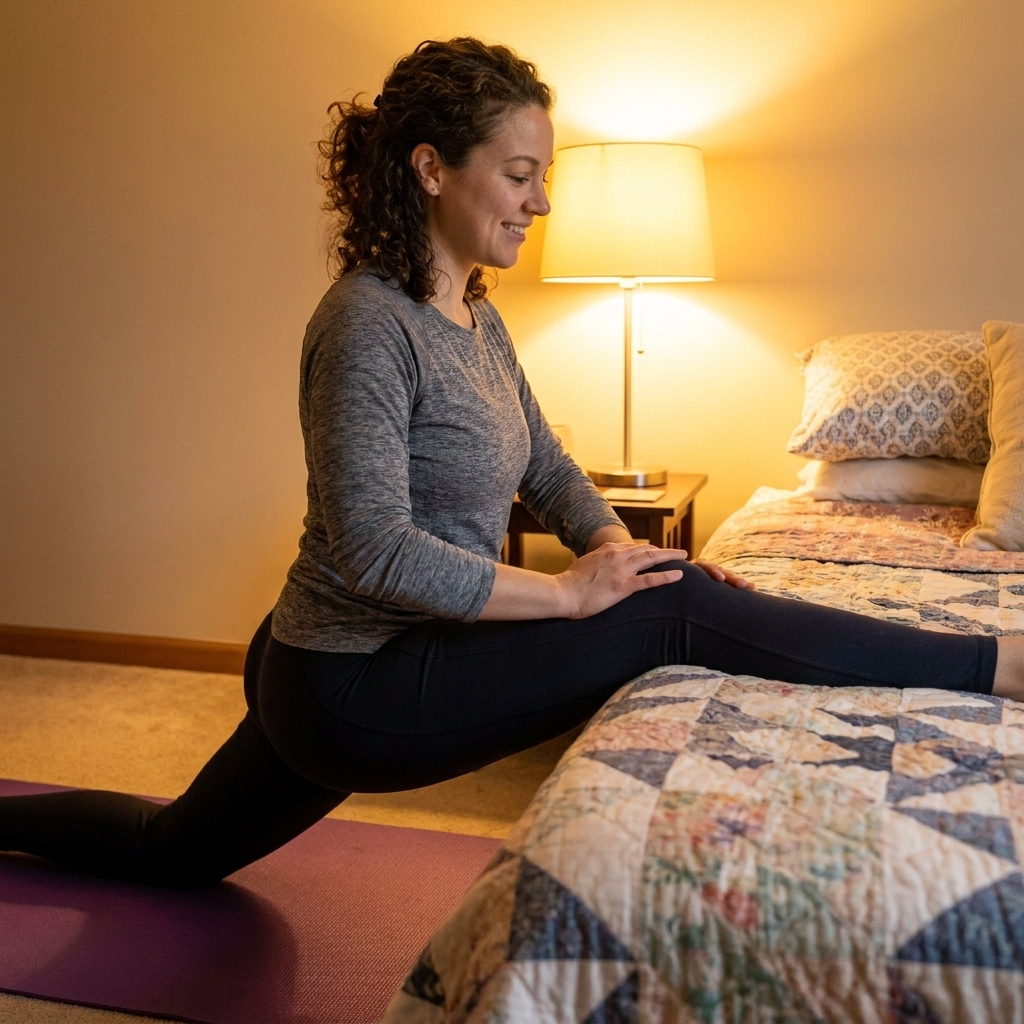
7) Low lunge hip flexor release (supported)
Best for: tight hip flexors from sitting, which can tug on the lower back.
How: Kneel with your right knee down and left foot forward, both knees about 90 degrees. Place hands on your left thigh or on blocks. Gently tuck the pelvis under, like bringing your belt buckle slightly up. You should feel the stretch in the front of the right hip, not in your low back.
Hold: 20 to 30 seconds each side.
Make it gentler: Do it standing with a smaller stance, holding a wall.
8) Figure four glute stretch (on your back)
Best for: glutes and piriformis, often linked to low back tightness.
How: Lie on your back with knees bent. Cross your right ankle over your left thigh, making a figure four. Keep your right foot flexed. Thread hands behind the left thigh and draw legs toward you until you feel a stretch in the right glute.
Hold: 30 to 45 seconds each side.
Make it gentler: Keep the left foot on the floor and simply press the right knee away slightly.
9) Seated hamstring stretch (bed edge)
Best for: hamstrings and calves without overstretching right before bed.
How: Sit on the edge of the bed. Extend one leg with heel on the floor, toes up. Keep a soft bend in the knee. Hinge forward from the hips with a long spine until you feel a mild stretch behind the thigh.
Hold: 20 to 30 seconds each side.
Avoid: rounding your back aggressively or forcing your toes back.
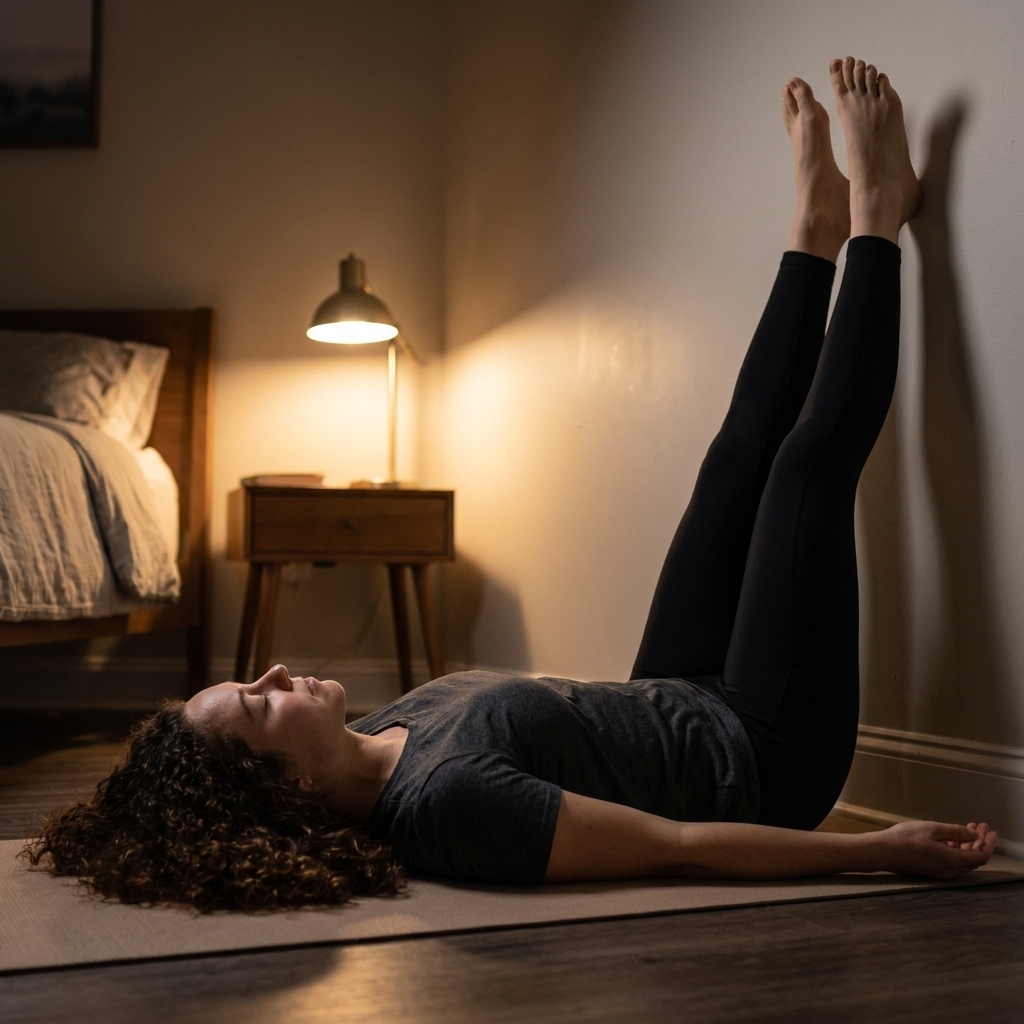
10) Legs up the wall (or calves on the bed)
Best for: end-of-day leg fatigue, mild puffiness at the ankles, and general downshifting.
How: Sit with one hip near a wall, then swing your legs up as you lower onto your back. Your hips can be a few inches away from the wall to keep it comfortable. Rest arms by your sides and breathe slowly.
Hold: 1 to 3 minutes.
Make it gentler: If the wall setup feels like a hassle, place calves on the bed or a couch with knees bent at 90 degrees.
Safety note: If leg swelling is new, painful, one-sided, or paired with redness, warmth, chest pain, or shortness of breath, skip this and talk with a clinician promptly.
A simple 8-minute bedtime sequence
If decision fatigue hits hard at night, here is a no-thinking flow that covers the most common tension zones:
- Diaphragmatic breathing: 6 breaths
- Neck side stretch: 20 seconds each side
- Cat-cow: 6 cycles
- Child’s pose with side reach: 20 seconds each side
- Figure four: 30 seconds each side
- Legs up the wall: 1 to 2 minutes
Do this consistently for a week. The real magic is repetition. Over time, your body learns: these moves mean sleep is next.
Common questions
Can stretching before bed help you sleep?
For many people, gentle stretching helps by reducing physical discomfort and encouraging a calmer, slower breathing pattern. It is not a cure for insomnia on its own, but it can be a powerful cue in a consistent wind-down routine, especially if muscle tension keeps you alert.
What kind of stretching is best at night?
Choose slow, low-intensity stretches held steadily with relaxed breathing. Avoid aggressive deep stretching, intense yoga flows, or anything that feels energizing. At night, we are aiming for soothing, not stimulating.
How close to bedtime should I stretch?
Most people do well with stretching in the last 30 to 60 minutes before sleep. If you notice you feel more awake afterward, move it earlier in your evening routine or shorten it to 3 to 5 minutes.
What if I feel sore the next day?
Mild soreness usually means you pushed a bit too far or held too long. Next time, decrease intensity and focus on slow exhalations. Night stretching should leave you feeling looser, not “worked.”
When should I get extra help for sleep issues?
If sleep problems are sticking around (like trouble falling or staying asleep at least three nights a week for three months), or you have loud snoring, gasping, restless legs sensations, or anxiety or low mood that feels hard to manage, it is worth checking in with a clinician. Stretching can support sleep, but you do not have to white-knuckle persistent insomnia alone.
The Rest Pact reminder
If your days are packed, your nervous system deserves a gentle landing. Pick a few stretches that feel good, keep the lights low, breathe a little slower than you think you need to, and let your body learn the pattern: release, soften, sleep.
If you want to pair this with an even stronger wind-down cue, add one small constant right after stretching, like a warm rinse in the shower, a lavender-free lotion, or two pages of a boring book. Consistency beats intensity every time.