
A calm, evidence-based bedtime routine you can actually stick with. Learn what to do (and when) to lower pre-sleep stress and sleep deeper.
The Rest Pact
Updated October 18, 2026
Created October 18, 2026
A Science-Backed Bedtime Routine for Adults

Maya Caldwell
Maya Caldwell is a certified sleep science coach and the lead researcher at RestPact. After overcoming years of chronic insomnia, she dedicated herself to making evidence-based sleep strategies accessible, helping others build bedtime routines that lead to deep, restorative rest.
I spent a decade as the person who “powered through” nights on four hours of sleep and another cup of coffee. It worked until it didn’t. When my sleep finally collapsed into full-blown insomnia, I learned the hard way that willpower is not a sleep strategy.
The good news is that your bedtime routine does not need to be elaborate to be effective. It just needs to reliably send your brain a few clear signals every night: it’s safe, it’s night, and it’s time. Below is the practical, science-aligned approach I use to help adults build a routine that fits real life, not an idealized wellness montage.

The three levers that move sleep
Most bedtime advice is a long list of tips. I prefer a simple model you can use to make decisions quickly.
1) Circadian timing
Your circadian rhythm coordinates sleepiness and alertness across the 24-hour day. Light is one of the primary cues that sets this clock. In general, consistent morning light tends to move your clock earlier, while consistent bright light at night tends to delay sleepiness. Individual responses vary, but the pattern is common.
2) Sleep pressure
Sleep pressure builds the longer you are awake and eases while you sleep. Long naps, sleeping in, and spending lots of time in bed awake can dilute this pressure and make falling asleep harder at night.
3) Arousal
Even when timing and sleep pressure are solid, high cognitive or physiological arousal can block sleep. Your routine’s job is to steadily lower stimulation so your nervous system can shift into rest mode.
When you build a routine, aim to support all three levers. If you only tackle one, progress is slower and easier to knock off course.
Step 1: Choose a wake time
If you do only one thing, make it this: pick a realistic wake time you can keep within about an hour, even on weekends. A consistent wake time strengthens circadian timing and stabilizes sleep pressure.
- Start with your life: choose the wake time you can keep most days.
- Give it 7 to 14 days: your body needs repetition to learn the pattern.
- If you slept badly: still get up close to the usual time. This is what helps the next night improve.
If this feels strict, I get it. But in the sleep science world, a consistent wake time is one of the highest return habits because it anchors everything else.
Step 2: Set a sleep window
Your sleep window is simply the hours you allow yourself to be in bed. A common reason adults struggle with insomnia is accidentally spending too much time in bed trying to force sleep. The brain starts pairing bed with effort and frustration instead of sleepiness.
Try this for a week:
- Keep your chosen wake time.
- Estimate your average sleep time (not time in bed). If you are unsure, start with what feels realistic.
- Set your time in bed window close to your average sleep time, then add about 30 minutes.
Example: If you typically sleep about 6.5 hours and wake at 7:00 a.m., start with a 7-hour window: 12:00 a.m. to 7:00 a.m. As your sleep becomes more efficient, you can expand the window earlier in 15-minute steps.
Safety note: If this approach makes you dangerously sleepy, do not push through. Do not drive drowsy. And if you have bipolar disorder, a seizure disorder, a history of mania, or a safety-critical job, it is smart to do sleep-window changes with a clinician. A routine can help a lot, but it is not a substitute for medical care.
If you have symptoms of sleep apnea, restless legs, or another medical sleep disorder, get evaluated. A routine helps, but it cannot treat a breathing disorder.
Step 3: Build a two-part routine
The most sustainable routines have two phases: a longer runway that gradually reduces stimulation, and a short landing sequence that is nearly identical every night.
Part A: 60 to 90 minutes to wind down
This is where you lower arousal and support your brain’s natural nighttime signals by keeping light and stimulation down.
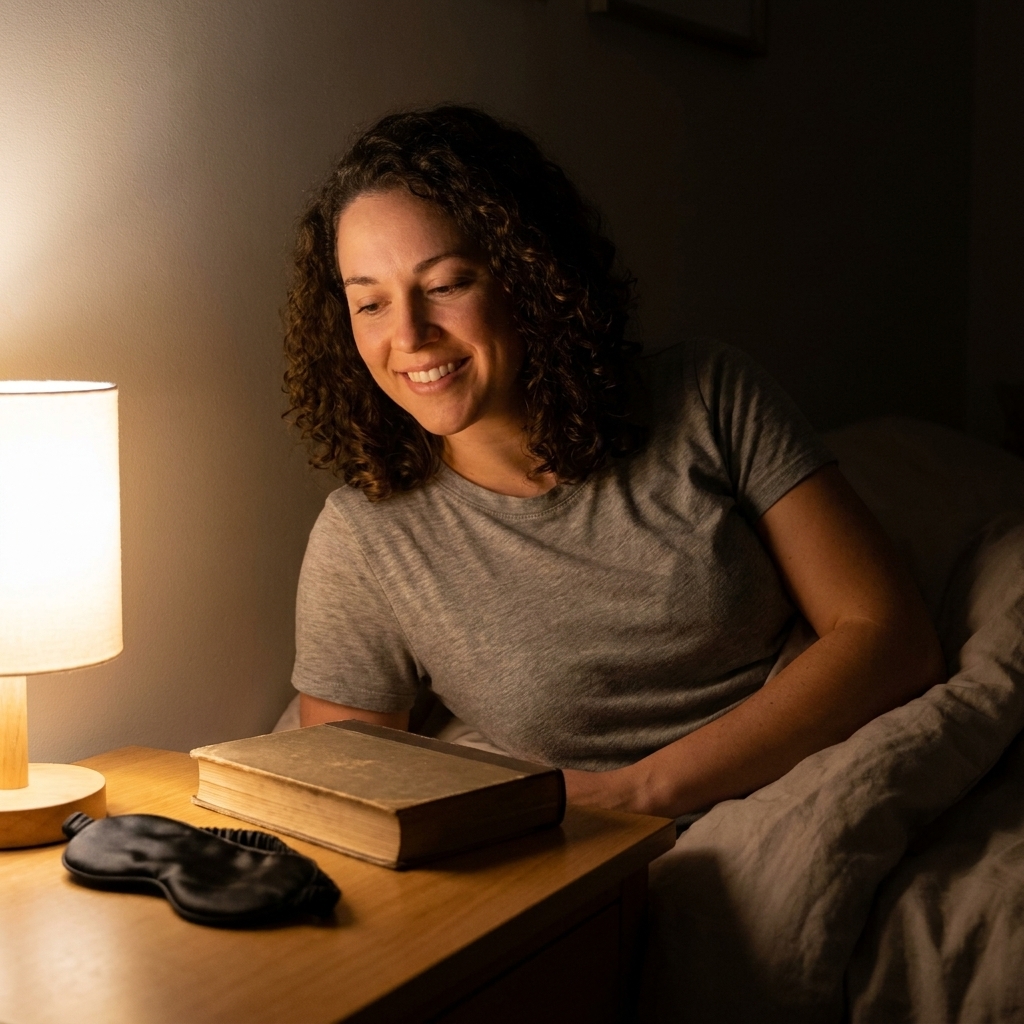
- Dim the environment: switch to warm, low lights. If you love overhead lighting, this is your sign to get a lamp you actually enjoy using.
- Reduce friction for tomorrow: a 5-minute reset (pack a bag, set coffee, lay out clothes) can prevent bedtime spiraling about the morning.
- Shift input to output: instead of consuming work, news, or intense entertainment, move toward calming, predictable activities.
Good options: light reading, gentle stretching, a calm shower, organizing one small area, easy crafting, low-stakes conversation, a cozy show you’ve seen before with brightness turned down.
Part B: 10 to 15 minutes, the same every night
This is your brain’s pattern-recognition moment. Keep it short, repeatable, and boring in the best way.
- Bathroom routine
- Skincare or simple hygiene
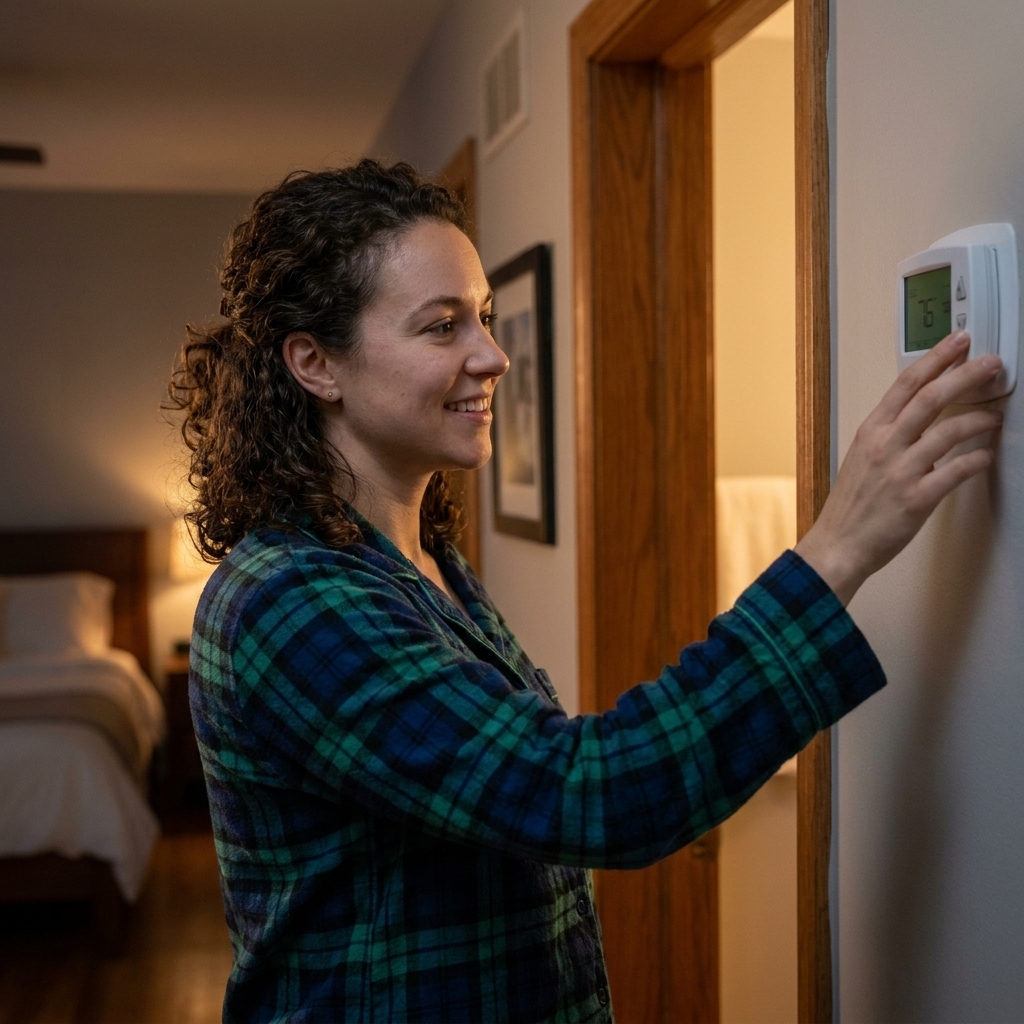
- Prepare the bedroom (temperature, fan, curtains)
- One page of a book, or a 3-minute breathing practice
- Lights out
Consistency beats complexity. Your goal is for this sequence to become almost automatic.
Step 4: Use light to your advantage
Light is a powerful signal to your circadian system, and it also affects alertness directly. You do not need perfect darkness all evening, but you do want a clear daytime versus nighttime contrast.
Morning: get bright light
- Within 1 to 2 hours of waking, aim for outdoor light if possible.
- Even on cloudy Pacific Northwest mornings (my home territory), outdoor light is usually brighter than indoor light.
Evening: dim and warm
- Lower brightness 1 to 2 hours before bed.
- If you use screens, reduce brightness and consider night mode, but understand that brightness and content can be just as stimulating as blue light.
- Move screens farther from your face when you can.
Night: keep it dim
If you need to get up, use a very dim, warm light. Bright bathroom lighting can fully wake up your brain.
Step 5: Temperature and shower timing
Sleep tends to come more easily when your core body temperature is drifting downward. You can work with this.
- Keep the bedroom cool: many adults sleep best in a cooler room than they expect.
- Try a warm shower 1 to 2 hours before bed: warming the skin can promote heat loss afterward, which may support a post-shower drop in core temperature.
- Cooling comfort matters: breathable bedding, a fan, or a cooling pillow can reduce wake-ups if you run hot.
Step 6: Caffeine, alcohol, and food
Caffeine
Caffeine can linger for hours, and people vary widely in sensitivity. If you are struggling with sleep onset, experiment with a cutoff 6 to 10 hours before bedtime. If that feels impossible, move it earlier by 60 minutes each week until your sleep improves.
Alcohol
Alcohol often makes people sleepy at first, but it can fragment sleep later in the night. For many adults, that looks like more awakenings and less steady, consolidated sleep. If you drink, the most sleep-friendly approach is earlier, smaller, and with water.
Late meals
Large, heavy meals right before bed can cause reflux or discomfort that wakes you up. If you get hungry at night, a small, simple snack tends to be easier on sleep than going to bed ravenous.
Step 7: A 5-minute mind routine
For many adults, bedtime is the first quiet moment all day. The brain takes the opportunity to unload every unresolved thought. You do not need to stop thinking. You need a container for the thinking.
Try a brain download plus a next step
- Set a timer for 3 minutes: write every worry, task, and loose end.
- Then 2 minutes: choose 1 to 3 items and write the next physical step (email, call, draft, schedule, purchase).
This works because it shifts your brain from open loops to planned action. It is not positivity. It is closure.
If anxiety spikes at lights out
Use a simple, repeatable downshift:
- Breathing: slow exhales (for example, inhale 4 seconds, exhale 6 seconds) for 3 to 5 minutes.
- Progressive muscle relaxation: gently tense and release muscle groups from feet to face.
- A neutral mental track: imagine walking through a familiar place, describing details slowly.
Step 8: Make your bedroom a sleep cue
Your brain learns context quickly. If bed becomes the place where you scroll, work, argue, or catastrophize, it starts pairing the bed with alertness.
Two high-impact upgrades
- Darken the room: if outside light wakes you up, blackout curtains or a good sleep mask can be a surprisingly high-impact upgrade.
- Reduce noise or control it: consider a fan or white noise if you wake easily.
If you are wide awake, get out of bed
If you have been awake long enough that you feel frustrated or mentally activated, get out of bed and do something calm in dim light until you feel sleepy again. Some people use a rough guideline of about 15 to 20 minutes, but the bigger cue is frustration or alertness. Try not to clock-watch.
This protects the bed-sleep association. You are not “giving up.” You are training your brain.
A sample routine to copy
Use this as a starting point, then adjust timing based on your schedule.
- 90 minutes before bed: dim lights, lower screen brightness, make a simple plan for tomorrow
- 60 minutes before bed: light snack if needed, hygiene, comfortable clothes
- 30 minutes before bed: calming activity (book, stretching, familiar show with low brightness)
- 15 minutes before bed: same short cue every night (bathroom, bedroom set-up, 3 minutes of breathing)
- Lights out: if sleepy, stay in bed; if wired, get up briefly in dim light

Personalize it
The best bedtime routine is the one you can do on an average Tuesday, not just on a perfect weekend.
Pick 2 non-negotiables
- Consistent wake time
- Dim lights 60 minutes before bed
- 10-minute identical landing sequence
- 3-minute brain download
Add 1 to 2 nice-to-haves
- Warm shower
- Gentle stretch
- Herbal tea like chamomile (enjoyable, but not magic)
- White noise or fan
If you miss a night, do not “start over.” Just return to your two non-negotiables the next evening. Your nervous system learns through repetition, not perfection.
Troubleshooting
If you cannot fall asleep
- Check time in bed: are you giving yourself too much time to sleep?
- Move caffeine earlier, even by 60 minutes.
- Make the last 30 minutes calmer and dimmer than you think necessary.
If you keep waking up at 3 a.m.
- Alcohol and late eating are common culprits.
- Stress and conditioned arousal can play a role. Use a dim-light reset and return to bed when sleepy.
- If this is frequent with loud snoring, gasping, or morning headaches, consider a sleep apnea screening.
If you sleep but feel exhausted
- Look at total sleep time, not just time in bed.
- Consider iron levels (with a clinician) if you have restless legs symptoms.
- Track daytime sleepiness. Persistent, unsafe sleepiness needs medical attention.
Exercise and busy schedules
Exercise is one of the best long-term sleep supports. If late workouts rev you up, try moving vigorous exercise earlier, and keep late evening movement gentle (walking, mobility, stretching). And if you are a parent, caregiver, or you work shifts, do not aim for perfection. Aim for a repeatable “minimum routine” you can do even on chaotic nights: dim lights, short landing sequence, consistent wake time whenever possible.
When to get professional help
Routines can move the needle, but sometimes you need more support. Consider talking with a clinician or a CBT-I provider if insomnia lasts more than three months, if daytime sleepiness is affecting safety, if you are using alcohol or sedatives to sleep, or if you suspect sleep apnea, restless legs, parasomnias, medication side effects, or a significant mood shift.
Frequently asked questions
How long should a bedtime routine be?
Long enough to consistently reduce stimulation and cue sleep. For most adults, a 60 to 90 minute wind-down plus a 10 to 15 minute identical landing sequence is both realistic and effective.
What is the single most important part of a bedtime routine?
If I have to choose one, it is a consistent wake time. It stabilizes circadian timing and helps sleep pressure build appropriately.
Do I have to avoid screens completely at night?
No. But you will usually sleep better if you reduce brightness, keep content calm, and give yourself at least 20 to 30 minutes of non-screen time before lights out. If screens are the only way you decompress, make them as boring and dim as possible.
Is melatonin a good addition to a routine?
Melatonin can help shift timing for some people, especially for circadian misalignment, but it is not a sedative. If you are considering it, it is worth discussing dose and timing with a clinician. For many adults, routine, light timing, and stress downshifting produce bigger results.
The goal
A science-aligned bedtime routine is not about doing more. It is about removing friction between you and sleep. When your evenings reliably get dimmer, calmer, and more predictable, your brain stops treating bedtime like a performance review.
If you want a simple place to start tonight, pick your wake time, dim the lights one hour before bed, and repeat the same 10-minute landing sequence for the next seven nights. Your body loves patterns. Give it one worth learning.