A calm, science-aligned nighttime routine using journaling, breathwork, and mindfulness to slow racing thoughts and make sleep feel possible again.
The Rest Pact
Updated October 18, 2026
Created October 18, 2026
4-7-8 Breathing for Sleep

Maya Caldwell
Maya Caldwell is a certified sleep science coach and the lead researcher at RestPact. After overcoming years of chronic insomnia, she dedicated herself to making evidence-based sleep strategies accessible, helping others build bedtime routines that lead to deep, restorative rest.
There is a particular kind of bedtime frustration I know intimately: you are exhausted, you finally get a quiet moment, and your body decides it is the perfect time to rehearse every unfinished thought from the day. When that happens, I reach for a tool that is simple enough to do in the dark, requires no equipment, and often helps me feel more settled within a couple of minutes.
It is called 4-7-8 breathing. You gently inhale for 4 counts, hold for 7, then exhale for 8. For some people, practiced consistently, it can become a familiar cue for the nervous system that it is safe to rest.
What it is (and is not)
4-7-8 breathing is a paced breathing pattern often taught as a relaxation exercise. The goal is not to force sleep or to get perfect numbers. The goal is to slow breathing down, lengthen the exhale, and give your brain a steady rhythm to follow instead of spiraling thoughts.
It is also not a substitute for medical care. If you have persistent insomnia, panic attacks, severe anxiety, or breathing conditions like COPD or uncontrolled asthma, treat this as a gentle technique to discuss with your clinician rather than a one-size-fits-all fix.
Why it may help at bedtime
Sleep is not something we can muscle into existence. It is more like a shy cat: the harder you chase it, the more it hides. Techniques like 4-7-8 can help because they may shift your body from a stress-ready state toward a rest-ready one.
The science, in plain English
- Slower breathing can support relaxation. Research on slow, paced breathing suggests it is associated with increased parasympathetic activity for many people, often measured indirectly through changes in heart rate variability (HRV). HRV is a useful proxy, but it is not a direct window into the nervous system, and responses vary from person to person.
- A longer exhale often feels calming. Many people notice their heart rate feels less “thumpy” when the exhale is slow and controlled.
- Counting occupies attention without revving you up. The gentle mental task gives your mind something predictable to hold onto, which can reduce rumination at lights out.
- Consistency creates a cue. Repeating the same pattern nightly can become a conditioned signal that bedtime is beginning, similar to how dim lights and a familiar routine can prime the brain for sleep.
Important nuance: research broadly supports slow, paced breathing for relaxation and stress reduction. The exact 4-7-8 ratio is less magical than the overall features that matter most: slower pace, comfortable breathing (often nasal), and an unforced extended exhale.
How to do it
If you only take one thing from this guide, take this: comfort beats precision. If the counts feel too long at first, shorten them and build up gradually.
Set up (30 seconds)
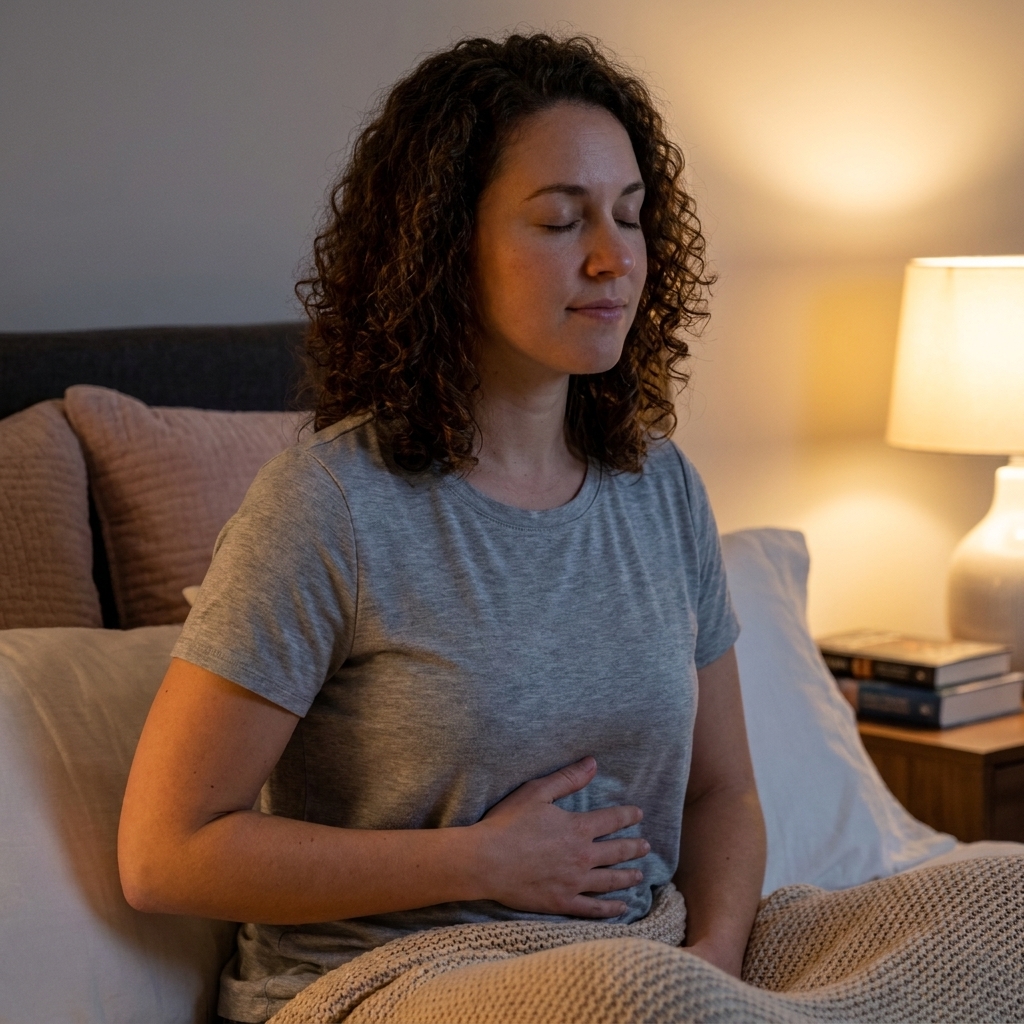
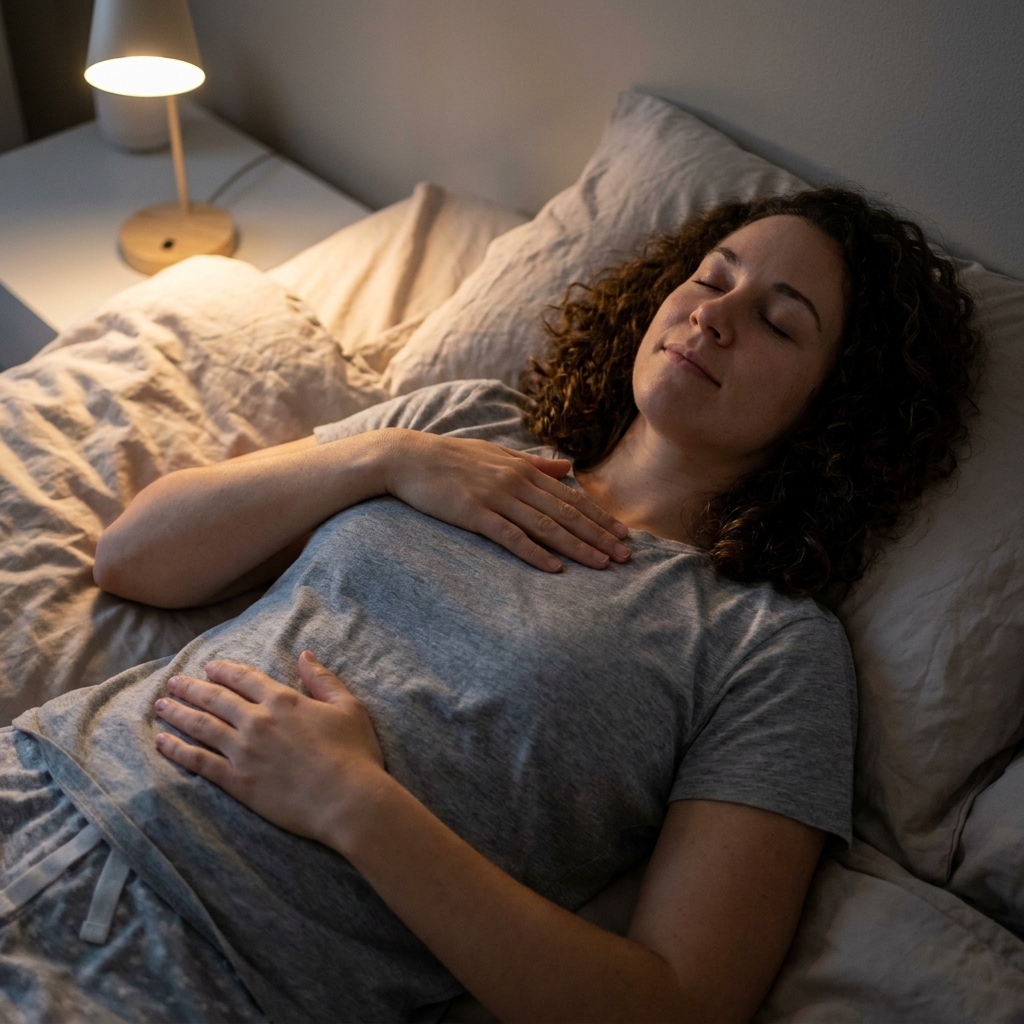
- Position: Sit comfortably on the edge of your bed or lie down with your head supported. If lying down makes you feel air-hungry, start seated.
- Mouth and jaw: Unclench your teeth. Let your tongue rest gently behind your top front teeth.
- Breath route: Inhale through your nose if you can. Exhale through your mouth or nose, whichever feels smoother. Traditional instructions often use an exhale through the mouth, but comfort comes first.
One cycle
- Inhale for 4 counts. Keep it quiet and gentle.
- Hold for 7 counts. This is a soft pause, not a strain.
- Exhale for 8 counts. Let the exhale be slow, steady, and complete.
How many cycles?
In many popular 4-7-8 guides, a practical starting point is 4 cycles. If you are still wide awake, you can do another round. I like a “two rounds max” rule at bedtime to prevent turning relaxation into a performance.
A simple bedtime script:
“Inhale… 2… 3… 4. Hold… 2… 3… 4… 5… 6… 7. Exhale… 2… 3… 4… 5… 6… 7… 8.”
Make it easier
If 4-7-8 feels too intense at first, that is not a personal failure. It is usually just a sign you are starting from a stressed baseline or you are sensitive to breath holds.
Gentle options
- Shorten the counts: 3-5-6 or 4-6-8 can feel more doable while keeping the longer exhale.
- Reduce the hold: If holding triggers anxiety, try 4-2-6 or skip the hold entirely and do 4-0-8.
- Exhale through the nose: If mouth exhaling feels awkward or drying, keep it nasal and simply lengthen it.
- Use a whisper exhale: A barely-audible “haaa” can help slow the breath without forcing it, as long as it does not dry your mouth or irritate your throat.
The principle is the same: slow, smooth, unforced breathing with a slightly longer exhale than inhale.
When to practice
In my experience, 4-7-8 works best as a transition ritual, not an emergency brake you only pull at 2:00 a.m.
Three good times to use it
- During your wind-down: Do 4 cycles after you brush your teeth or after skincare. It becomes a cue that bedtime is approaching.
- At lights out: Do 4 cycles once you are in your preferred sleep position. Then stop and let sleep take over without “checking” whether it worked.
- After a middle-of-the-night wake-up: Do 2 to 4 cycles, then return to normal breathing. If you feel pressure building, shorten the counts.
If you regularly wake up and cannot fall back asleep within about 20 to 30 minutes, some sleep specialists recommend getting out of bed briefly for a low-light, calming activity. You are not “giving up.” You are protecting your bed as a cue for sleep rather than struggle.
Common mistakes
Most issues with 4-7-8 come from trying too hard. Here is what to watch for.
- Taking a huge inhale: Big gulps of air can increase lightheadedness. Aim for a smaller, quieter inhale.
- Forcing the breath hold: The hold should feel neutral. If you feel panic or strain, shorten it or skip it.
- Counting too fast: If you race through the numbers, you lose the slow-breath benefit. If it helps, try about one count per second, or whatever pace feels steady and calm.
- Doing too many rounds: Ten minutes of “trying to breathe yourself asleep” can become another task. Keep it brief, then release the outcome.
- Saving it for desperate nights: Like most calming skills, it tends to work better when your body recognizes it as familiar.
If you feel lightheaded
Lightheadedness is usually a sign you are breathing a little too big or pushing the timing too hard.
- Return to normal breathing for a few breaths.
- Make the inhale smaller and quieter on the next round.
- Shorten the counts or skip the hold for tonight.
- Stop if you feel dizzy, numb, panicky, or unwell.
A simple nightly routine
If you want a plan you can repeat, here is one I recommend because it is realistic for tired humans.
The 6-minute wind-down
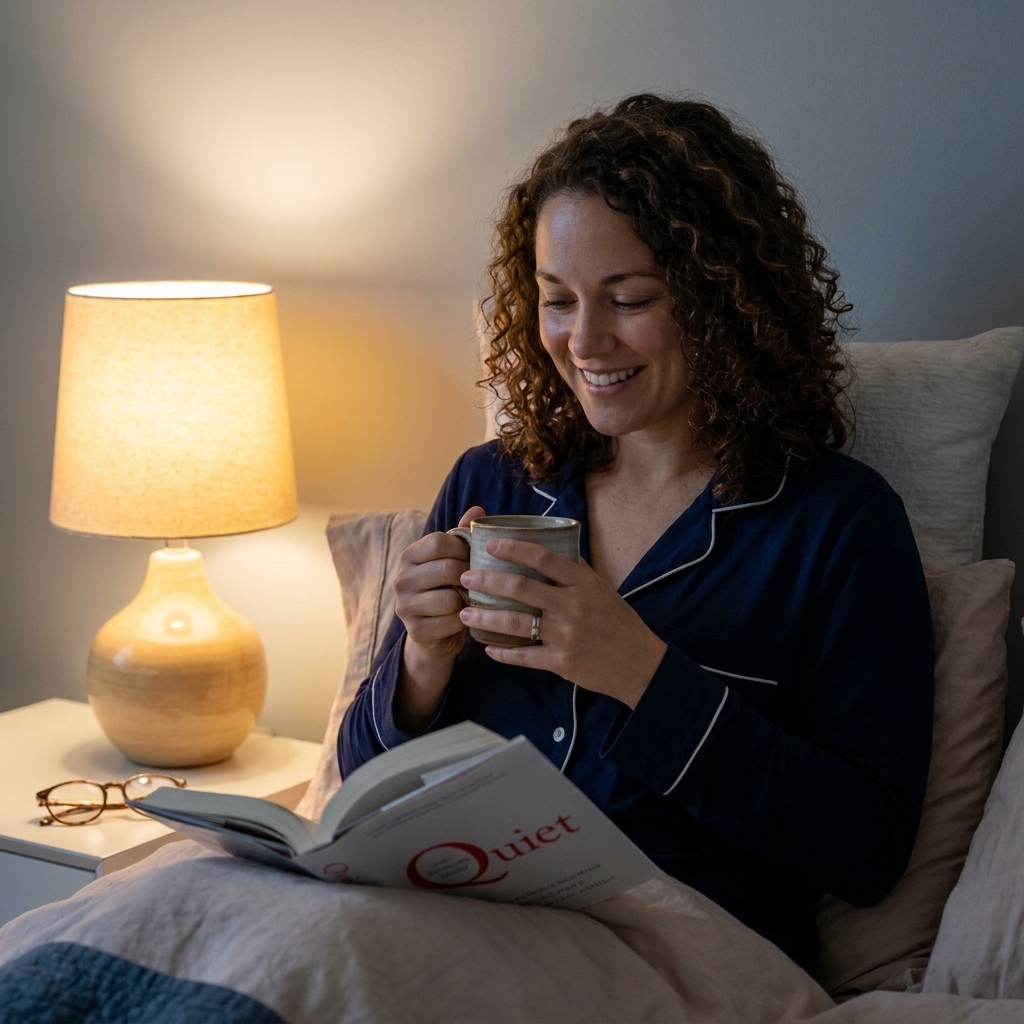
- Lights: Dim as much as you can. Even one small lamp helps signal “night.”
- Body: Get into bed and do a quick scan from forehead to feet, softening any tense spots.
- Breath: Do 4 cycles of 4-7-8 (or your modified version).
- Let go: Return to normal breathing. If thoughts come up, label them gently as “planning” or “remembering,” then refocus on the sensation of the pillow and sheets.
This routine is deliberately boring. Boring is a compliment at bedtime.
Is it safe?
For most healthy adults, gentle paced breathing is considered low risk. That said, stop if you feel dizzy, numb, panicky, or uncomfortable. If you have any concerns about whether this is appropriate for you, ask your clinician.
Use extra caution or ask your clinician first if you:
- have COPD, moderate to severe asthma, or another chronic respiratory condition
- have significant cardiopulmonary disease, new or worsening symptoms, or any condition your clinician has told you to treat as unstable or uncontrolled
- are pregnant and prone to lightheadedness or shortness of breath, or you have been advised to avoid breath-hold practices
- have a history of panic attacks triggered by interoceptive sensations (like noticing your heartbeat or breath)
A gentler starting point in those cases is often no hold and a modestly longer exhale, like 4 in and 6 out, through the nose.
FAQ
How long does it take to work?
Some people feel calmer in one to two minutes. For others, it is more subtle and cumulative, especially if your nervous system has been living in overdrive for months. I would give it several nights to a week or two of practice before judging it. And even then, the win is often “calmer,” not instant sleep on command.
What if I cannot hold for 7 counts?
Do not force it. Shorten the hold to 2 to 4 counts or skip it. You can still get the main benefit from slowing the breath and lengthening the exhale.
Nose or mouth?
Nasal breathing is great when it is comfortable, but mouth exhaling can make it easier to slow the exhale. Choose the option that feels smooth and quiet. Strain defeats the purpose.
Can I do it lying down?
Yes. If you feel air hunger when lying down, start seated and transition to lying down after a few cycles.
What if it relaxes me but I still cannot sleep?
That still counts as progress. Sometimes your nervous system needs repeated cues before sleep becomes easier. If you are regularly taking more than 30 minutes to fall asleep or waking often for weeks, it may be worth addressing bigger levers like light exposure, caffeine timing, stress load, sleep schedule consistency, or talking with a clinician about cognitive behavioral therapy for insomnia (CBT-I).
The Rest Pact takeaway
4-7-8 breathing is not a magic spell. It is a small, repeatable way to tell your body, “We are safe now. We can power down.” Keep it gentle, keep it consistent, and let “calmer” be the win even on the nights sleep takes its time.
If you try it tonight, start with just four cycles. Then put the technique away and give yourself permission to rest.