A chronobiology-based checklist to support your body clock: light exposure, consistent timing, movement, meals, caffeine, and a bedtime routine that actually...
The Rest Pact
Updated October 18, 2026
Created October 18, 2026
Deep Sleep vs. REM Sleep

Maya Caldwell
Maya Caldwell is a certified sleep science coach and the lead researcher at RestPact. After overcoming years of chronic insomnia, she dedicated herself to making evidence-based sleep strategies accessible, helping others build bedtime routines that lead to deep, restorative rest.
If you have ever woken up after eight hours and still felt wrung out, you are not alone. When I was living on four hours of sleep and caffeine as a personality trait, I assumed “more time in bed” was the whole game. It is not. Sleep quality is largely about sleep architecture, meaning how smoothly you move through the stages of sleep and how protected those stages are from fragmentation.
Two stages get the most attention for good reason: deep sleep (the heavy, physical restoration stage) and REM sleep (the vivid-dreaming stage that supports brain and emotional reset). They are different, they do different jobs, and they respond to different habits. The good news is that you can support both naturally with a few consistent daily inputs.
Sleep stages in plain English
Your sleep cycles repeat through the night. Many people average about 90 minutes per cycle, but it can vary widely by person and night, often roughly 70 to 110 minutes. In each cycle, you move through non-REM sleep (lighter stages and deep sleep) and then REM sleep. Across the night, your body changes what it prioritizes:
- Earlier night: more deep sleep (physical repair)
- Later night: more REM (mood, learning, emotional processing)
This is why going to bed late but sleeping in can still leave you feeling physically depleted, and why cutting the last hour of sleep often hits mood and focus hard. You need the whole arc.
Deep sleep vs. REM sleep: what each stage does
Deep sleep (slow-wave sleep)
Deep sleep is the stage where you are hardest to wake. It is strongly tied to physical restoration and recovery. During deep sleep, the brain shows slow, synchronized waves and the body shifts into repair mode.
- Supports: tissue repair, immune function, physical recovery, feeling physically “refueled”
- Usually benefits from: a consistent schedule, regular exercise (often earlier in the day), and a cooler sleep environment
- Often takes a hit from: alcohol close to bedtime, overheating at night, and disrupted or fragmented sleep
REM sleep (rapid eye movement sleep)
REM is when dreaming is most vivid for many people, and your brain looks surprisingly “awake” on EEG. Your body is safely relaxed (muscle tone is reduced) while the brain is actively processing.
- Supports: emotion regulation, creativity, next-day mood stability, and parts of learning and memory
- Usually benefits from: enough total sleep time (especially the later part of the night), stable circadian timing, and stress regulation
- Often takes a hit from: alcohol, some medications and sedatives, untreated sleep apnea, chronic stress, and frequent awakenings
One important nuance: we often talk about “REM for memory” and “deep sleep for recovery” because it is easy to remember, but it is not the whole story. Memory consolidation and learning happen across sleep, including non-REM (especially stage 2) and REM, just in different ways.
A quick reality check about trackers
Wearables can be helpful for noticing patterns, but they estimate sleep stages indirectly (movement, heart rate, heart rate variability). Use your tracker as a trend tool, not a verdict. If you feel more stable, calmer, and more capable during the day, that matters at least as much as a percentage on an app.
What is “enough” deep sleep and REM sleep?
Sleep stage percentages vary by age, genetics, and how much sleep you are getting overall. In healthy adults, deep sleep often lands somewhere around 10 to 25 percent of total sleep, and REM often around 20 to 25 percent. Those ranges can shift with age (deep sleep commonly declines) and they also change after sleep deprivation.
Instead of chasing a perfect number, I like these two questions:
- Body check: Do you wake feeling physically restored most mornings?
- Brain check: Do you have steady mood, workable focus, and decent stress tolerance most days?
If one of those is consistently off, it is a clue about which part of your sleep architecture might need more protection.
The biggest spoiler for both stages: fragmentation
Deep sleep and REM sleep both suffer when your night is chopped into pieces. Even brief awakenings can reduce the continuity your brain needs to do its job. Common drivers include:
- Alcohol (especially within a few hours of bed)
- Overheating or an overly warm bedroom
- Caffeine too late (even if you “fall asleep fine”)
- Stress and rumination
- Sleep apnea (often unrecognized, even in people who are not “classic” candidates)
- Nocturia, reflux, pain, or poorly timed fluids
If you are doing “all the right things” and still wake up repeatedly, it is worth talking to a clinician. Treating a medical root cause often does more for REM and deep sleep than supplements alone.
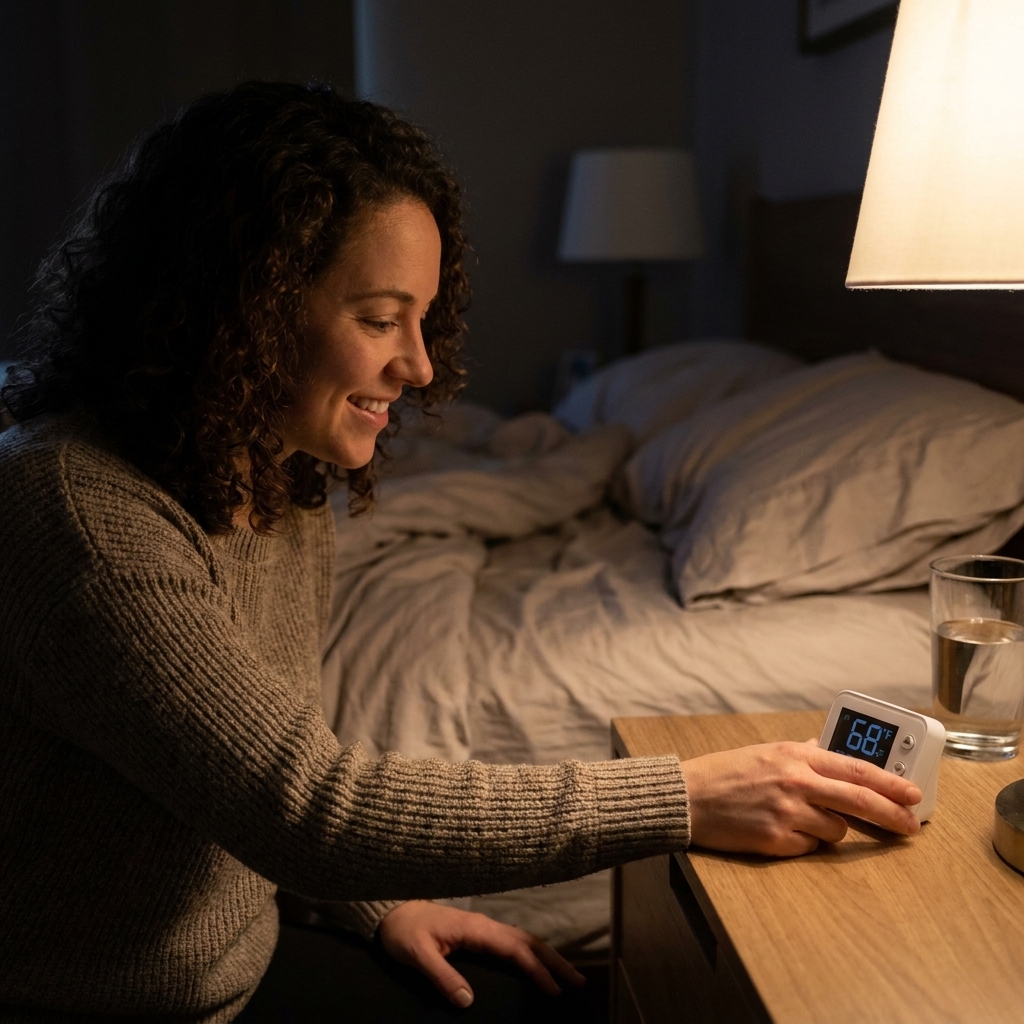
How to maximize deep sleep naturally
Deep sleep is sensitive to timing, temperature, and recovery signals. These are the habits I lean on most, both personally and with people I work with.
1) Protect the first half of the night
Deep sleep is front-loaded. If your bedtime slides later and later, you often lose the most deep-sleep-rich window. Aim for a consistent sleep schedule, with a bedtime that gives you a full night, not a “minimum viable” one.
2) Keep your bedroom cool, dark, and quiet
Temperature is one of the most underrated levers for deep sleep. Most people sleep best in a cool room. Practical options:
- Set your thermostat cooler at night
- Use breathable bedding and a lighter duvet
- Try a cooling pillow or mattress topper if you run hot
- Use blackout curtains to reduce early morning light that can fragment sleep
3) Move your body, but time it well
Regular exercise tends to support deeper sleep, especially when it is consistent. If intense workouts late at night leave you wired, move them earlier or make evening movement gentler (walking, mobility, light cycling).
4) Watch alcohol timing and dose
Alcohol can make you sleepy at first, but it commonly fragments sleep later and can reduce restorative stages. If you choose to drink, keep it moderate and earlier in the evening. Many people notice better deep sleep when alcohol is occasional rather than routine.
5) Build a “power-down” routine that actually lowers arousal
Deep sleep loves a calmer nervous system. Choose two or three cues that reliably downshift you:
- 10 minutes of light stretching
- A warm shower or bath 60 to 90 minutes before bed (cooling afterward can help sleep onset)
- Breathwork you enjoy and will repeat
- Low light and low stimulation reading
If you only change one thing this week: pick a consistent lights-out time and keep your room cooler. It is the simplest deep-sleep-friendly combo I know.

How to maximize REM sleep naturally
REM is especially vulnerable to short sleep, early alarms, and anything that disrupts the second half of the night. Supporting REM is often about giving your brain enough uninterrupted runway.
1) Give yourself enough total sleep time
REM tends to lengthen in the later cycles of the night. If you routinely cut your sleep short, you often cut REM first. For many adults, that means planning for 7 to 9 hours in bed, adjusted for how long it takes you to fall asleep.
2) Keep a steady wake time
A consistent wake time anchors your circadian rhythm. When your internal clock is stable, REM timing tends to stabilize too. If you want to adjust your schedule, shift gradually (15 to 30 minutes at a time).
3) Get bright light in the morning
Morning light is a powerful circadian signal. It helps set your sleep-wake rhythm so your brain knows when to be alert and when to be sleepy. Practical approach:
- Go outside within an hour of waking for 5 to 15 minutes
- If it is dark or gloomy, stay out longer
- Keep evenings dimmer to protect melatonin timing
4) Reduce stress carryover into bed
REM is deeply linked to emotional processing, and high stress often means lighter, more fragmented sleep. Two tools that work well for busy brains:
- A worry list + next steps: write down concerns and one small action for each, then stop problem-solving
- A consistent wind-down cue: same tea, same playlist, same lighting, same order
5) Be strategic with naps
Naps can be helpful, but long or late naps can steal sleep pressure from the night, meaning your built-up drive to sleep. That can reduce consolidated sleep later, including REM. If you nap:
- Keep it earlier in the afternoon
- Aim for 10 to 30 minutes if you want to avoid grogginess

Daily habits that support both deep sleep and REM
If you want the highest return on effort, focus on the overlap. These habits tend to improve overall sleep continuity, which protects both stages.
Anchor routine: the basics
- Same wake time most days (within about an hour on weekends)
- Morning outdoor light
- Caffeine cutoff at least 8 hours before bed if you are sensitive
- Meals earlier and lighter in the last few hours before bedtime if reflux or restlessness is an issue
- Cool, dark bedroom with minimal noise
- Wind-down ritual that lowers stimulation
What about supplements?
Some people benefit from targeted supplements, but I prefer to treat them as optional and individualized, not foundational. If you are considering melatonin, magnesium, or anything sedating, check with your clinician, especially if you are pregnant, managing anxiety or depression, or taking medications. Also remember: sedated is not always the same as restorative.
Common problems and what to do
“I get plenty of sleep, but my deep sleep is low.”
- First, check for fragmentation: alcohol, overheating, noise, pets waking you, late caffeine
- Add daytime movement if you are mostly sedentary (a daily walk counts)
- Consider whether sleep apnea could be present, especially if you snore, wake with headaches, or feel unrefreshed. If you sleep with a partner, ask what they notice (snoring, gasping, pauses in breathing).
“My REM looks low and I feel emotionally flat.”
- Make sure you are not cutting the last 1 to 2 hours of sleep consistently
- Stabilize your wake time and get morning light
- Reduce evening stress inputs: work email, intense shows, late-night doomscrolling
- Consider medication effects. Some antidepressants (including many SSRIs and SNRIs) can change REM patterns, and stimulants can fragment sleep. Do not change meds on your own, but it is worth discussing sleep with the prescriber.
“I wake up at 3 a.m. and can’t get back to sleep.”
This is incredibly common during stress, perimenopause, parenting seasons, or inconsistent schedules. Start with basics: cool room, low light, no clock-watching. If you have been awake for what feels like roughly 15 to 20 minutes, get out of bed and do something quiet and dim until sleepy again. Over time, this protects the bed-sleep association.
“My schedule makes ‘perfect sleep’ impossible.”
If you do shift work or have an unpredictable household, focus on what is controllable: a consistent wind-down cue, a dark sleep space (mask and blackout curtains help), and a protected core sleep window whenever you can. Even small improvements in continuity add up.
A simple 7-day plan to improve both stages
Days 1 to 2: stabilize timing
- Pick a realistic wake time and keep it
- Get outside in the morning for light
Days 3 to 4: upgrade your environment
- Cool the bedroom
- Add blackout curtains or a sleep mask if light wakes you
- Use white noise if sound wakes you
Days 5 to 7: protect your wind-down
- Choose a 20 to 40 minute routine you will repeat nightly
- Move alcohol earlier or skip it for the week and notice changes
- Cut off caffeine earlier if you are a slow metabolizer
At the end of the week, do not just look at your tracker. Ask: Do I feel a little more human? Is my mood steadier? Is it easier to wake up? Those are the outcomes we are after.
FAQ
Can you increase deep sleep and REM at the same time?
Yes. The most reliable way is improving sleep continuity and getting enough total sleep. When you stop fragmenting sleep and stop cutting it short, both stages usually rebound in a healthy pattern.
Why do I get more deep sleep some nights and more REM on others?
Your sleep architecture responds to recent history. After hard training or recovery needs, deep sleep may increase. After learning-heavy days, emotional load, or when you finally get enough total sleep time, REM may rise. Variability is normal.
Does dreaming mean I am getting good REM?
Dream recall is not a perfect indicator. You can have REM without remembering dreams, and you can remember dreams because you woke during or right after them.
Is it bad if my deep sleep decreases with age?
It is common for deep sleep to decrease with age, but the goal remains the same: protect what you can through consistent timing, healthy activity, and a sleep-friendly environment.
When to get professional support
If you consistently get adequate time in bed and still feel unrefreshed, or if you have loud snoring, gasping, morning headaches, or persistent daytime sleepiness, talk with a healthcare professional. Sleep apnea, iron deficiency, thyroid issues, mood disorders, and medication effects can all change sleep architecture in ways that lifestyle alone cannot fully solve.
You deserve sleep that actually restores you, not just sleep that fills the hours.