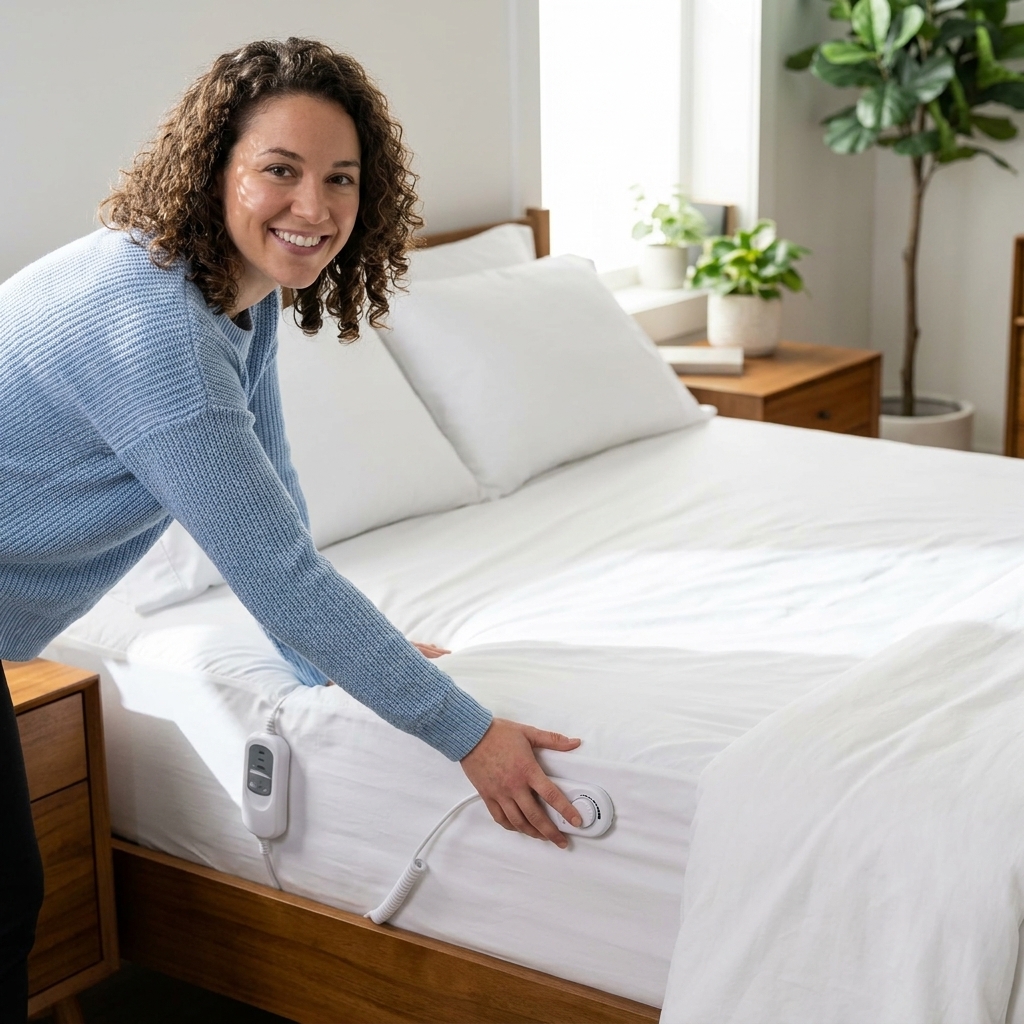
Hot at night? These seven cooling mattresses and bedding accessories are curated using sleep thermoregulation research and real-world comfort priorities.
The Rest Pact
Updated October 18, 2026
Created October 18, 2026
Bedroom Temperature and Humidity for Better Sleep

Maya Caldwell
Maya Caldwell is a certified sleep science coach and the lead researcher at RestPact. After overcoming years of chronic insomnia, she dedicated herself to making evidence-based sleep strategies accessible, helping others build bedtime routines that lead to deep, restorative rest.
If you have ever woken up at 2 a.m. sweaty, wide awake, and kicking the sheets like they are the problem, I get it. When I was an overworked project manager living on caffeine and 4 hours of sleep, I assumed my “sleep issues” were purely stress. Stress mattered, yes, but the night I finally started tracking my bedroom temperature and humidity I realized something uncomfortable: my room was quietly sabotaging me.
Your sleep environment is not just “nice to have.” Temperature and humidity can shape how easily you fall asleep, how often you wake up, and how restorative your sleep feels. The good news is that this is one of the most fixable parts of sleep.
Why temperature and humidity matter
Sleep is tightly linked to thermoregulation, your body’s ability to manage internal temperature. To fall asleep, your core body temperature typically needs to drop. Your body helps this happen by moving heat toward the skin and extremities, then releasing that heat to the surrounding air.
If your room is too warm, your body may struggle to offload heat. If the air is too humid, sweat does not evaporate as efficiently, so you can feel sticky and overheated. If the air is too dry, your nose and throat can dry out, which can contribute to irritation, congestion, mouth breathing, and more brief wake-ups.
In other words, “comfort” is not the fluffy goal here. The goal is to support the natural cooling process that helps stabilize sleep, especially in the first half of the night when deep sleep is typically more concentrated.
Target ranges to try
There is no single perfect number for every body, home, climate, or bedding setup. But sleep medicine guidance and indoor air quality norms converge on practical ranges that work for many adults.
Bedroom temperature: start around 60 to 67°F (16 to 19°C)
A cool room is often recommended for sleep. A useful starting point is 60 to 67°F. If that sounds shockingly cold, remember that pajamas, duvets, and body heat do the warming. You are building a stable “microclimate” in your bed.
- If you tend to run cold: aim toward the upper end (65 to 67°F), then warm yourself with socks or a comforter with a higher warmth rating.
- If you run hot or get night sweats: aim toward the lower end (60 to 64°F) and focus on breathable bedding.
Bedroom humidity: aim for 30 to 50% (many people prefer 40 to 50%)
For sleep comfort and airway health, a widely recommended indoor range is 30 to 50% relative humidity.
- Below 30%: dry nose, dry throat, static shocks, and sometimes worse snoring or morning headaches for mouth breathers.
- Above 50 to 60% (especially when sustained): sweat evaporation slows, the room can feel stuffy, and you increase the risk of dust mites and mold in damp spaces.
If you want one “set and forget” target: try 45% and adjust based on symptoms.
Find your sweet spot in 7 nights
I love rules of thumb, but your body’s feedback matters more than any single chart. Here is the simplest experiment I use with clients and in my own house in the Pacific Northwest, where rainy winters and dry indoor heat can swing humidity fast.
Step 1: Measure first, then change
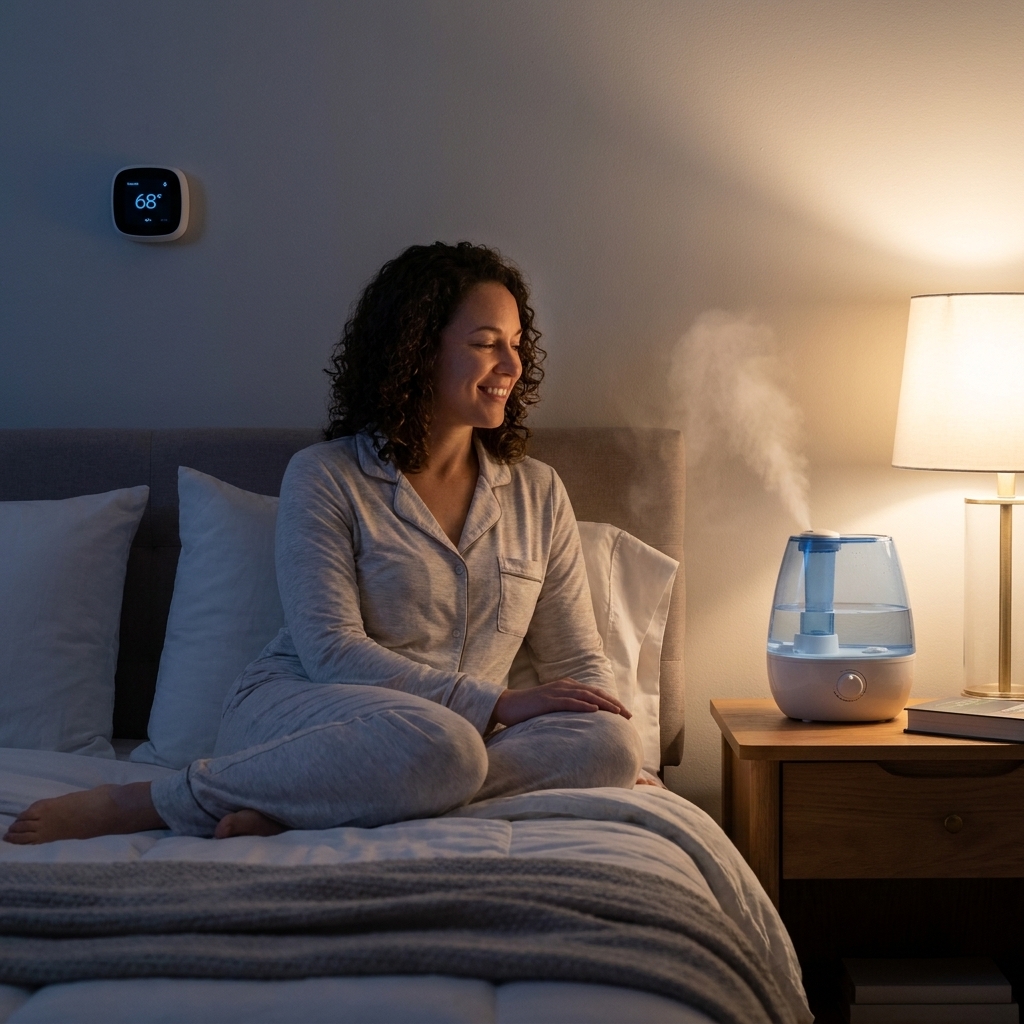
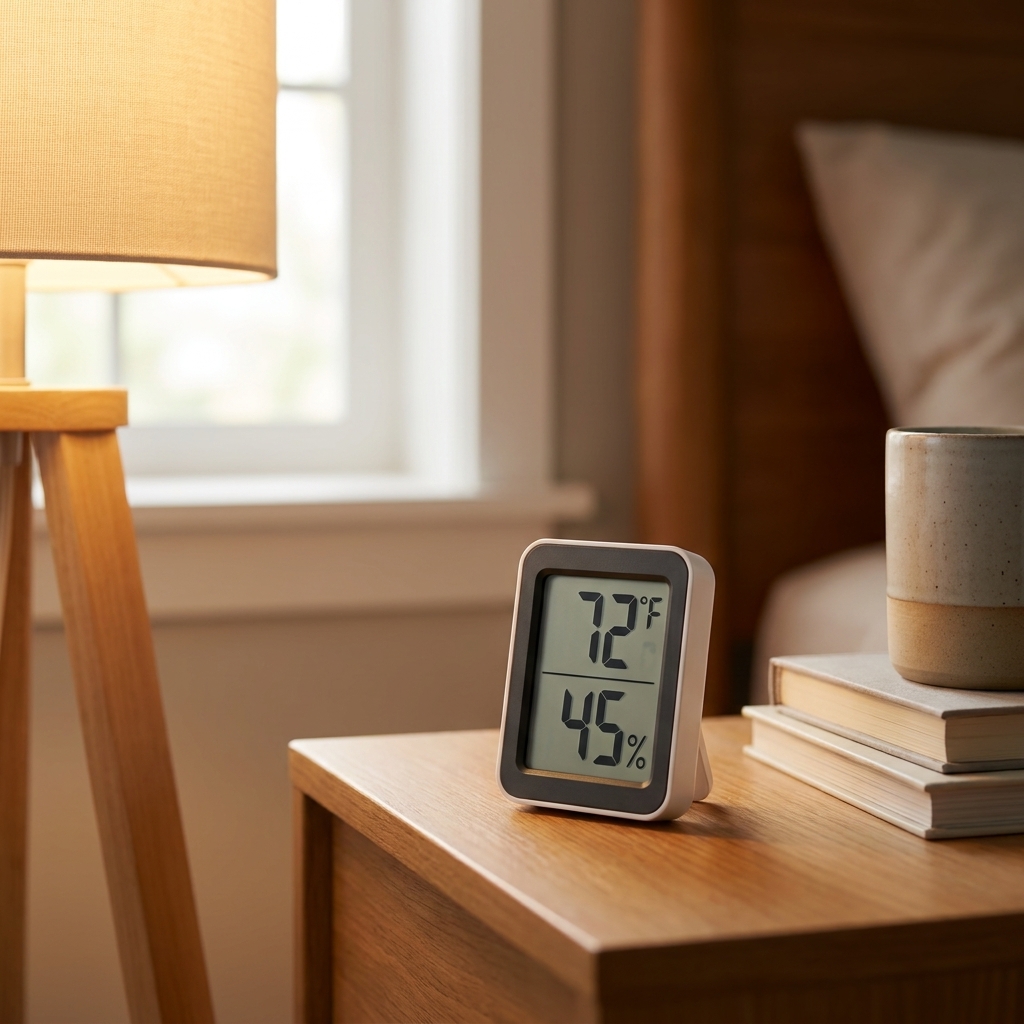
Get a basic digital thermometer plus hygrometer (often one device). Place it near the bed, not directly in the path of a vent or a humidifier stream. Check it at:
- Bedtime
- Any wake-ups
- Wake time
This gives you the “truth on the nightstand,” which is often different from what the hallway thermostat reports.
Step 2: Pick a starting setup
- Temperature: 65°F
- Humidity: 40 to 45%
Step 3: Adjust one variable at a time
For the next 7 nights, change only one thing every 2 nights. Pick the variable tied to your main complaint first, and keep the other one steady.
- If you wake sweaty or throw off covers, drop the thermostat by 1 to 2°F and keep humidity the same.
- If you wake with dry mouth, sore throat, or irritation and your humidity is low, increase humidity by 5% and keep temperature the same.
- If you wake clammy without being truly hot and your humidity is high, lower humidity by 5% and keep temperature the same.
Keep notes on: time to fall asleep, number of awakenings, and how you feel at 10 a.m. The goal is not “perfect sleep” overnight. The goal is fewer wake-ups and less time awake when you do wake.
Night sweats: room vs. root cause
Night sweats have a long list of possible causes. A room that is too warm or humid is a common and very fixable contributor, but it is not the only one.
Environmental fixes that often help quickly
- Lower room temperature by 1 to 3°F.
- Reduce humidity if it is above 50 to 55%.
- Switch bedding to more breathable materials. Many people do better with cotton percale sheets, linen, or moisture-wicking blends, plus a comforter that is not overly heavy for the season.
- Create airflow that does not blow directly on your face. A fan across the room can help mix air and improve heat transfer.
When to widen the lens
If you are having persistent drenching sweats, new symptoms, fevers, unexplained weight changes, swollen lymph nodes, or sweats that started after a medication change, it is worth discussing with a clinician. If you are over 50 and this is new for you, that is also a good reason to check in. Hormonal shifts, infections, medication side effects, alcohol close to bedtime, and untreated sleep apnea can all play a role. Optimizing your room is still helpful, but you deserve a full look at the root cause if this is ongoing.
Humidity fixes that work
If your humidity is too low (below 30%)
- Use a humidifier sized for your bedroom.
- Target 40 to 45% first, not 55%. More is not better.
- Use distilled or demineralized water if your water is hard and you notice white dust.
- Clean it on a schedule and follow the manufacturer instructions to prevent microbial growth. A dirty humidifier can worsen allergies.
If your humidity is too high (above 50 to 60%)
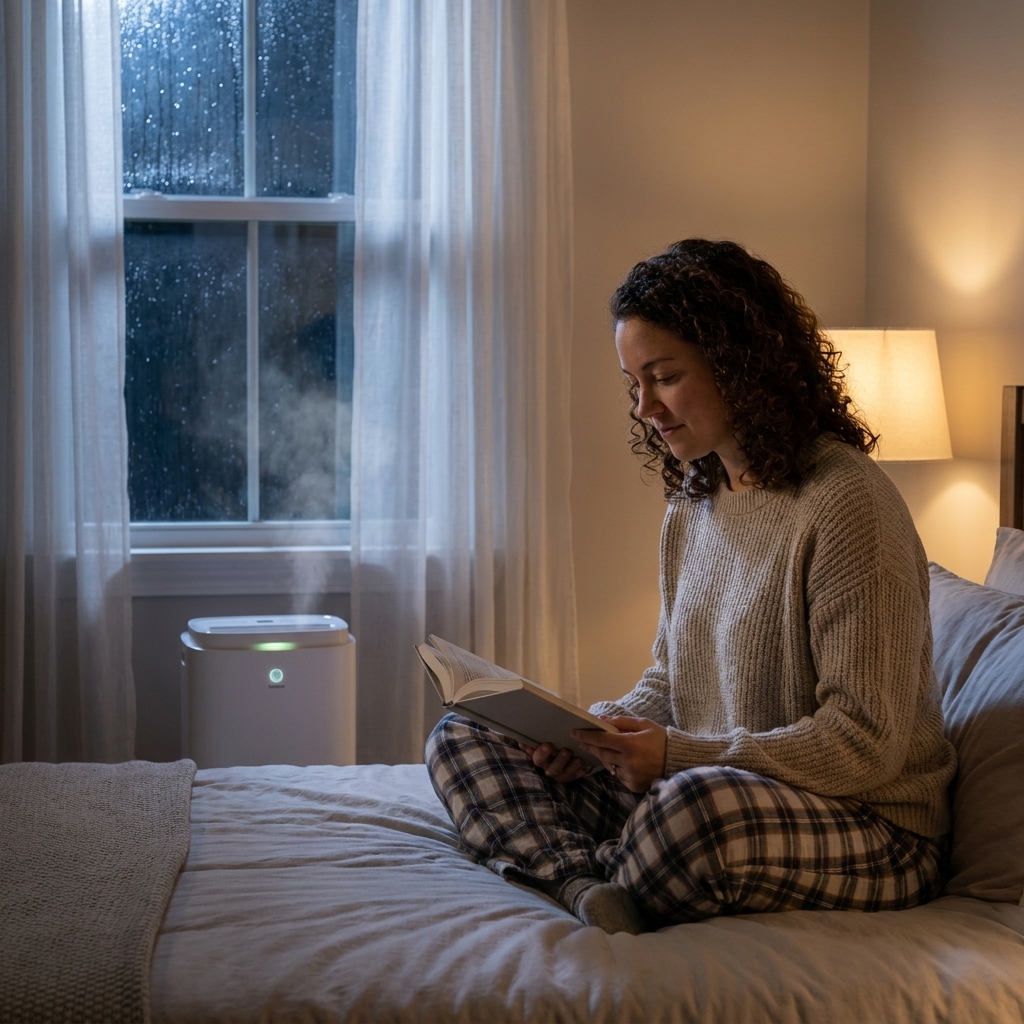
- Use a dehumidifier if you live in a humid climate or have a damp lower level bedroom.
- Run bathroom fans during and after showers, especially if your bedroom is nearby.
- Check airflow and HVAC settings. Air conditioning naturally dehumidifies, but short cycling can leave humidity high even when the temperature looks fine.
- Watch for hidden moisture like damp carpets, leaks, or wet laundry drying indoors.
Thermostat timing
One of the most overlooked tricks is not the exact temperature, but when you change it.
Try a nighttime schedule
- 60 to 90 minutes before bed: set the room slightly cooler to support the natural drop in core temperature.
- Overnight: keep it steady. Big swings can trigger wake-ups.
- 1 to 2 hours before wake: a gentle warm-up can make mornings easier for some people, especially if you wake too early and cannot fall back asleep when the room feels cold.
Warm shower, cool room
It sounds backward, but a warm shower or bath 1 to 2 hours before bed can promote sleepiness by bringing blood to the skin and helping your body shed heat afterward. Pairing that with a cool bedroom can make the cooling effect stronger.
Bedding and pajamas
You can set the perfect thermostat and still sleep poorly if your bedding traps heat and moisture. Think of your bed as a small climate system.
For hot sleepers
- Sheets: cotton percale or linen tend to feel cooler and less clingy.
- Comforter: lighter fill and breathable cover fabrics help. If you use a duvet, consider a lower warmth rating for your season.
- Pajamas: lightweight, breathable fabrics. If you wake sweaty, test sleeping in fewer layers before you drop the thermostat dramatically.
For cold sleepers
- Add warmth to the body, not the room. Socks and a warmer top often improve sleep without overheating the whole bed.
- Layer smart. A blanket you can easily remove at 3 a.m. is better than one heavy comforter you wrestle all night.
Special situations
Menopause and perimenopause
Hot flashes can be intense and sudden. Environmental changes will not remove the hormonal trigger, but they can reduce how disruptive the episode feels and how long it lasts.
- Keep the room cooler than you think you need.
- Lower humidity if you are waking clammy.
- Use breathable layers so you can adjust fast.
- Consider a cooling pillow or a pillow with better airflow if head and neck heat is your main complaint.
Pregnancy
Many people run warmer during pregnancy. Focus on a cooler room, breathable bedding, and steady airflow. If you are waking up overheated and thirsty, also look at hydration earlier in the day. Drinking a lot right before bed can backfire by increasing bathroom trips.
Partners with different needs
This is extremely common, and it is solvable.
- Set the room for the hotter sleeper. It is easier to add warmth than to remove it at 3 a.m.
- Use personal layers. One partner uses an extra blanket or warmer pajamas.
- Consider separate top bedding. Two lighter duvets can prevent the nightly tug-of-war and reduce heat buildup.
Setup checklist
- Thermometer + hygrometer: measure where you sleep, not in the hallway.
- Temperature goal: start at 65°F and adjust by 1 to 2°F.
- Humidity goal: keep 30 to 50%, aim for 40 to 50%.
- Air movement: gentle circulation helps, direct wind on your face often disrupts sleep.
- Bedding: breathable base layer, adjustable warmth on top.
- Consistency: stable conditions beat perfect numbers that swing wildly.
FAQ
Is sleeping in a cold room actually healthier?
A cooler room generally supports the body’s natural drop in core temperature at night, which can make it easier to fall asleep and stay asleep. “Healthier” depends on the person, but for many adults a cooler bedroom is a straightforward way to improve sleep quality.
Why do I wake up sweaty even when the thermostat says it is cool?
Three common reasons: humidity is high, your bedding is trapping heat, or your “bed microclimate” is too warm because of foam layers, heavy comforters, or snug sleepwear. Measure humidity at the bedside and experiment with lighter bedding before you assume it is purely hormonal or stress related.
Can a fan help even if the room temperature is the same?
Yes. Air movement improves heat transfer and sweat evaporation. If the fan is too loud or blows directly on your face, try aiming it across the room to circulate air more gently.
What humidity is best for snoring or congestion?
Many people breathe more comfortably around 40 to 50% humidity. Too dry can irritate nasal passages, and too humid can worsen dust mite exposure and make the room feel stuffy. If congestion is persistent, also consider allergens, bedding wash routine, and whether you might be mouth breathing.
The Rest Pact take
If you are tired of fighting your sleep, start with what your body often needs most at night: a stable chance to cool down. Set your bedroom temperature in the mid-60s, keep humidity in the 40 to 50% range, and let your bedding do the fine tuning. In my experience, this is one of the fastest, kindest upgrades you can make, because it helps your nervous system relax without asking you to “try harder” at bedtime.
And if tonight is one of those nights where you are already dreading the heat, make one small change: lower the thermostat by 2 degrees and crack the door for a bit of airflow. Small shifts add up to deeper sleep.