A step-by-step, research-driven bedtime routine you can personalize. Learn the key levers that help your brain and body transition into deeper, more consiste...
The Rest Pact
Updated October 18, 2026
Created October 18, 2026
Sleep Aromatherapy: Essential Oils That Help You Unwind

Maya Caldwell
Maya Caldwell is a certified sleep science coach and the lead researcher at RestPact. After overcoming years of chronic insomnia, she dedicated herself to making evidence-based sleep strategies accessible, helping others build bedtime routines that lead to deep, restorative rest.
I used to think aromatherapy was “nice, but optional” for sleep. Then I hit the kind of burnout where your body is exhausted but your brain is still sprinting. One of the first tools that helped me downshift at night was scent, not as a magic switch, but as a reliable cue. When you use the same calming aroma the same way each evening, your nervous system starts to recognize it as part of the landing sequence.
Sleep aromatherapy works best when you treat it like a signal, not a sedative. Below is the science-informed reason scent can feel regulating, which essential oils have the best support for relaxation, and exactly how to use them safely in a bedtime routine.
Why scent can feel calming
Your sense of smell is wired differently from your other senses. Odor signals travel from the nose to the olfactory bulb and then to networks involved in emotion, memory, and threat detection. That close linkage is one reason a smell can feel soothing or irritating fast, without a lot of conscious thought.
From a sleep coaching perspective, aromatherapy is most useful for two jobs:
- Lowering pre-sleep arousal. If your heart rate feels elevated, your thoughts are looping, or you feel “tired but wired,” a calming scent can support relaxation.
- Strengthening behavioral cues. Repeating the same scent as part of a wind-down routine helps condition your brain to associate that aroma with “it’s safe to power down now.”
Important nuance: essential oils do not replace the core drivers of sleep such as light exposure, circadian timing, and sleep pressure. Think of them as a supportive layer that can make winding down feel smoother, especially on stress-heavy evenings.
Best oils for bedtime
Not every oil marketed for sleep is backed by strong evidence. Lavender has the most consistent human research behind it. For the others, the data is more limited, often based on small clinical studies, specific populations, or relaxation outcomes rather than hard sleep measurements. Still, many people find these scents genuinely helpful when used gently and consistently.
Lavender (Lavandula angustifolia)
If you only choose one bedtime scent to try first, lavender is the most evidence-supported. In clinical studies (including randomized trials and reviews in certain settings), inhaled lavender has been associated with improved subjective sleep quality and relaxation in various groups, especially people with mild sleep complaints or stress-related sleep disruption.
Best for: a busy mind, stress-related tension, sleep that feels “light.”
How it smells: herbal floral, clean, classic “sleep” scent.
Roman chamomile (Chamaemelum nobile)
Chamomile is famous as a tea, and the essential oil is also used for calming. The human research on chamomile aromatherapy is smaller than lavender’s and tends to focus on relaxation and stress. That said, many people find it emotionally grounding, especially when they want comfort more than “knockout.”
Best for: irritability, nighttime restlessness, winding down after a tense day.
How it smells: warm, sweet herb-floral with a soft apple-like note.
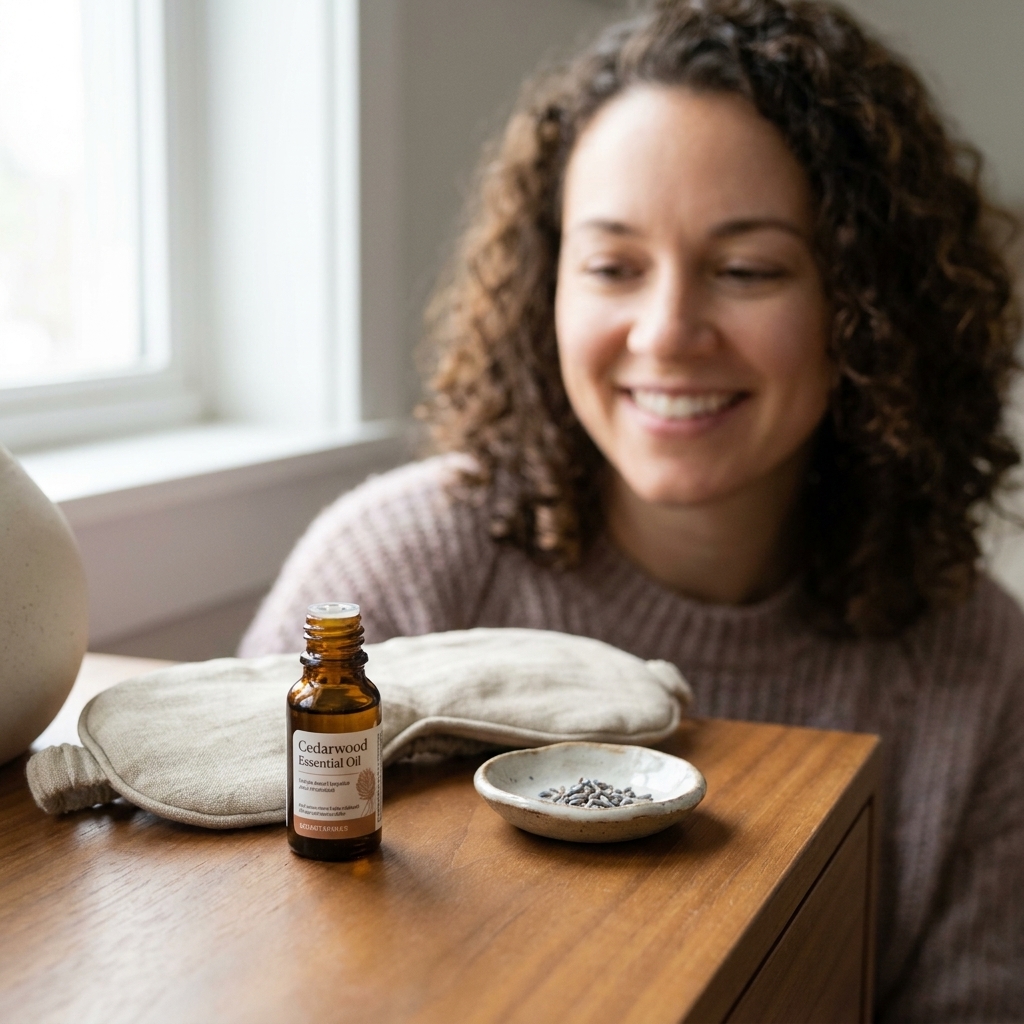
Cedarwood (Cedrus atlantica and related species)
Cedarwood is one of my favorites for people who dislike florals. Some components of cedarwood have shown calming or sedative-like effects in preclinical research, but human sleep-outcome evidence is thinner than lavender’s. In real life, it often works well as a “grounding” base note in a blend.
Best for: sensory comfort, stress decompression, pairing with lavender to deepen the base note.
How it smells: dry wood, soft resin, comforting.
Bergamot (Citrus bergamia)
Not all citrus is energizing. Bergamot is studied for stress and anxiety support, and many people find it relaxing, especially when blended with lavender or cedarwood.
Safety note: bergamot can be phototoxic when applied to skin (especially leave-on products) and then exposed to UV light, due to compounds called furocoumarins (including bergapten). This is not a concern for diffusion. If you plan to use it topically, choose an “FCF” (furocoumarin-free) bergamot and dilute properly.
Best for: stress decompression, mood support when worry feels heavy.
How it smells: citrus with floral, slightly bitter tea-like notes.
Ylang ylang (Cananga odorata)
Ylang ylang is strongly floral and can be polarizing. Some small human studies suggest relaxation effects (including changes in certain physiological markers of arousal). If you love the scent, it can be a powerful cue. If you do not, skip it. Sleep is not the time to force a fragrance.
Best for: tension release, slowing down physically.
How it smells: rich, sweet floral.
How to use oils at night
Most aromatherapy benefits come from inhalation. You do not need to perfume your entire bedroom. In fact, lighter is often better for sleep.
Option 1: Diffuser, timed and gentle
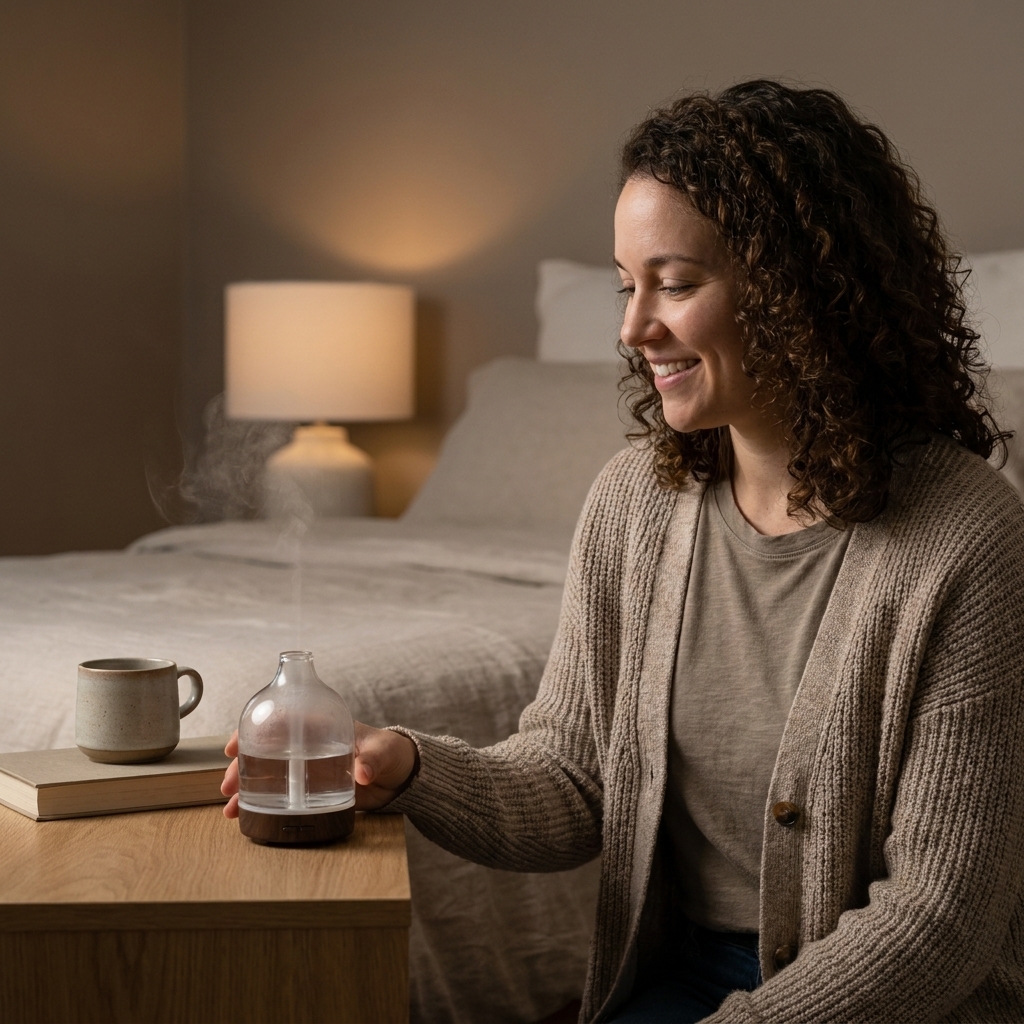
Use a diffuser for 15 to 30 minutes during your wind-down routine, then turn it off before you fall asleep. Constant scent all night can become stimulating for some people, and it increases exposure for kids and pets.
- Start low: 2 to 4 drops in a typical 100 to 200 mL water diffuser is plenty for many bedrooms. If yours is larger, follow the manufacturer’s guidance and err on the low side.
- Place it across the room: not right next to your pillow.
- Ventilate: a slightly open door can prevent the room from feeling overly scented.
- Small room rule: use fewer drops in small bedrooms or dorm rooms, even 1 to 2 can be enough.
Option 2: Tissue or cotton pad
This is my go-to for sensitive sleepers. Add 1 drop to a tissue or cotton pad, place it on your nightstand, and let it lightly scent the air. It is simple, inexpensive, and easy to stop if you change your mind.
Option 3: Linen spray (properly mixed)
A linen spray can be lovely, but dilution and formulation matter. Essential oils are highly concentrated and can irritate skin, eyes, and airways when overused.
- Use a properly formulated spray, or dilute carefully with an appropriate solubilizer. Oil plus water alone does not mix evenly.
- Spritz away from your face and let it dry before getting into bed.
Option 4: Bath or shower cue (with safety checks)
A warm shower or bath already supports relaxation by nudging body temperature in a sleep-friendly direction afterward. Adding a calming scent can deepen the cue, but never put undiluted essential oils directly into bathwater.
Also, a “carrier oil” by itself does not reliably disperse essential oils through bathwater. Without a proper solubilizer, oils can float and hit skin in concentrated droplets. The safest move is a pre-formulated bath product made for this purpose, or skip oils in the bath and use diffusion or the tissue method instead.
Easy blends for lights out
If decision fatigue hits at night, blends make this easier. Here are a few gentle combinations that tend to be widely tolerated. If your bedroom is small, cut the drop count down.
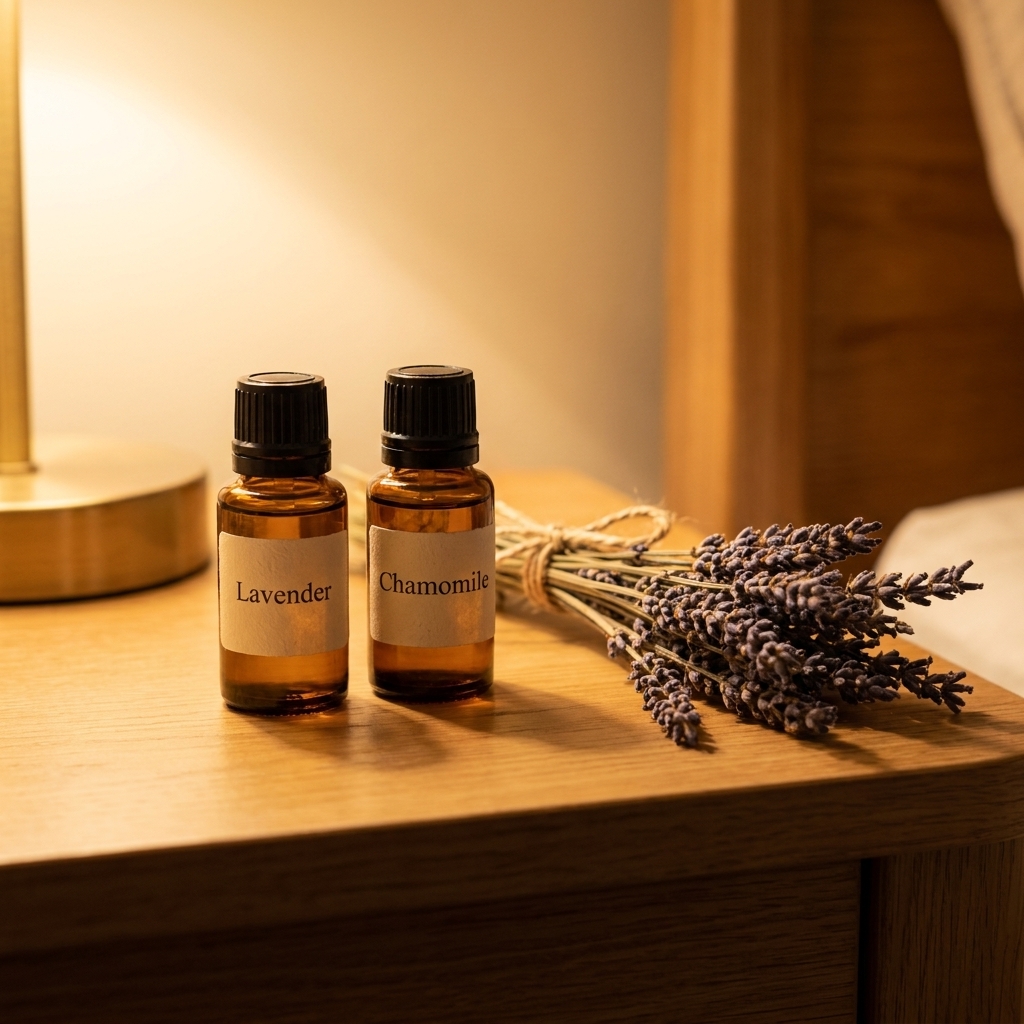
- Classic calm: 2 drops lavender + 1 drop Roman chamomile
- Woodland exhale: 2 drops cedarwood + 1 drop lavender
- Unwind without floral overload: 2 drops cedarwood + 1 drop bergamot (diffuse only)
- Deep slow-down: 2 drops lavender + 1 drop ylang ylang (use less ylang ylang if it feels strong)
Give any blend 3 to 5 nights before judging it. Your brain often needs repetition to treat a scent like a dependable sleep cue.
Safety rules that matter
I love aromatherapy, and I am also strict about safety. Essential oils are natural, but “natural” is not the same as gentle.
Key guidelines
- Do not ingest essential oils unless under the direct guidance of a qualified clinician trained in internal use.
- Keep oils away from eyes and mucous membranes.
- Do not apply undiluted oils to skin.
- Topical dilution guide: for bedtime use (especially near the face), aim low. 0.5 to 1 percent is a conservative range for many adults. That is roughly 3 to 6 drops per 1 ounce (30 mL) of carrier oil. Patch test first.
- Be cautious with asthma, migraines, and scent sensitivities. Try the tissue method with a single drop, and stop if symptoms flare.
- Use extra caution with pregnancy, infants, and children. Many oils are not appropriate. When in doubt, skip or consult a pediatrician or OB-GYN.
- Pets are more sensitive than we are. Risk depends on the oil, concentration, ventilation, and exposure time. Cats are often at higher risk because of how they metabolize certain compounds. Avoid diffusing in closed rooms where pets cannot leave, keep doses low, and ask your veterinarian if you have concerns.
- Quality matters. Look for the Latin name on the bottle and clear sourcing. Third-party testing can help (you may see references to GC-MS or GC-MS reports). Also note that “fragrance oils” are not the same as essential oils.
Common oils I skip at bedtime
This is not a full list, just a practical heads-up. Many people find peppermint and rosemary too stimulating at night. Eucalyptus can feel sharp or irritating for some airways, especially in higher doses. If you are trying to fall asleep, choose softer, gentler scents and keep the dose low.
When to stop
If you notice headache, nausea, throat irritation, coughing, itchy eyes, or a sudden spike in alertness, your nervous system is telling you that scent is not supportive right now. Turn it off, air out the room, and switch to a non-scent wind-down cue like dim light plus a book.
A routine you can use tonight
If you want a simple plan that does not turn into a new “sleep project,” try this:
- 60 minutes before bed: dim lights, set your phone to Night Shift or similar, and choose one scent (lavender is a safe starting point for many).
- 30 minutes before bed: start a diffuser for 15 to 30 minutes, or place a 1-drop tissue on your nightstand.
- While the scent runs: do one calming activity only: light stretching, a warm shower, journaling, or reading.
- At lights out: diffuser off. Keep the room cool, dark, and quiet.
- If you wake at night: do not add more scent. Keep stimulation low and let sleep pressure rebuild.
The goal is consistency. A small, repeatable routine beats a complicated one every time.
FAQ
Can aromatherapy improve sleep, or does it just feel nice?
For many people, it can do both. The best evidence is for improvements in subjective sleep quality and relaxation, especially when aromatherapy is used as part of a predictable wind-down routine. If your insomnia is severe or persistent, aromatherapy is best viewed as a supportive layer alongside evidence-based behavioral strategies.
What is the best essential oil for anxiety at night?
Lavender and bergamot are common picks for stress and anxiety support. If you are sensitive to fragrance, cedarwood is often easier to tolerate than many florals. The best oil is the one that smells calming to you and does not trigger headaches or irritation.
Should I diffuse essential oils all night?
Most people do better with timed diffusion during the wind-down period rather than continuous diffusion overnight. Sleep is a time when less stimulation is usually better, and limiting diffusion also reduces exposure for kids and pets.
Is lavender safe every night?
For many adults, light inhalation use is well tolerated. Keep it low-dose, take breaks if you notice irritation or headaches, and be more conservative if you are pregnant, have respiratory conditions, or have children or pets in the home.
My bottom line
Sleep aromatherapy is not about knocking yourself out. It is about creating a calm, familiar cue that tells your brain: we are done for the day. Start with one oil, keep the dose gentle, and use it consistently during a quiet wind-down routine. If your body relaxes even 5 percent faster, that is a real win, and those small wins add up to deeper, steadier rest.