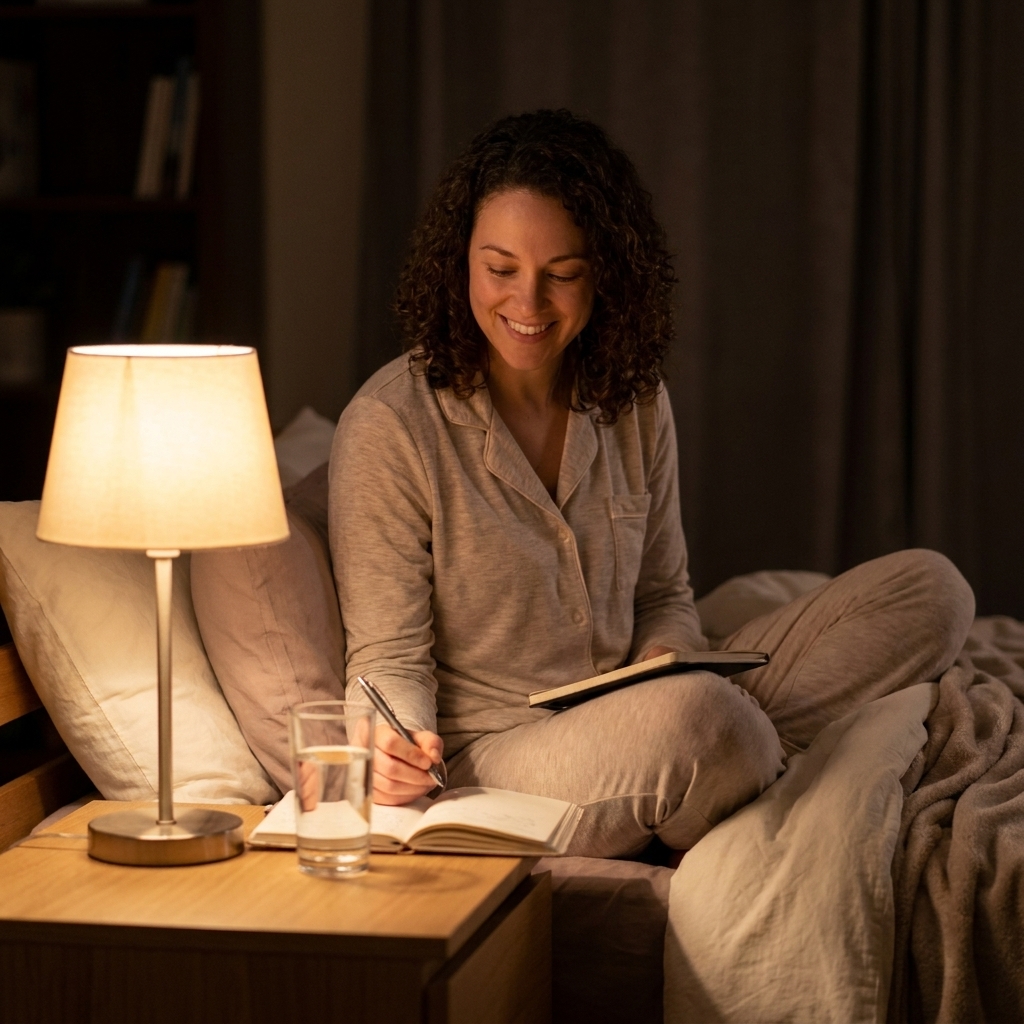
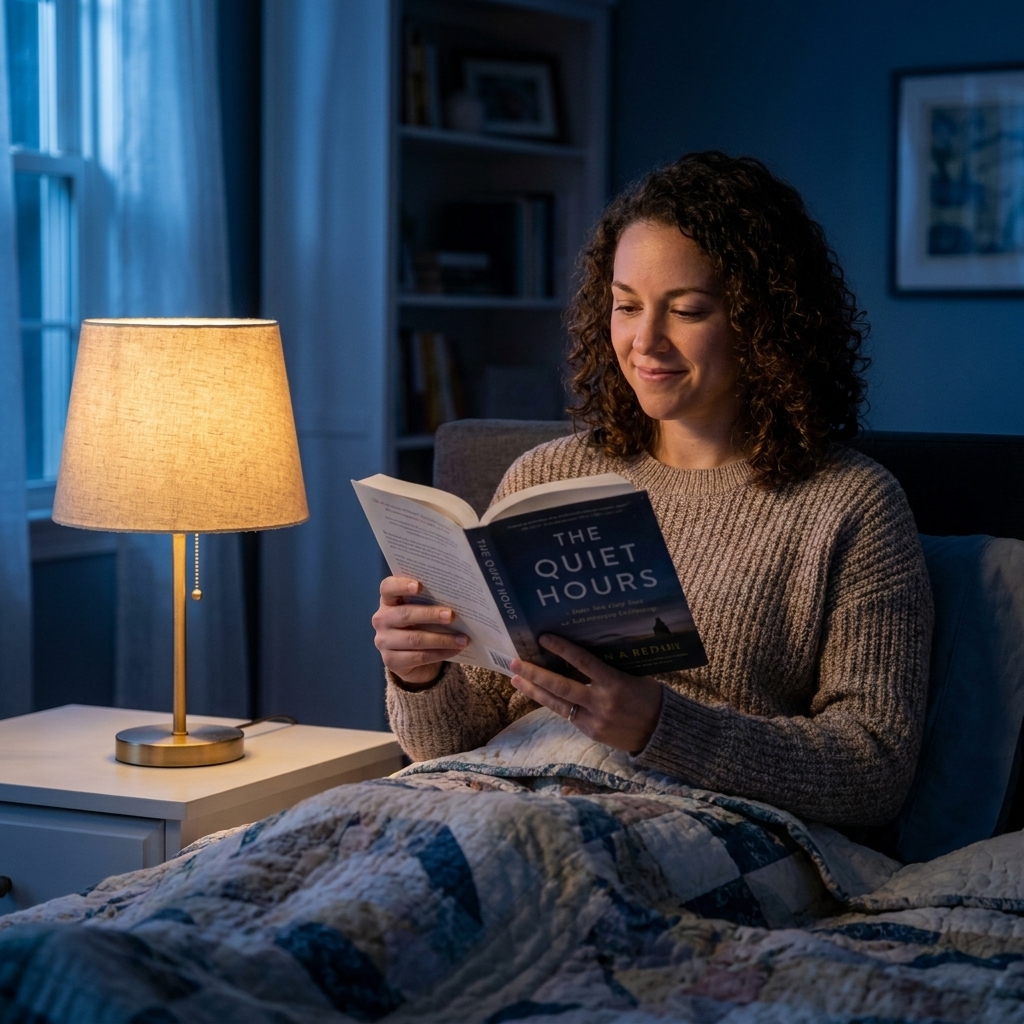
A step-by-step, research-driven bedtime routine you can personalize. Learn the key levers that help your brain and body transition into deeper, more consiste...
The Rest Pact
Updated October 18, 2026
Created October 18, 2026
7 Screen-Free Wind-Down Activities Before Bed

Maya Caldwell
Maya Caldwell is a certified sleep science coach and the lead researcher at RestPact. After overcoming years of chronic insomnia, she dedicated herself to making evidence-based sleep strategies accessible, helping others build bedtime routines that lead to deep, restorative rest.
For most of my project-manager decade, my “wind-down” was answering one last email in bed and then wondering why my brain felt like it was running a sprint at midnight. If that sounds familiar, you are not broken. You are stimulated.
Screens do two unhelpful things close to bedtime: they keep your mind cognitively “on,” and they can expose you to bright, blue-enriched light at the exact time your body would rather be shifting into night mode. Light intensity, spectrum, and timing all matter, and content-driven arousal is a separate pathway. You do not need a perfect digital detox to sleep well, but you do need a gentler runway into the night.
Below are seven screen-free wind-down activities I recommend often in my sleep coaching work. Pick one or two, keep them simple, and repeat them enough that your brain starts to recognize: this is the part of the day where we power down.
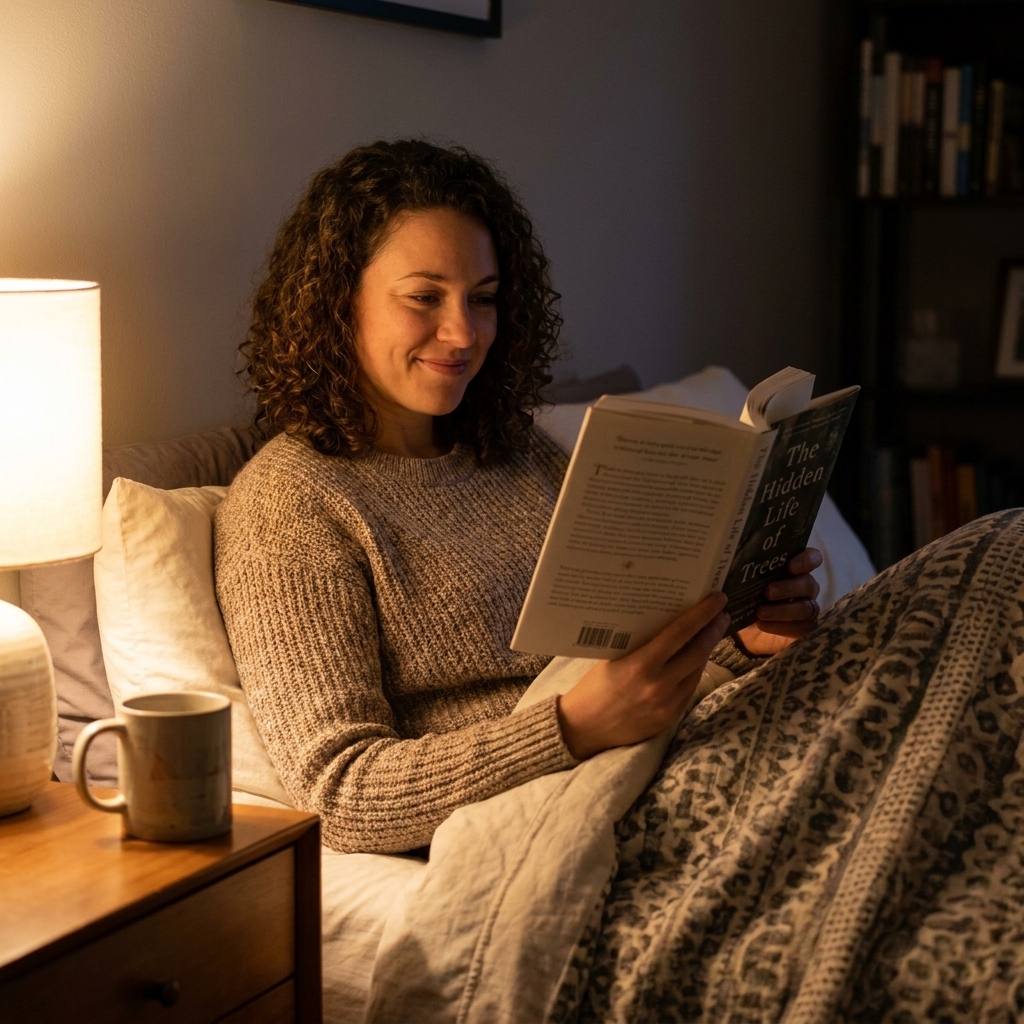
How to use this list
The most effective wind-down routine is not the fanciest. It is the one you will do on a regular Tuesday.
- Keep it short: Aim for 10 to 30 minutes. Longer is optional.
- Keep it low-stimulation: Dim lights, warm light if possible, and quiet surroundings.
- Make it repeatable: Same activity, same general time, most nights.
- If you are wide awake: Choose the calmest option here. If you get frustrated in bed, do your wind-down activity outside the bed, then return when sleepy.
Bonus basics: A cool, dark, quiet bedroom supports everything below. Even small changes, like lowering the thermostat or using a sleep mask, can help.
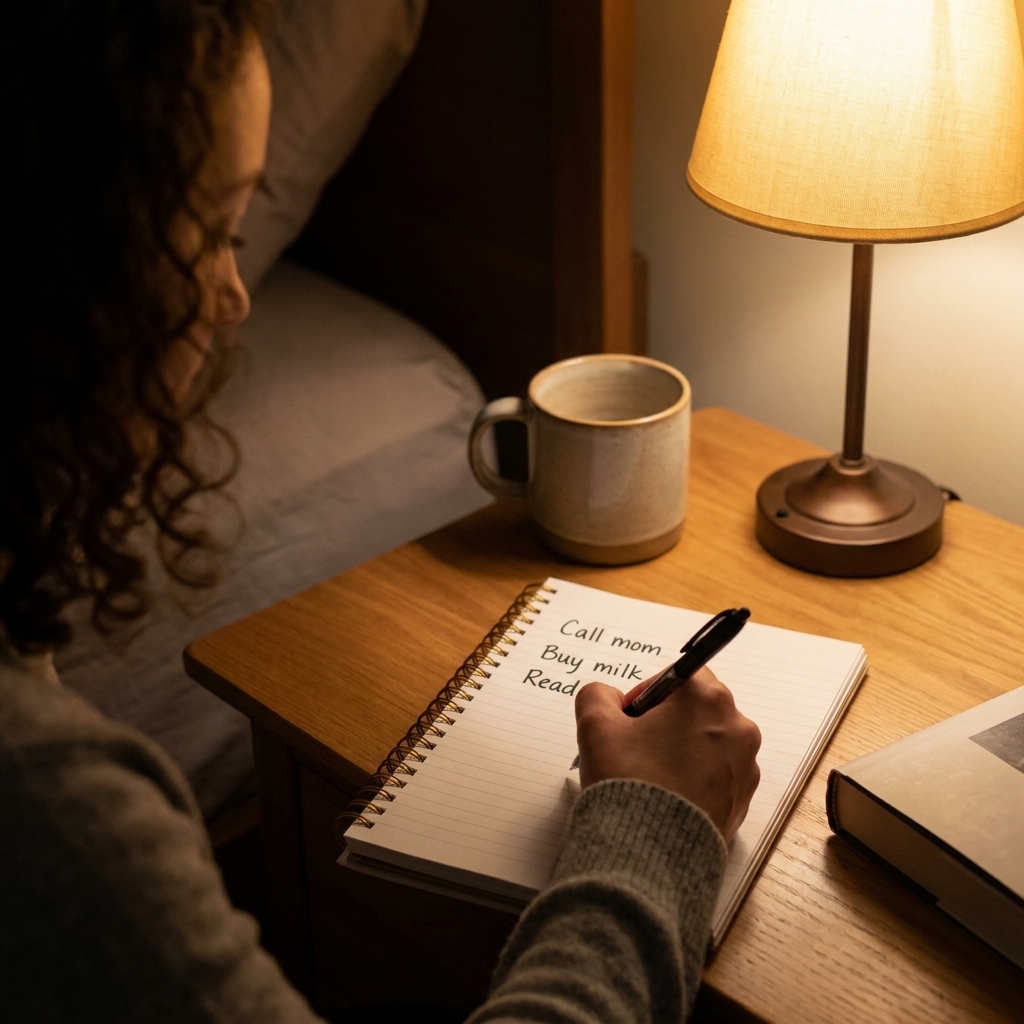
1) Brain dump plus tiny plan
If your mind starts doing its best work the moment your head hits the pillow, you are not imagining it. In bed, your brain finally has quiet space, so unfinished tasks tend to surface. A structured brain dump helps you move those thoughts out of working memory and onto paper.
How to do it
- Set a timer for 5 minutes.
- Write every worry, task, idea, and “do not forget” as fast as it comes.
- Then take 2 minutes to make a micro-plan: pick the top 1 to 3 items for tomorrow and write the very first step for each.
Why it works: Expressive writing and a simple plan can help many people feel more “closed loop” at night, which may reduce rumination and make it easier to let go.
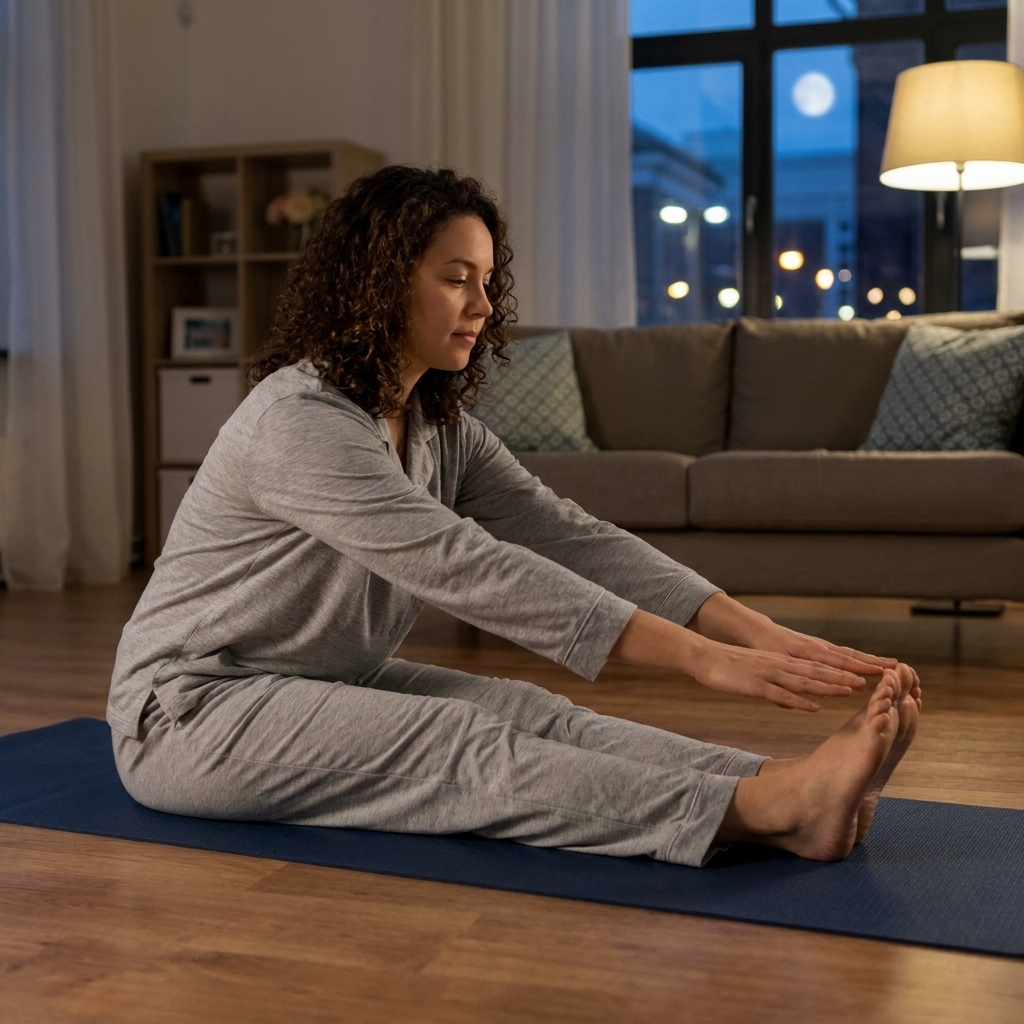
2) Light stretching
Think “unclench” more than “workout.” We want to reduce muscular tension and invite slower breathing, not spike heart rate.
A simple sequence
- Gentle neck turns or side bends, 30 seconds each side (skip anything that causes pain or dizziness)
- Shoulder circles, 10 slow reps
- Standing forward fold with soft knees, 30 to 60 seconds
- Child’s pose or knees-to-chest on the floor, 60 seconds
- Legs up the wall, 2 to 5 minutes (optional, very calming)
Make it sleep-friendly: Keep lights dim, move slowly, and stop well before you feel “worked.” If stretching energizes you, switch to option #3 or #6 instead.
3) Warm shower or wash-up
A warm shower about an hour before bed can be a powerful cue. When you warm the skin and then step out into cooler air, it can support a subsequent drop in core body temperature, which is one of the signals that helps your body drift toward sleepiness.
Make it a ritual
- Keep it short: 5 to 15 minutes.
- Use the same scent each night if you like (lavender is popular, but choose what you associate with calm).
- Afterward, do a simple skincare routine or brush and floss slowly, like a closing ceremony for the day.
If showering wakes you up: Try a warm foot soak instead. It is surprisingly soothing and less stimulating.

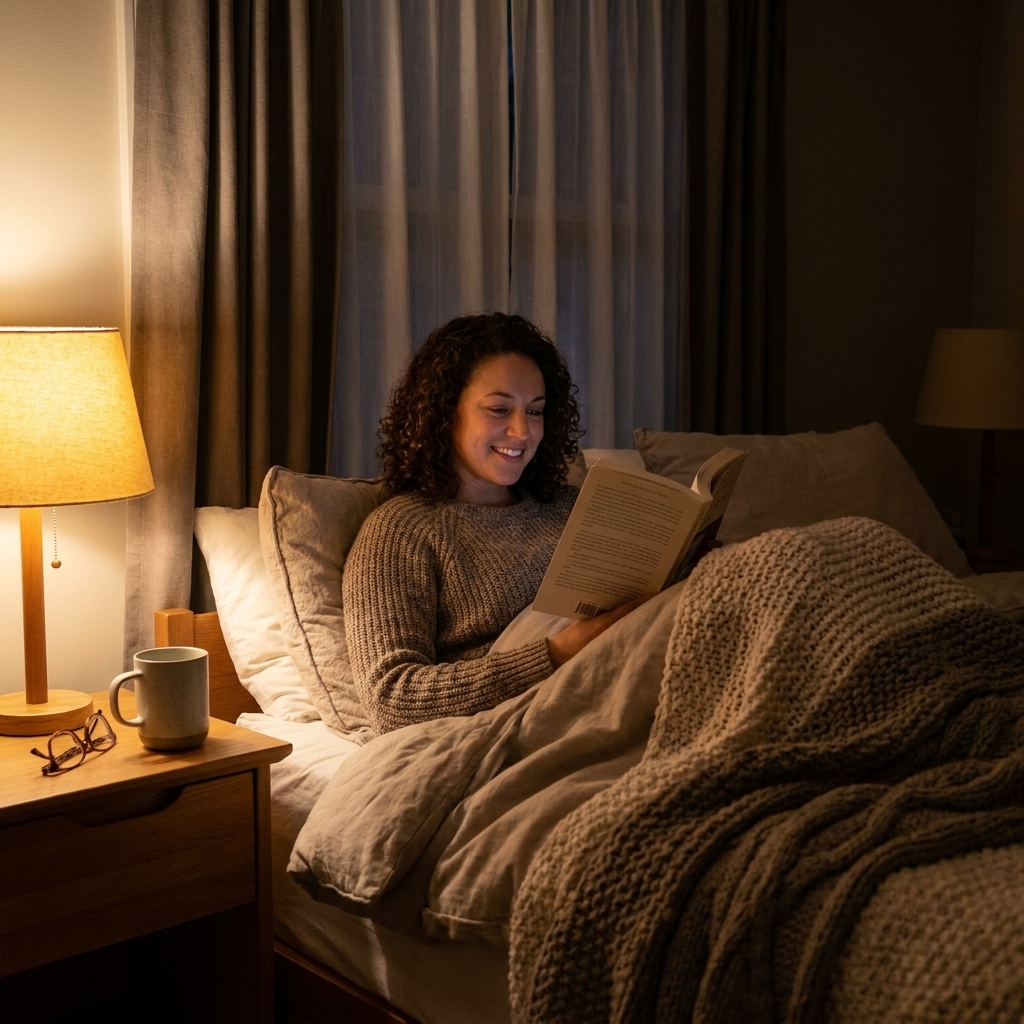
4) Comfort reading on paper
I love a good e-reader, but if the goal is screen-free, go old-school: a paperback, a magazine, or even a well-loved cookbook. Choose content that is interesting enough to hold your attention, but not so gripping that you keep bargaining for “one more chapter.”
What to read
- Best: gentle fiction, essays, nature writing, familiar re-reads
- Okay: light nonfiction that is not work-related
- Avoid: thrillers, upsetting news, anything that makes you solve problems
Pro tip from a Pacific Northwest resident: Pair paper reading with a warm bedside lamp and blackout curtains. That combo signals night in a way your brain can feel.
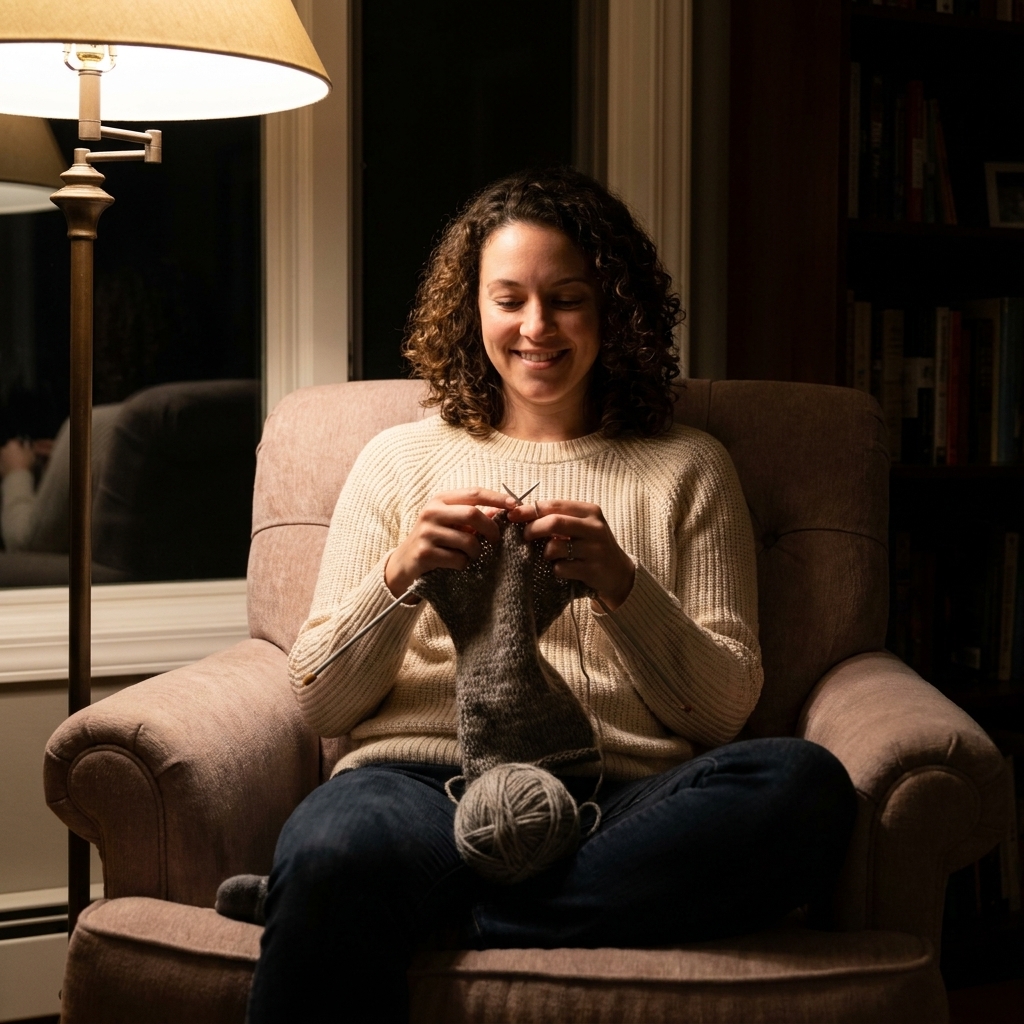
5) Low-stakes hands-on task
When people tell me, “I can’t meditate, my brain won’t stop,” I often suggest a quiet, repetitive task instead. Giving your hands something simple to do can reduce mental chatter without requiring intense focus.
Ideas that work well
- Knitting or crocheting
- Simple coloring (not on a tablet)
- Jigsaw puzzle for 10 minutes
- Fold tomorrow’s outfit or prep your coffee setup
- Brush a pet slowly and gently (if your pet enjoys it)
Keep the bar low: The goal is not productivity or perfection. It is steadiness.
6) Guided wind-down (audio)
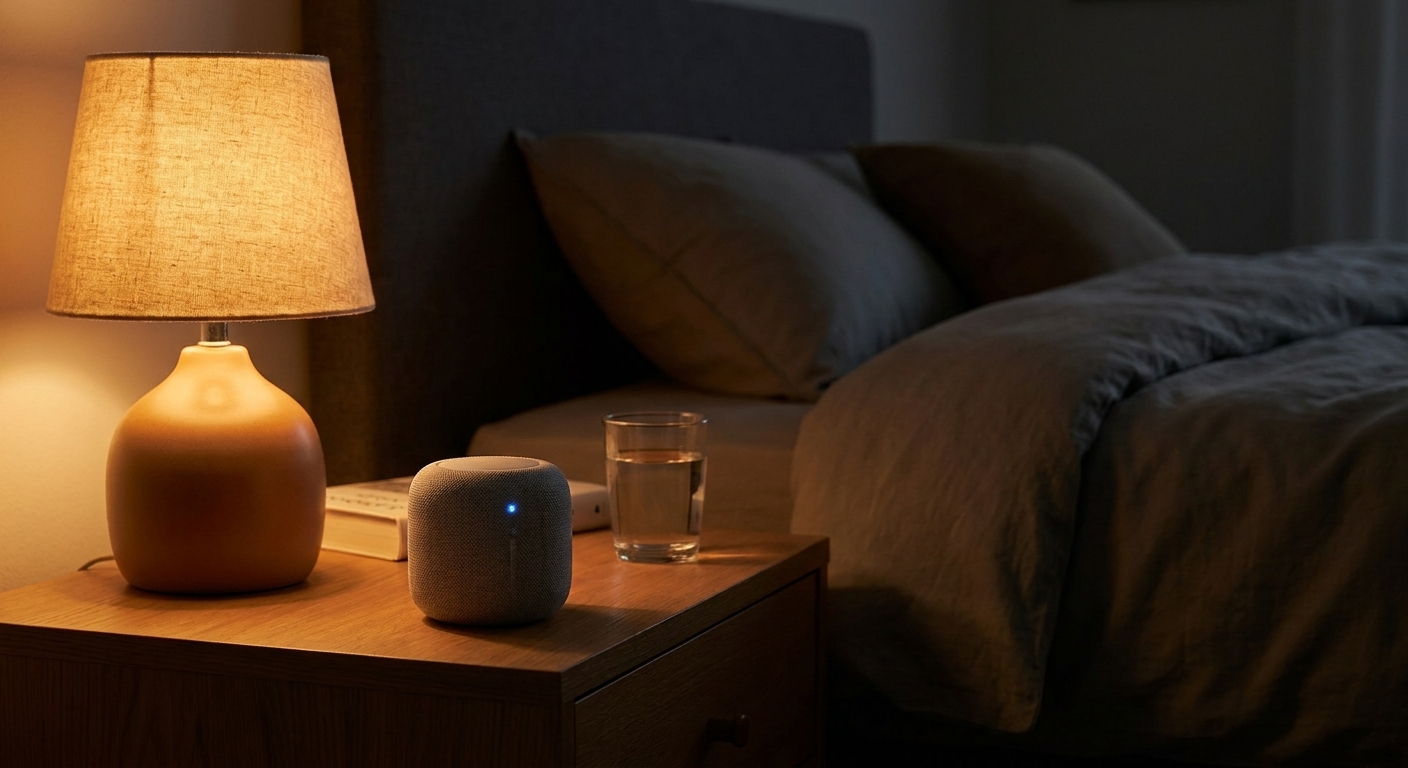
Screen-free does not have to mean sound-free. If silence makes your thoughts louder, use audio to guide your nervous system down a notch.
Ways to keep it screen-free
- Use a smart speaker with the screen off
- Play an audio track on your phone placed face down across the room
- Use a small Bluetooth speaker and start the track before you enter your bedroom
What to play: body scan audio, progressive muscle relaxation, yoga nidra, or a slow bedtime story for adults. Choose a voice and style that feels safe and boring in the best way.
Why it works: Techniques like progressive muscle relaxation and body scans can reduce physiological arousal, which is a fancy way of saying they help your body stop acting like it is still daytime.
7) A simple breathing practice
You do not need a perfect breathing technique. You need a simple one you will use when you are tired. I like breathing patterns that gently lengthen the exhale, because longer exhales tend to support relaxation.
Try this: 4-6 breathing
- Inhale through the nose for 4
- Exhale slowly for 6
- Repeat for 3 minutes
If 4-6 feels strained, make it 3-4 or 4-5. Comfort matters more than the numbers. If slow breathing makes you anxious or lightheaded, return to normal breathing and switch to a different wind-down option.
Small mindset shift: Your job is not to force sleep. Your job is to create the conditions where sleep is likely to show up.
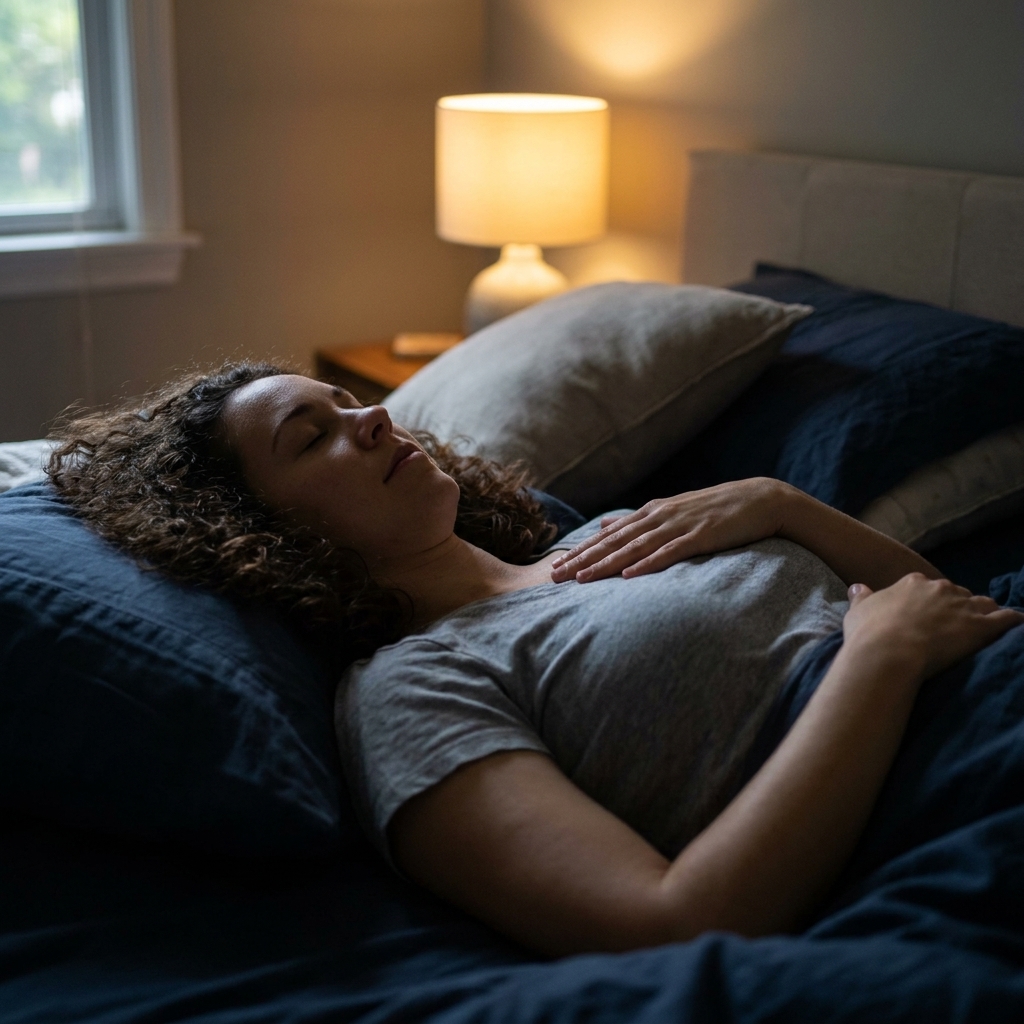
Build a 30 to 60 minute wind-down
If you want a simple formula, here is a mix-and-match routine I use with clients who feel wired at night:
- Minute 0 to 5: Brain dump plus tomorrow’s tiny plan
- Minute 5 to 15: Light stretching or a warm wash-up
- Minute 15 to 30: Paper reading or a hands-on activity
- Last 3 minutes in bed: 4-6 breathing or a short body scan
If you only have 10 minutes, do the last two bullets. Consistency beats duration.
Common questions
Do I need to avoid screens for a full hour?
Not always, but many people sleep better with 30 to 60 minutes of lower light and lower stimulation. If an hour feels impossible, start with 15 minutes and build from there.
What if I use my phone as my alarm?
You can still go screen-free. Set the alarm, then put the phone face down and out of arm’s reach. Better yet, switch to a basic alarm clock so your bed stops being a portal to the internet.
What if I do everything right and I still cannot fall asleep?
That happens. Wind-down activities improve your odds, but they are not an instant off switch. If you are awake long enough to feel frustrated, get out of bed and do a calm, dim-light activity from this list until you feel sleepy again, then return to bed.
When should I get extra help?
If insomnia is happening 3 or more nights per week for 3 months and it is impairing daytime functioning (mood, focus, safety), talk with a clinician. Cognitive behavioral therapy for insomnia (CBT-I) is the gold-standard, evidence-based treatment and can be life-changing. Also consider getting evaluated if you have symptoms of sleep apnea, like loud snoring, gasping, or witnessed breathing pauses.