A research-first look at deep pressure stimulation: what weighted blankets may help with, what they cannot, and how to choose a safe weight if you want to tr...
The Rest Pact
Updated October 18, 2026
Created October 18, 2026
Weighted Blankets for Insomnia and Anxiety

Maya Caldwell
Maya Caldwell is a certified sleep science coach and the lead researcher at RestPact. After overcoming years of chronic insomnia, she dedicated herself to making evidence-based sleep strategies accessible, helping others build bedtime routines that lead to deep, restorative rest.
I used to be the person who would try anything at 2:00 a.m. when my brain would not turn off. White noise, magnesium, a new pillow, a new tracker, a new bedtime rule I swore I would follow. When weighted blankets hit the mainstream, I was skeptical. Then I started reading the clinical literature on deep pressure stimulation and realized there was a real physiological reason some people feel calmer under gentle, evenly distributed weight.
This article is a science-first look at what weighted blankets can and cannot do for insomnia and anxiety, plus the practical details that make or break the experience: choosing a safe weight, a usable size, and a fabric that does not turn your bed into a sauna.
What it may do to your nervous system
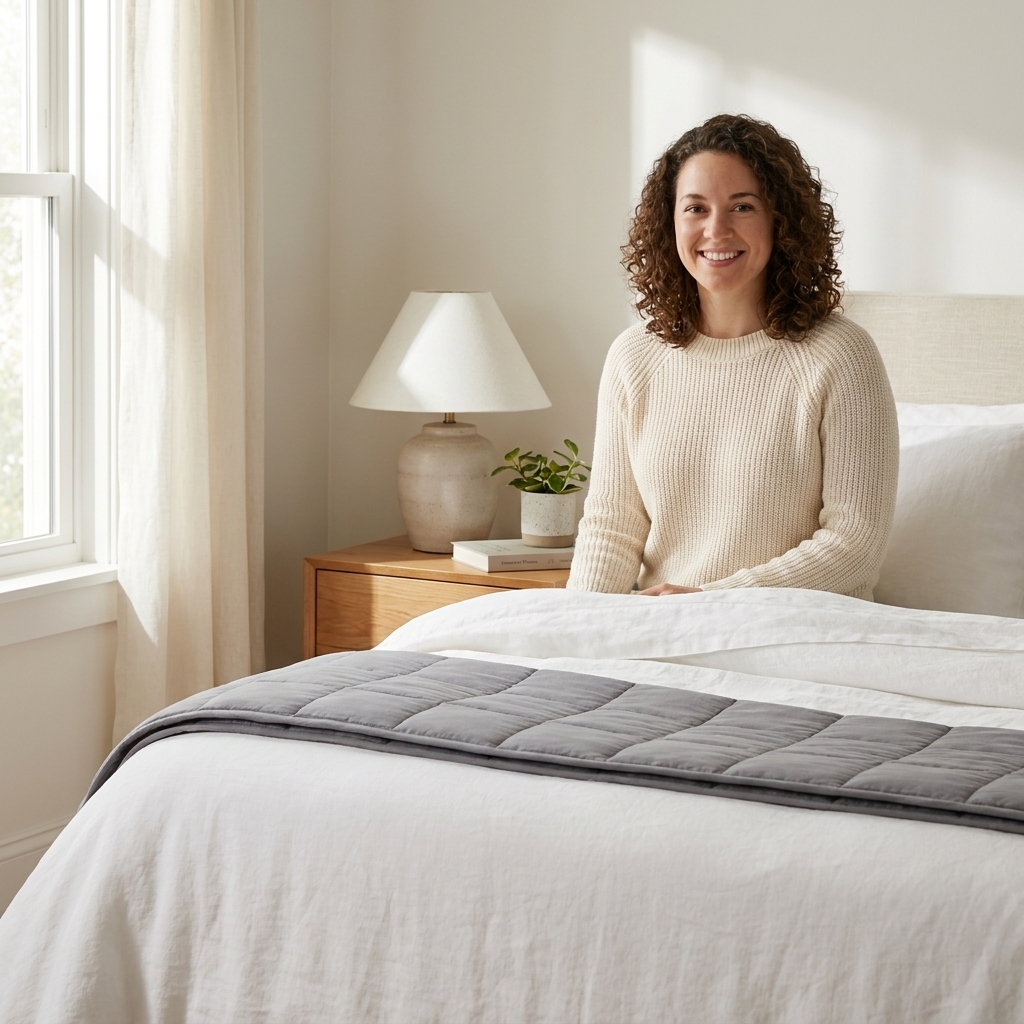
Weighted blankets are designed to provide deep pressure stimulation, meaning steady, gentle pressure across much of the body. Think of it as a full-body, low-grade hug. Pressure input is processed through the skin and deeper tissues and then integrated by the nervous system.
In practice, that pressure may support a shift away from a fight-or-flight state (sympathetic activation) toward a more restful state (parasympathetic activation). In studies, this kind of “downshift” is often inferred from outcomes like self-reported calm and anxiety, and sometimes physiological measures such as heart rate or heart rate variability.
Why it can matter for sleep
Many cases of insomnia are not about a lack of sleep knowledge. They are about hyperarousal: a body that stays on alert even when you are exhausted. Anxiety can amplify this loop, especially at night when there are fewer distractions and more room for rumination. If deep pressure helps your physiology settle, it can be easier to fall asleep and, for some people, easier to get back to sleep after a wake-up.
If your insomnia feels like you are tired but wired, a weighted blanket is a tool that may help by targeting the body’s arousal state, not just your bedtime rules.
What the research suggests
Clinical research on weighted blankets is still developing, and outcomes vary by population and by how sleep is measured. Overall, the evidence leans most consistently toward improvements in subjective calm and perceived sleep quality, with more mixed results when researchers look for big changes in objective sleep metrics.
A few peer-reviewed examples worth noting:
- Ackerley et al. (2015, Journal of Sleep Medicine & Disorders): In adults with insomnia, participants generally reported feeling calmer and liked the sensation of the blanket. Sleep outcomes were primarily self-reported.
- Ekholm et al. (2020, Journal of Clinical Sleep Medicine): In a randomized controlled trial of adults with insomnia and psychiatric diagnoses, weighted blanket use was associated with improved insomnia severity and daytime functioning, largely based on validated questionnaires.
- Gringras et al. (2014, Pediatrics): In children with autism spectrum disorder, a weighted blanket was not associated with major improvements in objective sleep outcomes, although some families and children preferred the blanket.
- Mullen et al. (2008, American Journal of Occupational Therapy): An early study of deep pressure techniques suggested short-term reductions in physiological arousal for some participants, which is part of the rationale for weighted products.
Two important takeaways follow from that mix of findings:
- This is not a stand-alone treatment for chronic insomnia or an anxiety disorder.
- Subjective benefits still matter. If a blanket helps you feel safe, settled, and less physically restless, that can indirectly support sleep even if it does not transform your sleep tracker.
Weighted blankets tend to work best as a supportive tool alongside evidence-based approaches like CBT-I (cognitive behavioral therapy for insomnia), consistent wake time, morning light exposure, and reducing long stretches awake in bed.
Who tends to like them
Anecdotally, weighted blankets seem most helpful for people who experience sleep disruption as a body problem, not only a thought problem, including:
- Body-based anxiety such as muscle tension, restlessness, or a racing physical sensation at night.
- Light sleepers who startle easily and prefer a cocooned feeling.
- Sensory seekers including some people with ADHD or sensory processing differences who find pressure regulating.
How to pick the right weight
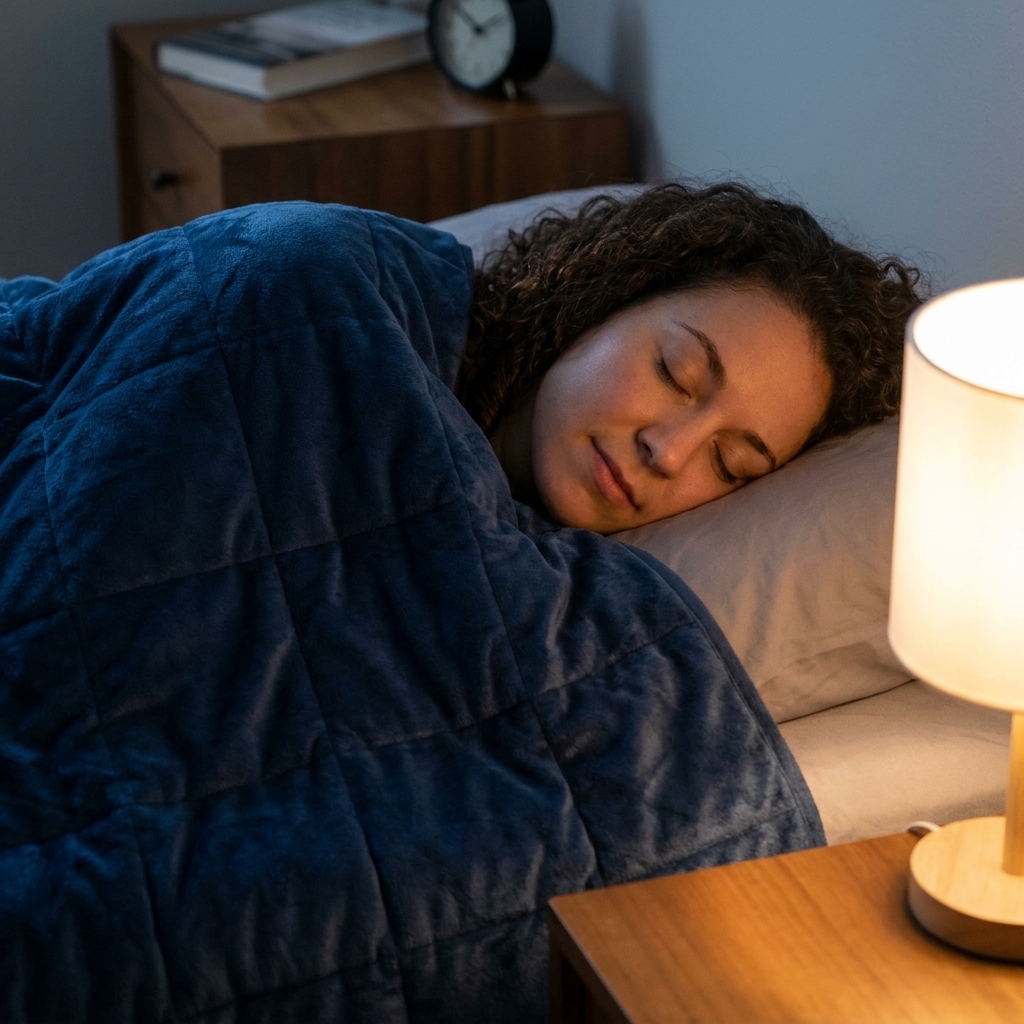
The internet loves a simple rule, and you will often see “10 percent of body weight.” That guideline can be a reasonable starting point for many healthy adults, but it is not a universal clinical standard. The right weight is the one that feels calming without making you feel trapped, overheated, or like you are fighting your bedding.
A practical starting range
Use this as a first-pass range for healthy adults:
- Start light: 7 to 10 percent of body weight is often a comfortable entry point.
- Go heavier only if it still feels effortless: Some people prefer 10 to 12 percent, especially if they already like heavy bedding.
- If you are anxiety-prone: Err lighter at first. Feeling pinned can backfire.
Safety rules that matter
- You should be able to remove it easily without straining or panicking.
- Your breathing should feel normal. Stop if your chest feels restricted or you feel air hunger.
- Keep it off your head and neck. It should rest on your body, not your airway.
- If you wake up sore: Treat that as a sign to size down or use it only for wind-down.
When to size down
Choose a lighter blanket if you:
- Run hot at night or have night sweats.
- Have shoulder, hip, or back pain that flares when turning over is harder.
- Are new to weighted blankets and unsure of your tolerance.
Choosing the right size
One of the most common purchasing mistakes is buying a weighted blanket in a standard comforter size that drapes over the sides of the bed. With weighted blankets, that can cause sliding, uneven weight distribution, and a constant tug-of-war.
Fit rules that work
- Solo sleeper: Choose a blanket that covers your body from shoulders to feet, with minimal overhang.
- Sharing a bed: In most cases, use two separate weighted blankets rather than one large one. People have different weight and temperature needs.
- If you want one shared blanket anyway: Choose a model designed for couples with reinforced edges and even fill, and expect it to feel less hug-like than a personal blanket.
Fabric and fill
A weighted blanket can be perfect on paper and still fail if it makes you overheat. Temperature is a major sleep disruptor. If your core temperature cannot drop, your brain tends to stay more alert.
Cover materials
- Cotton: Breathable, easy to wash, generally a safe all-season choice.
- Bamboo or lyocell: Often feels smoother and can be more comfortable for hot sleepers.
- Minky or plush polyester: Cozy and soft but can trap heat for some people.
- Linen: Very breathable and excellent for warmer sleepers, though the texture is more crisp than plush.
Fill types
- Glass beads: Often used in premium models because they are small and dense, which can help weight feel smoother and less bulky. Quality still depends on pocket stitching and bead containment.
- Plastic poly pellets: Often bulkier and can feel lumpier over time.
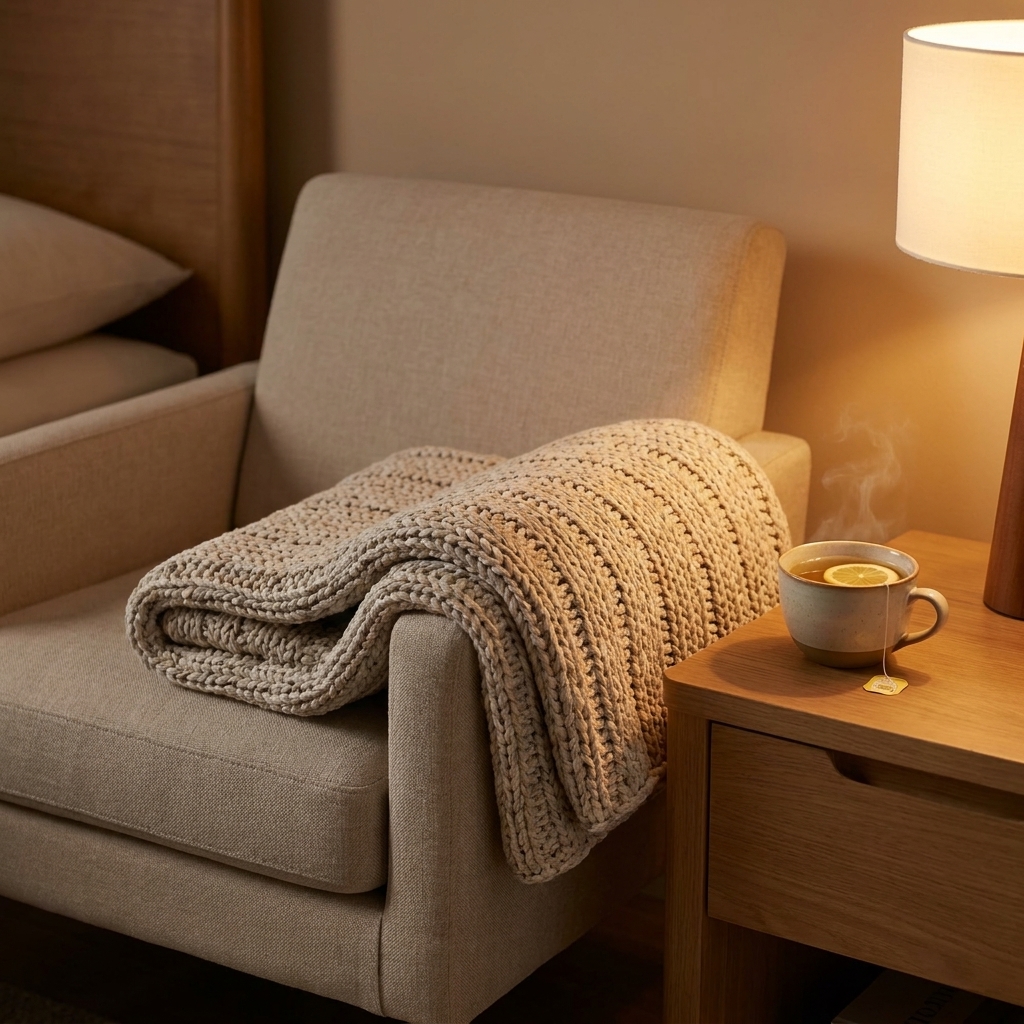
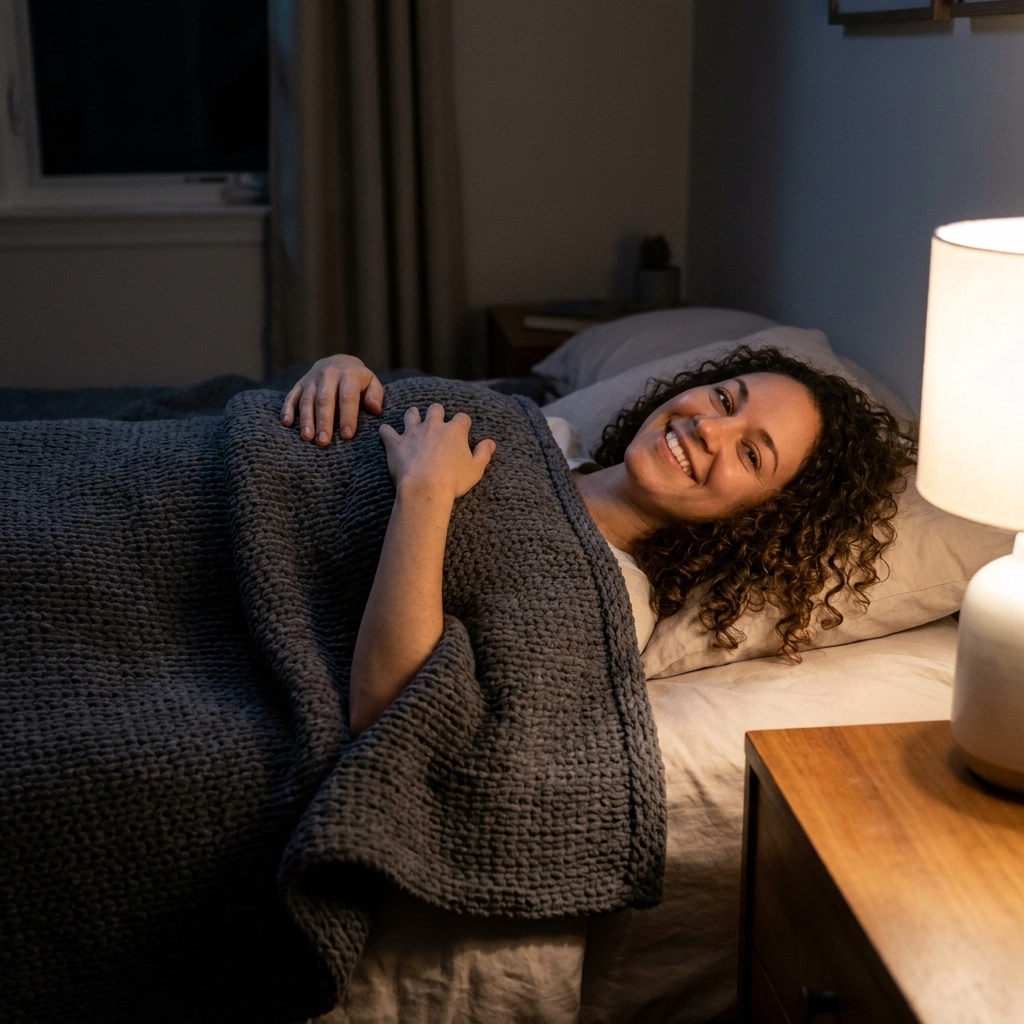
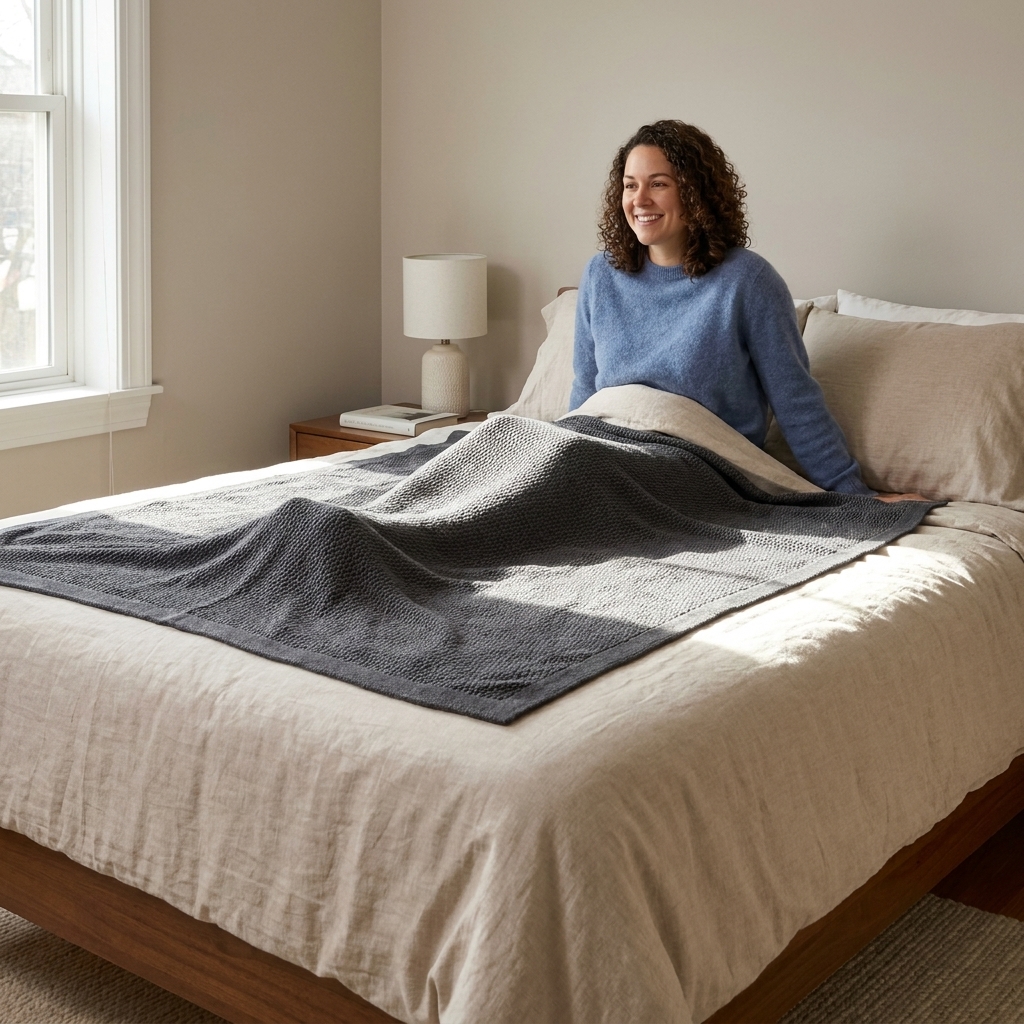
- Knitted weighted blankets: Weight comes from the yarn itself rather than beads. Many people love the airflow, but the blanket can snag and may not feel as evenly hugging for everyone.
If you sleep hot
- Glass bead fill, since it tends to add less bulk per pound.
- A breathable cover fabric like cotton percale, bamboo, or linen.
- A removable, washable duvet cover so you can adjust warmth by season.
How to use it
The best results usually come from treating a weighted blanket like a wind-down cue, not a miracle sleep switch.
A simple routine
- Start 20 to 30 minutes before lights out: Use the blanket while reading something low-stimulation or doing gentle breathing.
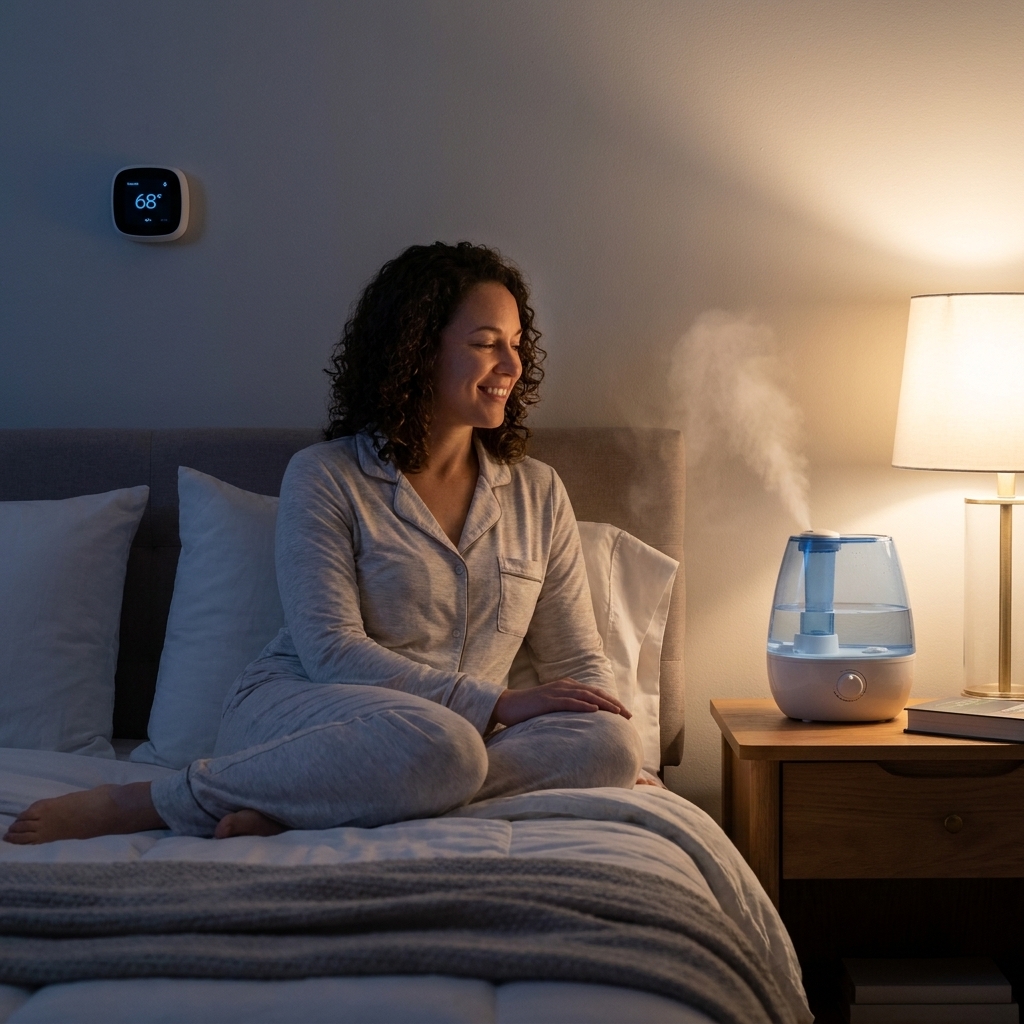
- Pair with a cool room: If you cannot cool the whole room, try cooling your feet or using a breathable sheet under the blanket.
- Use it consistently: Your nervous system learns by repetition.
What to expect
If it is a match, many people notice the biggest benefit as a sense of calm within minutes. Sleep changes, if they happen, are usually subtler. Give it a fair trial of about one to two weeks before deciding, unless you feel breathless, panicky, overheated, or sore, in which case stop and reassess immediately.
If you feel anxious under it
This is more common than people admit. If you feel panicky:
- Try half-body use first, like across your legs and hips only.
- Switch to a lighter weight.
- Try a more breathable fabric so warmth is not contributing to the sensation.
Safety and who should avoid it
Weighted blankets are generally safe for many healthy adults, but there are real exceptions. When in doubt, ask a clinician who understands your medical history and your sleep.
Check with a clinician first if you have
- Sleep-disordered breathing such as obstructive sleep apnea, especially if it is untreated or you struggle with breathing at night.
- Breathing or respiratory conditions that could be worsened by extra weight or restricted chest movement.
- Neuromuscular weakness or any condition that makes it hard to shift positions or remove the blanket independently.
- Mobility limitations that make it hard to get free of the blanket quickly.
- Circulatory issues or conditions affecting sensation or skin integrity.
- Claustrophobia or panic disorder that is triggered by pressure or confinement.
- Pregnancy: Some people find weight soothing, but comfort, temperature, and breathing can change quickly. A lighter blanket and clinician guidance are prudent.
Children and weighted blankets
Safety guidance is stricter for kids. Weighted blankets should not be used for infants, and they are generally not recommended for toddlers unless a clinician specifically directs it due to suffocation and entrapment risk. If you are considering a weighted blanket for a child, discuss it with a pediatrician or an occupational therapist, especially if the child has medical, developmental, or sensory considerations.
Care and maintenance
The unglamorous truth is that a heavy blanket is also a heavy laundry problem. Before you buy, check the care label and make sure your setup can handle it.
- Check washer capacity: Many inserts are too heavy for a standard machine when wet.
- Prefer a removable cover: It is easier to wash weekly, and it reduces sweat and oil buildup on the insert.
- Look for internal ties: Duvet ties keep the insert from sliding and clumping.
- Plan for drying time: Thick blankets can take a long time to dry fully, which matters for mildew risk.
- Watch for bead leakage: Strong stitching and smaller quilted pockets help, but inspect seams occasionally.
Buying checklist
- Weight: Start around 7 to 10 percent of body weight. Lighter if you are heat-sensitive or anxiety-prone.
- Size: Choose a size that fits the person, not the mattress. Minimal overhang.
- Construction: Look for small quilted pockets and even fill to prevent shifting.
- Temperature: Breathable cover and dense fill (often glass beads) for less bulk.
- Washability: Removable cover, clear care instructions, and a realistic plan for cleaning a heavy item.
- Return policy: Your nervous system gets the final vote. Make sure you can return it if it is not a match.
FAQ
Can a weighted blanket help you fall asleep faster?
It can, especially if your main barrier is physical restlessness or a sense of being on edge. If your insomnia is driven by circadian timing issues, inconsistent wake times, or spending long stretches awake in bed, a weighted blanket alone may not change sleep onset much.
Can a weighted blanket replace anxiety treatment?
No. Think of it as a comfort tool that may reduce physiological arousal. For persistent anxiety, evidence-based therapy and, when appropriate, medication are worth discussing with a qualified clinician.
Is it normal to feel sore the first few nights?
Mild soreness can happen if the blanket is too heavy or if it makes you move less naturally during sleep. If you wake with aches, try a lighter weight, use it only during wind-down, or place it on your legs instead of your full body.
What if I share a bed?
Two blankets is usually the happiest solution. You each get the weight and temperature that supports your sleep, and nobody ends up in a midnight tug-of-war.
The bottom line
Weighted blankets are not a cure for insomnia or anxiety, but they can be a legitimately helpful tool for the right person. If your sleep is disrupted by hyperarousal, nighttime restlessness, or that wired feeling that makes your body refuse to settle, deep pressure stimulation may help you feel calmer at bedtime.
Start lighter than you think, size it for your body instead of your bed, and choose a breathable fabric if you run warm. Sleep is already hard enough. Your gear should make it easier, not become one more thing to fight at 1:30 a.m.