A science-backed look at weighted blankets, including citations, safety cautions, and a simple guide to weight, fit, and fabric for calmer sleep.
The Rest Pact
Updated October 18, 2026
Created October 18, 2026
Do Weighted Blankets Actually Work?

Maya Caldwell
Maya Caldwell is a certified sleep science coach and the lead researcher at RestPact. After overcoming years of chronic insomnia, she dedicated herself to making evidence-based sleep strategies accessible, helping others build bedtime routines that lead to deep, restorative rest.
I used to be the person who would buy anything that promised sleep. I was running projects on four hours a night, mainlining coffee, and telling myself I would “catch up this weekend.” Spoiler: I never did. When my body finally forced me to stop, I started reading sleep research like it was my job. It is not my job, but it became my obsession, and eventually the backbone of how I write about sleep.
Weighted blankets sit in a tricky spot. They are not snake oil. They are also not a magic off switch for anxiety or insomnia. The real story lives in the middle, in a phenomenon called deep pressure stimulation (DPS) and in what the studies do, and do not, show. In this guide, I will walk you through what DPS is, what the evidence actually suggests, and how to try a weighted blanket safely without turning it into a pricey regret.
What it does
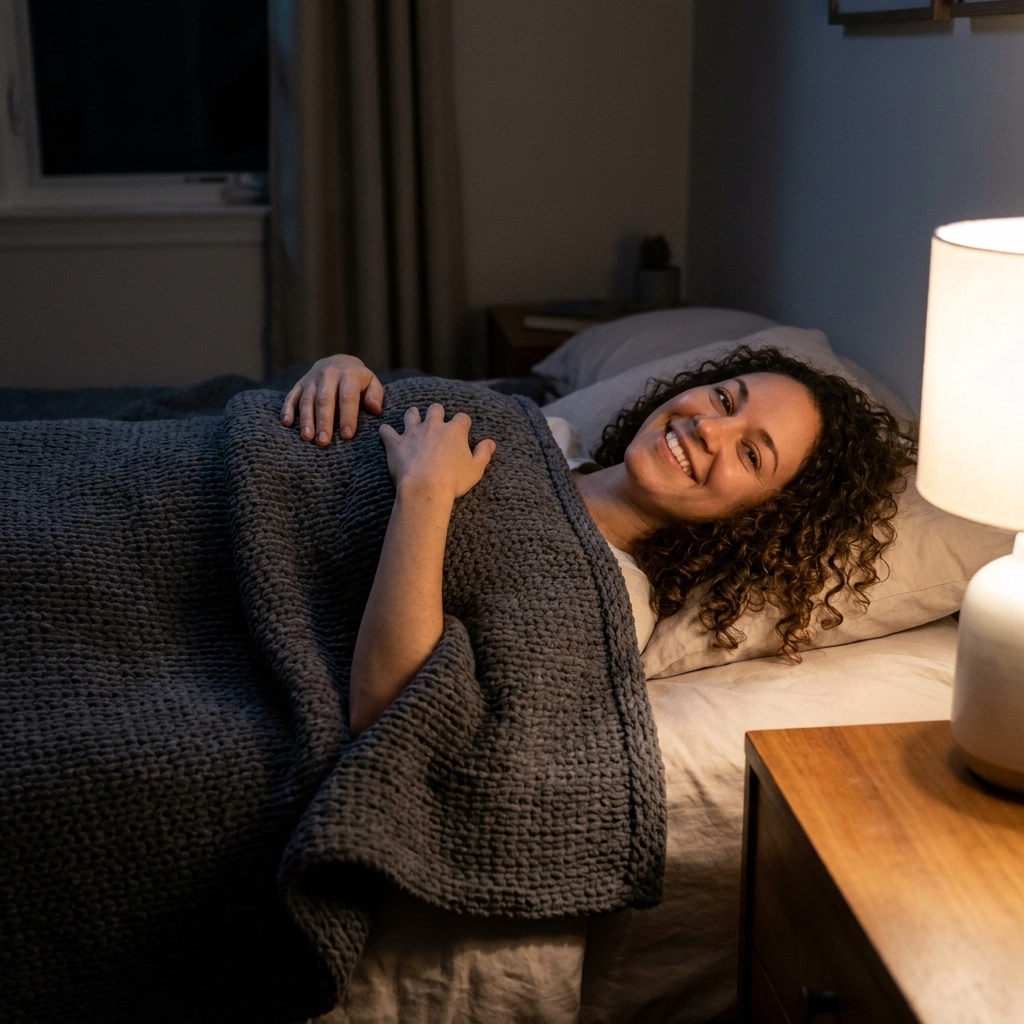
A weighted blanket applies evenly distributed pressure across the body using glass beads, plastic pellets, or densely woven fabric. That steady pressure is what people are usually referring to when they say “it calms my nervous system.”
In the clinical and occupational therapy world, this is often grouped under deep pressure stimulation, sometimes also called deep touch pressure. DPS is a form of firm, consistent tactile input. Many people experience it as grounding or “organizing,” especially when their mind is racing at night.
The likely biology
Researchers think DPS may influence autonomic nervous system balance, nudging the body away from fight or flight and toward rest and digest. In small studies, researchers have looked at outcomes like reduced physiological arousal, lower subjective anxiety, and improved feelings of security at bedtime.
What we have less evidence for is a clean, predictable pathway like “weighted blanket increases serotonin and melatonin” in a way that reliably translates into better sleep for everyone. You will see that claim a lot. The evidence for hormone changes specifically is not the strongest part of the research base.
What research shows
Overall, the evidence is promising but mixed. The strongest signals tend to show up in people whose sleep is disrupted by bedtime anxiety and arousal, rather than sleep problems driven by circadian timing issues, untreated sleep apnea, or chronic pain.
It also helps to know what studies typically measure. Many trials are small and focus on self-reported outcomes like insomnia severity, anxiety ratings, restlessness, and sleep satisfaction. Some include objective tracking, like actigraphy from a wearable. Those objective findings are where results get less consistent.
1) Anxiety and arousal
In several small clinical trials and reviews, weighted blankets are associated with reduced subjective anxiety and increased calmness. When anxiety is what keeps you awake, that shift alone can be enough to shorten sleep onset for some people.
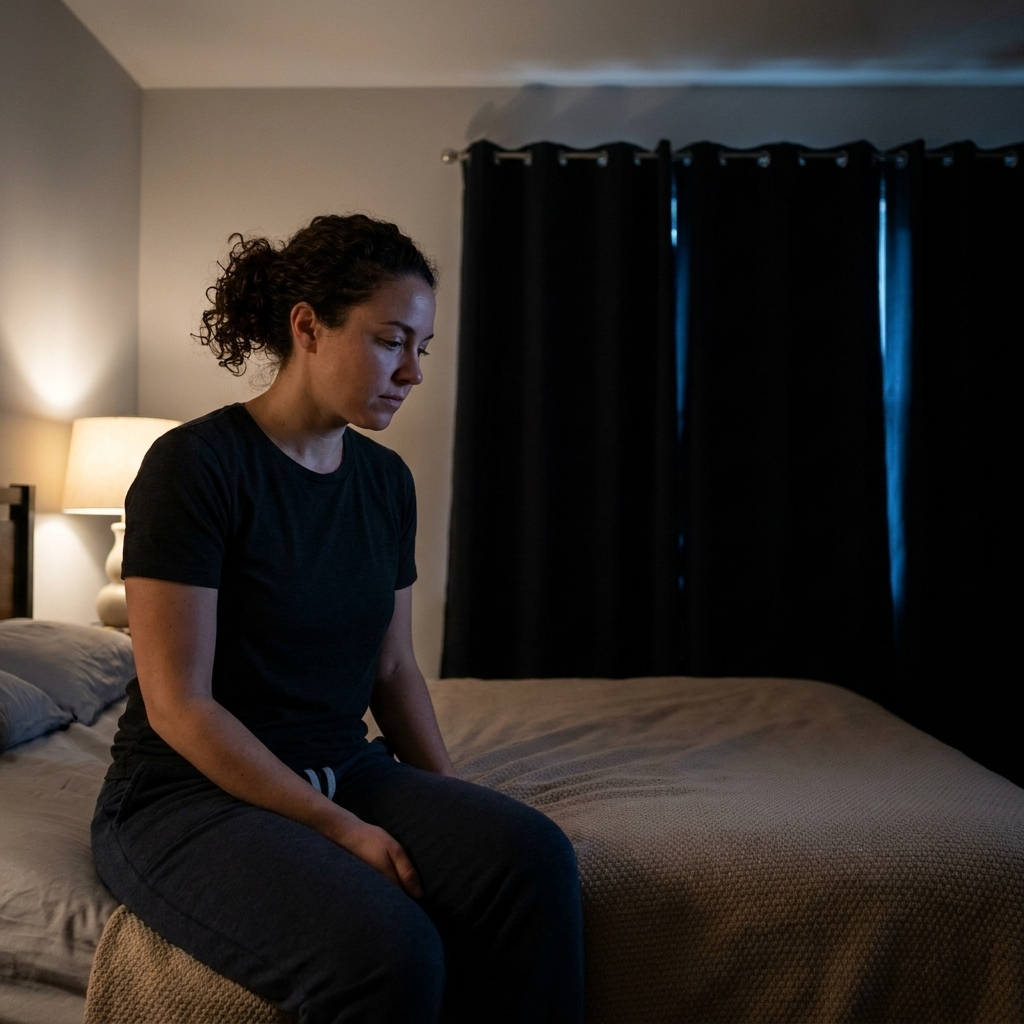
In practical terms, the benefit often looks like this: your body feels safer, your muscles unclench a notch, and your brain stops scanning for problems long enough to drift off.
2) Insomnia symptoms
Some randomized and observational studies report improvements in insomnia severity scores and self-reported sleep quality with weighted blanket use, including in people with insomnia plus comorbid anxiety or depression. Results vary by population and by what “better sleep” means in the study, whether that is falling asleep faster, fewer awakenings, or simply feeling more rested.
One pattern that shows up often: weighted blankets tend to show bigger benefits in how people feel about sleep (comfort, security, reduced restlessness) than in large, across-the-board changes on objective sleep metrics.
3) Objective tracking
When studies use actigraphy or wearables to estimate sleep time and efficiency, improvements are not consistent. That does not mean the blankets do not help. It may mean the primary effect is lowering distress and pre-sleep arousal, not reliably changing sleep architecture for every user.
If your main issue is “my body cannot downshift,” a weighted blanket is more likely to help than if your main issue is “my schedule is pushing my circadian rhythm later and later.”
A note on sources: If you want to go deeper, look for randomized trials in adults with insomnia (including psychiatric comorbidity) and for systematic reviews of deep pressure interventions. The overall theme across that literature is cautious optimism, not a guaranteed, universal fix.
Will it fix sleep anxiety?
For some people, it can meaningfully reduce sleep anxiety. For others, it is a supportive tool that makes the bed feel less activating. And for a subset, it is simply uncomfortable.
I like to frame it this way: a weighted blanket can be a regulation tool, not a treatment plan.
More likely to help
- You feel tired but wired. Your mind races and your body feels restless or jumpy.
- You seek pressure when stressed. You love heavy comforters, tight tucks, or that grounded feeling from a firm hug.
- Your insomnia is anxiety-linked. Especially rumination at bedtime or anticipatory worry about not sleeping.
Unlikely to be enough
- Your sleep is mis-timed. Night owl circadian rhythm, shift work, jet lag, irregular wake times.
- You have symptoms of sleep apnea. Loud snoring, gasping, witnessed pauses in breathing, excessive daytime sleepiness.
- You are waking from pain, reflux, or hot flashes. Pressure may comfort, but it will not fix the driver.
Picking the right weight
You will often hear the guideline: choose a blanket that is about 10% of your body weight. This is a starting point, not a rule carved into stone.
Here is what I see in real life: people who are anxious at bedtime often prefer heavier, but only up to the point where it starts to feel restrictive. If you are between sizes, I generally recommend choosing the lighter option first.
A practical approach
- Start lighter if you run hot or get claustrophobic. Overheating and panic sensations can cancel the calming effect.
- Prioritize even weight distribution. A well-constructed 12 lb blanket can feel better than a lumpy 15 lb one.
- Make sure you can move easily. You should be able to change positions without feeling trapped.
Material and heat
Many sleep complaints that sound like anxiety are actually thermal discomfort. Weighted blankets can trap heat, but how warm they feel is about the whole build: cover fabric, weave, quilting, airflow, and how tightly the blanket drapes.
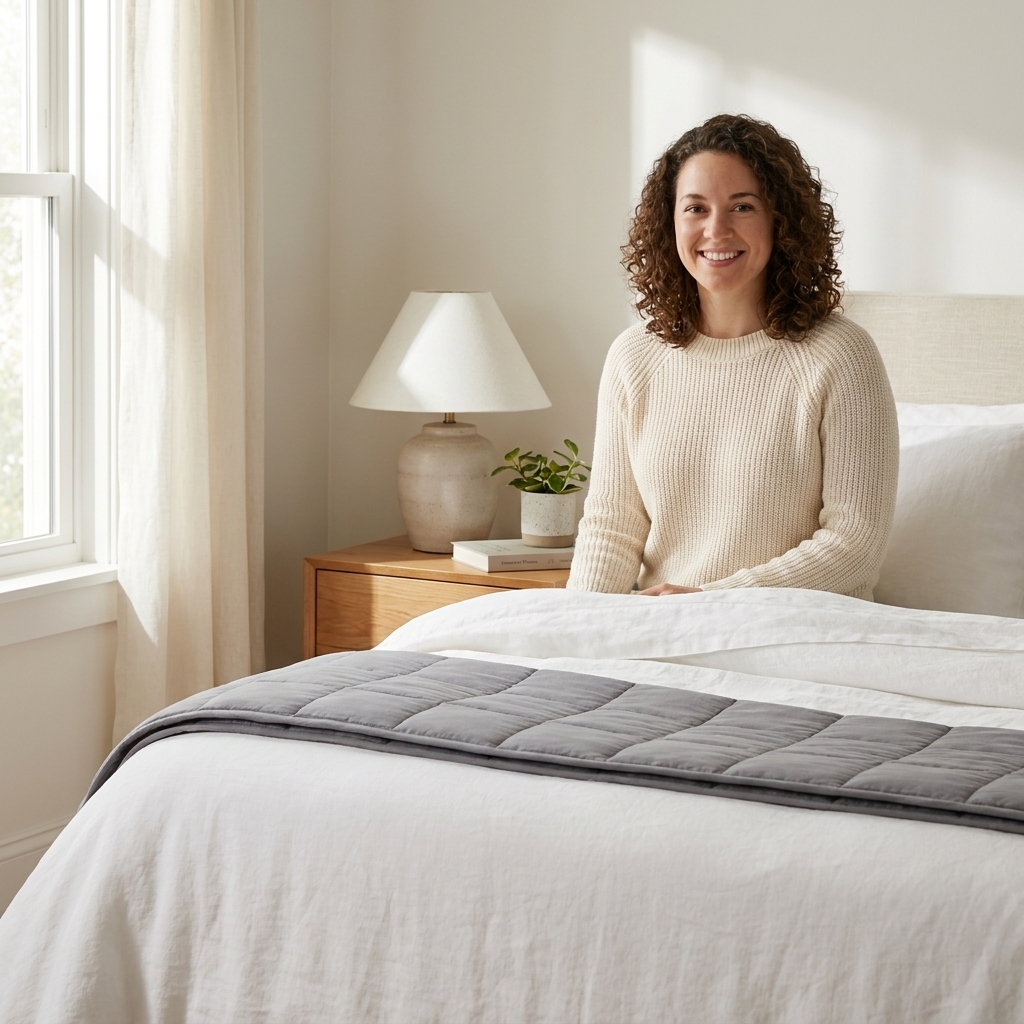
- If you sleep warm: look for breathable covers (cotton percale, linen, bamboo viscose blends) and a construction that does not feel overly dense. Some people find glass bead fills sleep cooler than certain poly fills, but there are plenty of exceptions depending on the outer fabric and quilting.
- If you sleep cold: a quilted or minky-style cover can feel soothing, but test for overheating.
Buying details people skip
- Size affects feel. A heavier blanket in a smaller size (like twin) can feel more intensely weighted than the same weight in a larger size.
- Look for a washable cover. Ideally removable, with ties or loops so the insert does not bunch.
- Check the return policy. Comfort is personal. A trial period matters.
Safety and who should skip it
Weighted blankets are generally safe for healthy adults, but safety guidance is not perfectly standardized across medical organizations, and product labels vary. If any of the below apply, treat it as a “pause and ask” moment. Consider checking with a clinician, and always follow the specific product’s age and weight limits.
- Infants and toddlers: do not use weighted blankets for infants. Avoid use in children under age 2. For older children, use only with clear pediatric guidance and appropriate sizing, and only if the child can remove the blanket independently.
- Anyone who cannot remove the blanket independently due to mobility, strength, or cognitive limitations.
- Breathing issues: if you have a condition that makes breathing effortful or if chest pressure triggers anxiety or breathlessness, talk to a clinician before using one.
- Circulation or skin concerns: if you have conditions where pressure, reduced sensation, or skin integrity is an issue, get medical guidance first.
- Severe claustrophobia or panic where pressure is a trigger.
If you try one and notice increased anxiety, heat buildup, pain, or a sense of breathlessness, that is your cue to stop. Sleep tools should make your body feel safer, not more vigilant.
How to test it
If you are curious but skeptical, a simple experiment beats wishful thinking. Give it a fair trial, and set it up so you can actually tell if it helps.
A two-week trial
- Use it only at night for the first few nights, not for long daytime naps that can shift your sleep drive.
- Keep your routine stable. Same wake time, similar caffeine cutoff, similar bedtime wind-down.
- Track one or two signals. For example: time to fall asleep (rough estimate), number of awakenings, and bedtime anxiety (0 to 10).
- Control temperature. If you are warmer than usual, your result is confounded. Try a cooler room, lighter pajamas, or a more breathable cover.
What you are looking for is not perfection. It is whether your body downshifts faster and whether you feel less apprehensive about going to bed.
Other options
If the idea of weight sounds comforting but you hate feeling pinned, you still have options that mimic some of the held sensation.
- Layered bedding without weight: a regular comforter with a tucked top sheet can create gentle containment.
- Compression or stretch knit blanket: provides a snug feel with less load on the chest.
- Body pillow or knee pillow: reduces positional restlessness and adds that anchored feeling.
- Progressive muscle relaxation: evidence-based, free, and surprisingly powerful when practiced consistently.
- Breathing with a longer exhale: for many people, this is the quickest way to lower arousal at lights out.
When to get help
If insomnia is happening at least three nights a week for three months or more, or it is causing daytime impairment, it is worth getting evaluated. Also seek help if you suspect sleep apnea, restless legs, or another medical sleep disorder.
Weighted blankets can be supportive, but they are not a substitute for CBT-I (cognitive behavioral therapy for insomnia), which is the most evidence-based first-line treatment for chronic insomnia. If you are stuck in the cycle of worry, bad nights, and compensating behaviors, CBT-I can be a game changer.
Do they work?
They can, especially if your sleep problems are tied to anxiety, restlessness, or difficulty settling your nervous system at night. The most reliable benefit is not that they knock you out, but that they can help your body feel calmer and safer, which makes sleep more accessible.
If you want to try one, choose a weight you can move under easily, watch your temperature, and run a simple two-week test. If you feel worse, listen to that immediately. Your best sleep setup is always the one your body trusts.
Quick FAQ
Can it help with panic at night?
For some people, yes, because steady pressure can feel grounding. For others, it can worsen panic if it triggers heat, restriction, or breath-focused fear. Start lighter, keep your chest area free if needed, and stop if it increases symptoms.
Is nightly use okay?
For healthy adults who tolerate it well, nightly use is generally fine. The main issues I see are overheating and shoulder or hip discomfort from an overly heavy blanket.
Does it increase deep sleep?
We do not have strong, consistent evidence that weighted blankets reliably increase deep sleep for everyone. Many users report better perceived sleep quality and less restlessness, which can still be meaningful.
What is the safest weight?
A common starting point is around 10% of body weight, but comfort and mobility matter more than a formula. You should be able to roll over and remove it easily.