A chronobiology-based checklist to support your body clock: light exposure, consistent timing, movement, meals, caffeine, and a bedtime routine that actually...
The Rest Pact
Updated October 18, 2026
Created October 18, 2026
Blue Light, Melatonin, and Your Sleep

Maya Caldwell
Maya Caldwell is a certified sleep science coach and the lead researcher at RestPact. After overcoming years of chronic insomnia, she dedicated herself to making evidence-based sleep strategies accessible, helping others build bedtime routines that lead to deep, restorative rest.
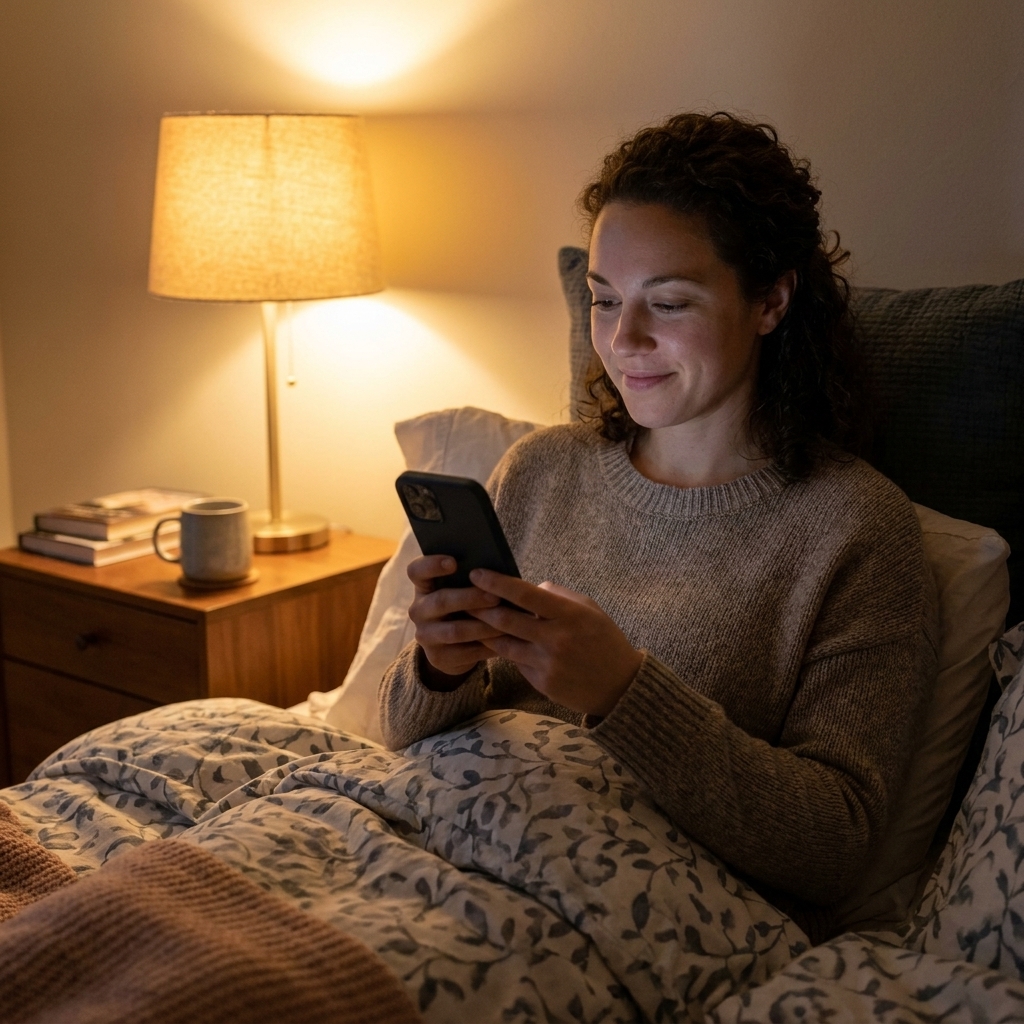
I used to be that person answering “one last email” in bed, face lit up like a tiny moon, wondering why I felt wired at midnight and wrecked at 7 a.m. If that’s you, I get it. Blue light is not the villain in every story, but at the wrong time and in the wrong dose, it can make sleep harder by nudging your melatonin rhythm in the wrong direction.
This is the evidence-based version of what’s happening, plus practical, realistic ways to cut blue-leaning light and protect your sleep without turning your evenings into a technology-free monastery.
What melatonin does
Melatonin is a hormone your brain releases in the evening to help signal “night has started.” It does not knock you out like a sleeping pill. Think of it more like a biological cue that helps your body shift into nighttime mode: lowering alertness, supporting the timing of sleep, and reinforcing your internal clock.
Your melatonin rhythm is guided mainly by light. Bright light in the morning helps anchor your day. Lower light and darkness at night help your body start producing melatonin and keep it rising as bedtime approaches.
Why this matters for sleep
If you are dealing with difficulty falling asleep, a delayed sleep schedule, or that “tired but wired” feeling, evening light exposure is a common and fixable contributor. Screens matter because they deliver light close to your eyes, often for long periods, at the exact time your brain is scanning for “is it still daytime?”
Why blue light gets attention
Not all light affects your circadian system equally. Your eyes contain specialized light-sensitive cells (intrinsically photosensitive retinal ganglion cells) that are particularly responsive to short-wavelength light, which we commonly describe as blue light. These cells send signals to the brain’s master clock (the suprachiasmatic nucleus), which influences melatonin production.
In plain language: blue-leaning light in the evening tells your brain it might still be daytime. That can suppress melatonin and shift your circadian timing later.
It is not only about color
Blue light is potent, but intensity and timing matter enormously. A very bright warm light can also affect melatonin. And a dim blue source is not the same as a bright blue source. The real-world impact comes from a combination of:
- Spectrum: how much short-wavelength light is present.
- Brightness: how intense the light is at your eyes.
- Duration: how long you are exposed.
- Timing: how close the exposure is to your natural bedtime.
- Distance: screens close to your face deliver stronger retinal light exposure.
What the science supports
Evening exposure to short-wavelength light can suppress melatonin, increase alertness, delay sleepiness, and shift circadian phase later. Laboratory studies using controlled light sources show this clearly. Real life is messier because your room lighting, screen brightness, content (stressful work email versus a calm show), and your natural chronotype all shape the outcome.
It is also worth calibrating expectations: for many people, typical consumer screens at typical settings have a smaller effect than very bright room lighting. But if your phone is bright and close to your face for hours, or your home is lit like a grocery store at 10 p.m., the impact can add up.
Do you need to panic about screens?
No. But if you are trying to fall asleep at a reasonable hour and you are using bright screens in the 1 to 3 hours before bed, you are more likely to notice:
- Longer time to fall asleep
- A later “second wind”
- Less sleepiness at your intended bedtime
- More difficulty keeping a consistent sleep schedule
Who tends to be most affected
- People with insomnia: not because blue light “causes” insomnia, but because it can shrink the wind-down window and amplify hyperarousal.
- Teens and night owls: already biologically prone to a later rhythm, so evening light can push bedtime later still.
- Anyone with early wake demands: if you must wake early, pushing sleep later harms total sleep time.
- People using devices very close to the face: phones and tablets at high brightness are the classic scenario.
How to cut blue light
You do not need perfection. You need a strategy you will actually do on weeknights when you are tired and your willpower is low. I like a layered approach, starting with the highest impact steps.
1) Dim the screen at night
Brightness is a big deal. Lowering brightness often helps more than obsessing over the exact color temperature.
- Set brightness manually low at night. Auto-brightness can sometimes keep screens brighter than you realize.
- Reduce white backgrounds. Dark mode can reduce perceived glare for some people.
- Increase viewing distance. Holding a phone farther away reduces light at the eye.
2) Use warm filters earlier
Night filters help most when they are:
- Enabled automatically
- Set to the warmest comfortable setting
- Scheduled to start at least 2 hours before your typical bedtime
iPhone and iPad (iOS)
- Night Shift: Settings > Display & Brightness > Night Shift. Schedule it. Slide “Color Temperature” warmer.
- Extra warmth (Color Filters): Settings > Accessibility > Display & Text Size > Color Filters. Turn on and choose a warmer filter if it feels comfortable.
- Reduce White Point: Settings > Accessibility > Display & Text Size > Reduce White Point. This can be a game changer for nighttime glare.
Android (varies by brand)
- Look for Night Light or Eye Comfort Shield in Display settings. Schedule it. Increase warmth.
- Use Extra Dim if available (often under Accessibility). This reduces brightness beyond the normal slider.
Mac
- System Settings > Displays > Night Shift. Schedule it and increase warmth.
- Lower brightness manually at night.
Windows
- Settings > System > Display > Night light. Schedule it and adjust strength.
3) Fix the room lighting too
If your ceiling lights are blazing at 10 p.m., a phone with Night Shift on cannot fully compensate. Evening lighting is the overlooked lever.
- Use warm, dim lamps instead of overhead lights 2 to 3 hours before bed.
- Choose bulbs labeled 2700K or warmer for evening spaces.
- Consider dimmable bulbs or smart bulbs with a warm evening preset.
Do blue light glasses work?
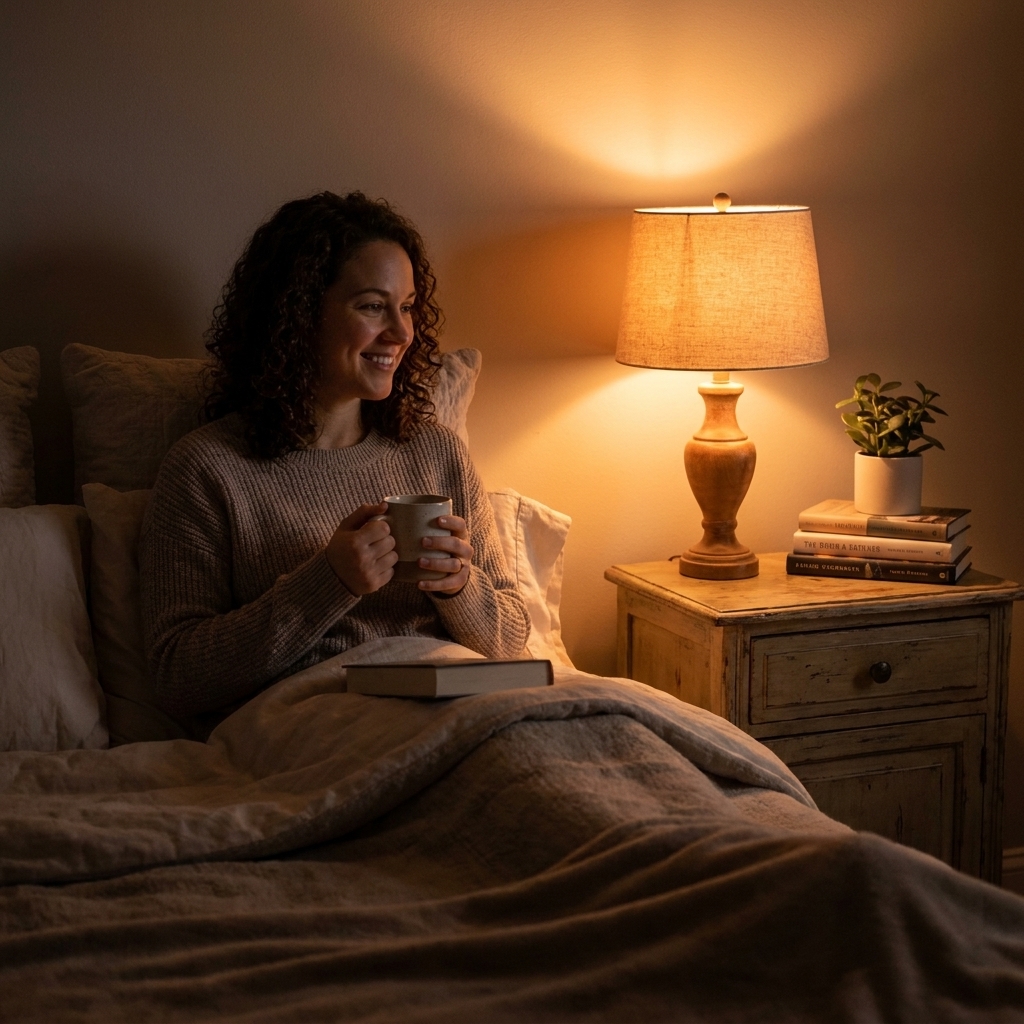
They can, especially for people who must use devices at night and want a more reliable reduction in short-wavelength light than software filters alone. Glasses that are noticeably amber or orange generally block more of the wavelengths most involved in melatonin suppression than nearly-clear lenses.
That said, glasses are not magic if the rest of your environment is bright, you are scrolling stressful content, or your bedtime is inconsistent.
How to choose and use them
- Prioritize evening use: 1 to 3 hours before bed is the key window.
- Pair them with dimmer lighting: they work best as part of a low-light routine.
- Look for real specs: reputable brands publish wavelength transmission data rather than vague claims.
TVs, e-readers, and gaming
TV
TVs are usually farther away than phones, which helps. But big bright screens can still delay sleepiness, especially in a dark room where your pupils dilate and more light reaches the retina.
- Lower the TV backlight or brightness at night.
- Use bias lighting behind the TV or a warm lamp in the room to reduce harsh contrast.
- If the TV is very bright, avoid watching in a pitch-black room.
E-readers
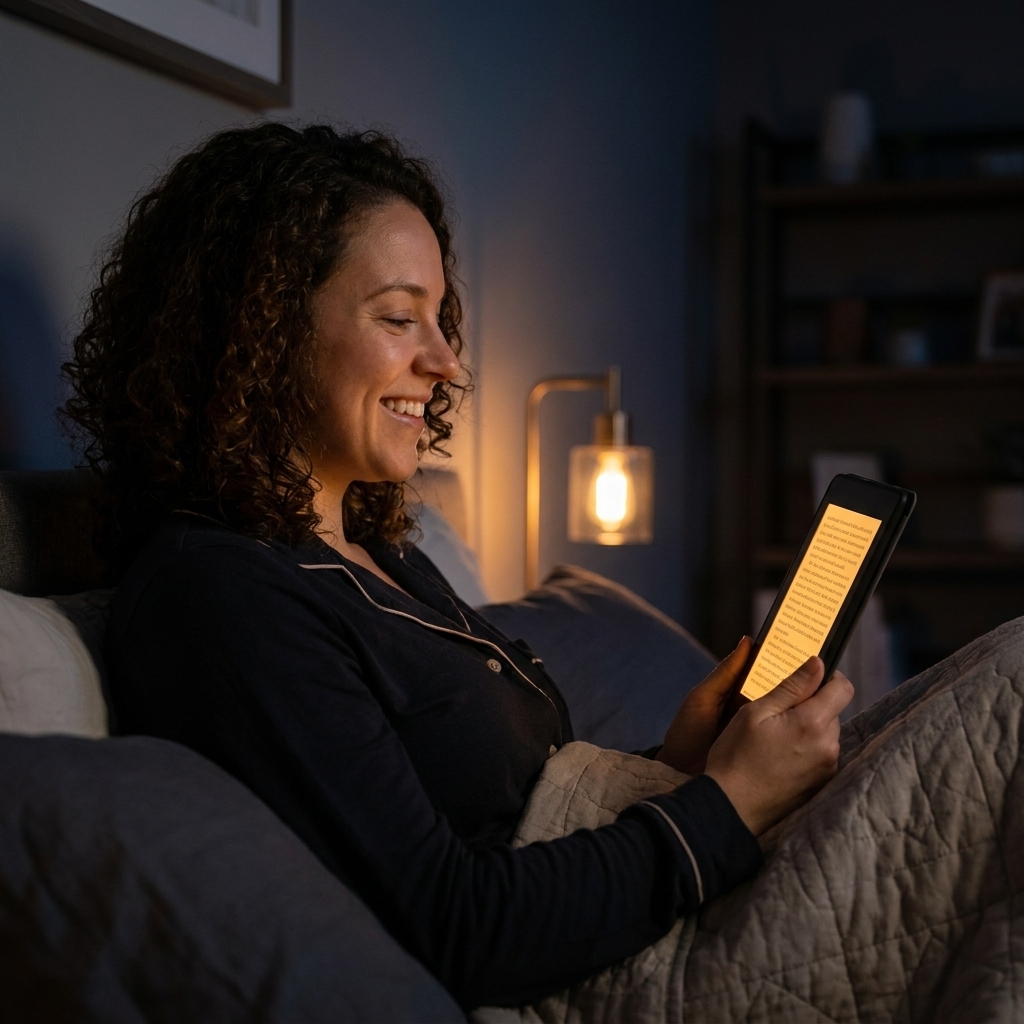
Ink-based e-readers without a bright backlight tend to be gentler than tablets. If your e-reader has a front light and warmth settings, use the warmest tone and the lowest brightness that remains comfortable.
Gaming
For many people, the bigger sleep disruptor is not only light. It is also intensity, competition, and adrenaline. If you game at night:
- Enable warm display settings and reduce brightness.
- Set a hard stop time, ideally 60 to 90 minutes before sleep.
- Build a decompression buffer afterward: shower, stretching, calm audio, or reading.
A simple evening plan
If you want a routine that is effective but not fussy, here is the one I give to busy, screen-tethered adults.
2 to 3 hours before bed
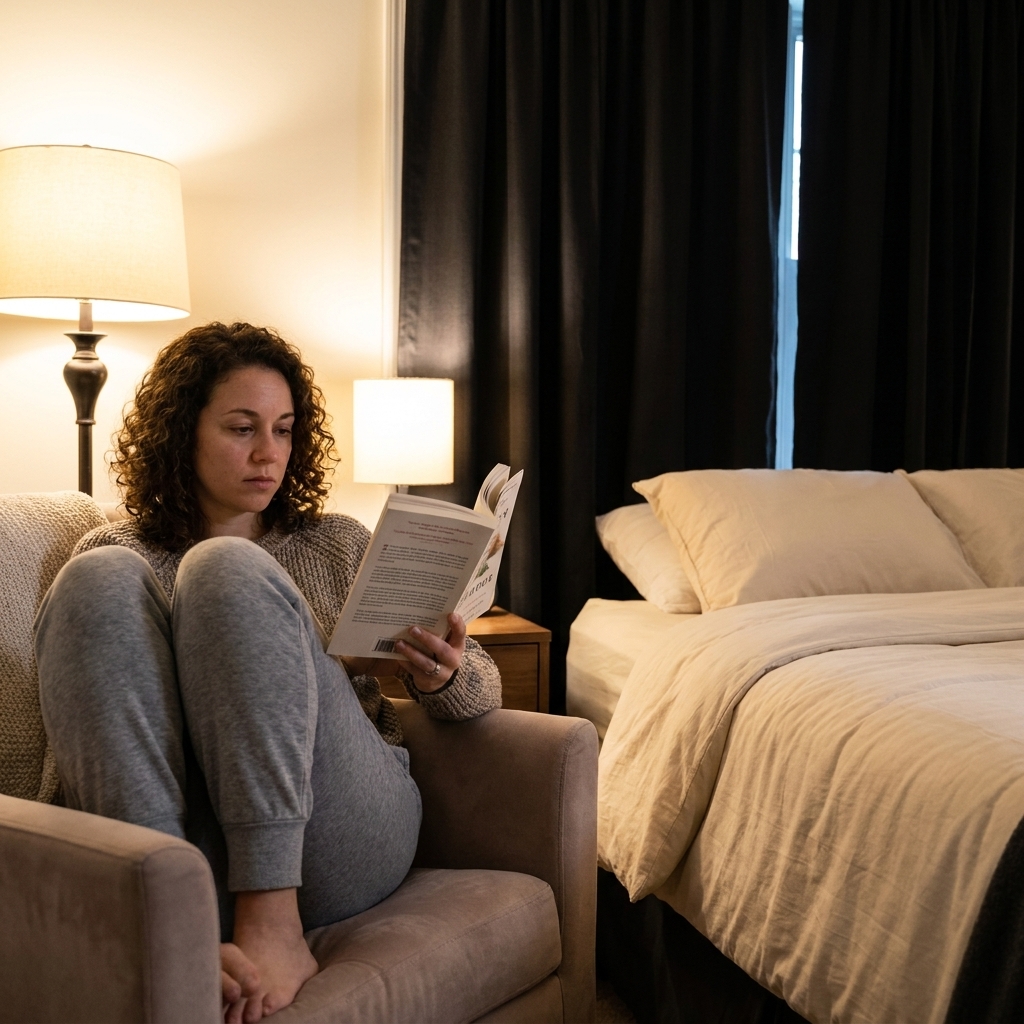
- Switch overhead lights to warm lamps.
- Turn on Night Shift or Night Light automatically.
- Decide when screens end, or decide what “safe screens” are (a light novel, a cozy show, a low-stakes puzzle).
60 to 90 minutes before bed
- Dim screens to low and keep devices at arm’s length when possible.
- Avoid work email and emotionally activating content.
- If you tend to scroll endlessly, set a downtime limit or move charging out of the bedroom.
15 to 30 minutes before bed
- Make it low light and low stimulation. This is where melatonin is trying to rise.
- Do one consistent wind-down cue: wash face, stretch, read on a warm setting, or listen to a quiet podcast.
If you only change one thing: reduce brightness and overhead lighting in the last 2 hours before bed. It is the highest return for the least effort.
FAQs
Is blue light from screens worse than room lighting?
It depends on brightness and distance. A phone close to your face can deliver a strong dose to the eyes. But very bright overhead LEDs in the evening can be just as disruptive. Ideally, address both: dim the room, warm the screens, and lower brightness.
Does dark mode fix melatonin suppression?
Dark mode can reduce glare and, on some displays (especially OLED), it can reduce light output when large parts of the screen are truly black. On other screens, the difference can be modest. Either way, it is not a full solution. Pair dark mode with reduced brightness and a warm color filter.
What if I use screens at night because it relaxes me?
That is valid. If it helps you unwind, keep it but make it “sleep-friendly”: warm filter on, brightness down, content calm, and stop before you get a second wind. If you fall into doomscrolling, that is a sign to add boundaries, not guilt.
Should I take melatonin instead of worrying about light?
Melatonin supplements can be useful for certain timing issues, but they are not a substitute for controlling evening light exposure. More is not better, and product quality varies widely. If you are considering melatonin, it is wise to discuss dosing and timing with a clinician, especially if you take other medications or sedatives, have a seizure disorder or autoimmune condition, are on anticoagulants, or are pregnant or breastfeeding.
What if this still is not enough?
If you are consistently taking more than 30 to 45 minutes to fall asleep, waking often, or feeling unrefreshed despite making changes, it may be time to get evaluated. Insomnia, anxiety, sleep apnea, restless legs, and delayed sleep-wake phase disorder can all look like “I just can’t shut off,” and they have targeted treatments.
Bottom line
Blue light is not your enemy all day long. Morning and daytime light are helpful for alertness and circadian alignment. The problem is high, blue-leaning light at night, delivered close to your eyes for long stretches, right when your brain is trying to raise melatonin.
If you want a calmer bedtime without giving up your devices, focus on the big levers: dim everything, warm the light, start earlier than you think, and protect the last 60 minutes before sleep like it is part of your health plan. Because it is.