Firm, medium, plush: what actually supports your spine? Learn how to match mattress firmness to your weight and sleep position with a simple at-home testing ...
The Rest Pact
Updated October 18, 2026
Created October 18, 2026
Break In a New Mattress Fast (Without Ruining It)

Maya Caldwell
Maya Caldwell is a certified sleep science coach and the lead researcher at RestPact. After overcoming years of chronic insomnia, she dedicated herself to making evidence-based sleep strategies accessible, helping others build bedtime routines that lead to deep, restorative rest.
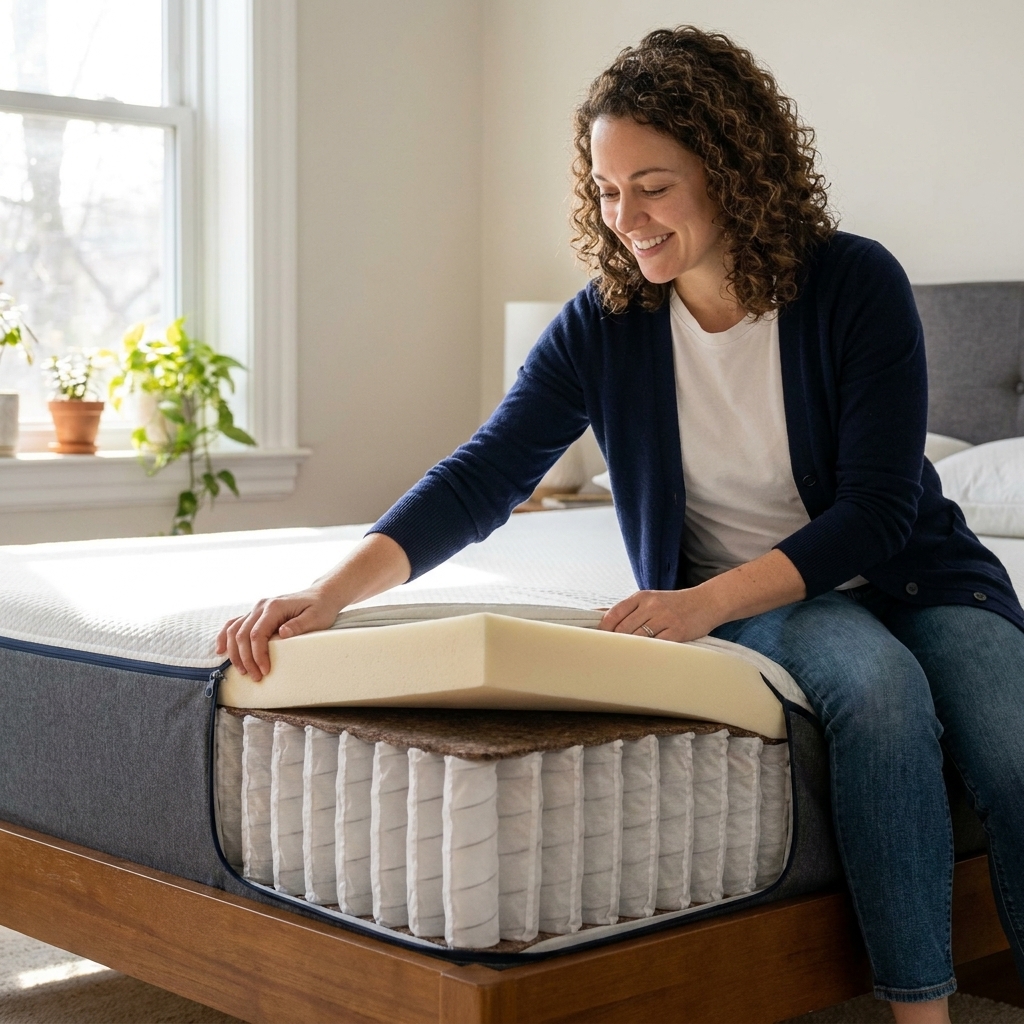
A brand-new mattress can feel oddly “wrong” at first, even when it is a good match on paper. It might be firmer than the showroom model, your shoulders may not sink in the way you expected, or you might wake up sore simply because your body is adapting to a new support pattern.
The good news: most mattresses do soften and settle during the first few weeks, and you can help that process along safely. The key is to encourage normal material relaxation without damaging the foams, coils, or edge support that keep your spine aligned.
First, what “breaking in” really means
When people say a mattress needs a break-in period, they are usually talking about two things happening at the same time:
- Material settling: Foams become a bit more flexible, fibers compress slightly, and the quilted top layers loosen. In hybrids and innersprings, the comfort layers above the coils do most of the “softening.”
- Body adaptation: Your muscles and joints get used to a new pressure distribution. Even a supportive mattress can feel uncomfortable at first if your previous bed was sagging or overly plush.
Most people notice meaningful change within 2 to 4 weeks, with smaller changes continuing through the first 30 to 60 nights. If your mattress has a sleep trial, that window is there for a reason. Use it thoughtfully.
Before you try to soften it: do these 5 quick checks
1) Confirm it is fully expanded (foam and hybrids)
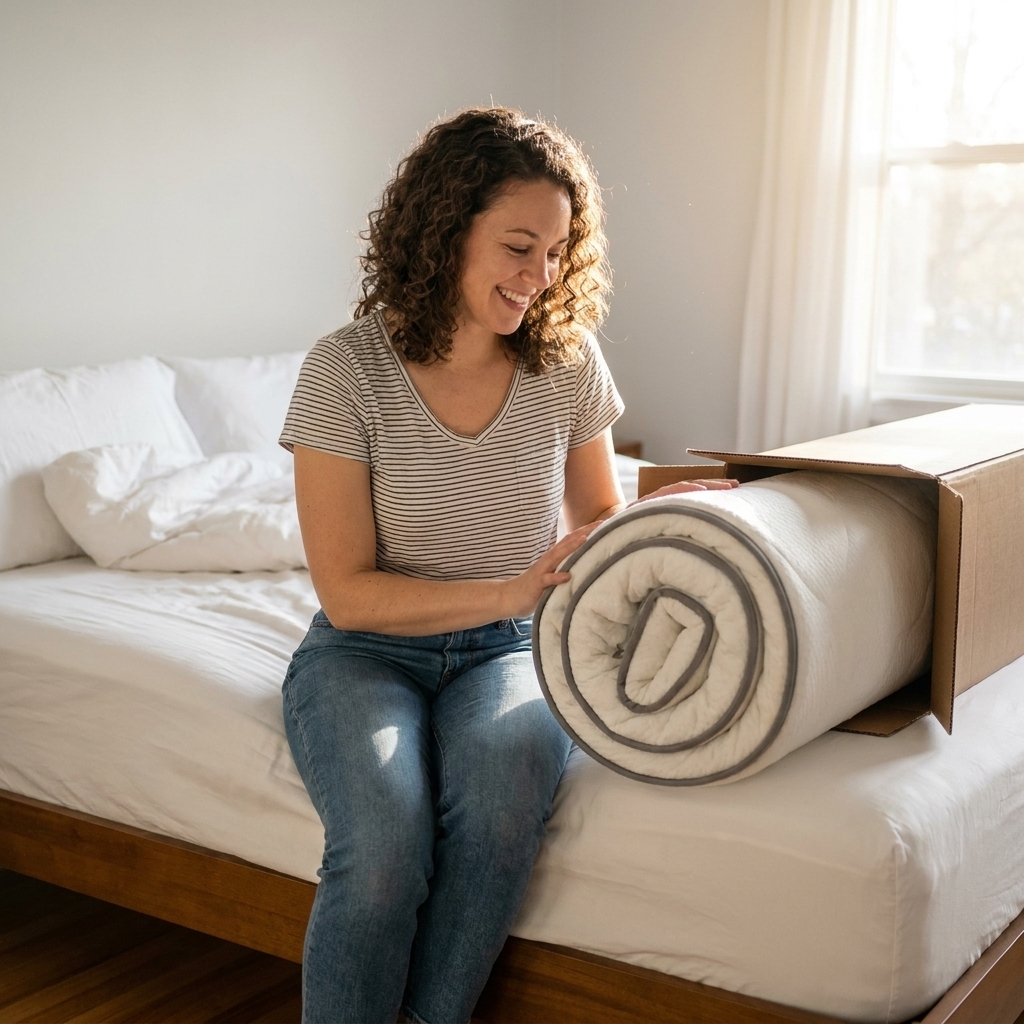
Bed-in-a-box mattresses can take a day or two to fully inflate. Sleeping on it immediately is usually fine, but don’t judge firmness on night one. If the brand recommends a specific expansion period, follow it.
2) Make sure the foundation is correct
An unsupportive base can make a mattress feel both harder (because it cannot contour evenly) and more painful (because your spine is not getting consistent support). Use:
- A solid platform, or
- A slatted base with narrow gaps (often 2 to 3 inches, but check your warranty), or
- A box foundation designed for your mattress type.
3) Check for protective plastics and overly stiff mattress covers
Some waterproof protectors feel like a rain jacket. They can reduce contouring and make foam feel firmer. If your protector is crinkly, slick, or very taut, try a thinner, stretch-knit option.
4) Re-evaluate your pillow
New mattress, same pillow is a classic mismatch. If your mattress is firmer and lifts your torso more, a tall pillow may push your neck out of alignment. If your mattress is softer, a thin pillow can leave you under-supported.
5) Identify what feels “off”
This helps you choose the right fix:
- Pressure points (shoulder, hip, ribs): usually too firm at the surface.
- Low back tension: can be too firm, too soft, or a pillow issue depending on sleep position.
- Feeling stuck or overheated: often a cover, protector, or bedding problem rather than mattress firmness alone.
The safest ways to break in a new mattress quickly
1) Add consistent, even “use” (the most effective option)
Foams and fibers relax with repeated compression. To speed this up without stressing the mattress, aim for normal, evenly distributed pressure rather than harsh impact.
- Sleep on it nightly for at least 14 nights before making big decisions.
- Lounge on it for 20 to 30 minutes in the evening while reading or winding down.
- Rotate the mattress (if allowed) every 1 to 2 weeks for the first month, then every 3 to 6 months. Rotation helps wear-in happen more evenly.
2) Do a gentle “walk and press” session (short, controlled)
If the surface feels board-firm, you can do a quick conditioning session:
- With clean socks, walk gently across the sleep surface for 2 to 3 minutes, then
- Press down with your hands or forearms on tighter areas (often shoulder zones) for another 2 to 3 minutes.
Keep it controlled and distributed. The goal is repeated compression, not jumping. If your mattress has a delicate pillow-top, be extra gentle.

Use heat the right way (and avoid risky hacks)
Temperature changes foam behavior. Many foams feel firmer in a cold room and more pliable when warmed by body heat. You can use this to your advantage without overheating the materials.
What helps
- Warm up the room slightly before bed (even 1 to 2 degrees can make foam feel less stiff).
- Use breathable bedding so your body heat gently warms the comfort layers without trapping sweat.
- Take a warm shower 60 to 90 minutes before bed. You will bring warmth into the bed, and the cooldown afterward supports sleep onset.
What to skip
- Space heaters blowing directly on the mattress for long periods.
- High-heat electric blankets on memory foam all night, especially if the manufacturer warns against it.
- Hair dryers or heat guns aimed at one spot.
Localized high heat can degrade adhesives and foam structure over time. Gentle, whole-room warmth is the safer play.
If it is too firm: comfort fixes that do not ruin support
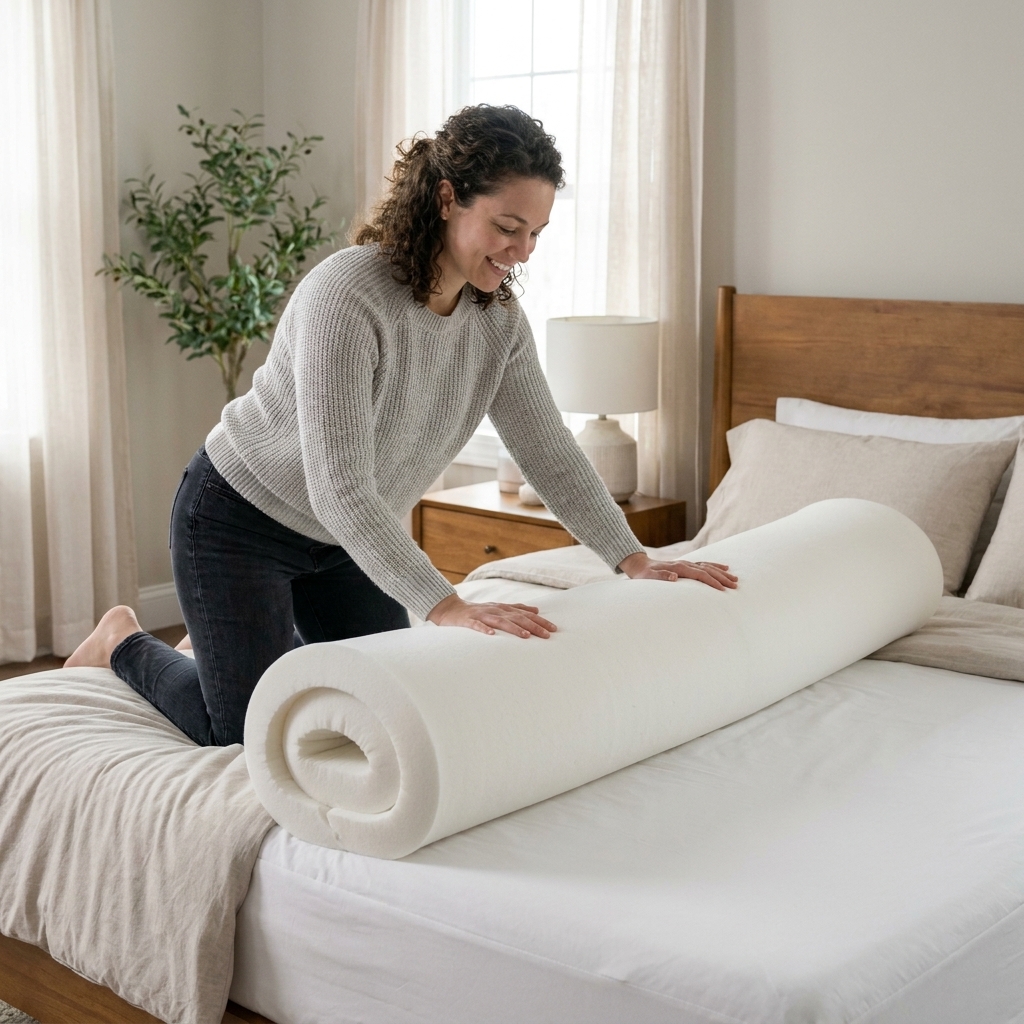
1) Try a thin, high-quality topper (the fastest comfort win)
If you have sharp pressure points, a topper can bridge the gap while the mattress breaks in. I typically start conservative:
- 1 inch if you mostly need surface relief.
- 2 inches if you need noticeable cushioning at shoulders and hips.
Material choices:
- Latex: buoyant, responsive, often cooler, great for “soften without sinking.”
- Memory foam: best for pressure relief, can sleep warmer depending on formulation and cover.
- Serene or polyfoam blends: a middle ground, often more temperature-stable than traditional memory foam.
Tip: use a topper with a stretchy cover and pair it with a fitted sheet that is not overly tight. A too-tight sheet can “flatten” the feel.
2) Loosen your bedding
It sounds almost silly, but a tucked-tight sheet or thick, stiff mattress pad can reduce contouring and make a new bed feel firmer. Try:
- Removing the mattress pad for a few nights.
- Switching to a stretchy jersey or knit sheet.
- Using a thinner protector designed for foam contouring.
3) Adjust your sleep position, temporarily
While you are adapting, small changes help:
- Side sleepers: hug a pillow to reduce shoulder strain; place a thin pillow between knees to reduce hip torque.
- Back sleepers: try a small pillow under knees to reduce low-back extension.
- Stomach sleepers: consider transitioning away if possible. It is the hardest position to keep the spine neutral, especially on a firm new mattress.
If it feels too soft: what to do in the first 30 days
“Too soft” is trickier because you cannot safely firm up a mattress the same way you can soften one. But you can improve alignment and reduce the stuck-in-the-mud feeling.
1) Confirm the base is not flexing
Softness complaints are often foundation issues. Make sure slats are close enough and that there is a center support beam for queen sizes and up.
2) Remove extra plush layers
- Skip featherbeds and thick mattress pads.
- Use a thinner protector and a lighter comforter.
3) Consider a thin, firming topper (yes, that exists)
A firm latex topper (often 1 inch) can add surface resilience so you feel less swallowed, especially on foam beds. This is not magic, but it can meaningfully improve ease of movement.
4) If you are sinking at the hips, do not wait too long
If your hips are dropping and you wake with consistent low-back pain, that is a support issue, not a break-in problem. Document it early with photos and notes in case you need to use your return or warranty options.
A simple 30-day break-in plan
If you like checklists, here is the plan I give friends when they text me, exhausted, on night three.
Days 1 to 3: Set the stage
- Verify the mattress is fully expanded and on the right base.
- Use breathable bedding and a flexible protector.
- Make one pillow adjustment if your neck feels off.
Days 4 to 10: Encourage normal settling
- Sleep on it nightly.
- Add 20 minutes of evening lounging.
- Do one gentle walk-and-press session if it feels unusually stiff.
Days 11 to 21: Rotate and reassess
- Rotate (if your mattress is designed for rotation).
- Re-check pressure points versus alignment.
- If pressure points persist, add a 1 to 2 inch topper.
Days 22 to 30: Decide based on patterns
- If you are improving week to week, keep going.
- If pain is consistent and clearly linked to the bed, start the return or exchange conversation while you are still inside the trial window.
What not to do (common break-in mistakes)
- Do not jump on the mattress to soften it. Impact can damage foams, fibers, and coil systems.
- Do not fold or bend mattresses not designed for it.
- Do not add heavy weights (like stacks of books or gym plates) for hours. This can create uneven compression and void warranties.
- Do not ignore persistent numbness or tingling in arms or hips. That is often a pressure issue that needs a topper or a different firmness.
- Do not confuse “firm” with “supportive.” A supportive mattress keeps your spine neutral. Some firm beds are supportive. Some are just hard.
Mattress type notes (foam vs hybrid vs innerspring)
All-foam
- Often feels firmer in cool rooms and softens with warmth.
- Most noticeable break-in happens in the top comfort layers.
- Best quick fix for pressure points: a breathable 1 to 2 inch topper.
Hybrid (foam + coils)
- Usually breaks in faster than dense all-foam beds because the coil system responds immediately while the comfort layers relax over time.
- Make sure the foundation is stable. Hybrids can feel uneven on flexible slats.
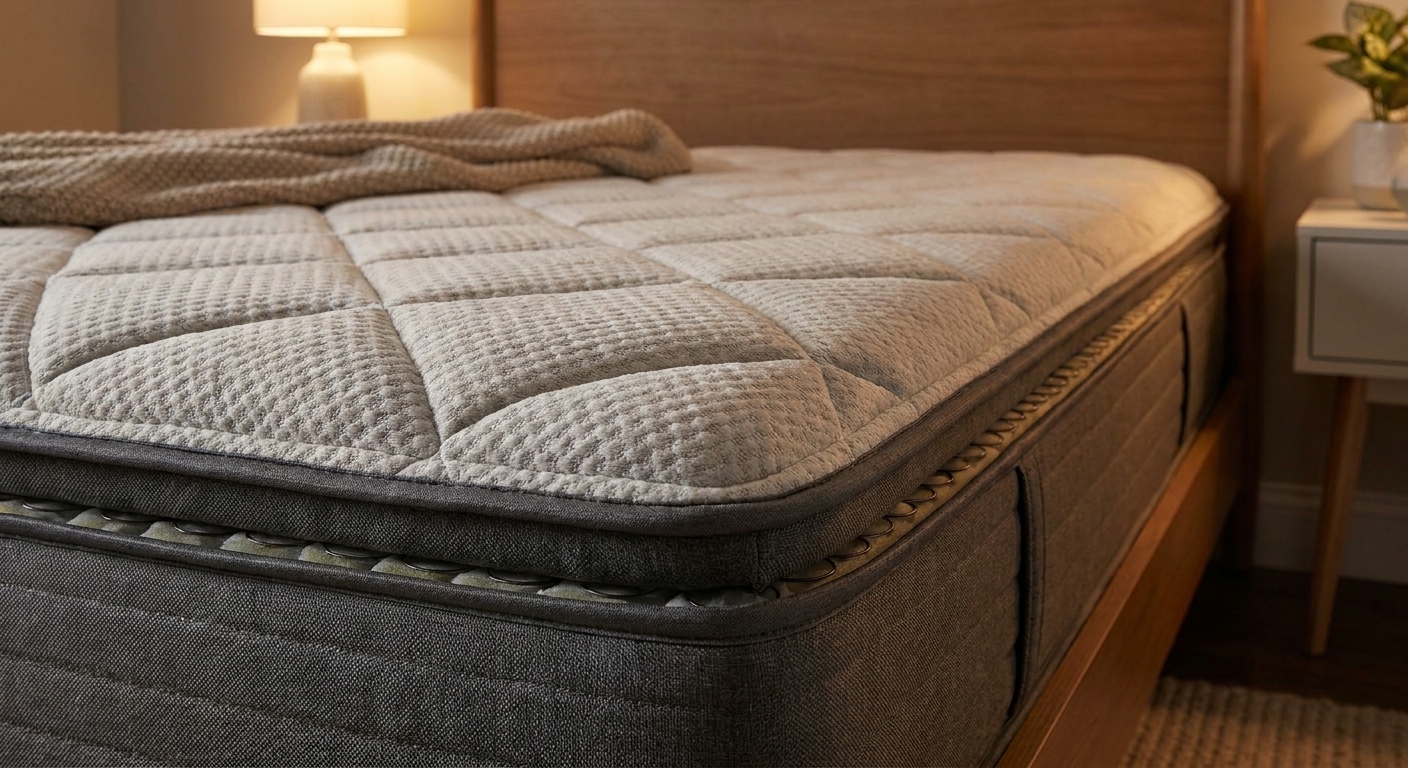
Traditional innerspring with pillow-top
- The pillow-top fibers can compress quickly, sometimes within the first few weeks.
- Rotate early and keep weight distribution even to prevent body impressions.
When to stop trying to break it in
I am a big believer in patience, but I am an even bigger believer in not suffering through preventable bad sleep.
Consider exchanging or returning the mattress if:
- You have consistent pain (not just “new bed weirdness”) that lasts beyond 2 to 3 weeks.
- You see visible sagging or deep body impressions early on.
- You cannot resolve pressure points with a modest topper and bedding tweaks.
- Your partner’s movements or the edge support make the bed unusable for your needs.
If you are within a sleep trial, take advantage of it. The right mattress should feel more restorative each week, not more exhausting.
FAQ
How long does it take to break in a new mattress?
Most mattresses show noticeable changes in comfort within 2 to 4 weeks, with smaller adjustments through the first 30 to 60 nights. Your body’s adaptation can take just as long as the materials.
Can I break in a mattress in a week?
You can often make it feel better in a week by optimizing your base, bedding, and pillow, and by using it consistently. True long-term softening of foams and fibers usually takes longer than seven nights.
Will a mattress topper prevent my mattress from breaking in?
It can slightly slow direct wear-in of the top layer, but if you are in pain, comfort comes first. A topper is a smart bridge solution during the adjustment period, and it can protect the mattress surface from premature impressions.
Is walking on a mattress safe?
Gentle, evenly distributed walking for a couple of minutes is generally safe for many mattresses, but avoid aggressive stomping or jumping. If your warranty specifically warns against it, skip it and use rotation plus nightly use instead.
Why does my new mattress feel firmer than the store model?
Showroom beds are pre-softened from months of testing, and stores are often warmer than bedrooms, which can make foam feel more flexible. Your bedding and foundation at home also change how the mattress performs.
A last gentle reminder
If you are reading this bleary-eyed, I see you. New mattress disappointment is uniquely frustrating because you did the responsible thing: you invested in your sleep. Give your body and the materials a little time, use the safe steps above, and make data-driven adjustments. Better rest is supposed to feel simpler than this, and with a few smart tweaks, it usually does.