Firm, medium, plush: what actually supports your spine? Learn how to match mattress firmness to your weight and sleep position with a simple at-home testing ...
The Rest Pact
Updated October 18, 2026
Created October 18, 2026
Choose the Right Pillow Loft and Material

Maya Caldwell
Maya Caldwell is a certified sleep science coach and the lead researcher at RestPact. After overcoming years of chronic insomnia, she dedicated herself to making evidence-based sleep strategies accessible, helping others build bedtime routines that lead to deep, restorative rest.
If you have ever woken up with a stiff neck and blamed your mattress, I get it. I spent years rotating through “perfect” pillows while running on caffeine and willpower. The surprise is that pillow comfort is not just about softness. It is geometry. Your pillow’s loft (height under load) and material (how it compresses, rebounds, and holds heat) decide whether your neck stays neutral or spends eight hours bent like a paperclip.
This guide will help you find a realistic starting loft range and the right fill for your sleep position, body shape, and mattress firmness, with a quick five-minute starting test you can do at home and a simple week-long plan to confirm the fit.

What “pillow loft” means
Loft is the pillow’s height, but the number on the package is not necessarily the number your neck experiences. Brands usually list a pillow’s unweighted height, and measurement methods can vary a bit between manufacturers.
- Measured loft is the uncompressed height of the pillow.
- Functional loft is how tall it is after your head sinks in, on your mattress, in your sleep position.
Your goal is simple: keep your cervical spine in a neutral line, meaning your nose stays aligned with the center of your chest and your neck is not side-bent or cranked up.
Two quick alignment checks
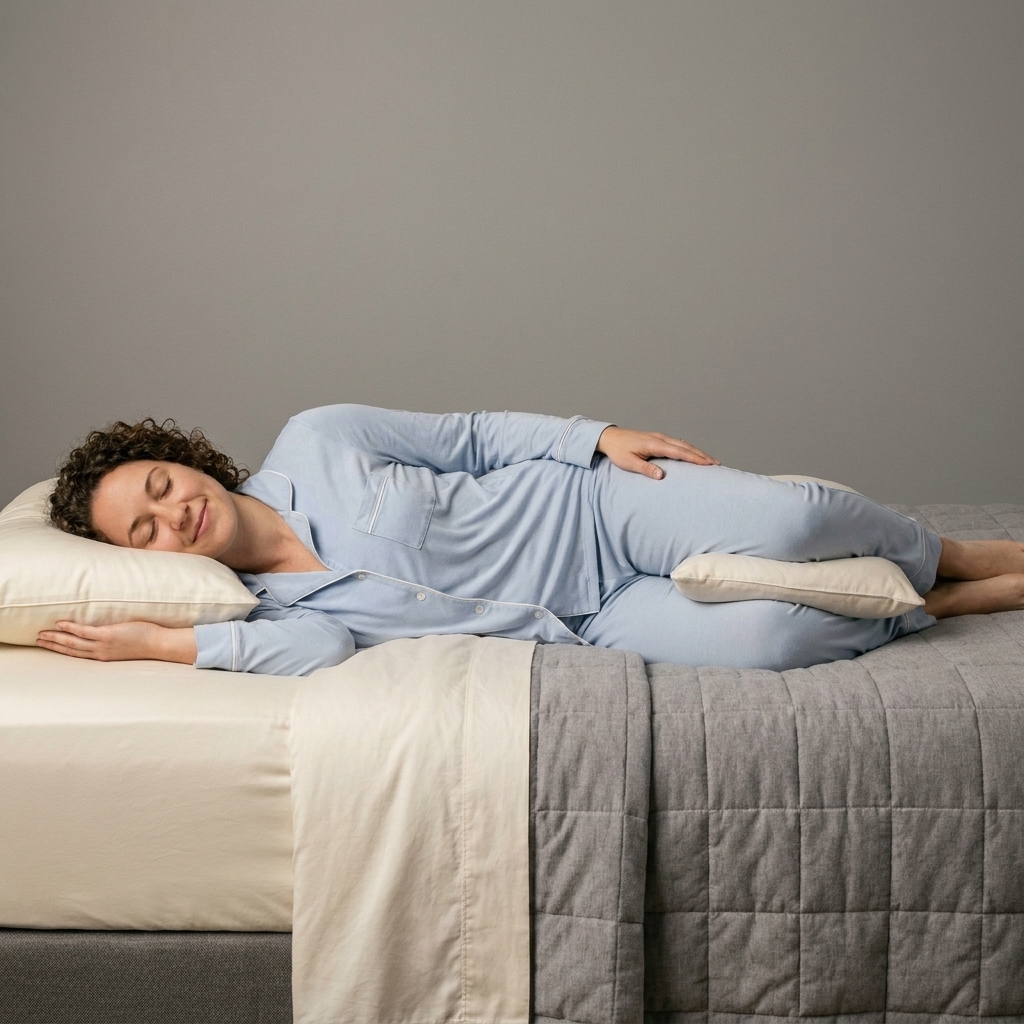
- Side sleepers: Your nose should point straight out, not toward the ceiling or the mattress. If someone takes a quick photo from behind, your nose and sternum should look lined up.
- Back sleepers: Your chin should look neutral, not tucked hard toward your chest and not lifted.
If you can, have someone take a quick photo of you lying in your usual position. I know it feels a little extra, but it is the fastest way to stop guessing.
Loft by sleep position
Use these as common starting ranges, not a hard rule. Think of them as typical functional-loft targets people land in during retail fitting and at-home trial and error, not precision measurements. Loft needs vary a lot by pillow design (traditional versus contour), how much you sink into your mattress, and your shoulder and neck dimensions. If you are between two sizes, an adjustable fill pillow makes this dramatically easier.
Side sleeping: medium-high loft
Side sleeping creates the biggest gap between your ear and the mattress. The pillow needs to “fill” that space so your head does not drop.
- Common starting range: roughly 4 to 6 inches of functional loft for many adults.
- If you have broad shoulders: you may do better closer to 5 to 7 inches or a pillow that resists compression.
- If you have narrow shoulders: you may land closer to 3.5 to 5 inches.
Common mistake: choosing a very fluffy pillow that compresses to almost nothing, which makes your neck side-bend down all night.
Back sleeping: medium loft
Back sleepers generally need less height than side sleepers. The pillow should support the natural curve of your neck without pushing your head forward.
- Common starting range: roughly 3 to 5 inches of functional loft.
- If you tend to feel “chin tuck” quickly: you may do better on the lower end, ideally with better neck contouring rather than more height.
Common mistake: a too-high pillow that tucks the chin and may contribute to morning headaches or upper back tightness for some people, especially if you wake with neck or jaw tension.
Stomach sleeping: low loft (or no pillow)
Stomach sleeping already rotates the neck. A tall pillow increases the twist and can irritate the joints and muscles around the cervical spine.
- Common starting range: roughly 0 to 2 inches functional loft.
- Best-case option: a very thin pillow or no pillow under the head, plus a small pillow under the pelvis to reduce low back strain for some stomach sleepers.
Common mistake: trying to “treat” stomach sleeping with a plush, high pillow. It usually backfires.

Adjust loft for shoulders and mattress
Two people can both be side sleepers and still need totally different pillow heights because of shoulder width and mattress feel.
Shoulder width: the gap you must fill
For side sleepers, wider shoulders create more distance from mattress to ear.
- Broad shoulders: add loft or choose a pillow with better resistance to compression.
- Narrow shoulders: reduce loft or choose a pillow that compresses more easily.
Mattress firmness: how far you sink
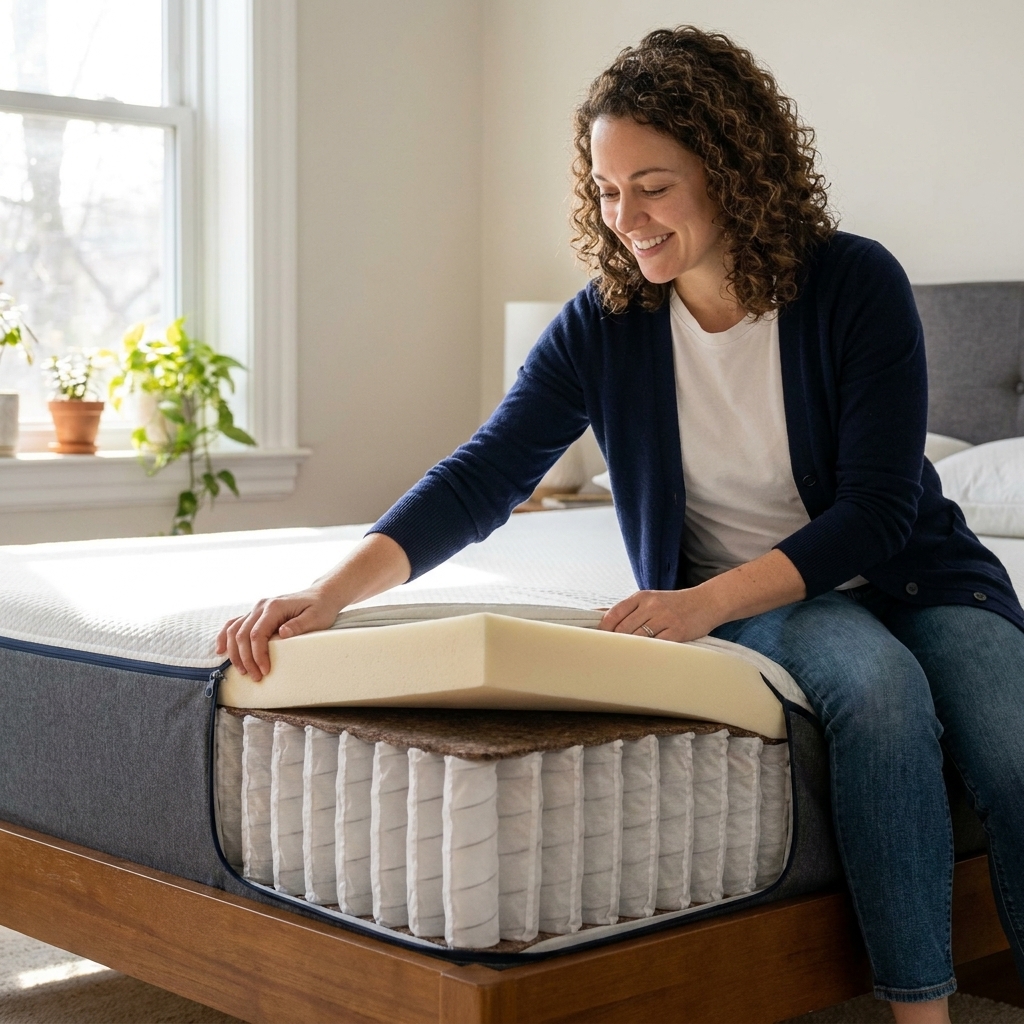
Your pillow does not work alone. A softer mattress lets your shoulder sink, which reduces the gap your pillow must fill. A firm mattress keeps your shoulder higher, which increases the gap.
- Soft mattress: you often need less pillow loft.
- Firm mattress: you often need more pillow loft.
The towel test (my favorite low-tech fitter)
Before buying anything, do this:
- Lie down in your usual sleep position.
- Roll a bath towel into a firm tube.
- Slide it under your pillowcase or under your pillow and adjust thickness until your neck feels neutral.
- Measure the towel stack height. That is a solid functional-loft target to shop for, then confirm it over several nights of real sleep.
This sounds almost too simple, but it is remarkably effective for dialing in the right height.
Materials and what they do well
Loft picks the height. Material decides whether it stays that height at 2 a.m., whether you overheat, and whether the pillow supports your neck or collapses.
Memory foam (solid or shredded)
- Best for: people who want stable support and fewer “pillow flips” at night.
- Feel: slow response, cradling.
- Watch-outs: can trap heat, and solid foam can feel too firm for some.
Side sleepers: memory foam is often excellent because it holds loft under the weight of your head and helps keep your neck from drifting. Back sleepers: look for a contoured shape or a medium loft so your chin does not tuck. Stomach sleepers: usually do better with something thinner and softer.
Latex foam
- Best for: people who want support without the “stuck” feeling.
- Feel: springy, responsive.
- Watch-outs: can feel buoyant if you prefer a sinking cradle.
Latex is a strong pick for hot sleepers because it often ventilates better than dense, solid memory foam, and it tends to keep its shape well over time.
Down and down alternative
- Best for: people who want softness and moldability.
- Feel: plush, compressible.
- Watch-outs: can flatten and lose functional loft during the night, especially for side sleepers.
If you love down but wake up with neck pain, the issue is often loft stability. A higher fill power can help it feel loftier, but many side sleepers also need more fill weight, a gusseted design, or a supportive inner core so the pillow does not collapse sideways.
Feather blends
- Best for: those who want moldability with slightly more structure than down.
- Watch-outs: quills can poke, and loft can still shift.
Polyfill
- Best for: budget-friendly softness and easy replacement.
- Watch-outs: tends to clump and compress over time, which reduces support.
Buckwheat or millet hulls
- Best for: people who want highly adjustable loft and very stable support.
- Feel: firm, structured.
- Watch-outs: noise with movement, heavier pillow, not for everyone’s sensory preferences.
These can be fantastic for side sleepers who struggle with collapse, as long as the firmness does not create pressure points.
Adjustable and contour pillows
Adjustable fill pillows
If you are not sure about loft, adjustable pillows are the closest thing to a cheat code. Most are shredded foam or shredded latex with a zip cover so you can add or remove fill.
- How to adjust: remove a little fill at a time, then sleep on it for two nights before changing again.
- Keep the extra fill: store it in a clean bag so you can add it back if your pillow settles.
- Evenness matters: after adjusting, redistribute fill so your neck and head have consistent support.
Contour and cervical pillows
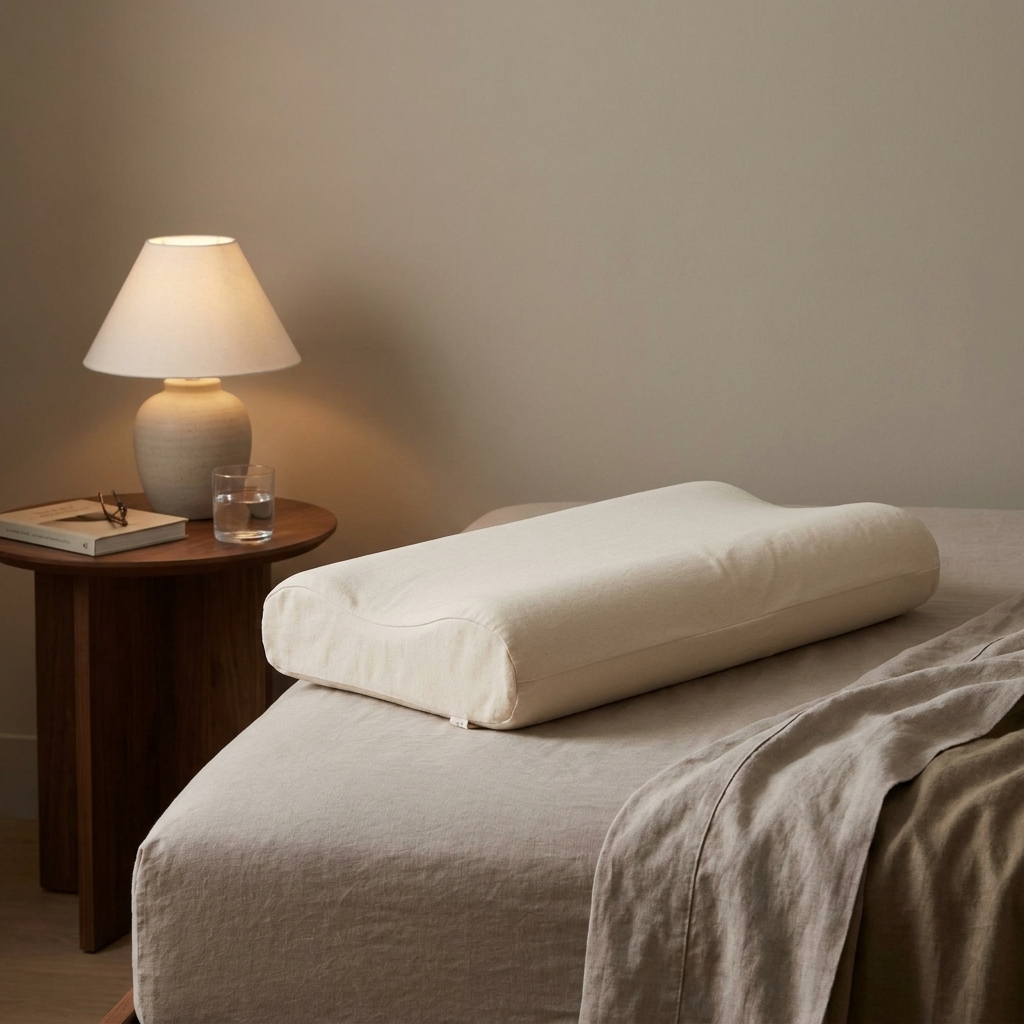
Contour pillows can work well for back sleepers and some side sleepers because they support the neck curve while keeping head height reasonable. The key is fit: the neck roll should support your neck without forcing your chin down, and the head cradle should not be so deep that your head sinks and your neck bends sideways.
If you dislike feeling “locked in,” switch positions constantly, or sleep partly on your stomach, a contour pillow can be annoying fast. In that case, a traditional adjustable pillow is usually easier to live with.
Heat, sweating, and pillow flipping
If you overheat, you will wake more often, and you will blame your pillow for being uncomfortable when the real issue is temperature and arousals.
What tends to sleep cooler (all else equal)
- Latex (springy and typically more breathable than dense foam)
- Buckwheat (airflow between hulls)
- Shredded foam (more air pockets than solid foam)
What tends to trap more heat (all else equal)
- Solid memory foam (especially dense, slow-response foams)
- Very plush synthetic fills that hold warmth close to the face
Cooling moves that do not change support
- Breathable cover (cotton percale and some bamboo blends can feel cooler)
- Skip thick protectors when you can (waterproof layers can block airflow)
- Room-side fixes like a fan and breathable sheets
One gentle reminder from the Pacific Northwest: even the best cooling pillow cannot beat a room that is too warm or too bright. A dark room and a slightly cooler thermostat do a lot of heavy lifting.
A simple 7-night fitting plan
If you want to avoid buying three pillows and returning two, run a short experiment. The towel test gets you a fast starting target. This plan helps you confirm it in real sleep.
Night 1: Identify your primary position
Most people have a “default” position even if they move. Start there. If you truly split the night, prioritize the position you wake up in most often, or the one that causes pain.
Nights 2 to 3: Dial in loft first
- Use the towel test to simulate higher loft.
- If the pillow feels too high, reduce loft by choosing a thinner pillow or removing fill if it is adjustable.
Nights 4 to 7: Lock in material based on symptoms
- Neck pain and “collapse” feeling: try a more supportive material (latex, memory foam, buckwheat) or a design that holds loft better.
- Pressure points at the ear or jaw: try a softer surface feel or slightly lower loft while keeping support underneath.
- Overheating: switch to a cooler material or a more breathable construction, and look at your cover and protector.
Keep a tiny morning note: neck stiffness 0 to 10, shoulder pain 0 to 10, and how many times you woke up. You do not need a perfect spreadsheet. You need a pattern.
Special situations
- CPAP users: you may do better with a lower-profile pillow or a CPAP-friendly cutout design so your mask seal is not pushed out of place.
- Pregnancy side sleeping: prioritize stable side-sleeper loft and consider a second small pillow to support the bump or knees so your shoulders and neck are not doing all the work.
- Shoulder pain: keep your neck aligned, but consider a slightly softer surface feel. Also try hugging a small pillow so your top shoulder is not pulled forward.
- Very soft mattresses: if your shoulder sinks deeply, your pillow may need less loft than the “usual” side-sleeper range.
Replace or rethink
- You fold it in half and it stays folded: the fill has broken down, and loft stability is gone.
- You wake with tingling, numbness, or shooting pain: stop experimenting and talk to a clinician, especially if symptoms persist.
- You need to stack multiple pillows to feel “okay”: you likely need a single pillow with the right loft and structure.
- Your pillow is older and permanently lumpy: uneven support can torque the neck.
Typical lifespans
- Polyfill: often 6 to 18 months, depending on compression and how it is washed.
- Down and feather: often 1 to 3 years with regular fluffing, sometimes longer with high-quality construction.
- Foam and latex: often 2 to 4 years, sometimes longer if it keeps its shape and support.
These are broad averages, and quality varies widely. If your alignment is off, replace sooner, even if the pillow looks fine.
FAQ
What is the best pillow loft for neck pain?
The best loft is the one that keeps your neck neutral in your main sleep position. Many adults start around 4 to 6 inches for side sleeping, 3 to 5 inches for back sleeping, and 0 to 2 inches for stomach sleeping, then adjust based on shoulder width, mattress sink, and pillow design. Neck pain often happens when your pillow is too high (chin tucked or head tipped up) or too low (head dropping down toward the mattress).
Do I need a contour pillow?
Not always. Contour pillows can work well for back sleepers and some side sleepers because they support the neck curve while keeping head height reasonable. If you dislike being “locked in” or change positions a lot, an adjustable shredded foam or latex pillow can be easier to live with.
How do I pick a pillow if I switch between side and back?
Aim for the side-sleeping requirement, but not the maximum. Many combination sleepers do well with an adjustable fill pillow set to a medium-high loft so the pillow can compress a bit when you roll to your back.
Is a firmer pillow always better for support?
No. Support comes from maintaining functional loft and keeping your neck neutral. Some people get excellent support from a medium pillow that has the right height and consistent fill. Too firm can create pressure points, especially at the ear and jaw for side sleepers.
What about pillow size, like standard vs king?
Size changes surface area more than alignment. Choose loft and material first. If you move a lot at night, a king can feel easier because there is more “landing space,” but it will not automatically fix neck position.

Bottom line
Your best pillow is not the fluffiest one. It is the one that keeps your neck neutral, stays stable through the night, and matches your temperature needs. Start with your sleep position, adjust for your shoulders and mattress firmness, then choose the material that holds that loft without overheating or collapsing.
If you want a single takeaway: loft first, material second. Once the height is right, comfort gets dramatically easier.