A research-grounded look at mattress firmness, spinal alignment, and pressure relief, with practical tips to choose the right feel for lower back pain and be...
The Rest Pact
Updated October 18, 2026
Created October 18, 2026
Mattress Firmness and Spinal Alignment

Maya Caldwell
Maya Caldwell is a certified sleep science coach and the lead researcher at RestPact. After overcoming years of chronic insomnia, she dedicated herself to making evidence-based sleep strategies accessible, helping others build bedtime routines that lead to deep, restorative rest.
Mattress firmness is one of those topics that gets oversimplified fast. We hear “firm is best for your back,” and suddenly people with sore hips are suffering on rock-like beds, while others sink into something so plush their lower back feels like it worked a double shift overnight.
Here is the real goal: spinal alignment plus pressure relief. A mattress should keep your spine in a neutral, easy line while distributing your weight so your shoulders, hips, and ribs are not getting punished all night.
This guide breaks down how firmness actually works, why body weight changes the feel, and a step-by-step method you can use at home to find the right setup without guessing.

What spinal alignment means
Neutral spinal alignment means your spine is resting in its natural curves, not forced into an extreme arch or a rounded slouch. When alignment is off for hours, your muscles and connective tissues tend to guard and tense to protect you. That can show up as morning low back stiffness, shoulder numbness, or a neck that feels stuck.
Alignment by sleep position
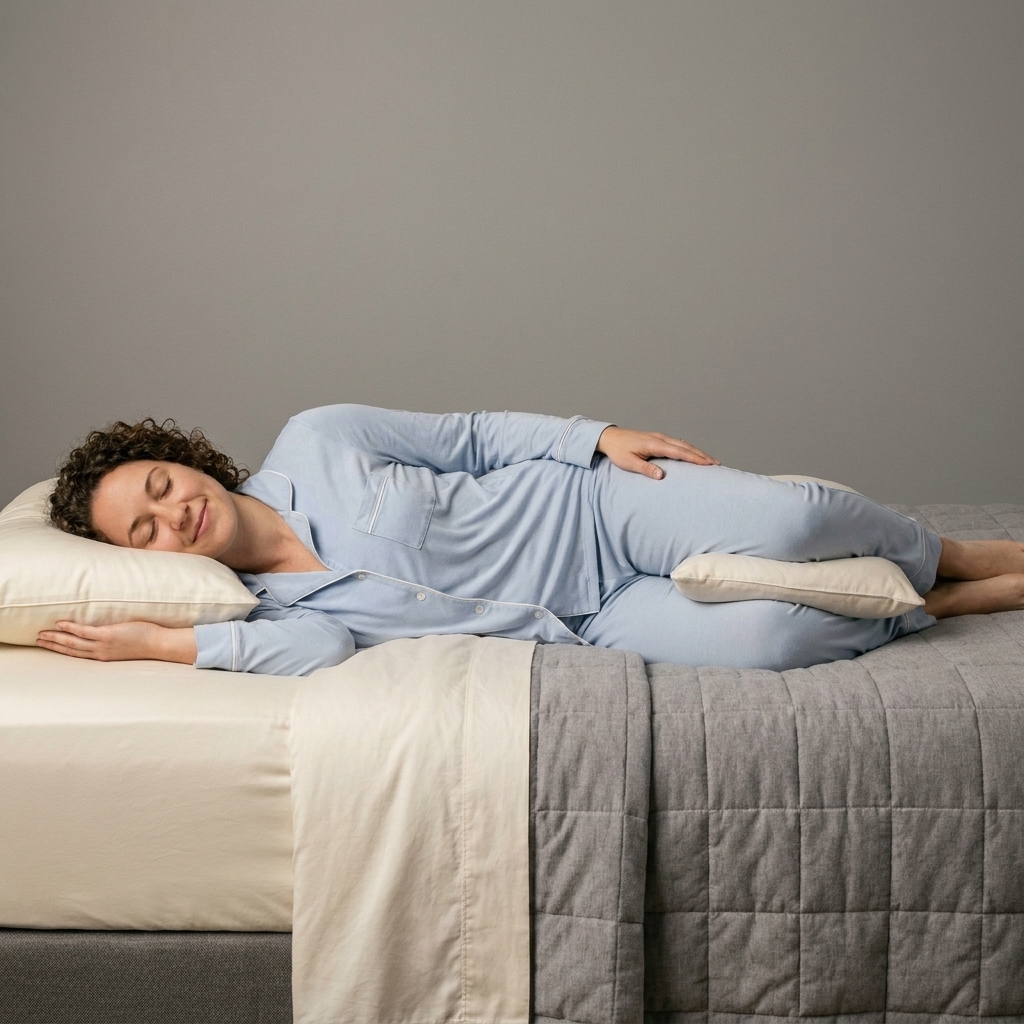
- Side sleepers: You want a straight line from neck to tailbone. The shoulder and hip need enough room to sink so your waist is supported, not dangling.
- Back sleepers: You want gentle support under the lumbar curve without pushing your hips up. Think “supported, not perched.”
- Stomach sleepers: Alignment is hardest here. Most people need a thinner pillow and a firmer, flatter surface to reduce low back sway and neck twist.
Important nuance: spinal alignment is not just firmness. It is also about how the mattress distributes load and how quickly it firms up as you compress it.
Firmness is not support
“Firmness” is a sensation: how hard or soft the bed feels at the surface and as you sink in. “Support” is whether the mattress keeps your body from sagging into misalignment. A mattress can feel plush on top and still be supportive underneath.
Two layers that create the feel
- Comfort layer: The top materials that cushion you. Softer comfort layers can improve pressure relief but may allow too much sink for some bodies.
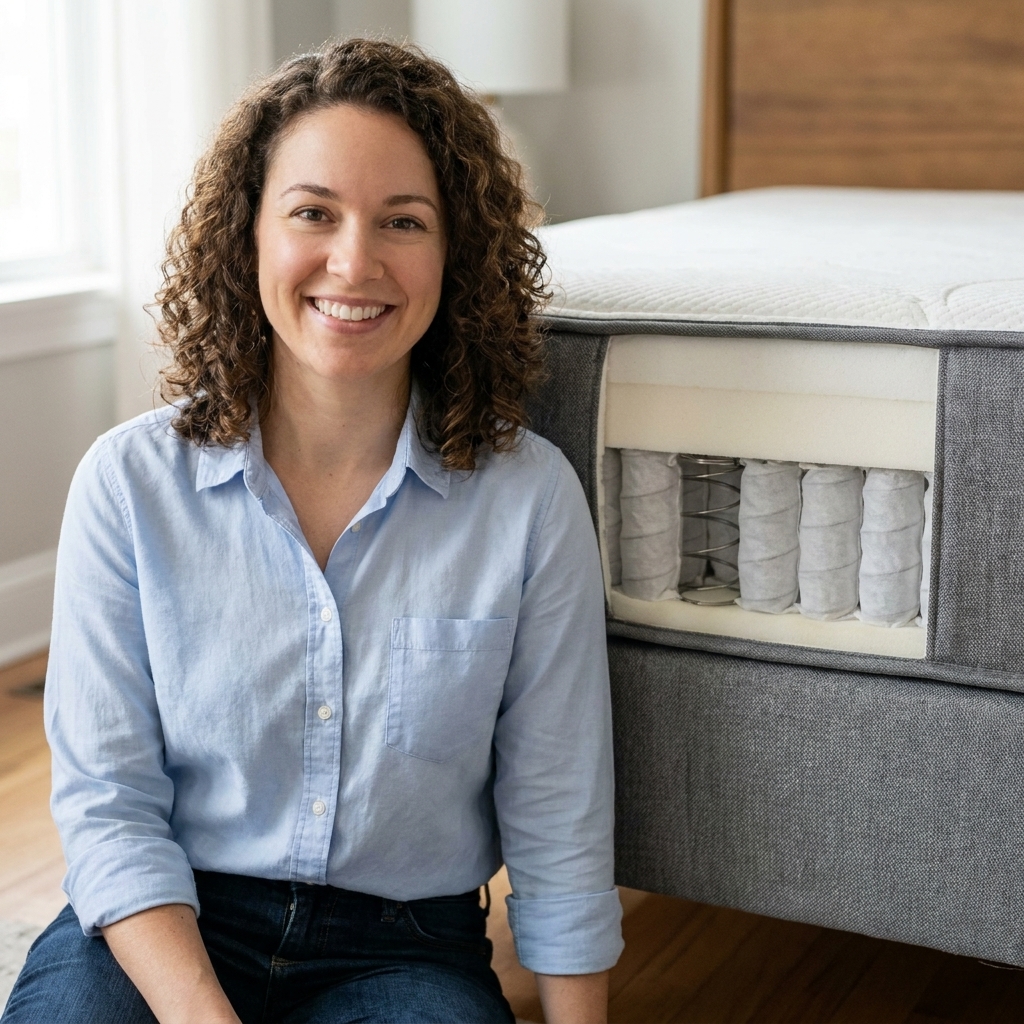
- Support core: Coils, dense foam, latex, or hybrid systems that prevent deep sagging and help maintain alignment.
Why this matters: when someone says “I need a firmer mattress,” what they often need is more support in the deeper layers or less sink at the hips, not necessarily a hard surface that bruises their shoulders.
Two common failure modes
Most mattress problems fall into one of two patterns.
1) Too soft: the hammock effect
If your hips sink more than your ribcage and shoulders, your lumbar spine can drop into extension or rotation. This is common for:
- Back sleepers on very plush beds
- Stomach sleepers on anything that lets the pelvis sink
- People with higher body weight on mattresses with softer or thinner support cores
Common morning signs: low back ache, feeling folded, needing time to straighten out.
2) Too firm: pressure points and protective tension
If the mattress does not let your shoulder and hip sink enough (especially on your side), your spine can bend sideways. Even if alignment looks okay, pressure can trigger micro-awakenings and muscle tension.
Common morning signs: numb arms, sore hip points, shoulder pain, tossing to find a comfortable spot.
Body weight changes the feel
Firmness recommendations only make sense when you include body weight. The same “medium” mattress can feel like a brick to a 120 lb person and like quicksand to a 230 lb person, because the heavier body compresses deeper into the mattress layers.
Also, weight is not the whole story. Body shape matters too. If you carry more weight through the hips and abdomen, you may need extra resistance under the pelvis even if you still want cushion at the shoulders.
A practical starting map
These ranges are a starting heuristic, not a medical rule. Use them to narrow the field, then confirm with the alignment and pressure checks below.
| Body weight | Side sleeper starting range | Back sleeper starting range | Stomach sleeper starting range |
|---|---|---|---|
| Under 130 lb | Soft to medium-soft | Medium-soft to medium | Medium to medium-firm (thin pillow) |
| 130 to 200 lb | Medium-soft to medium | Medium to medium-firm | Medium-firm to firm |
| 200 to 250 lb | Medium to medium-firm (thicker comfort layer, strong support core) | Medium-firm to firm | Firm (and consider a supportive hybrid) |
| 250 lb and up | Medium-firm (pressure-relieving top, very strong support core) | Firm (watch hip sink over time) | Firm (supportive hybrid is often easiest) |
How to find your firmness
If you take only one thing from this guide, make it this: evaluate a mattress by alignment, pressure, and ease of movement, not by the showroom label.
Step 1: Pick your main sleep position
Pick the position you fall asleep in most often. If you truly split time evenly, treat yourself like a combo sleeper and choose a balanced medium to medium-firm feel with good responsiveness.
- Side: prioritize pressure relief at shoulder and hip
- Back: prioritize lumbar support and controlled hip sink
- Stomach: prioritize pelvis staying level, minimize sink
Step 2: Choose a starting range
Use the table above, then adjust one step based on your pain pattern:
- If you wake with low back ache: go one step firmer or look for stronger zoning or support under the hips
- If you wake with shoulder or hip pain: go one step softer or choose a more pressure-relieving comfort layer
Step 3: Do the 10-minute check
If you are testing in-store, you can still do this. If you are at home during a trial period, even better.
- Lie in your normal sleep position for 5 full minutes. Not 20 seconds. Your tissues need time to settle.
- Check pressure: do you feel sharp buildup at the shoulder, hip point, ribs, or tailbone?
- Check alignment: if you have a partner, ask them to take a quick photo from behind (side sleeping) or from the side (back sleeping). You are looking for a straight, neutral line, not a bend at the waist.
- Check how your body reacts: do you notice your abdomen bracing, your ribcage feeling pinned, or your shoulders creeping up toward your ears? Those are clues you are working against the surface, not resting into it.
Step 4: Do the roll test
Roll from back to side and back again. You should be able to change positions without feeling stuck. If you have to brace with your arms or wake yourself up to move, the comfort layers may be too soft for your body weight or too slow-responding.
Step 5: Decide what to tweak
This is where people save a lot of money and frustration.
- If alignment is good but pressure hurts: you likely need a softer comfort layer, a plush topper, or a different material. Latex, for example, tends to feel more buoyant and less stuck than memory foam while still contouring.
- If pressure is fine but your low back hurts: you likely need more deep support, less hip sink, or a firmer overall build.
- If both are bad: you probably need a different firmness category, not a minor accessory fix.
Materials change firmness
Two mattresses can both be labeled “medium-firm” and feel completely different depending on materials and construction.
Memory foam
- Strengths: excellent pressure relief, strong contouring for many side sleepers
- Watch-outs: can feel softer as it warms up, can allow hip sink if the support core is weak, some people feel stuck
Latex (natural or synthetic)
- Strengths: buoyant support, easier movement, often great for combo sleepers
- Watch-outs: can feel firmer than expected because it pushes back, not everyone likes the springy sensation
Innerspring and hybrid (coils plus foam or latex)
- Strengths: strong support, airflow, good edge support, tends to scale well for higher body weights
- Watch-outs: comfort layer quality varies widely, some hybrids feel firm at pressure points if the top is too thin
Common problems and fixes
My hips sink and my back aches
- Often means: too soft, or insufficient deep support
- Try: medium-firm to firm, hybrids with strong coils, or zoned support (firmer under hips)
My shoulder goes numb on my side
- Often means: too firm at the surface, not enough contour
- Try: medium-soft to medium, thicker comfort layer, or a more pressure-relieving top material
I feel fine at bedtime but wake up sore
- Often means: materials soften with heat and time, or your muscles relax and you sink deeper later
- Try: a slightly firmer feel than your initial impression, or a mattress with more resilient support (latex or a well-built hybrid)
I sleep hot and toss all night
- Often means: too much sink and not enough airflow, or heat-retaining foams
- Try: responsive surfaces that keep you more on the bed, breathable covers, hybrids, or latex
Fine-tune without replacing
Sometimes the mattress is close, just not quite dialed in. Here are body-mechanics-friendly adjustments you can try first.
If the mattress feels too firm
- Add a topper: a 2-inch topper often reduces pressure points, but density and firmness matter. Memory foam tends to add contouring; latex tends to add cushion with bounce.
- Check your pillow height: especially for side sleepers, a too-thin pillow can make a good mattress feel wrong by pulling the neck down.
- Give your body a short adaptation window: a few nights can be reasonable. Weeks of worsening pain is not.
If the mattress feels too soft
- Look under the bed: a sagging foundation or widely spaced slats can create a too-soft feel even with a supportive mattress.
- Try a firm layer under the mattress: a bunkie board or more supportive base can reduce sink by increasing surface stability.
- Rotate the mattress: if allowed, rotating can redistribute wear patterns that create hip sag.
When softness is really wear
If you are suddenly sinking more than you used to, the issue may not be your body. It may be breakdown. Visible impressions, a persistent dip where your hips land, or foam that feels dramatically softer in one zone are signs the mattress may be past its prime.
Special situations
Chronic low back pain
Some studies suggest that medium-firm mattresses work well for many people with non-specific low back pain, but the best choice still depends on body weight, sleep position, and how your hips and shoulders interact with the surface. If you are a side sleeper with back pain, you may do better with a surface that is slightly softer at the shoulder and hip while still supportive underneath.
Scoliosis or asymmetry
When your body is asymmetrical, pressure relief becomes even more important. Many people do best with a mattress that contours enough to meet the curves without letting the pelvis collapse. If you wake up twisted, prioritize deep support. If you wake up bruised, prioritize a more adaptive comfort layer.
Pregnancy
Side sleeping usually becomes the default. A medium to medium-soft surface that cushions hips and shoulders often improves comfort. Pillows (between knees and, if needed, under the belly or behind the back) can also help you stay supported in side sleeping and reduce unwanted rotation.
Higher body weight (especially above 230 lb)
Look for a mattress designed to handle deeper compression: robust coil systems, higher density foams, and enough thickness to prevent bottoming out. Many people in this range prefer medium-firm to firm, but still need a comfort layer that protects shoulders and hips.
When to talk to a clinician
If you have numbness or tingling that persists, radiating pain, progressive weakness, symptoms that are worsening, or a diagnosed spine condition, it is worth checking in with a clinician or physical therapist. A mattress can support good mechanics, but it cannot diagnose (or solve) everything.
FAQ
Is a firm mattress better for spinal alignment?
Not automatically. A firm mattress can improve alignment if you are sinking too much on a softer bed. But if it creates pressure points at the shoulder and hip, your spine can bend and your muscles may tense. The best mattress is the one that keeps you neutral while still cushioning bony areas.
How can I tell if my mattress is too soft?
Common signs include waking with low back pain, feeling like you are sleeping in a dip, or noticing that your hips sink more than your upper body. A quick test is to lie on your back and see if you feel your pelvis dropping. If you have a partner, a side photo can reveal a hammock shape.
How can I tell if it is too firm?
Numbness, tingling, or sharp pressure at shoulders and hips are classic. Side sleepers often feel this first. If you wake up changing positions a lot to escape discomfort, firmness may be the issue.
What if I am a combo sleeper?
A responsive medium to medium-firm feel is usually the easiest to live with. Look for a surface that does not trap you when you roll, and make sure side sleeping still feels cushioned at the shoulder.
Do mattress firmness scales (1 to 10) matter?
They can help within a brand, but they are not standardized. Your body weight and the materials used can change how a “7/10” actually feels. Use the scale as a clue, then confirm with the alignment and pressure checks.
A gentle takeaway
If you have been blaming yourself for not sleeping well on the “right” mattress, I want to gently reframe that. Mattress fit is biomechanics, not willpower. When your bed matches your body, your muscles can finally stop guarding, your breathing can deepen, and sleep gets a lot less complicated.
Aim for neutral alignment, comfortable pressure relief, and easy movement. Use your body weight as the filter. Then trust what your mornings are telling you.