A research-first look at how adjustable bases and zero-gravity presets may reduce snoring, ease reflux, and support comfort for better recovery at night.
The Rest Pact
Updated October 18, 2026
Created October 18, 2026
Home Sleep Apnea Test vs. Lab Sleep Study: What to Expect

Maya Caldwell
Maya Caldwell is a certified sleep science coach and the lead researcher at RestPact. After overcoming years of chronic insomnia, she dedicated herself to making evidence-based sleep strategies accessible, helping others build bedtime routines that lead to deep, restorative rest.
If you have ever woken up gasping, been told you snore like a freight train, or felt inexplicably wiped out after a full night in bed, you have probably run into the question of sleep apnea testing. And the next question usually lands with a thud: Do I really have to sleep in a lab?
As someone who spent years chasing answers for stubborn sleep problems, I get the anxiety. The good news is that modern testing is much more flexible than it used to be. Clinicians typically choose between two routes:
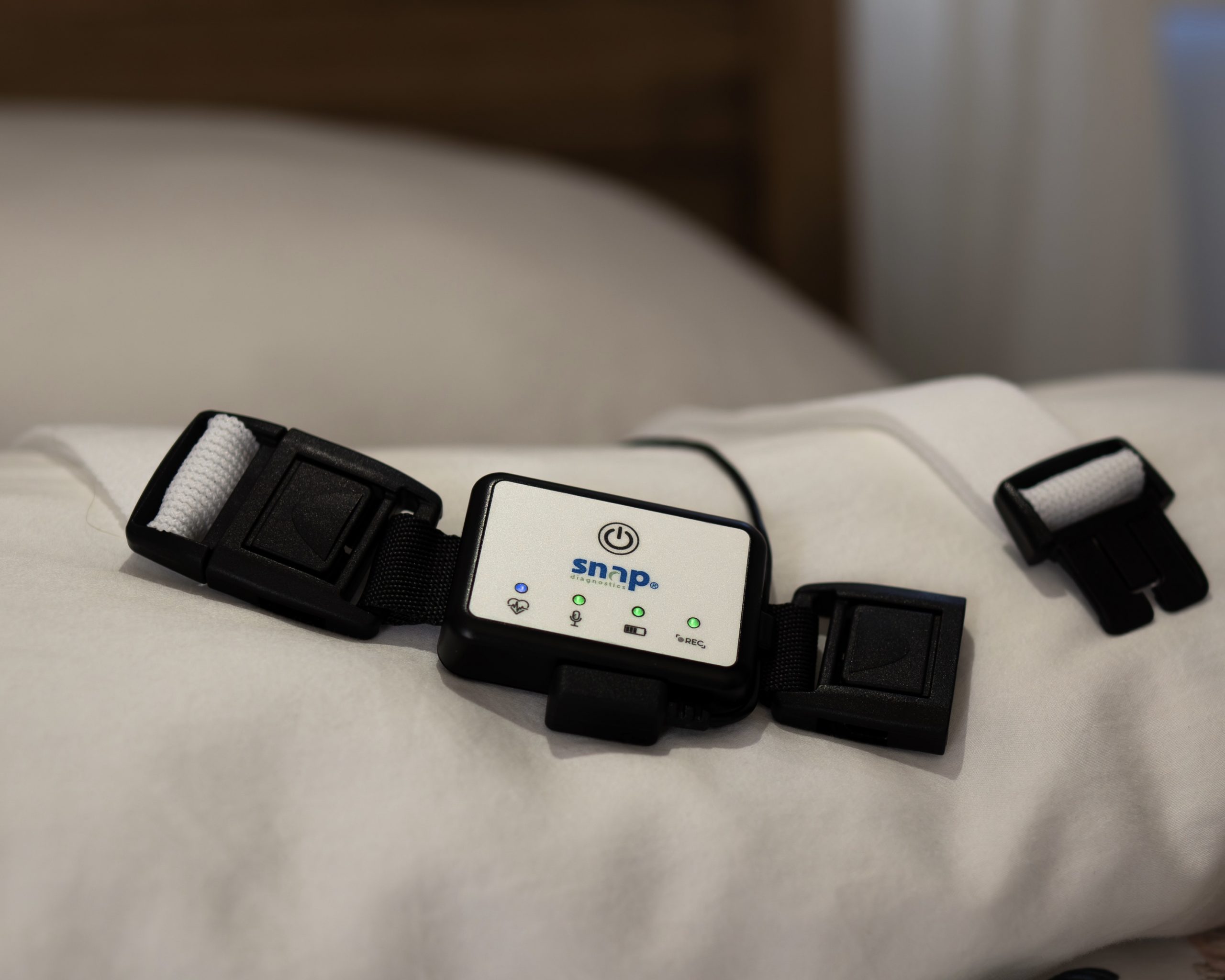
- A clinician-ordered home sleep apnea test (HSAT), done in your own bed
- An in-lab overnight sleep study (polysomnography), done at a sleep center with a technologist monitoring you
Both can be useful. They are not interchangeable, and neither is the same thing as what your smartwatch estimates. Below is exactly what to expect, what is measured, and why a “normal” or “inconclusive” home test sometimes needs a follow-up in the lab.
What we are testing for
Sleep apnea is a condition where breathing repeatedly reduces or stops during sleep. The most common type is obstructive sleep apnea (OSA), where the airway narrows or collapses. Less commonly, central sleep apnea (CSA) is driven by changes in breathing control from the brain rather than an airway blockage.
The core “score” clinicians use is typically the apnea-hypopnea index (AHI), which estimates how many breathing events happen per hour of sleep. With many home tests, you will also see related terms like REI (respiratory event index) that are commonly based on recording time rather than true sleep time. The exact label and calculation can vary by device and lab, which is one reason a home report may not match how you feel.
Testing also looks at how low your oxygen goes and how often breathing disruptions cause arousals and fragmented sleep.
Home sleep apnea test (HSAT)
An HSAT is usually prescribed when your clinician suspects uncomplicated obstructive sleep apnea and you do not have other medical or sleep conditions that would require deeper monitoring.
What you do
- You pick up the device from a clinic, or it is mailed to you.
- You get instructions, often with a short demo video.
- At bedtime, you attach a few sensors, start the recording, and sleep at home.
- In the morning, you remove the sensors and return the device.
What the equipment may include
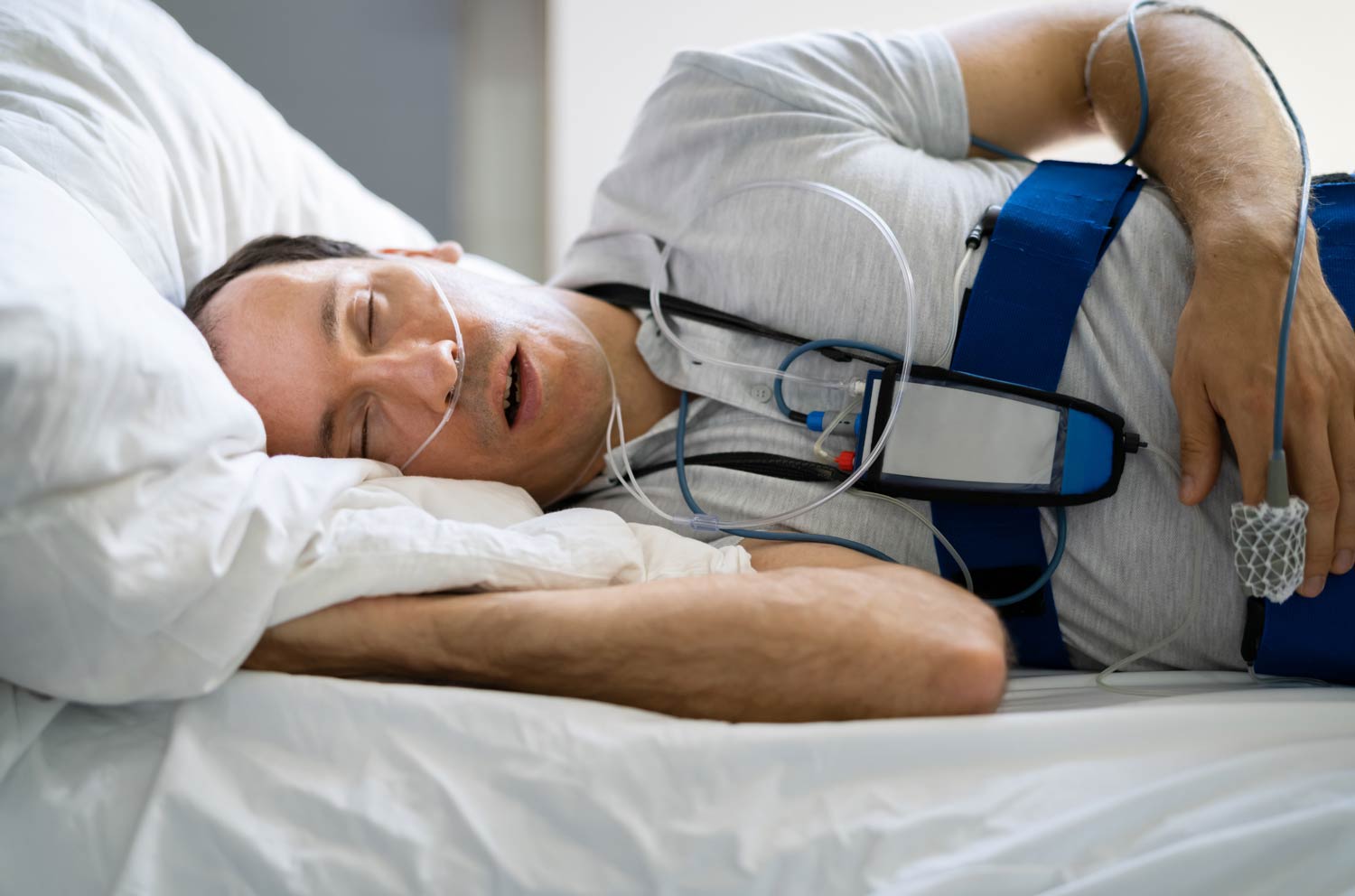
Home tests vary by brand and by “type,” but many clinician-ordered HSATs (often Type III devices) include some combination of:
- Nasal cannula or airflow sensor (to estimate breathing)
- Chest and/or belly effort belt (to detect breathing effort)
- Finger pulse oximeter (oxygen saturation and pulse)
- Position sensor (sometimes built in, to track back sleeping)
You can expect it to feel mildly annoying at first, like sleeping with travel gear. Most people adjust within 10 to 20 minutes. The biggest practical issue I see is sensors slipping off during the night, especially the cannula or the finger probe.
In-lab sleep study (PSG)
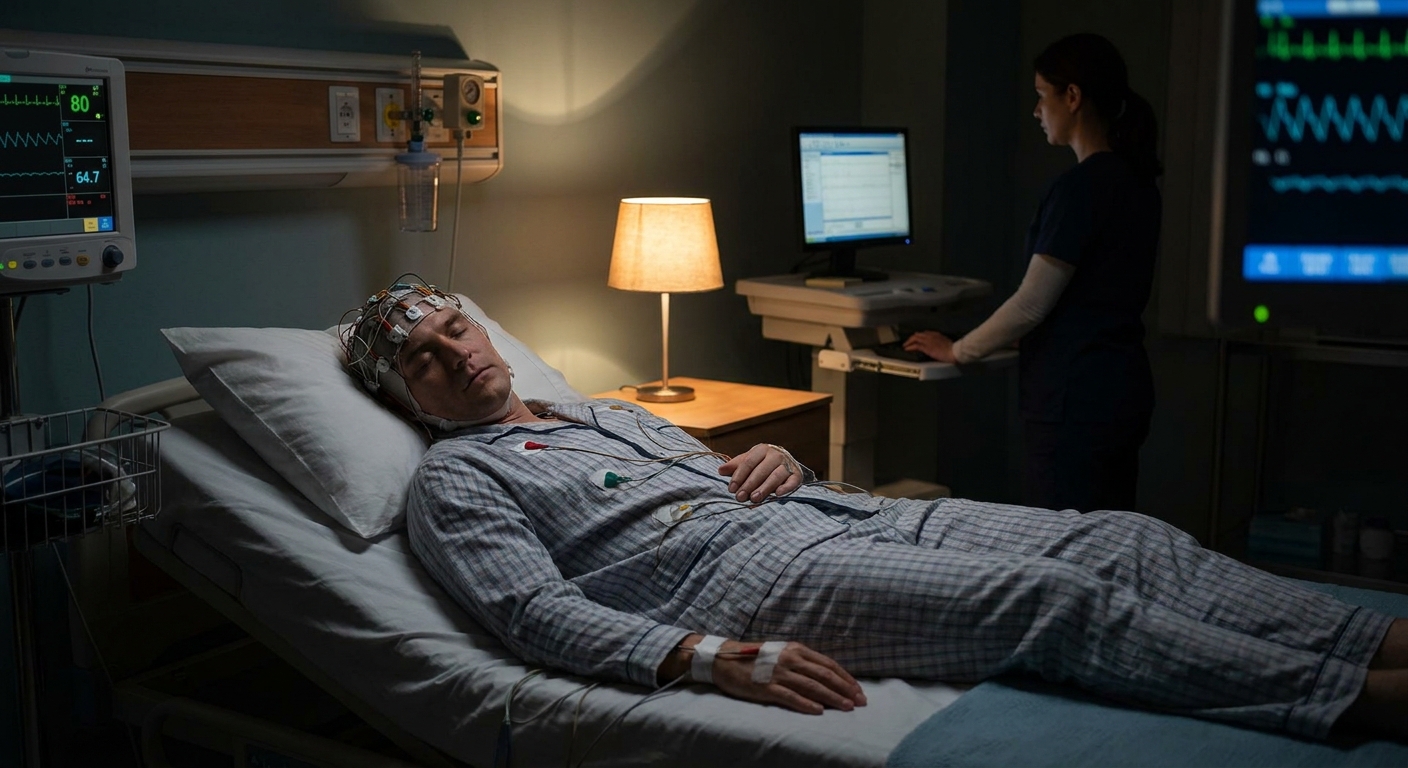
A lab sleep study is the most comprehensive overnight test. It is done at a sleep center with a sleep technologist who sets you up, monitors your signals, and can troubleshoot sensors in real time.
What setup looks like
- You arrive in the evening with your pajamas and toiletries.
- You sleep in a private room that feels a bit like a simple hotel room.
- A technologist applies sensors to your scalp, face, chest, limbs, and finger.
- They test signals, dim the lights, and you sleep while your data is recorded.
Many people worry they “will not be able to sleep.” It is normal to sleep differently in a new environment. Sleep labs expect that, and they can often collect enough data even if your sleep is lighter or more broken than usual.
What it measures
Polysomnography typically includes:
- EEG (brain waves) to determine actual sleep stages and arousals
- EOG (eye movements) and chin EMG (muscle tone) to help stage REM and non-REM sleep
- Airflow and breathing effort (to distinguish obstructive vs central patterns)
- Pulse oximetry (oxygen saturation)
- ECG (heart rhythm)
- Leg EMG (to evaluate periodic limb movements)
- Body position and sometimes snoring sound
This is why lab studies can answer broader questions than “do I have OSA.” They can evaluate sleep fragmentation, unusual movements, possible parasomnias, and suspected narcolepsy (typically with an added daytime MSLT), among other issues.
What each test measures
Here is the simplest way to think about it:
- HSAT is primarily a breathing and oxygen test done at home.
- PSG is a whole sleep physiology test done in a lab.
HSAT strengths
- More convenient and usually less expensive.
- You sleep in your normal environment, which can reduce first-night effects.
- Often sufficient to diagnose moderate to severe OSA when symptoms and risk factors are strong.
HSAT limits
- Most HSATs do not measure brain waves, so they cannot reliably tell when you are asleep versus awake.
- Because of that, many HSAT reports use recording time rather than true sleep time. This can underestimate severity if you spent a lot of the night awake.
- Home tests can have sensor loss (cannula slips off, oximeter falls off), leading to incomplete data.
- HSAT may not reliably characterize central sleep apnea, hypoventilation, or more complex breathing patterns well enough for definitive answers in certain people. Device choice and accuracy depend heavily on your health history and what your clinician is trying to rule in or rule out.
PSG strengths
- Most complete picture of your sleep, including sleep stages and arousals.
- Technologist can fix sensors during the night, reducing data loss.
- Can distinguish and evaluate a wider range of sleep and breathing disorders.
PSG limits
- Less convenient, and can be more expensive depending on coverage.
- New environment can slightly change sleep patterns.
- Wait times for appointments can be longer in some regions.
Why HSAT is often first
In practice, HSAT is often chosen when the goal is to confirm suspected obstructive sleep apnea in someone who:
- Has classic symptoms (loud snoring, witnessed breathing pauses, gasping awakenings, excessive daytime sleepiness)
- Has risk factors (higher BMI, larger neck circumference, nasal obstruction, family history, post-menopausal status, certain jaw structures)
- Does not have major complicating conditions that warrant lab-level monitoring
For many people, HSAT is a practical and evidence-supported first step. If the HSAT clearly shows OSA, it can streamline treatment decisions.
Who may need PSG first
If any of these apply, clinicians often lean toward an in-lab study from the start, or they interpret HSAT results more cautiously:
- Significant cardiopulmonary disease (for example, heart failure) or prior stroke where central sleep apnea is a concern
- Chronic opioid use or other factors that raise the odds of central events
- Neuromuscular disease or suspected hypoventilation
- Severe insomnia that makes it likely a home test will record lots of awake time
- Suspected parasomnias, nocturnal seizures, or other complex sleep problems beyond OSA
This is not about gatekeeping. It is about choosing the test that is most likely to give you a clean, actionable answer on the first try.
Why HSAT can be inconclusive
This is the part that frustrates people, understandably: you do the home test, you still feel awful, and the results come back as negative, borderline, or technically inadequate.
That does not automatically mean “nothing is wrong.” Common reasons a clinician may recommend an in-lab study after HSAT include:
- Low event count but high suspicion: Symptoms are strong, but HSAT did not capture enough events. This can happen if you slept lightly, spent more time on your side, or had underestimated severity due to awake time being counted as sleep.
- Not enough usable data: Sensors fell off or signals were poor.
- Possible non-OSA breathing pattern: Concern for central sleep apnea, hypoventilation, or complex patterns that need lab-level clarity.
- Need for broader evaluation: For example, significant insomnia, unusual behaviors in sleep, suspected periodic limb movement disorder, or unexplained oxygen drops.
If your HSAT is “normal” but you are still sleepy enough to nod off at stoplights, wake up choking, or have a bed partner witnessing breathing pauses, please do not self-dismiss. That is exactly when lab testing can be clarifying.
CPAP testing in the lab
Yes. Some sleep centers do a split-night study. That means the first part of the night is diagnostic, and if moderate to severe apnea is clear early on (and there is enough night left to do it well), the second part of the night is used to try positive airway pressure (PAP) and determine effective settings. Criteria vary by lab.
Other times, your first night is diagnostic only, and you come back for a separate PAP titration study if needed. Whether that makes sense depends on how clear the diagnosis is, the severity, and the clinic’s protocols.
Why watches are not diagnostic
I love well-designed consumer sleep tech. I test it for a living. But we have to be honest about what it can and cannot do.
Most watches and rings estimate sleep and sometimes flag “breathing disturbances” using combinations of movement (actigraphy), heart rate, heart rate variability, and sometimes oxygen saturation (SpO2). Some devices do continuous SpO2 overnight; others do spot checks, and algorithms vary widely. In some markets, a limited number of features have received regulatory clearance, but that still does not make a wearable equivalent to HSAT or PSG for diagnosis.
Wearables can be useful for:
- Spotting trends, like consistently low overnight oxygen
- Noticing that symptoms match nights with more “disturbance”
- Prompting you to talk to a clinician sooner
But a consumer wearable generally cannot replace HSAT or polysomnography because:
- They do not measure airflow or respiratory effort directly the way medical tests do.
- They cannot reliably score apneas and hypopopneas using the same clinical definitions and signal quality standards.
- They are not set up to differentiate obstructive vs central events with diagnostic confidence.
- They are not designed for clinical decision-making the way clinician-ordered studies are, including quality controls and standardized scoring rules.
If your watch is raising a red flag, treat it like a smoke alarm: it is a reason to check, not a diagnosis by itself.
How to prep
For HSAT
- Practice the setup earlier in the evening while you are still alert.
- Follow your normal routine as much as possible unless your clinician instructs otherwise.
- Secure sensors the way the instructions show. If you tend to toss and turn, take extra care with the cannula and oximeter.
- Charge or check batteries if your device requires it.
For a lab study
- Pack comfort items: your pillow, a familiar blanket, earplugs, or an eye mask if allowed.
- Avoid heavy alcohol unless your clinician specifically says to keep intake typical. Alcohol can worsen breathing events, but changing your pattern can also make the night less representative.
- Bring your medication list and take medications as directed unless told otherwise.
- Tell the technologist what you struggle with: insomnia, anxiety, nocturia, temperature sensitivity. They hear this every day and can often help.
What happens after results
If testing shows OSA, the next step is usually a treatment discussion based on severity, symptoms, anatomy, and preferences. Common options include:
- CPAP or APAP (positive airway pressure), often first-line for moderate to severe OSA
- Oral appliance therapy with a qualified dental sleep clinician for some mild to moderate cases
- Positional therapy if events are much worse on your back
- Weight management when relevant, as part of a broader plan
- Nasal or ENT evaluation if anatomy or obstruction is a major factor
If testing is negative but symptoms are significant, that is also a result with value. Your clinician may look for other sleep disorders (like insomnia, circadian rhythm issues, or periodic limb movements), medical contributors, medication effects, or the possibility that a different kind of sleep study is needed.
Which is better?
It is less about better and more about fit.
- If your situation looks like straightforward OSA, an HSAT can be a smart first step.
- If your case is complex, your symptoms are severe, or HSAT did not match your lived experience, polysomnography is often the clearer path.
The goal is not to win the testing Olympics. The goal is to get a reliable answer so you can treat the right problem.
FAQ
Is an HSAT uncomfortable?
Most people find it mildly annoying, not painful. The nasal cannula and finger sensor are the most noticeable. If you have sensory sensitivities, plan a little extra wind-down time so your nervous system can settle after setup.
Can HSAT miss mild sleep apnea?
It can. Because many HSATs do not measure brain waves, they may underestimate severity, especially if you were awake for portions of the recording or if events cluster in REM sleep that was not well captured.
What if I barely sleep in the lab?
Tell the sleep center ahead of time if you have insomnia. Labs can often still collect useful data, and your clinician can decide whether the study was adequate or needs repeating. Even fragmented sleep can show breathing patterns clearly.
If my watch shows oxygen drops, should I ask for testing?
Yes, especially if you also have snoring, witnessed breathing pauses, morning headaches, high blood pressure, or significant daytime sleepiness. Bring a few nights of data as context, but expect your clinician to confirm with a medical-grade test.
A safety note
If you are sleepy enough to doze off while driving, at work, or in other safety-sensitive situations, take that seriously. Avoid driving when drowsy and contact a clinician promptly. Severe daytime sleepiness is not just uncomfortable. It can be dangerous.
A gentle next step
If you suspect sleep apnea, you do not have to guess your way through it. Start by sharing your symptoms clearly with a clinician, including what your bed partner notices and how daytime sleepiness affects your safety and quality of life.
And if you are dreading the idea of a sleep study, I want you to know this: whether you do it at home or in a lab, the point is not to catch you doing anything wrong. It is to collect enough good data to help you breathe steadily and sleep deeply again.