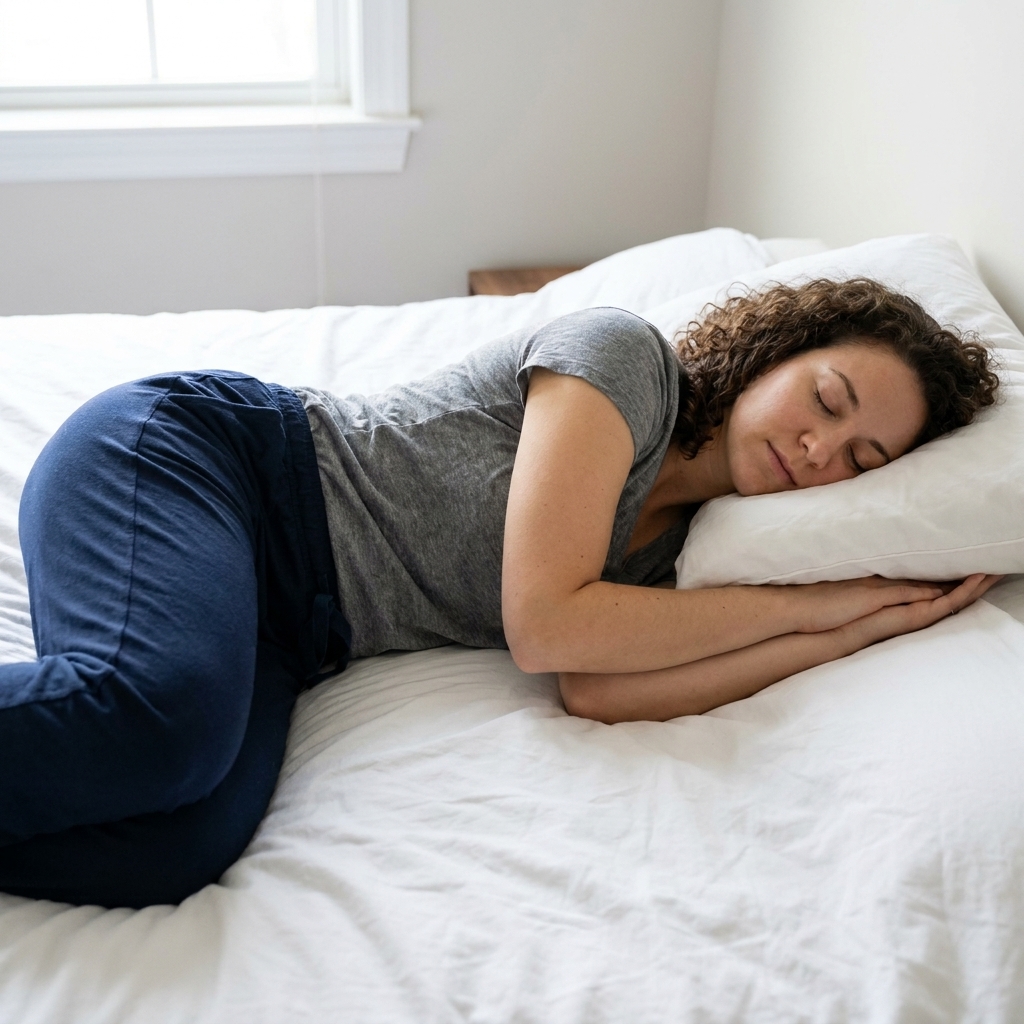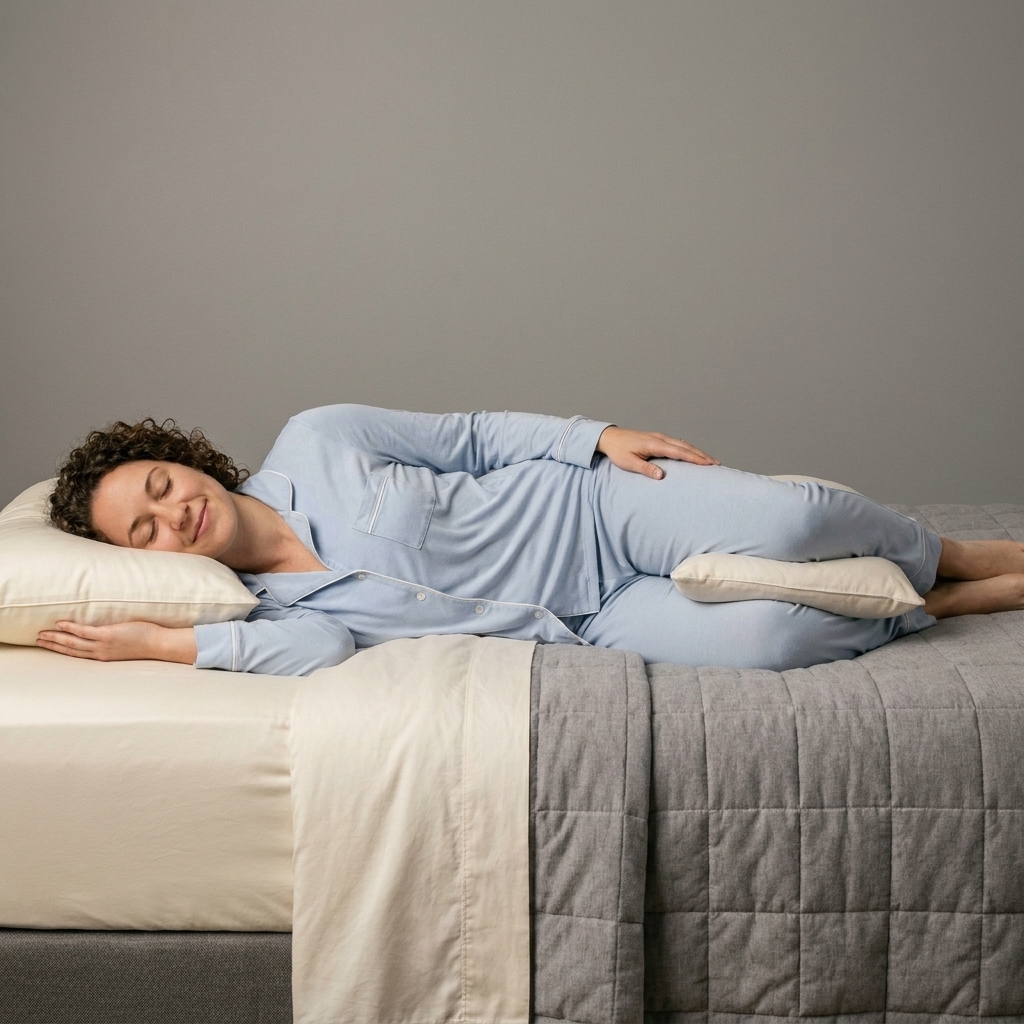
Find a realistic pillow loft range and the best fill based on sleep position, shoulder width, and mattress firmness so you can wake up with less neck pain.
The Rest Pact
Updated October 18, 2026
Created October 18, 2026
Adjustable Bed Frames Explained

Maya Caldwell
Maya Caldwell is a certified sleep science coach and the lead researcher at RestPact. After overcoming years of chronic insomnia, she dedicated herself to making evidence-based sleep strategies accessible, helping others build bedtime routines that lead to deep, restorative rest.
If you have ever tried to sleep through a partner’s snoring, woken up with that familiar throat-burn from reflux, or noticed your legs feel heavy at night, you already know the frustrating truth: “Just get more sleep” is not actionable advice.
Adjustable bed frames are not a magic cure, but they are one of the rare pieces of sleep gear that can change your body position with real physiological effects. Elevation can change how your airway behaves, reduce how easily stomach contents flow back up, and may help reduce dependent swelling in the lower legs for some people. The goal is not to buy a gadget. The goal is to create a position your body can actually recover in.
What it does
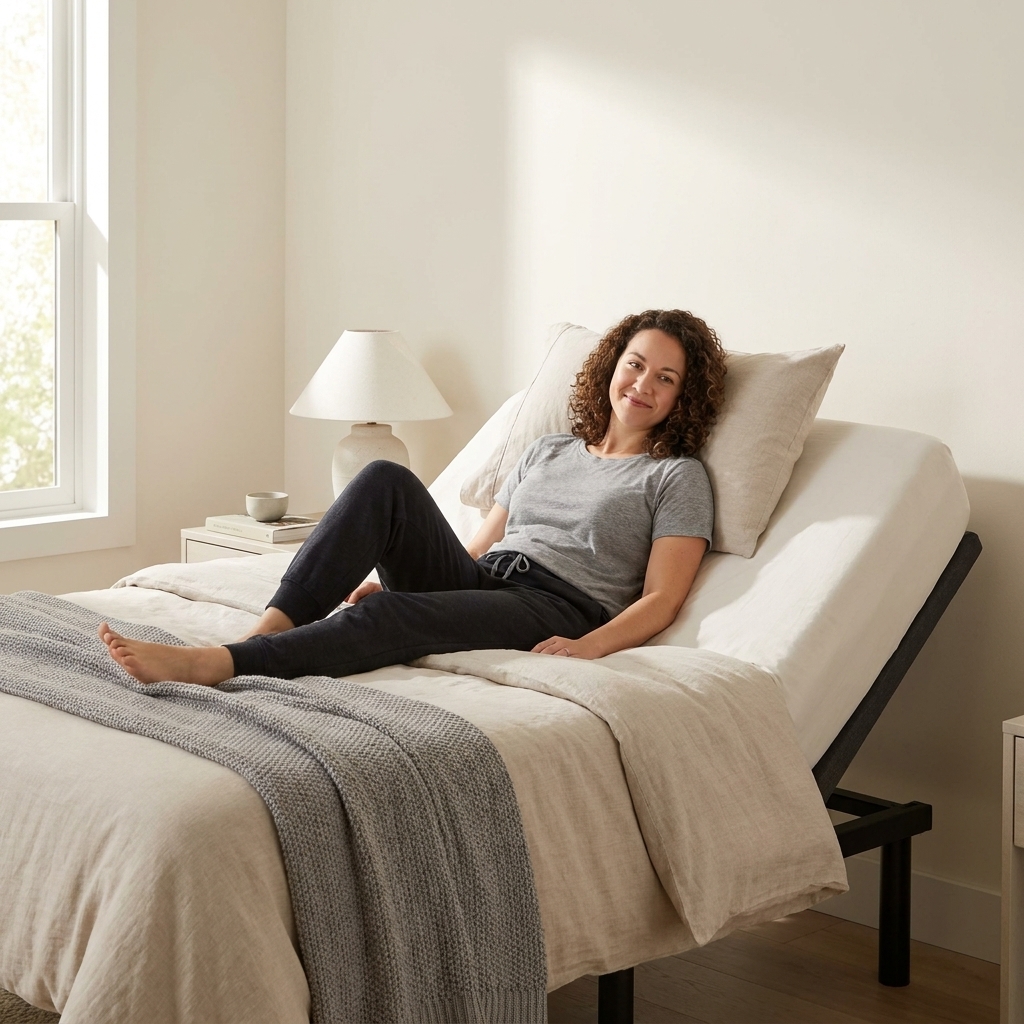
An adjustable bed frame, also called an adjustable base, lets you raise and lower the head section, the leg section, or both. Some models offer preset positions like “zero gravity,” plus extras like under-bed lighting, massage motors, USB ports, or snore response features.
Head elevation
Typically ranges from a subtle lift to a fairly steep incline. Even small angles can matter for reflux and snoring because gravity and tissue position change quickly once you are no longer flat.
Leg elevation
Raising the knees and lower legs can reduce pressure on the low back for some sleepers and can be useful for people who deal with leg swelling or a “heavy legs” feeling at night.
Zero gravity
This is the signature setting people ask about. In most designs it means:
- Head slightly elevated
- Knees bent with legs elevated
- Hips supported so the lower back is not forced into an exaggerated arch
“Zero gravity” is marketing language, not a medically defined position. Think of it as a preset that approximates a neutral-body posture inspired by how bodies are supported in low-load environments. In practice, you are aiming for a supported curve from head to pelvis and a gentle opening of the hip angle, not a dramatic chair-like bend.
Benefits in plain English
Let’s connect the dots between position changes and common sleep disruptors. I will keep this evidence-based and practical. Think “risk reducer” and “symptom helper,” not “medical treatment.”
1) Snoring
Most snoring is vibration from partial airway narrowing. When you lie flat, gravity and relaxed tissues can encourage the tongue and soft palate to fall backward, especially in back sleepers. Raising the head and upper torso slightly can reduce that collapse for some people, but it is not universal. Depending on anatomy and sleep apnea severity, elevation may help, do nothing, or occasionally make things feel worse.
- What tends to help: mild head-of-bed elevation paired with side sleeping when possible (positional changes have stronger evidence than adjustable bases specifically)
- What can backfire: cranking the head too high so your chin drops toward your chest, which may actually narrow the airway
If snoring is loud, chronic, or paired with gasping, choking, morning headaches, high blood pressure, or extreme daytime sleepiness, treat it as a possible obstructive sleep apnea signal. An adjustable base can make sleep more comfortable, but it does not replace diagnosis or CPAP when needed.
2) Acid reflux and GERD
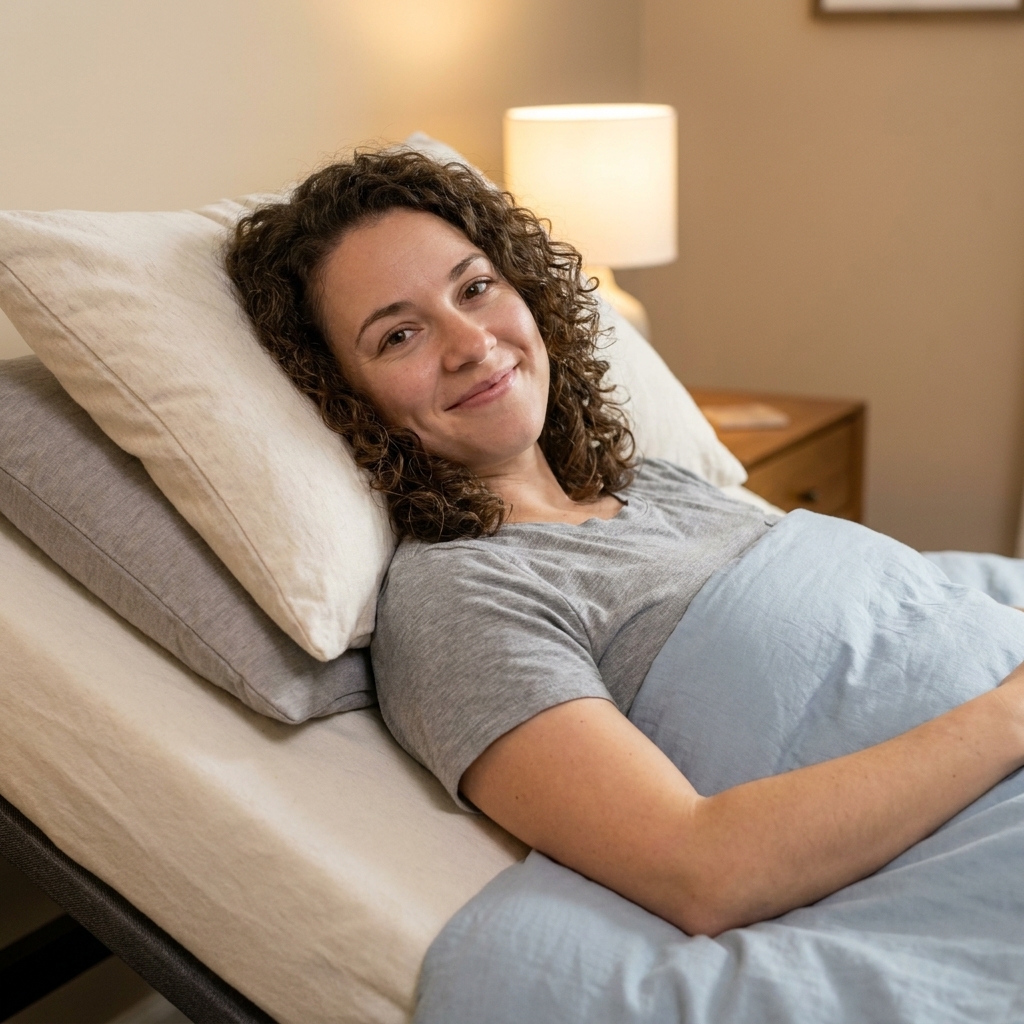
Reflux often worsens when lying flat because stomach contents can move upward more easily. Elevating the upper body can reduce episodes for many people. The key is “upper body,” not just “head.”
From a mechanics standpoint, adjustable frames shine because they can lift you in a consistent way night after night. Many people try to hack this with extra pillows, but pillow stacking often bends the neck and can increase pressure at the abdomen, which is uncomfortable and sometimes counterproductive.
- What to try: a gentle incline that raises your torso as a unit. If you want a concrete starting point, many clinicians suggest raising the head of the bed by about 6 to 8 inches, or using a wedge roughly in the 10 to 30 degree range. Start on the low end and adjust based on symptoms.
- What to avoid: sliding down the bed into a folded posture. If you wake up scrunched, lower the angle and consider a grippier mattress pad, a retainer bar (if your base supports it), or a different pillow setup.
Important safety note: if you have significant reflux symptoms, trouble swallowing, unexplained weight loss, vomiting blood, black stools, or persistent chest pain, get medical evaluation. Nighttime reflux is common, but it should not be ignored.
3) Circulation, swelling, and “heavy legs”
A lot of people notice their ankles leave sock lines at night, or their legs feel puffy after sitting all day. Elevating the legs may help reduce dependent pooling and swelling for some sleepers, especially after long periods of sitting or standing.
In real life terms: if your day involves long hours at a desk, travel, pregnancy, or standing shifts, a modest leg elevation setting may help you feel less swollen and more comfortable at bedtime. If swelling is persistent, one-sided, painful, or new, that is not a “sleep gear” problem, it is an evaluation problem.
- What to try: elevate legs so knees are comfortably bent and calves are supported
- Watch for: numbness or tingling. If your legs fall asleep, change the angle and check that the edge of the mattress is not pressing behind your knees.
If you have diagnosed vascular disease, heart failure, lymphedema, or a history of blood clots, ask your clinician what positions are appropriate for you. Comfort changes are not always neutral in complex medical cases.
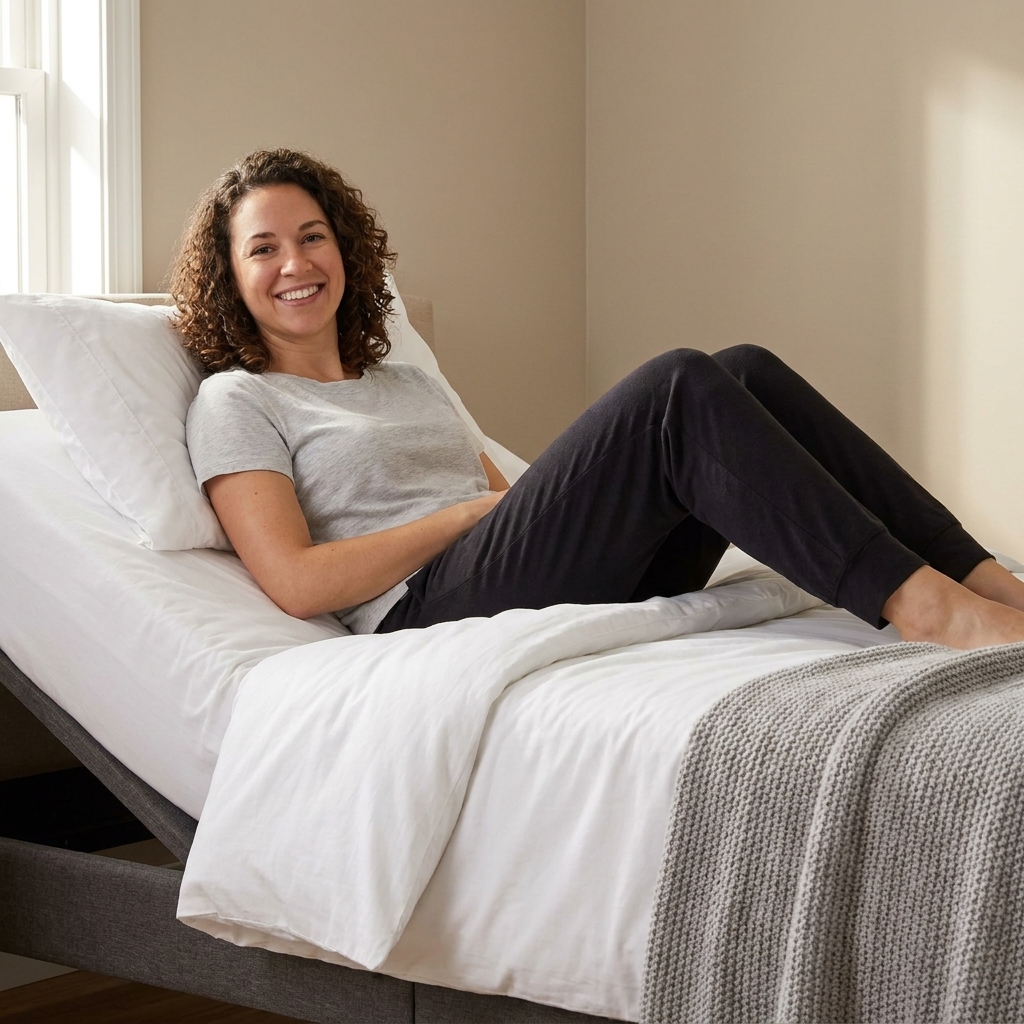
4) Back comfort and recovery
While this article is focused on snoring, reflux, and circulation, it would be incomplete not to mention basic musculoskeletal comfort. The position you can tolerate is the position you can actually stay in long enough to cycle through deeper sleep stages.
Zero gravity settings can reduce the sense of “pull” in the low back for some people, partly by supporting the knees and redistributing pressure. If you wake up from discomfort and reposition repeatedly, an adjustable base can sometimes reduce those micro-awakenings.
Find your settings
I used to be the person who would run a month-long spreadsheet experiment for a pillow. So I understand the urge to optimize. But with adjustable bases, simple beats perfect.
A gentle 7-night plan
- Nights 1 to 2: Set head elevation low. Pay attention to reflux, snoring feedback, and whether your neck feels neutral.
- Nights 3 to 4: Add a small amount of leg elevation. Notice low back comfort and whether you feel less “heavy” in the legs.
- Nights 5 to 6: Try the preset zero gravity position, then reduce it slightly if you feel folded at the waist.
- Night 7: Choose the most comfortable setting and repeat it for consistency.
Consistency helps because routines and predictable setups can make it easier to wind down and stay asleep.
Common mistakes
Going too steep, too fast
If you raise the head a lot in one night, you may get neck strain, low back tension, or sliding. Start with a small incline and only increase if symptoms require it.
Chin to chest
For snoring, you want a long, open airway. If your pillow is too tall or the head is too elevated, the neck flexes forward. Lower the head section or switch to a lower loft pillow.
Sliding down the bed
Sliding can increase abdominal pressure and worsen comfort. Solutions include lowering the angle, choosing a mattress with better surface grip, using a fitted sheet with more tension, adding a mattress retainer bar if your base includes one, or adjusting knee elevation to “anchor” the pelvis.
Assuming massage equals better sleep
Massage motors can feel relaxing, but vibration can be stimulating for some people. If you use it, keep it brief and end the session before you are trying to fall asleep.
Who benefits most
- Reflux-prone sleepers: especially if symptoms worsen when lying flat
- People who snore: particularly back sleepers who can tolerate mild elevation (and who are also working on side sleeping when possible)
- Anyone with leg swelling or heavy legs: especially after long sitting or standing days
- Combination sleepers who read or wind down in bed: comfortable pre-sleep positioning can reduce tossing
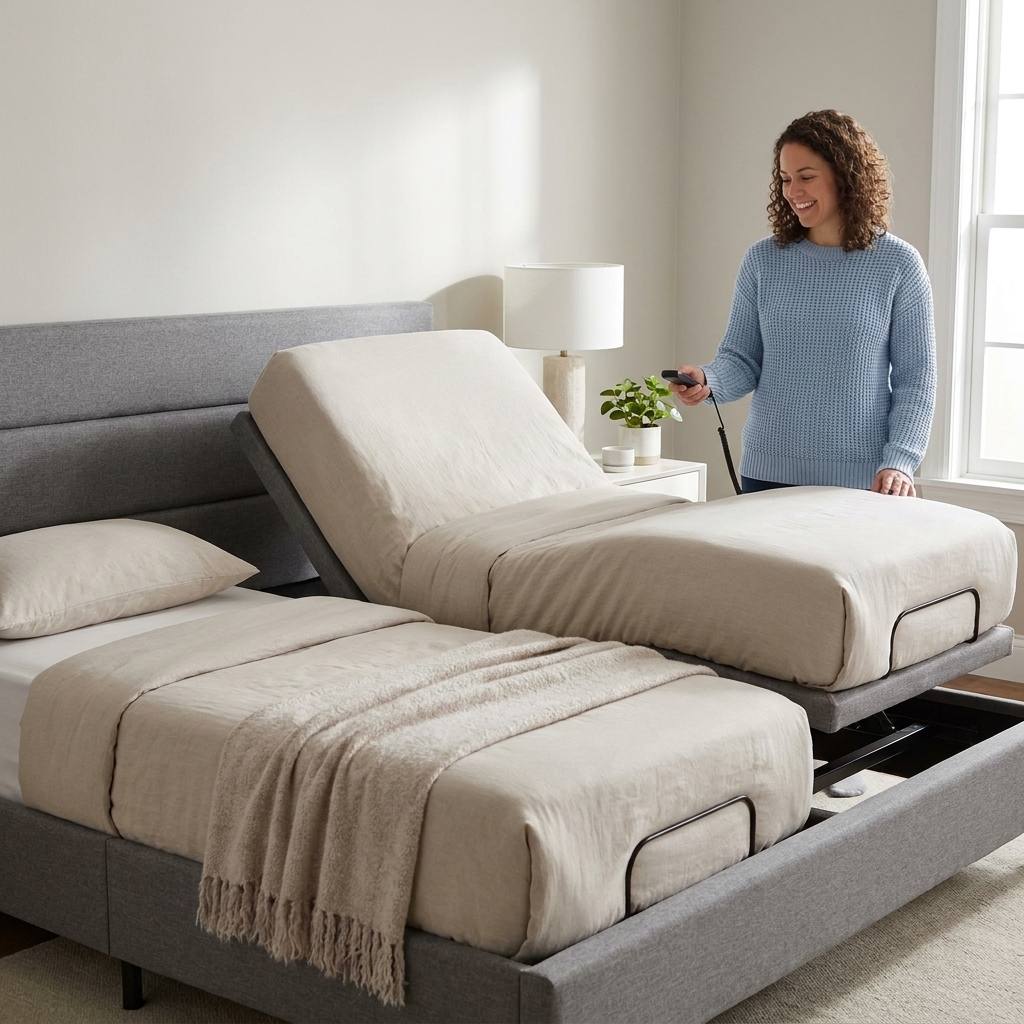
- People sharing a bed: a split configuration lets each person position independently
On the other hand, if your sleep is mainly disrupted by noise, light, temperature, or stress, your best return may come from blackout curtains, cooling bedding, or a gentler pre-bed routine. I say this as someone in the Pacific Northwest who considers blackout curtains a basic human right.
Buying checklist
Range of motion and smoothness
Test how gradual the adjustments feel. Jumpy motors can wake you or your partner.
Wall-hugger design
Some bases slide the bed backward as it elevates so your nightstand stays within reach. This matters more than people expect.
Weight capacity and mattress fit
Most modern foam and hybrid mattresses work well. Very stiff innerspring models may not flex as intended. Confirm compatibility and warranties for both the mattress and base.
Noise level
If you are a light sleeper, motor noise can become a real issue. Look for credible reviews that mention sound, not just features.
Split vs standard
- Split king: ideal if partners have different needs (snoring, reflux, reading in bed). Practically, it usually means two Twin XL mattresses on two bases.
- Standard: simpler and usually less expensive, but you move together
Headboard and frame details
If you want to keep a headboard, check whether the base includes headboard brackets or is compatible with your existing bed frame. This is one of those small details that becomes a big headache after delivery.
Bedding reality
Plan on deep-pocket sheets. For split setups, some people prefer split-top sheets so partners can adjust independently without turning the blanket into a tug-of-war.
Body fit and sleep style
Very tall or very short sleepers can find that hinge points hit in awkward places depending on the base and mattress. Stomach sleepers often dislike head elevation. If you know you slide easily, prioritize a base with a retainer bar or use a grippy pad.
Zero gravity limits
Zero gravity is best thought of as a comfort preset that often supports spinal neutrality and reduces pressure points. Many people report it feels like their body “lets go” more easily.
What it cannot do is treat sleep apnea, cure GERD, or fix circulatory disease. It can, however, make symptom management easier by helping you maintain a helpful posture for longer. In sleep, sustained comfort is a big deal. The body does not recover well when it keeps waking to adjust.
Safety and when to ask for help
Most healthy adults can experiment with mild elevation safely. If you have symptoms that suggest an underlying condition, use the base as a comfort tool while you prioritize evaluation, not as a workaround that delays care.
Talk to a clinician if you have:
- Possible obstructive sleep apnea symptoms (loud snoring, witnessed pauses in breathing, gasping, significant daytime sleepiness), or diagnosed sleep apnea that is not well controlled
- Severe GERD symptoms, difficulty swallowing, or persistent chest pain
- Heart failure, significant edema, vascular disease, or a history of blood clots
- Recent surgery where positioning matters
- Pregnancy complications that require specific sleep positions
If your adjustable base helps you sleep better, that is wonderful. If you are using it to avoid getting a symptom evaluated, that is a red flag. Comfort tools should support care, not replace it.
Quick FAQ
Is sleeping elevated bad for you?
For most people, mild elevation is not harmful. The main risks are musculoskeletal strain or sliding into a curled posture. If you wake up stiff, reduce the angle and adjust pillows.
Do adjustable bases help with snoring every time?
No. Snoring has multiple causes, including anatomy, alcohol use, nasal congestion, and sleep apnea. Elevation helps some people, especially when it prevents airway tissue collapse in back sleeping, but it is not guaranteed.
What is better for reflux, an adjustable base or a wedge pillow?
Both can work. Adjustable bases often feel more stable and consistent because they elevate the torso as a unit. Wedges can be effective and less expensive, but some people slide off or find them too firm.
Can I use an adjustable base with a memory foam mattress?
In most cases, yes. Foam and many hybrids flex well. Always verify with the mattress manufacturer, especially for thicker models.
The takeaway
Adjustable bed frames are not just a luxury add-on. They are a positioning tool. When used thoughtfully, head and leg elevation, especially a comfortable zero gravity posture, can reduce some of the most common sleep disruptors: snoring, reflux discomfort, and leg heaviness.
If you are exhausted and you need one change that can make your nights feel less like a battle, start with this: pick one symptom you want to target, make small position changes, and keep the rest of your routine steady for a week. Better sleep is often less about willpower and more about removing the physical friction that keeps your body on alert.