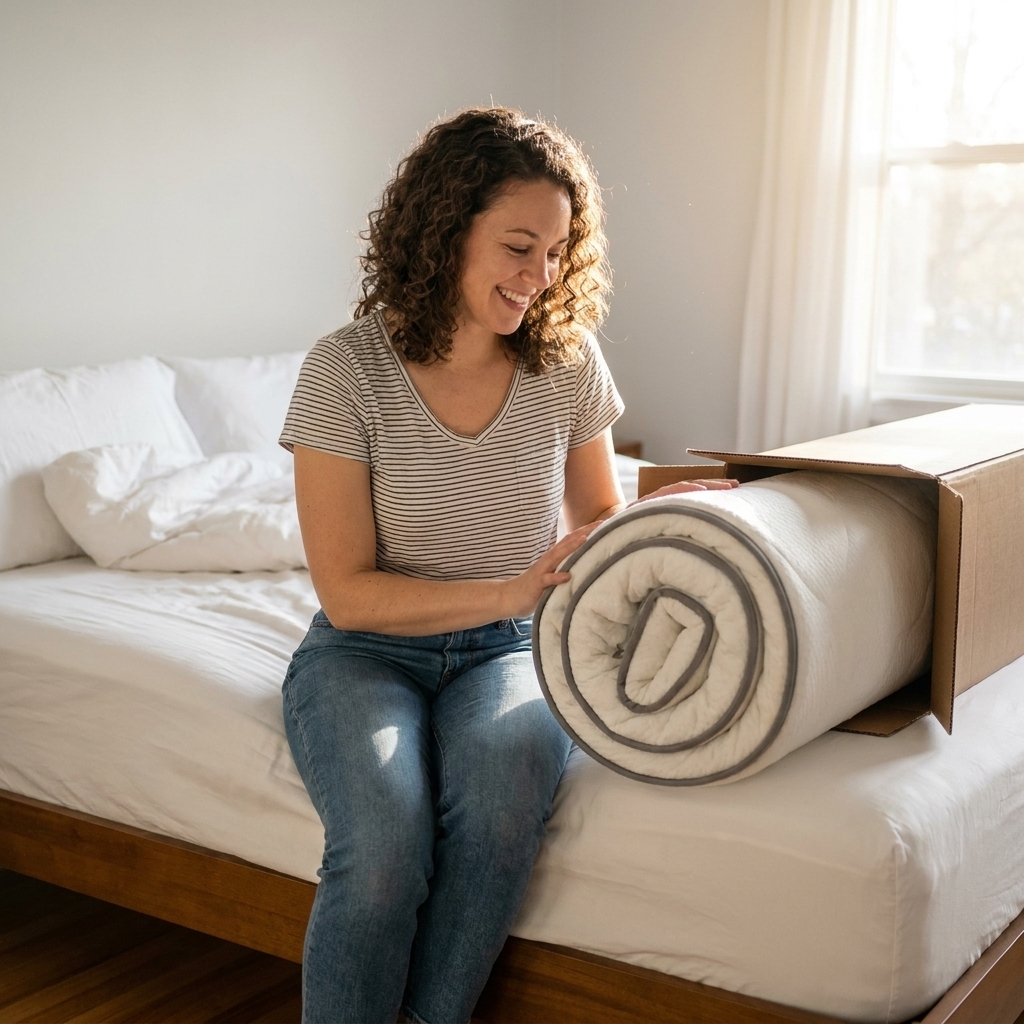
A science-backed 30-day plan to soften a new mattress safely. Simple steps for foam, hybrid, and innerspring beds, plus what not to do if you want comfort wi...
The Rest Pact
Updated October 18, 2026
Created October 18, 2026
How to Buy a Truly Non-Toxic Mattress

Maya Caldwell
Maya Caldwell is a certified sleep science coach and the lead researcher at RestPact. After overcoming years of chronic insomnia, she dedicated herself to making evidence-based sleep strategies accessible, helping others build bedtime routines that lead to deep, restorative rest.
I used to be the person who could fall asleep anywhere because I was so exhausted. Then my body stopped cooperating. During my insomnia years, I became painfully aware of how everything in a bedroom can nudge your nervous system, including smells you stop noticing after a few nights. If you have ever unboxed a mattress and felt that chemical hit, you are not imagining it.
This guide is here to help you buy a mattress that is as genuinely low-toxin as possible, without getting trapped in marketing language. We will talk about volatile organic compounds (VOCs), the certifications that actually mean something, and the materials most likely to keep your indoor air cleaner.

What “non-toxic” means
In the US, there is no single federal definition or one official standard for the term “non-toxic” in mattress marketing. Brands can use it loosely to mean anything from “we do not add fiberglass” to “our product meets specific chemical-emissions standards.” Oversight is generally handled through broader truth-in-advertising rules and state consumer-protection laws, not a “non-toxic mattress” rulebook.
When people say they want a truly non-toxic mattress, they are usually aiming for three practical outcomes:
- Lower chemical emissions into your indoor air, especially right after unboxing (often discussed as VOCs).
- Fewer concerning chemical treatments like added flame retardants and performance finishes.
- More transparency about what is inside the mattress, including foams, adhesives, and the fire barrier.
Important nuance: “organic” and “low-VOC” are related, but not identical. An organic certification is primarily about how a raw material was grown and processed, while an emissions certification is about what comes off the finished product into the air you breathe.
VOCs and off-gassing
VOCs are a broad category of chemicals that can evaporate into the air at room temperature. Some VOCs are relatively benign. Others are irritants or are associated with health concerns depending on the chemical, concentration, and duration of exposure.
Off-gassing is the release of those volatile compounds. New mattresses often off-gas most strongly in the first hours to days. Smell is a clue, but it is not a reliable measurement. Some VOCs have a strong odor at low concentrations. Others may have little smell but still be present.
If you are chemically sensitive, have asthma, are pregnant, or are shopping for a child, an emissions-focused certification (like GREENGUARD Gold) can be a particularly useful filter.
How to reduce exposure
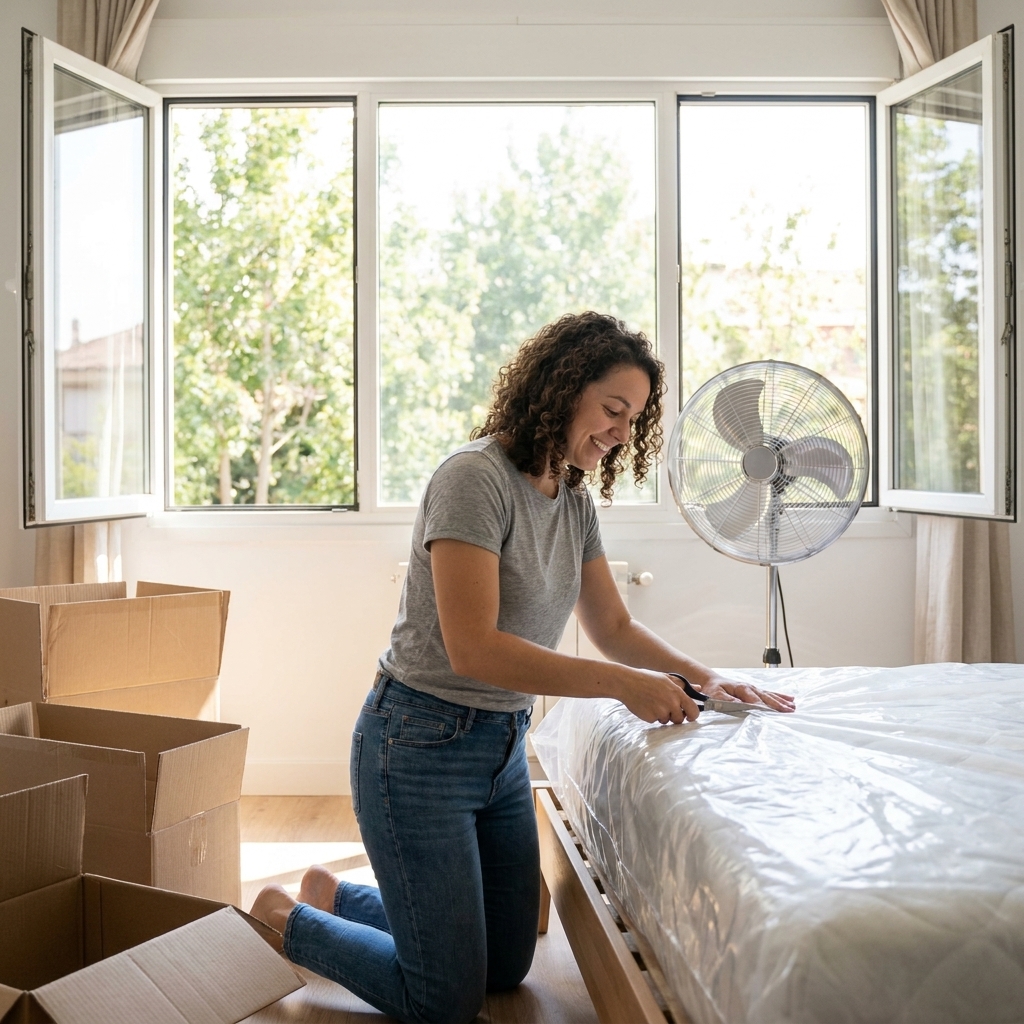
- Let the mattress air out in a well-ventilated room for 24 to 72 hours if you can.
- Open windows, run a fan, and consider a HEPA air purifier during the first week.
- Wash any removable covers per instructions before use (if allowed).
- If odor persists beyond the first week or two, contact the brand. Ask for emissions testing info and return options.
Certifications that matter
Certifications are not perfect, but they can provide guardrails. The key is knowing what the certification covers: raw materials, finished-product emissions, or both.
GOTS
Best for: organic cotton and organic wool components, plus restrictions on many chemicals used in processing.
GOTS (Global Organic Textile Standard) is one of the most meaningful standards for textiles. If a mattress has a GOTS-certified cover or quilting layer, it generally signals the cotton or wool meets organic and processing criteria, with limits on a range of harmful inputs.
What to look for:
- Language like “GOTS certified” with a license number or certifier name.
- Clarity about which parts are GOTS certified (cover, batting, quilting).
Common greenwashing move: “Made with organic cotton” without stating GOTS certification or the percentage of organic fiber.
GOLS
Best for: verifying organic natural latex content in foam layers.
If you want latex and you want the highest level of organic verification for latex foam, GOLS (Global Organic Latex Standard) is the standard most shoppers are trying to find.
Reality check: Not all excellent latex is GOLS certified. Some brands use high-quality natural latex that is not certified organic. GOLS is a plus, not an automatic requirement, especially if it blows up your budget.
GREENGUARD Gold
Best for: low chemical emissions from the finished product into indoor air.
If you are trying to avoid VOC exposure, GREENGUARD Gold is one of the clearest signals available because it focuses on emissions, not just ingredient lists. It is commonly used for products intended for sensitive environments like schools and nurseries.
What to look for: a listing that identifies the exact product name or model. Ideally, the brand can point you to the certification listing, not just a logo on a product page.
OEKO-TEX Standard 100
Best for: screening textiles and foams for a long list of harmful substances.
OEKO-TEX Standard 100 tests for many substances that consumers want to avoid in fabrics and foams. It does not mean “organic,” and it is not primarily an emissions certification for the whole mattress, but it is still a helpful safety screen for components like covers, quilting, and foam layers.
Tip: OEKO-TEX product class matters. Stricter classes are intended for more sensitive use cases, including baby products.
CertiPUR-US
Best for: a baseline content and emissions screen for polyurethane foam.
If a mattress contains memory foam or polyfoam, CertiPUR-US is better than no standard at all. It indicates the foam is made without certain heavy metals and certain flame retardants, and it sets limits on VOC emissions for the foam component.
Limits to know:
- It applies to the foam component, not the entire mattress.
- It does not cover many mattress-wide contributors like the cover fabric, adhesives, and the fire barrier.
- It does not make polyurethane foam “natural” or “non-toxic.” It is a set of restrictions and testing requirements for that foam.
Why you need more than one
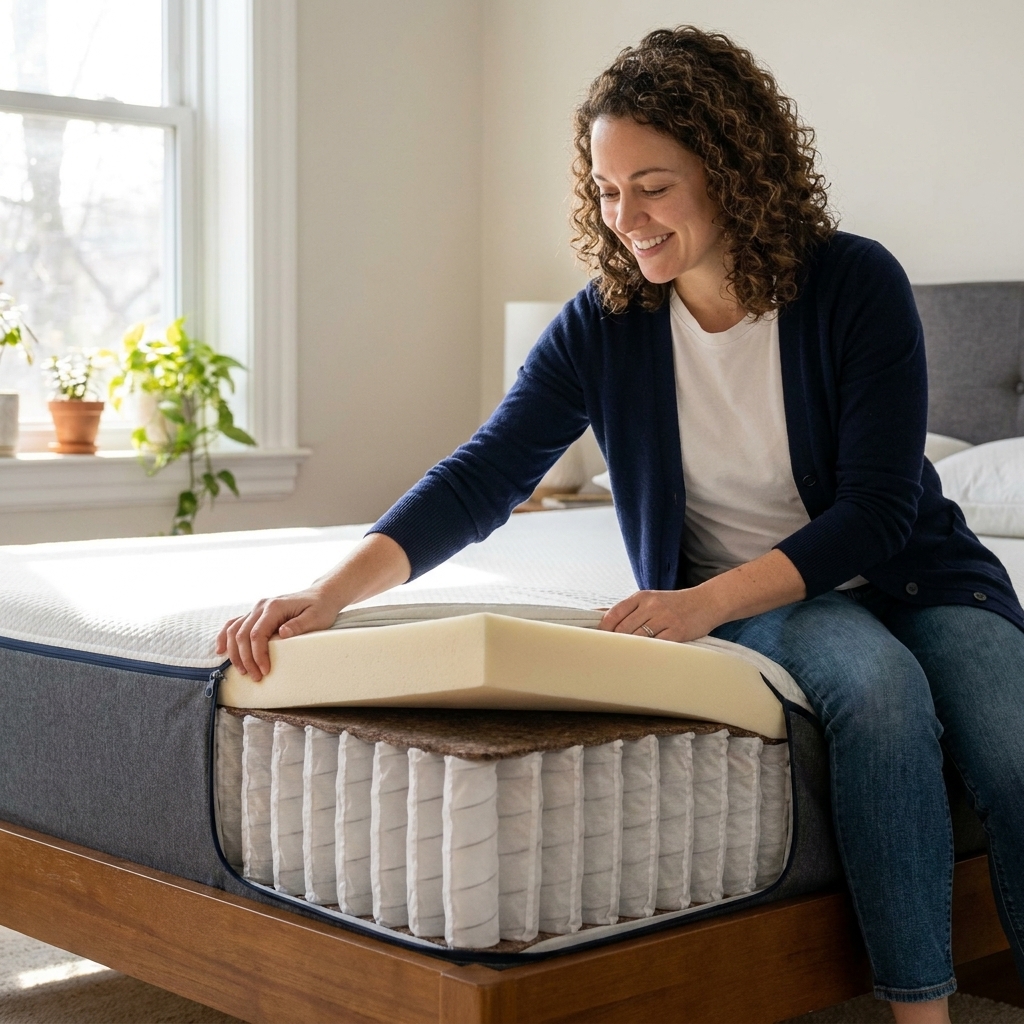
A mattress is a stack of parts: cover, quilting, comfort layers, support core, adhesives, and a fire barrier. One certification rarely covers all of it. A strong combination might look like:
- GOTS for the cotton or wool cover and quilting
- GOLS (or clearly documented natural latex sourcing) for latex layers
- GREENGUARD Gold for whole-product emissions, especially if you are sensitive
Materials to prioritize
Here is the material reality beneath the marketing.
Natural latex
Latex foam made primarily from rubber tree sap is often a cornerstone of “cleaner” mattress builds because it can be made without polyurethane foam. It is also naturally resilient, which can help with durability.
Two process types you will see:
- Dunlop latex: typically denser, often used for support layers.
- Talalay latex: typically plusher and more consistent, often used for comfort layers.
What to ask: Is the latex 100 percent natural, blended, or synthetic? Is it GOLS certified? Is it OEKO-TEX certified? A trustworthy brand will answer plainly.
Latex allergy note: People worry about latex allergies for good reason. Many individuals with latex sensitivity do fine with finished latex foam, but sensitivities vary. If you know you react to latex, talk to your clinician and consider a different build.
Memory foam and polyfoam
Polyurethane-based foams are common because they are inexpensive and easy to tune for feel. They can also be a bigger source of odor and VOC concerns for some shoppers.
If you choose foam: look for CertiPUR-US at minimum and consider prioritizing mattresses that also carry a whole-product emissions certification like GREENGUARD Gold.
Wool and cotton
Wool is frequently used as a fire barrier and temperature-regulating quilting layer. Cotton is common in covers.
Best-case signals: GOTS certified cotton and GOTS certified wool (when applicable). If wool matters to you ethically or for allergies, ask about sourcing and whether it is washed and processed with restricted chemicals.
Finishes to watch
If you are shopping for low-toxin, do not get so focused on foam that you miss the “extras.” Ask whether the cover or quilting includes:
- Added fragrances or deodorizers
- Antimicrobial treatments
- Stain repellents
- “Cooling” coatings or performance finishes
Fire barriers
Mattresses sold in the US must meet federal flammability requirements, including 16 CFR 1632 and 16 CFR 1633. Brands can comply in different ways, including:
- Wool barriers
- Rayon or synthetic fire-barrier socks that may incorporate silica or other fire-resistant chemistries
- Inherently flame-resistant fibers
Some shoppers want to avoid certain chemical treatments. The key is transparency. Ask what the fire barrier is made of and whether any added chemical flame retardants are used in the build.
Fiberglass
Fiberglass is sometimes used as a fire barrier in lower-cost mattresses, especially all-foam models. If the cover is removed or damaged, fiberglass can escape and become a major nuisance that may be difficult and expensive to remediate.
How to screen it out:
- Ask directly: “Does this mattress contain fiberglass anywhere in the build?”
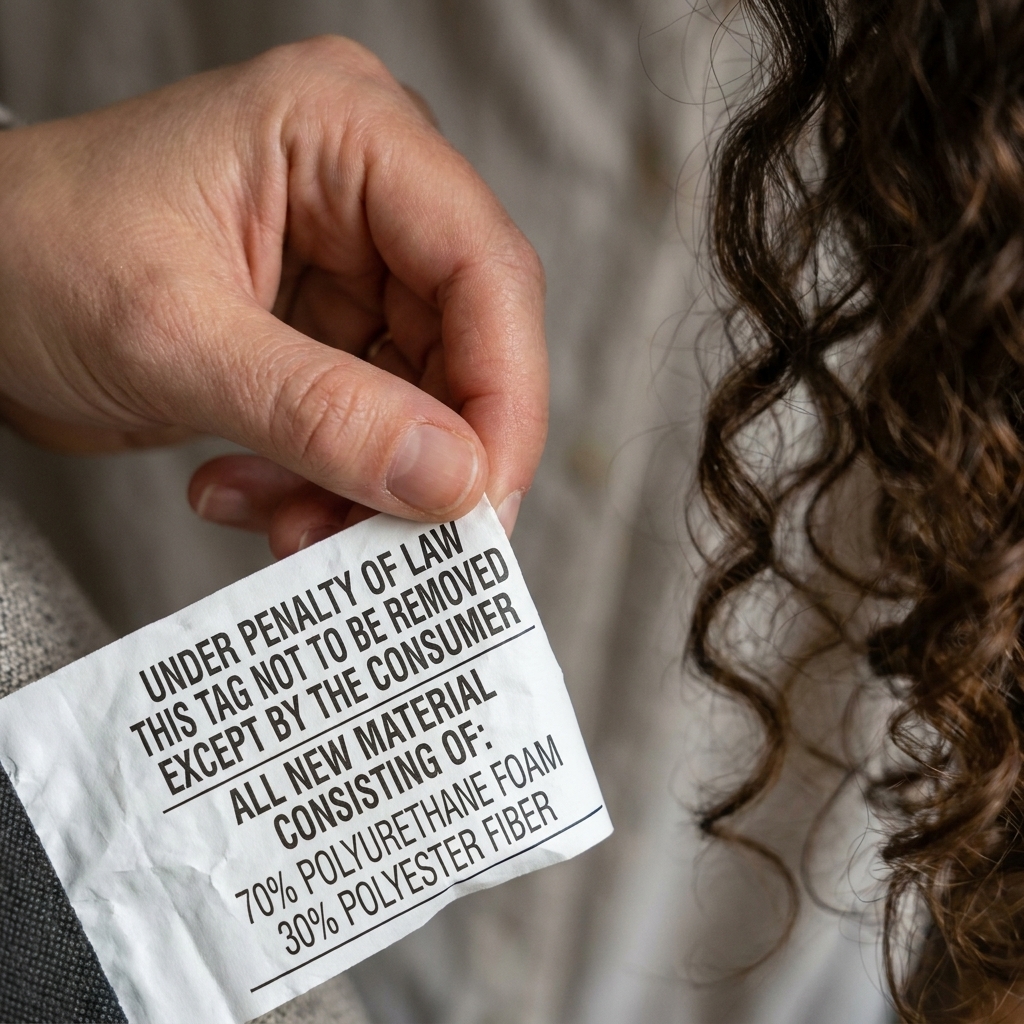
- Read the law label (the white tag) and look for terms like “glass fiber” or “fiberglass.”
- Be cautious of vague phrases like “glass wool” or “silica fiber” without clarification.
Common mattress builds
If you are trying to balance comfort, budget, and chemical concerns, it helps to think in “build types,” not just buzzwords.
All-latex
Why people choose it: avoids polyurethane foam, often durable, responsive feel.
Tradeoffs: can be pricier, and some people prefer a deeper hug than latex typically gives.
Latex hybrid
Why people choose it: latex comfort layers over coils can be a sweet spot for airflow, support, and lower-foam builds.
Tradeoffs: still contains multiple components, so transparency around adhesives and fire barriers matters.
Innerspring with wool and cotton
Why people choose it: a more traditional build that can use wool as both cushioning and a fire barrier.
Tradeoffs: comfort depends heavily on the quilting and padding layers, and some models still include foam.
All-foam
Why people choose it: often cheaper and good motion isolation.
Tradeoffs: typically the hardest category for low-toxin shoppers, so prioritize detailed materials disclosure and whole-product emissions testing when possible.
How to read listings
When I am vetting a mattress for low-toxin potential, I am looking for specificity. The safest brands are often the least poetic.
Green flags
- Full layer breakdown with thickness, density (for foam), and material type.
- Certification details, not just logos. Ideally, the brand can provide certificate numbers or direct you to listings.
- Fire barrier disclosure in plain language.
- Adhesive disclosure, especially if layers are glued. “Water-based” adhesives are sometimes lower odor, but not always low-emissions. If this matters to you, look for emissions testing and clear documentation.
Yellow flags
- “Eco,” “green,” “natural,” “plant-based,” or “soy foam” without certifications or percentages.
- “No VOCs” claims with no emissions testing. Almost all manufactured products emit something.
- Organic claims that apply only to one small component, like “organic cotton piping.”
Red flags
- No layer list at all.
- Refusal to answer whether fiberglass is present.
- Certifications that do not match the materials described, or certifications that are clearly for a different product category.
Quick checklist
If decision fatigue is kicking in, here is a practical filter you can use in a few minutes per brand.
1) Decide what you avoid
- Fiberglass (for many shoppers, this is non-negotiable)
- Added chemical flame retardants (ask how flammability is achieved)
- Fragrances, antimicrobials, stain repellents, and “cooling” finishes (if you are sensitive)
2) Pick certification priorities
- Want organic textiles? Prioritize GOTS for the cover and quilting.
- Want organic latex? Prioritize GOLS.
- Want low emissions? Prioritize GREENGUARD Gold for whole-product testing.
- Buying a foam mattress? Treat CertiPUR-US as a baseline, not a finish line.
3) Confirm what the cert covers
Ask: “Is this certification for the entire mattress, or only specific components like the cover or foam?” A good brand will answer without evasiveness.
4) Plan for delivery week
Even with the best materials, I like to set people up for success: ventilation, clean bedding, and a calm wind-down routine while any new-product odors fade. If you are airing it out indoors, put a breathable barrier under the mattress if you are worried about scuffing floors, and keep the room ventilated.
5) Know your exit
Before you buy, read the trial period and return policy carefully. If you are sensitive to smell, you want a realistic return window and clear instructions for pickups, repackaging, and fees.
FAQ
Is an “organic mattress” automatically non-toxic?
No. Organic certifications are strongest for specific raw materials like cotton, wool, and latex. A mattress can have an organic cover but still use adhesives or foam layers you would prefer to avoid. Think of “organic” as one valuable piece of the puzzle.
Which matters more: GOTS or GREENGUARD Gold?
They answer different questions. GOTS helps validate organic textiles and restricted processing chemicals. GREENGUARD Gold focuses on emissions from the finished product. If VOC sensitivity is your main issue, GREENGUARD Gold may feel more directly relevant. If avoiding pesticide-intensive textile inputs is your priority, GOTS matters a lot.
Does CertiPUR-US mean a mattress is safe?
It means the polyurethane foam meets certain content restrictions and VOC limits for the foam component. That is helpful, but it is not the same as whole-mattress emissions testing, and it does not cover the cover, adhesives, or the fire barrier.
How can I confirm a mattress is fiberglass-free?
Ask customer support in writing and read the law label when you receive the mattress. If the brand will not clearly confirm “no fiberglass,” I treat that as a reason to walk away.
What is the best mattress type for low-toxin shoppers?
Many people land on latex hybrid builds (latex comfort layers with coil support) or all-latex mattresses, paired with a GOTS-certified cotton or wool cover. But the “best” choice depends on your comfort needs, budget, and sensitivity level. The safest shopping strategy is to combine transparent materials with meaningful certifications.
Bottom line
A truly non-toxic mattress is rarely about one magic label. It is about stacking evidence: transparent materials, credible third-party certifications, and clear answers about fire barriers, foams, finishes, and fiberglass.
If you are overwhelmed, start with two questions: What is it made of? and What testing backs up the claims? A mattress company that respects your sleep should respect those questions, too.