A clear, patient-first breakdown of home sleep apnea testing vs. in-lab polysomnography: equipment, measurements, limitations, and why smartwatches are not d...
The Rest Pact
Updated October 18, 2026
Created October 18, 2026
Sleepiness vs. Fatigue: What to Record Before Talking to Your Doctor

Maya Caldwell
Maya Caldwell is a certified sleep science coach and the lead researcher at RestPact. After overcoming years of chronic insomnia, she dedicated herself to making evidence-based sleep strategies accessible, helping others build bedtime routines that lead to deep, restorative rest.
I used to tell myself I was “just tired” and push through. As a former project manager who ran on four hours of sleep and too much coffee, I got good at minimizing symptoms. But when your days start blurring together and you cannot tell whether you are sleepy (you could doze off) or fatigued (your body feels drained), that distinction matters. It changes how you describe what is happening, what your clinician asks next, and how quickly you get to a safer plan.
This guide will help you separate sleepiness from fatigue using everyday examples, and it will walk you through what to record for one to two weeks before a medical appointment. Think of it as making your symptoms clear and usable so a clinician can do their job well.
First, a safety note
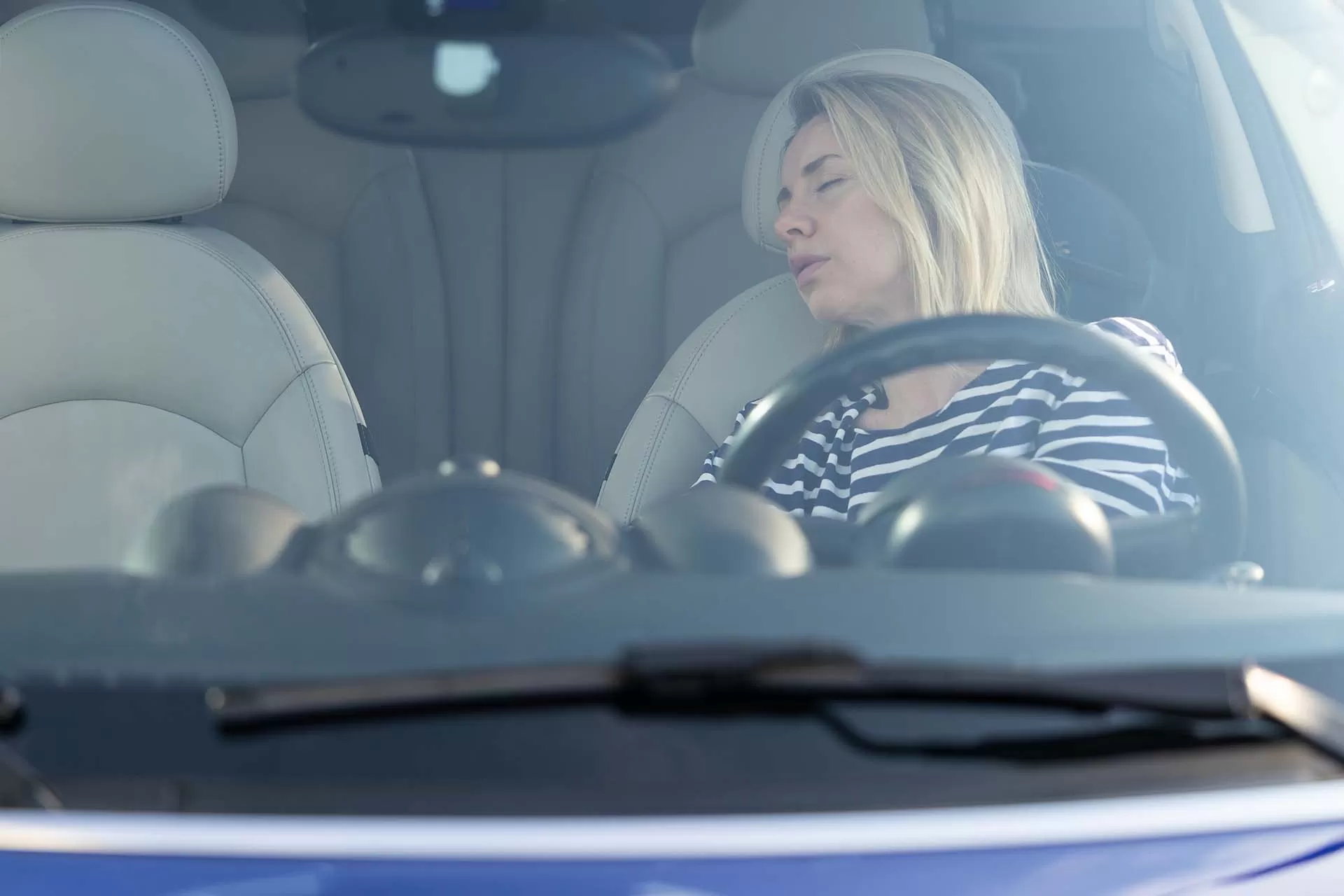
If you are struggling to stay awake or think you could doze off, do not drive. Drowsy driving can turn dangerous fast, especially with sleep debt, sedating medications, alcohol, or an untreated sleep disorder. If you are fighting to keep your eyes open, missing exits, drifting within your lane, or not remembering the last few minutes or miles, treat that as an immediate safety issue. Pull over, arrange a ride, or delay the trip. “I can power through” is a common thought right before a near-miss.
If your symptoms include sudden sleep episodes, frequent nodding off, or you have had close calls while driving or at work, contact your clinician promptly and ask for guidance about safety-sensitive activities.
Sleepiness vs. fatigue
Sleepiness: a drive to fall asleep
Sleepiness is the urge to doze. It often shows up as heavy eyelids, yawning, head bobbing, or “micro-moments” where your attention drops out. It can be worse in quiet, passive situations.
- Everyday example: You sit down to watch a show at 7:30 p.m. and you are out cold by 7:45, even if you did not mean to sleep.
- Another clue: You perk up temporarily with stimulation, like conversation, bright light, or getting up to move, but the dozing urge returns when things get quiet again.
Fatigue: low energy, low capacity
Fatigue is more like a depleted battery. You may feel weak, heavy, achy, unmotivated, or mentally foggy. But unlike sleepiness, you might not actually feel like you could fall asleep.
- Everyday example: You are exhausted after a normal day, but when you lie down your brain stays busy and sleep does not arrive easily.
- Another clue: You might describe it as “everything takes more effort,” even things you usually enjoy.
You can have both
Many people do. You can be intensely fatigued from strain or illness and also sleepy from insufficient or poor-quality sleep. That is why the tracking below focuses on patterns and context, not labels.

Quick self-check
Try these plain-language prompts and write down which ones match your day:
- Sleepiness check: “If I sat in a warm room for 10 minutes, could I fall asleep?” “Do I nod off while reading, watching TV, or riding as a passenger?”
- Fatigue check: “Do I feel worn out, but not able to sleep?” “Do my muscles feel heavy or my thinking feel slowed?”
- Timing check: “Is this worse at a certain time of day?” (For example, mid-afternoon, early evening, after meals, during night shifts.)
- Situational check: “Is it worse when I am inactive, or even when I am actively doing things?”
These phrases are helpful because they translate your experience into observable features your clinician can use.
Common causes to know
You do not need to diagnose yourself, but it helps to know the usual buckets clinicians think about. Depending on your history and exam, they may consider:
- Not enough sleep opportunity: work hours, caregiving, late nights, early wake times
- Fragmented or poor-quality sleep: insomnia, pain, reflux, frequent awakenings
- Sleep-disordered breathing: loud snoring, witnessed breathing pauses, gasping, morning headaches
- Circadian mismatch: shift work, irregular schedules, jet lag, delayed sleep timing
- Medication or substance effects: sedating antihistamines, some antidepressants, alcohol, cannabis
- Medical and mental health contributors: anemia, thyroid disease, infections/inflammation, depression, anxiety
- Neurologic sleep disorders: for example narcolepsy symptoms such as sleep attacks or cataplexy-like episodes (sudden muscle weakness triggered by emotion)
This is not exhaustive. It is simply a way to organize what you track so your clinician can sort faster.
What to record for 1 to 2 weeks
You do not need a perfect spreadsheet. You need consistent notes that show: (1) sleep opportunity, (2) symptoms, (3) context, and (4) impact.
1) Sleep opportunity and timing
Clinicians often start by asking a deceptively simple question: “How much opportunity do you have to sleep?” That is different from how much sleep you actually get.
- Bedtime and lights-out time: When you intended to sleep.
- Estimated time to fall asleep: A rough range is fine.
- Wake-ups: How many, and the longest one.
- Final wake time: When you woke up for the day.
- Out-of-bed time: When you actually got up.
- Schedule shifts: Travel, late nights, early meetings, shift work, or caring for a child.
Why it matters: If there is not enough sleep opportunity, the most likely outcome is daytime sleepiness. If there is plenty of opportunity but sleep is still unrefreshing, your clinician may ask different follow-up questions.
2) Naps
Naps are very revealing. Record:
- Time and duration: for example, 2:00 to 2:25 p.m.
- Intentional or accidental: planned nap versus dozing off
- Refreshment: “felt better after” or “still foggy”
3) Symptom intensity and duration
For each day, capture both how strong the symptom was and how long it lasted.
- Rate sleepiness: 0 to 10 (0 = not sleepy, 10 = fighting sleep constantly).
- Rate fatigue: 0 to 10 (0 = energized, 10 = cannot function normally).
- Record duration: “Sleepy from 1 to 4 p.m.” or “Fatigue all day, peaked after dinner.”
- Note sudden vs. gradual: Did it come on like a wave, or build slowly?
Those details help a clinician understand whether this sounds like a circadian timing problem, insufficient sleep, medication effects, or another category that needs evaluation.
4) Functional impact
This is the piece many exhausted people skip, because we are used to “pushing through.” But functional impact is often one of the clearest clinical signals.
- Work and school: missed deadlines, errors, rereading the same paragraph, losing track during meetings
- Home life: falling asleep while putting a child to bed, forgetting meals, not having energy to clean or socialize
- Exercise and movement: not finishing routine workouts, needing unusually long recovery
- Mood and coping: irritability, tearfulness, feeling unusually flat, using caffeine to “feel normal”
- Safety: near-misses while driving, dozing as a passenger, nodding off at stoplights, workplace safety concerns
Be specific. “I’m tired” is easy to dismiss, even by kind clinicians. “I had to pull over twice because I was nodding off” is a different level of urgency.

Meds, supplements, substances
Many things can worsen sleepiness, worsen fatigue, or disrupt sleep quality enough that you wake feeling unrefreshed. Make a simple list and bring it.
What to include
- Prescription medications: name, dose, and what time you take them
- Over-the-counter meds: especially antihistamines, cold medications, and “PM” products
- Supplements: melatonin, magnesium, herbal products, or anything marketed for relaxation or energy
- Caffeine: coffee, tea, energy drinks, soda, caffeine gum or pills. Note timing and approximate amount.
- Alcohol and cannabis: note timing, amount, and whether symptoms are worse the next day. Alcohol can make you feel sleepy at first but fragment sleep later in the night.
- Nicotine: timing matters, especially close to bedtime
Tip from the trenches: Record the time, not just the total. “Two coffees” is less useful than “one at 7 a.m., one at 2 p.m.”
Sleep disruptions to note
You are not trying to build a perfect bedroom. You are looking for repeatable disruptors.
- Light: evening screen time, bedroom light leaks, early morning sunlight
- Noise: snoring in the room, pets, traffic, neighbors
- Temperature: overheating at night, sweating, or waking chilled
- Stress load: high-conflict days, deadlines, caregiving, grief
- Illness and pain: congestion, reflux, headaches, injury flare-ups
- Sleep symptoms worth logging: loud snoring, gasping, witnessed pauses in breathing, restless legs sensations, vivid dream enactment, sleep paralysis, sudden weakness with strong emotions
If you wake feeling like you “slept” but did not recover, these context notes can help a clinician distinguish fragmented sleep from other causes.
If you use a wearable
I love good data, but I have also watched people get lost in it. If you use a tracker, keep it simple.
- Record basics only: bedtime window, wake time, and any clear awakenings
- Do not obsess over stages: consumer devices estimate sleep stages indirectly and can be wrong for individuals
- Match data to symptoms: “Tracker says 7h 45m, but I was sleepy 9 out of 10 by noon.” That mismatch is clinically useful.
An optional tool
If you want a simple, clinician-recognized add-on, consider filling out the Epworth Sleepiness Scale and bringing your score along with your notes. It does not replace a medical evaluation, but it can help communicate how likely you are to doze in everyday situations.
Questions for your clinician
Going into an appointment with a few focused questions can reduce the overwhelm when you are already running on fumes.
- “Based on my notes, does this sound more like sleepiness, fatigue, or both?”
- “Is my sleep opportunity sufficient for my schedule and needs?”
- “Are any of my medications or supplements likely to contribute to daytime sleepiness or fatigue?”
- “What safety precautions should I follow right now, especially around driving or operating equipment?”
- “What evaluations make sense next, and what would they tell us?”
- “What symptoms would mean I should contact you sooner?”
If you are worried you will forget, bring a printed list or keep it in your phone notes.
When to seek care sooner
Seek urgent medical advice (or use urgent care or emergency services if needed) if you experience:
- Sleepiness that makes driving unsafe or repeated near-misses on the road
- Sudden uncontrollable sleep episodes or frequent nodding off in unsafe situations
- New or worsening shortness of breath, chest pain, fainting, or confusion
- Severe mood changes including thoughts of self-harm
Even when the root cause is not an emergency, the safety risk can be.
One-day log example
If you like examples, here is what “good enough” can look like. You can copy this style into a notes app.
- Sleep opportunity: In bed 10:45 p.m., lights out 11:10 p.m. Estimated sleep onset 30 to 45 minutes. Woke 2 times, longest 25 minutes. Final wake 6:20 a.m., out of bed 6:35 a.m.
- Naps: Unplanned doze 2:15 to 2:25 p.m., woke groggy.
- Sleepiness (0 to 10): 7 from 1 to 3 p.m., nodded off briefly during a meeting.
- Fatigue (0 to 10): 6 most of day, felt “heavy” after dinner.
- Functional impact: Missed two action items, reread emails repeatedly, did not feel safe to drive at 2:30 p.m. and asked a coworker for a ride.
- Meds and substances: Allergy pill 8 a.m. Coffee 7 a.m. and 12:30 p.m. No alcohol.
- Context: High-stress deadline day. Bedroom felt warm overnight.
What I hope you take from this
You do not need to solve your symptoms alone, and you do not need the “perfect” story to deserve help. But a week or two of clear, honest notes can shorten the path between “I’m exhausted” and a clinician understanding exactly how this is affecting your life.
If you are consistently struggling to stay awake, treat that as a safety issue first. Then bring your records, your questions, and your full human experience to the appointment. You are not being dramatic. You are being responsible.