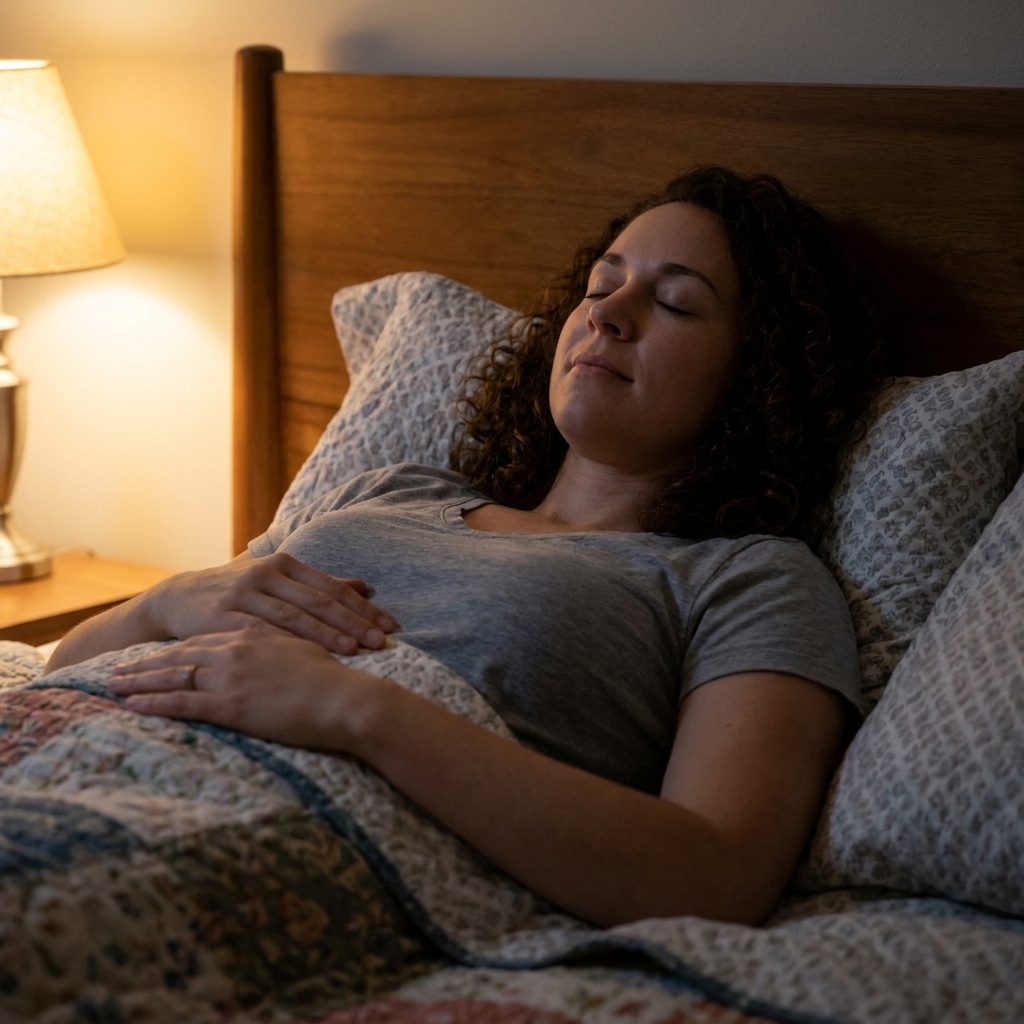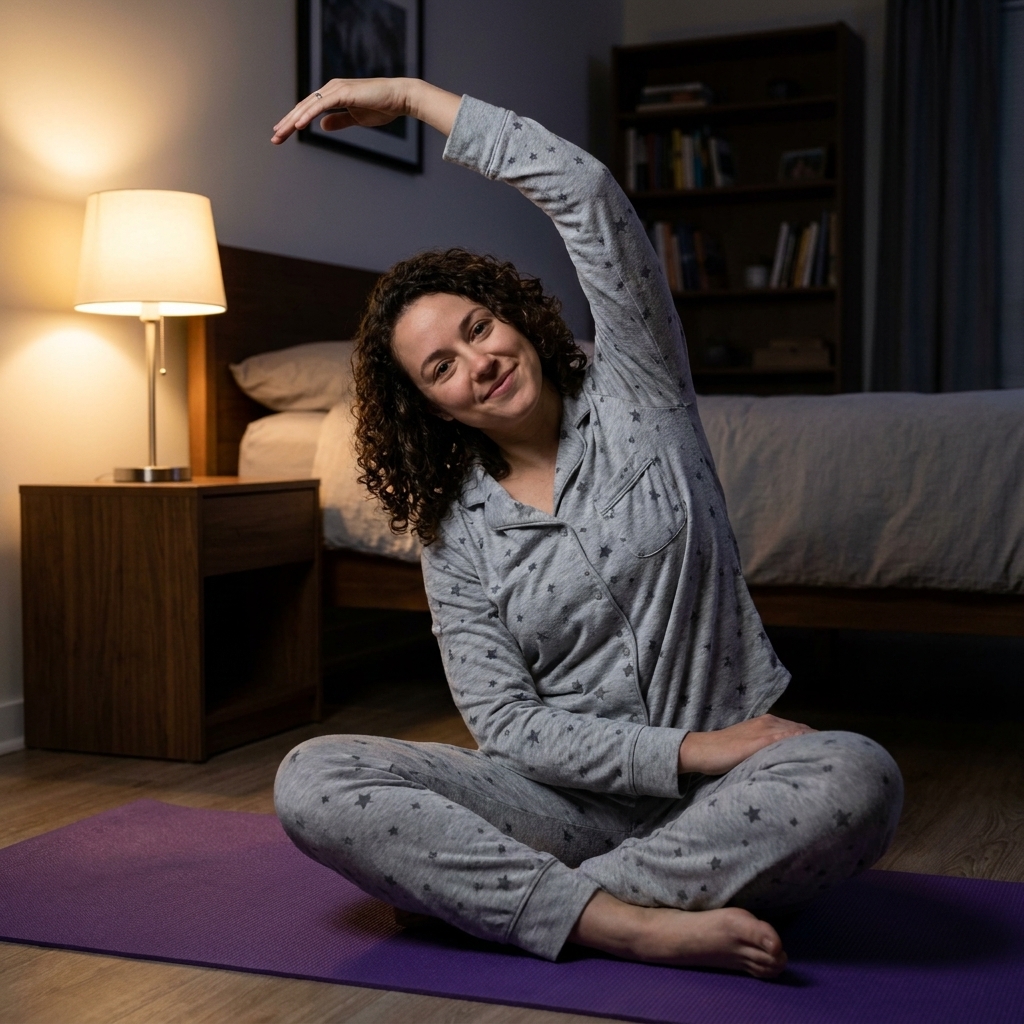
Unwind with 10 slow, calming stretches that ease tight hips, shoulders, and lower back while signaling to your body that it is time to sleep.
The Rest Pact
Updated October 18, 2026
Created October 18, 2026
5 Gentle Bedtime Yoga Poses to Release Physical Tension

Maya Caldwell
Maya Caldwell is a certified sleep science coach and the lead researcher at RestPact. After overcoming years of chronic insomnia, she dedicated herself to making evidence-based sleep strategies accessible, helping others build bedtime routines that lead to deep, restorative rest.
When you are tired but your body feels wired, it is often not a motivation problem. It can be a nervous system problem, or a sign that your system is still in “go mode” after a long day of sitting, rushing, scrolling, or bracing against stress. Your muscles can stay “on” even when your brain is ready to sleep.
These five gentle yoga poses are designed specifically for bedtime. They are slow, supportive, and easy to do on top of your sheets. No sweating, no stretching contests. Just a clear signal to your body that the day is over.
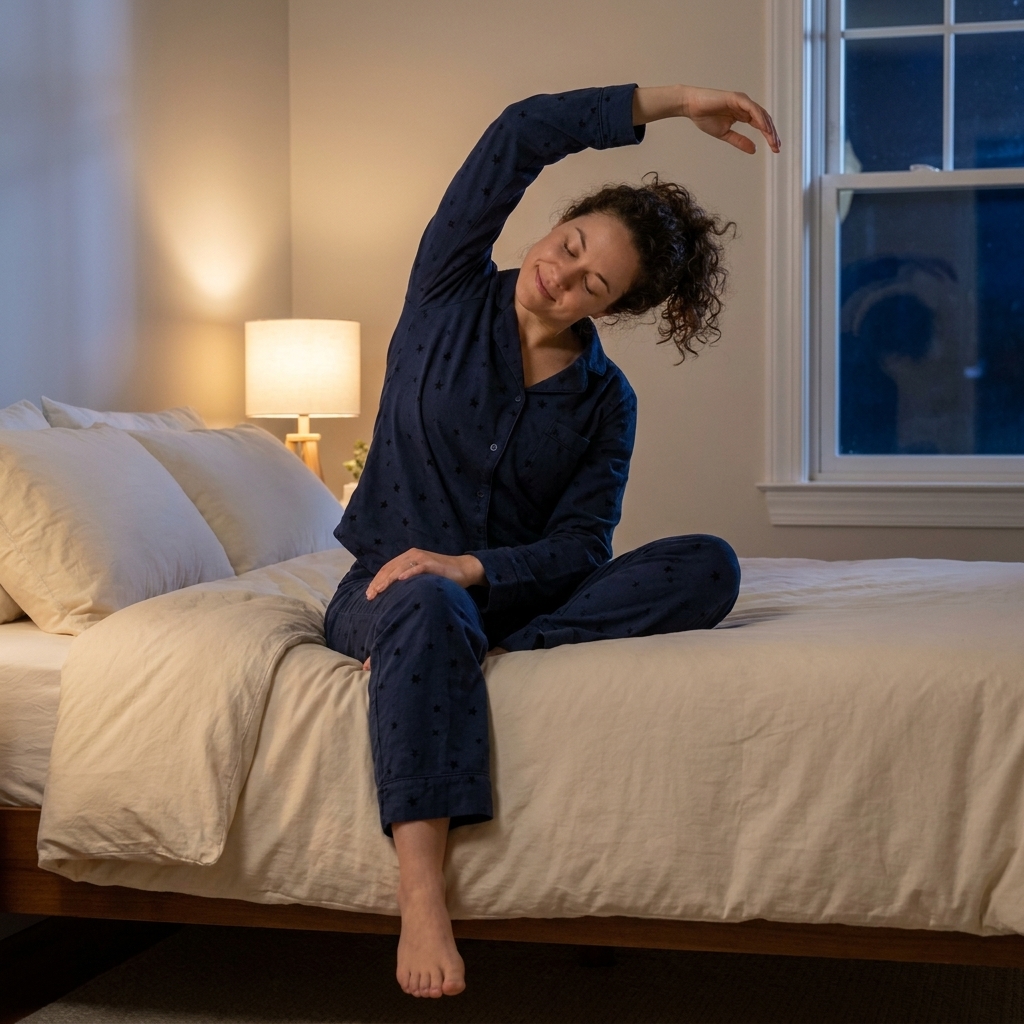
Before you start
Make it feel safe and simple
- Keep the lights low. Bright light tells your brain it is daytime. A lamp or warm bedside light is perfect.
- Move at 30 to 50 percent effort. At bedtime, we are not chasing flexibility. We are chasing ease.
- Breathe through your nose if you can. For many people, nasal breathing feels steadier and more calming. If you feel persistently short of breath or “air hungry,” do not push through it. Check in with a clinician.
- Aim for 5 to 10 minutes total. Enough to unwind, not so long that it turns into a project.
A quick note on discomfort
You should feel gentle sensation, not pain, pinching, numbness, or tingling. If you have recent surgery, a new injury, significant osteoporosis, glaucoma, uncontrolled blood pressure, vertigo, or any condition that makes certain positions unsafe, check with a clinician before trying new movement. If you are pregnant, consider extra support and skip any shape that feels compressive or uncomfortable.
The 5-pose in-bed sequence
You can do these poses in order. If one feels particularly good tonight, it is fine to repeat it and skip another. Consistency matters more than perfection.
One more permission slip: if you start feeling drowsy halfway through, you can stop right there, turn off the light, and go to sleep.
1) Constructive Rest (knees bent, feet down)
Why it helps: This is one of my favorite “downshift” positions. It reduces strain on the low back and invites your ribcage and belly to soften so your breathing can slow.
- Set up: Lie on your back. Bend your knees, feet flat on the bed about hip-width apart. Let your knees gently knock toward each other if that feels comfortable.
- Hands: One hand on your belly and one on your chest, or both hands resting by your sides.
- Breathe: Inhale through the nose for about 4 seconds, exhale for about 6 seconds. Do 6 to 10 rounds.
- Soften: On each exhale, imagine your shoulders getting heavier and your jaw unclenching.
Make it easier: If your low back feels arched, scoot your feet a little farther from your hips.

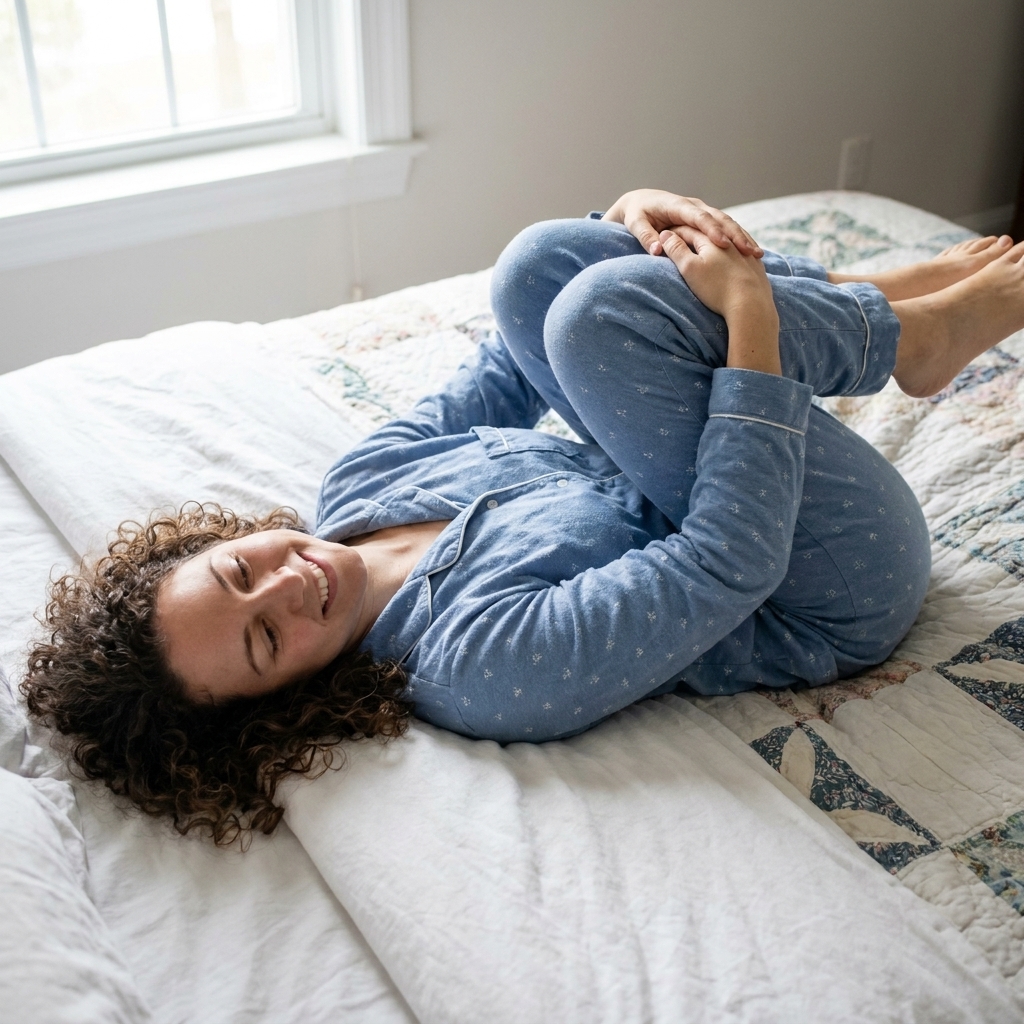
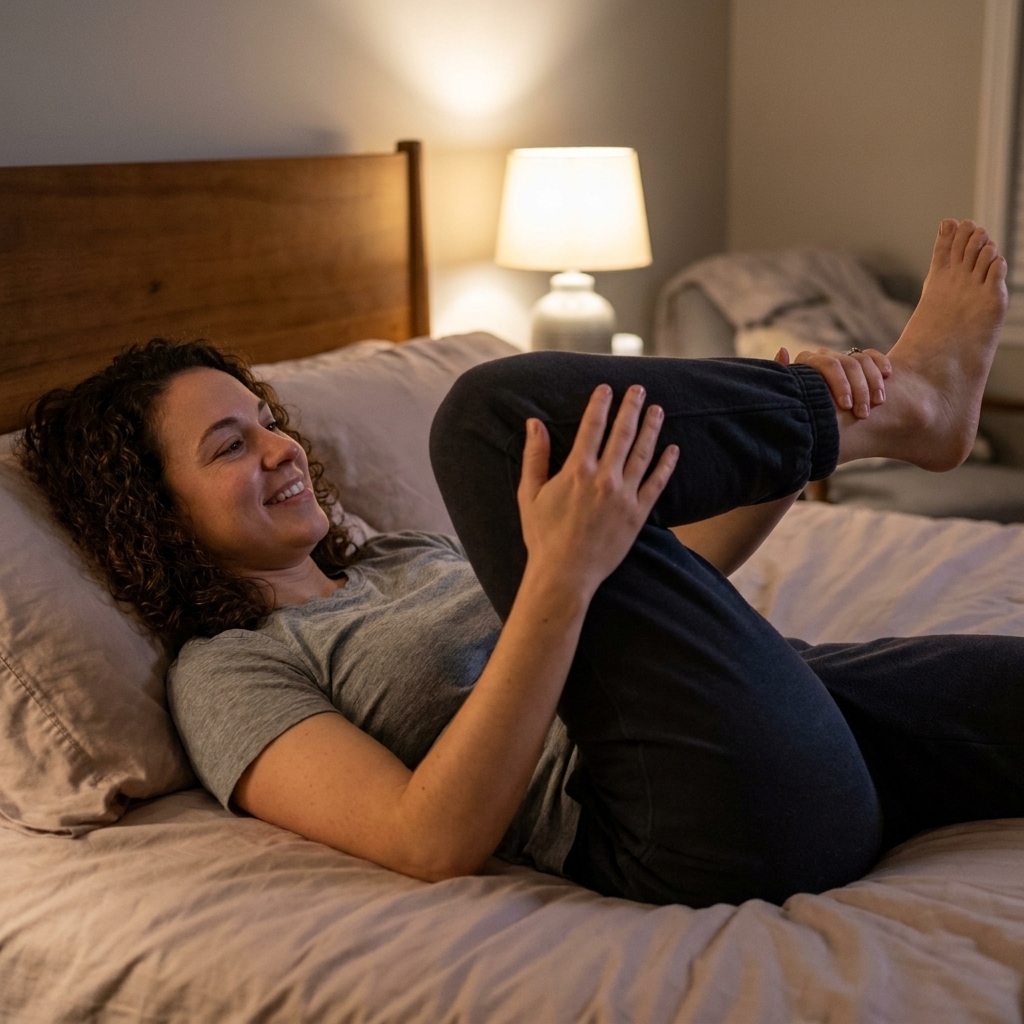
2) Knees-to-Chest Hug (Apanasana)
Why it helps: Great for end-of-day low back tightness and that “compressed” feeling from sitting. The gentle pressure can also feel grounding when your mind is spinning.
- Set up: From constructive rest, bring one knee toward your chest. Then bring the other knee in.
- Hold: Wrap your arms around your shins or behind your thighs, whichever is more comfortable.
- Breathe: Slow inhale, long exhale. Stay for 5 to 8 breaths.
- Optional rock: Rock a tiny amount side to side, very slow, like you are soothing your nervous system, not massaging a sore spot.
Make it gentler: Keep one foot on the bed and hug one knee at a time.
If you are pregnant: Choose one knee at a time and keep it light. If anything feels like too much pressure, skip this pose.
3) Supine Figure Four (reclined hip stretch)
Why it helps: If you carry tension in your hips, glutes, or outer thighs, this one can be magic. For many people, tight hips are a surprisingly big reason it is hard to get comfortable at night.
- Set up: Lie on your back with knees bent. Cross your right ankle over your left thigh, just above the knee, making a figure four shape.
- Option A: Stay here and simply breathe if that is enough sensation.
- Option B: Thread your hands behind your left thigh and gently draw the left leg toward you.
- Stay: 5 to 8 breaths, then switch sides.
Key cue: Flex the foot of the crossed leg gently (toes toward shin) to support the knee.
Avoid: If you feel pinching in the front of the hip, back off and try Option A only.
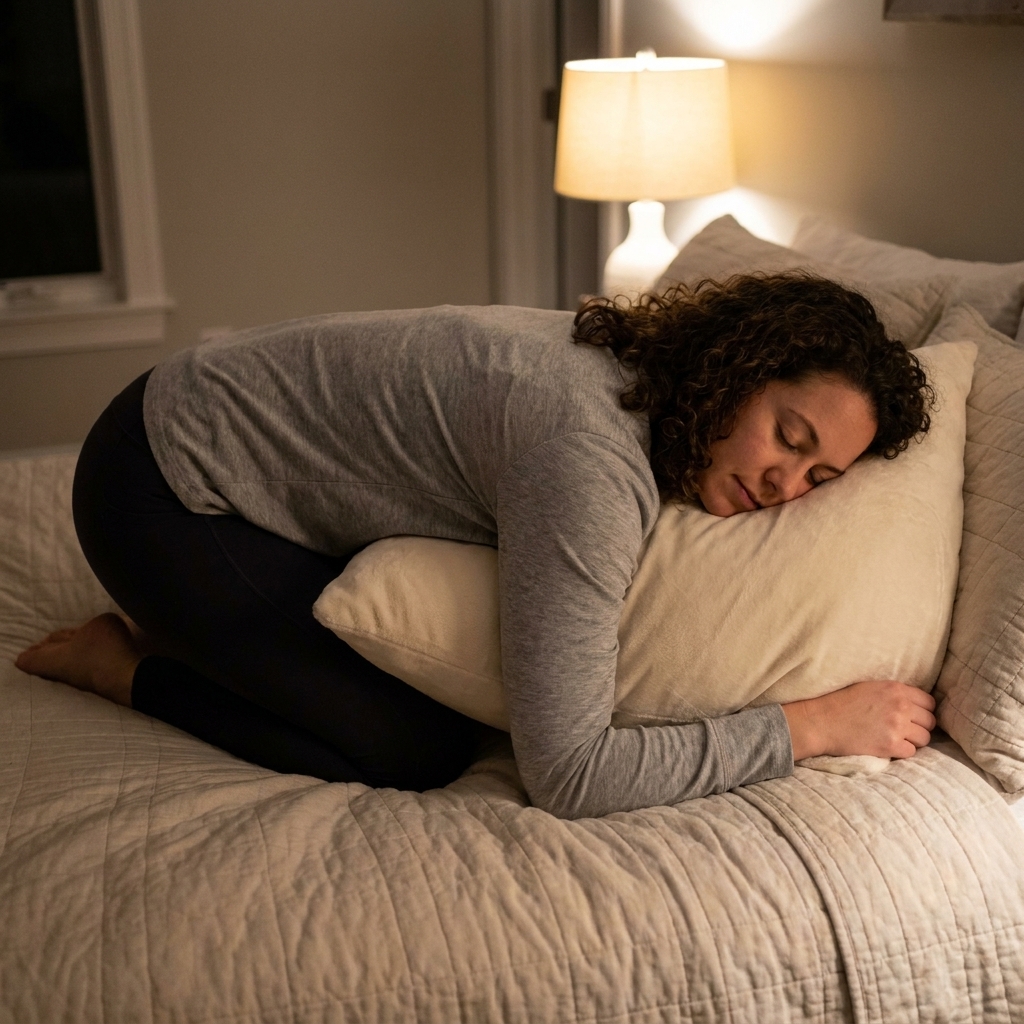
4) Supported Child’s Pose in Bed
Why it helps: This is a quiet way to release the back body, soften your shoulders, and cue safety. Many people also find the gentle pressure around the forehead soothing.
- Set up: Come onto hands and knees on the bed. Bring big toes toward each other and let knees widen.
- Support: Place a pillow lengthwise in front of you.
- Fold: Sit hips back toward heels and drape your torso over the pillow. Turn your head to one side.
- Breathe: Send your breath into your back ribs. Stay for 6 to 10 breaths, then turn your head the other way.
Make it easier: Keep knees closer together, or add an extra pillow under your chest.
If you are pregnant: Widen the knees more and use extra pillows so your belly has space and you are not compressed.
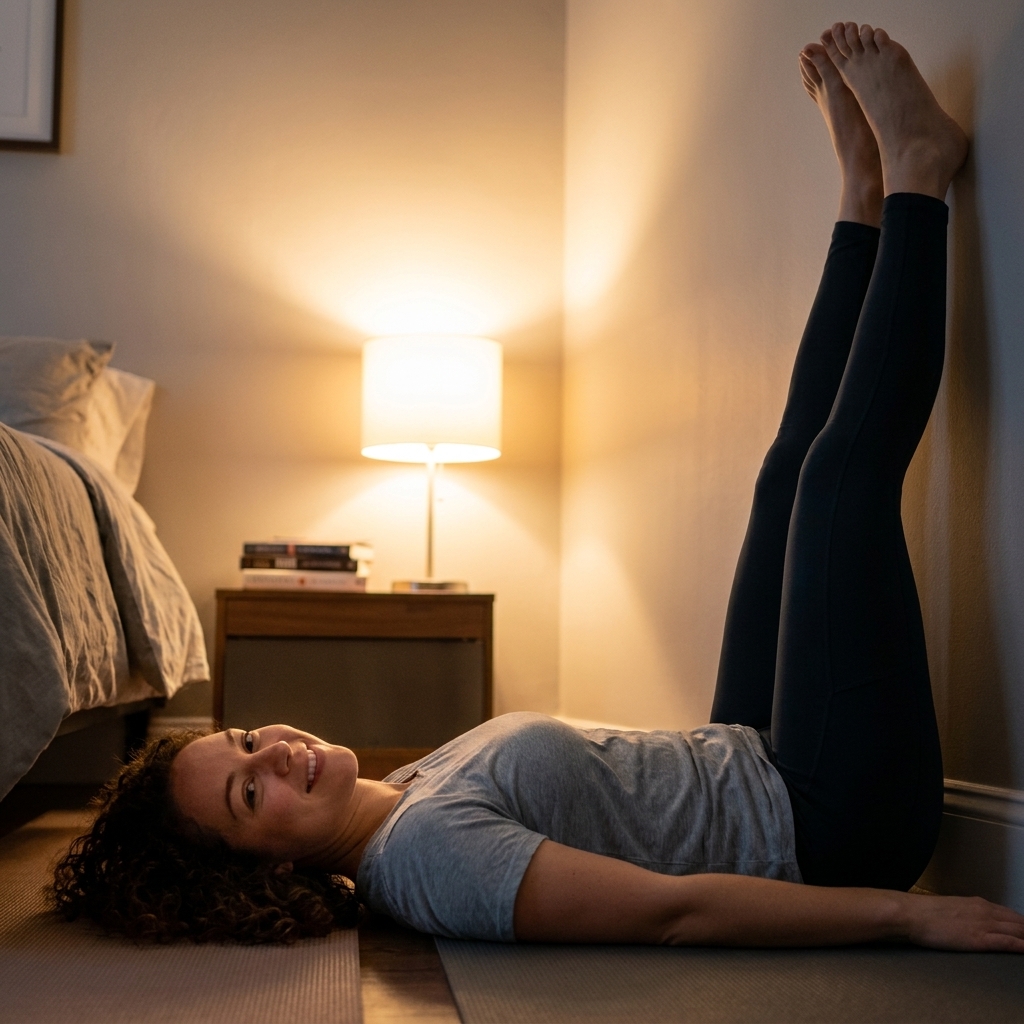
5) Legs Up the Wall (or Legs on Headboard)
Why it helps: This gentle inversion may help with the heavy, achy feeling in legs and feet after a long day. More importantly for sleep, it is a strong cue for stillness. Your job in this pose is to let gravity do the work.
- Option A, wall: Scoot your hips close to a wall beside the bed and extend legs up the wall.
- Option B, in bed: Lie on your back and rest your calves on a stack of pillows or against a sturdy headboard.
- Arms: Hands on belly, or arms relaxed by your sides.
- Stay: 1 to 3 minutes, breathing slowly.
Make it more comfortable: Slide a folded blanket under your hips for a small lift, or bend knees slightly if hamstrings feel too intense.
Safety note: Skip inversions if they are not recommended for you (for example with glaucoma, uncontrolled high blood pressure, certain heart conditions, or vertigo), and come out slowly. If you feel dizziness, pressure, or headache, stop.
Turn the sequence into a sleep cue
The most powerful part of bedtime yoga is repetition. When you do the same 5 to 10 minutes most nights, your brain starts pairing these shapes and breaths with sleepiness.
A simple wind-down script
- One sentence intention: “Nothing to solve tonight.”
- Breathing rule: Exhale a little longer than you inhale.
- Ending cue: After the last pose, roll to your side and pause for two slow breaths before you turn out the light.
- Keep the spell intact: If you can, skip the phone after. Keep the room dim and go straight into sleep mode.
If you wake up at night
If your mind turns on at 2 a.m., try a mini reset: constructive rest plus 6 slow breaths with a longer exhale. Keep it boring on purpose, then return to your usual sleep position.
Common questions
Is yoga before bed always good for sleep?
Gentle, restorative yoga is usually sleep friendly because it lowers arousal. Fast-paced flows, heated classes, or strong core work can be energizing for some people. The bedtime version should feel like a dimmer switch, not a workout.
What if stretching wakes me up?
That can happen, especially if you push into intense sensations. Dial it back until it feels almost too easy. Focus on longer exhales and supported shapes (pillows are not “cheating,” they are strategy).
How long should I hold each pose?
For sleep, I like breath-based timing: 5 to 10 slow breaths per pose. If you are very tired, even 3 breaths each can be enough to shift your body toward rest.
Can I do this if I share a bed?
Yes. The quietest options are constructive rest, knees-to-chest (one leg at a time), figure four, and legs on pillows. If your partner is already asleep, do the smallest version of each pose and keep transitions slow.
When should I get help for sleep?
If insomnia is happening most nights for more than a few weeks, if you are struggling during the day, or if you suspect something like sleep apnea (loud snoring, choking or gasping, morning headaches, intense daytime sleepiness), it is worth talking with a clinician. You deserve support that goes beyond willpower.
A gentle reminder
When I was deep in my own insomnia years, I used to treat bedtime like a performance review. Did I do everything right? Did I ruin my sleep again? That pressure alone can keep the nervous system alert.
Try this instead: let these poses be a kindness, not a fix. If your body softens even five percent tonight, that is progress. And over time, those small signals of safety add up to deeper rest.