What blue light really does to melatonin, why timing and brightness matter, and the most effective ways to reduce exposure without giving up your devices.
The Rest Pact
Updated October 18, 2026
Created October 18, 2026
Reading vs. Phone Scrolling Before Bed

Maya Caldwell
Maya Caldwell is a certified sleep science coach and the lead researcher at RestPact. After overcoming years of chronic insomnia, she dedicated herself to making evidence-based sleep strategies accessible, helping others build bedtime routines that lead to deep, restorative rest.
For years, my “wind-down” looked like this: I crawled into bed exhausted, opened my phone, and kept scrolling until my eyes burned. I told myself it helped me relax. In reality, it was one of the most reliable ways to stretch my sleep latency (the time it takes to fall asleep) and wake up feeling oddly unrefreshed.
If you’re trying to choose between reading a book and scrolling on your phone before bed, sleep science points in a fairly consistent direction for many people. They can both be “quiet activities,” but they tend to affect your brain and body differently, especially when it comes to falling asleep smoothly and protecting the REM-rich part of the night.
What REM sleep needs
REM (rapid eye movement) sleep is the stage most associated with vivid dreaming, emotional processing, and memory consolidation. You cycle through REM multiple times per night, with longer REM periods toward the second half of sleep.
Two big things determine how much REM you get and how restorative it feels:
- Total sleep time. REM expands later in the night, so late bedtimes and early alarms can cut it short.
- Continuity of sleep. Frequent awakenings or restless, fragmented sleep can disrupt your natural cycling, including REM periods.
Your pre-bed habit matters because it can change both sleep latency and sleep continuity. In other words, what you do in the last 30 to 90 minutes can influence whether you fall asleep more easily and stay asleep deeply enough to reach longer, stable REM periods later on.
Reading before bed
When people say reading makes them sleepy, that is not just a personality quirk. For many sleepers, reading works because it supports the two main jobs of a wind-down routine:
- Lowering physiological arousal (heart rate, stress hormones, mental activation)
- Reducing bright light exposure that can delay melatonin timing and push the circadian system later
How reading affects sleep latency
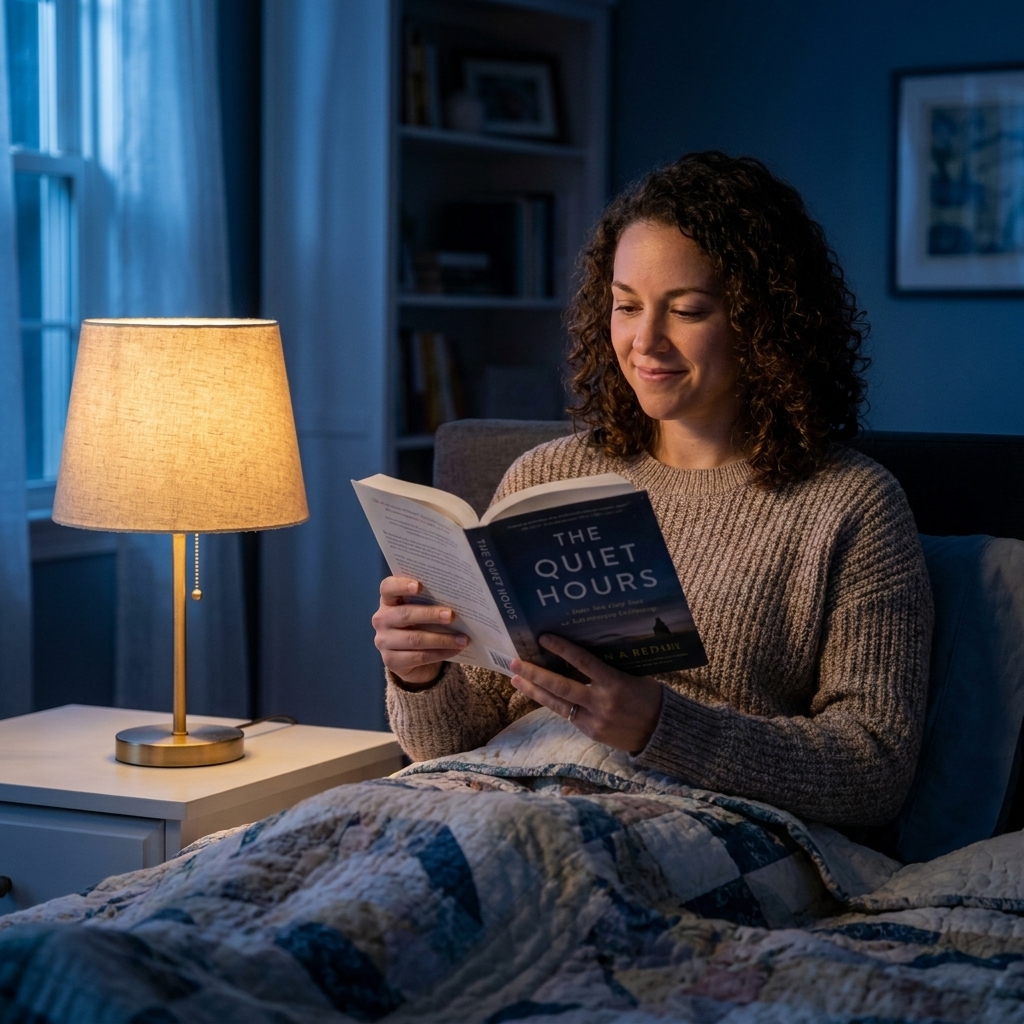
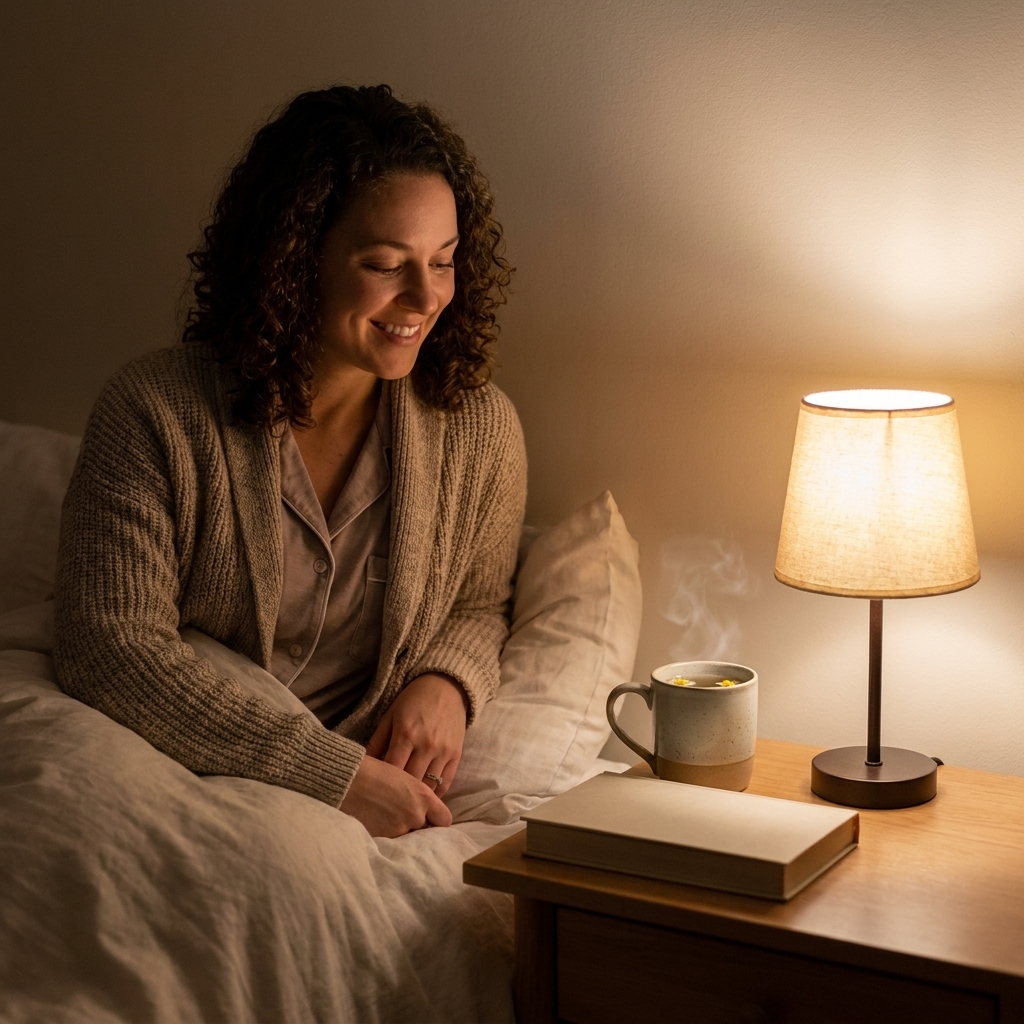
Reading a physical book in dim, warm light tends to be low stimulation. It gives your attention something gentle to hold onto while your body downshifts. Research on bedtime reading routines suggests this can reduce stress and improve perceived sleep quality for some people, which often translates into shorter sleep latency in real life.
One key detail: it is not that reading is magic. It is that reading is predictable and non-interactive. The story moves at one pace. There are no notifications. No infinite feed. No sudden “one more video.”
How reading can support later-night REM
Reading does not “create” REM directly. The pathway is simpler: if reading helps you fall asleep earlier and with less tossing and turning, you protect the later part of the night when REM becomes longer and more plentiful. A calmer pre-sleep state can also reduce the odds of middle-of-the-night awakenings that break up your sleep cycles.
Print vs. e-readers
Print books are the cleanest win because they avoid light from a screen. E-readers can be fine if they are dim, set to warm tones, and you keep brightness low. The big variables are light output, viewing distance, notifications, and how interactive the device feels. A tablet that turns into email or social media with one tap tends to behave more like a phone from a sleep standpoint.
One more nuance: content matters as much as the device. A calming chapter book is different from a high-stakes thriller that spikes your heart rate.
Phone scrolling before bed
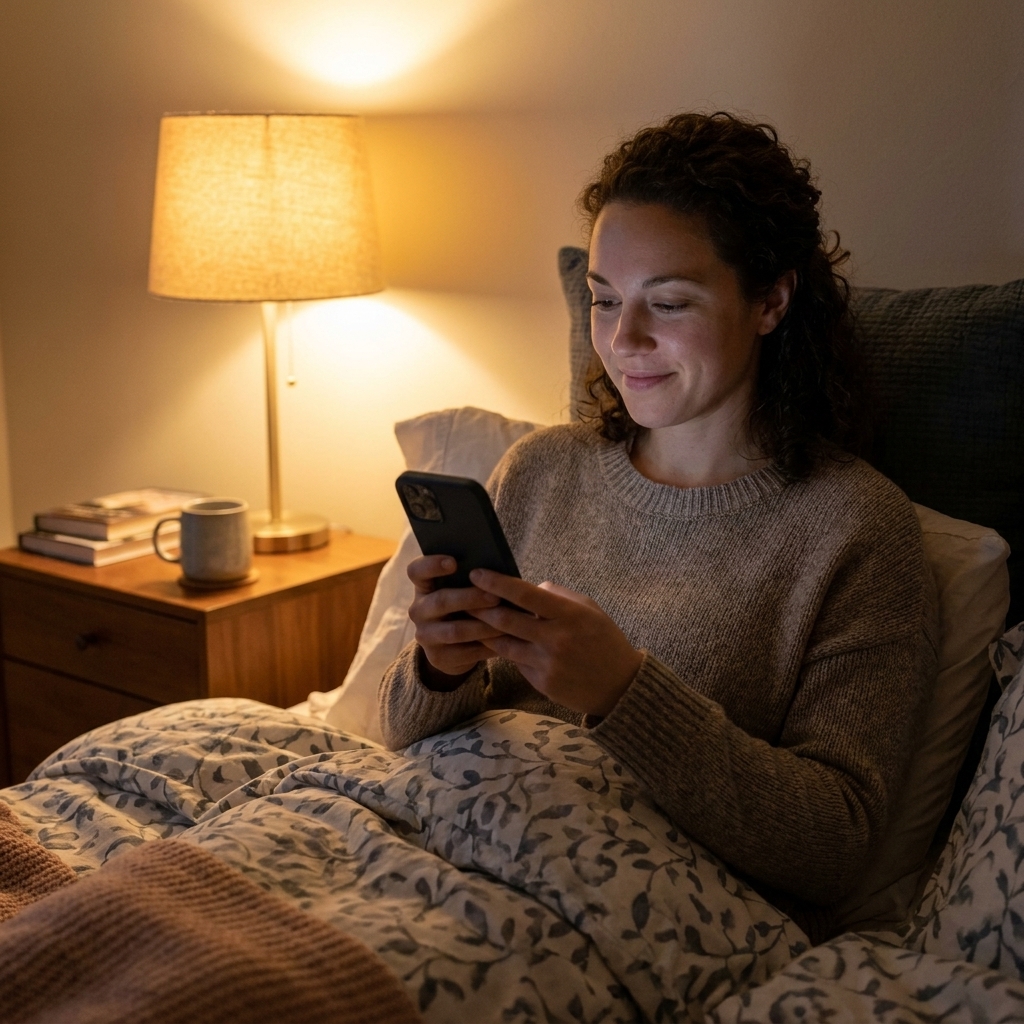
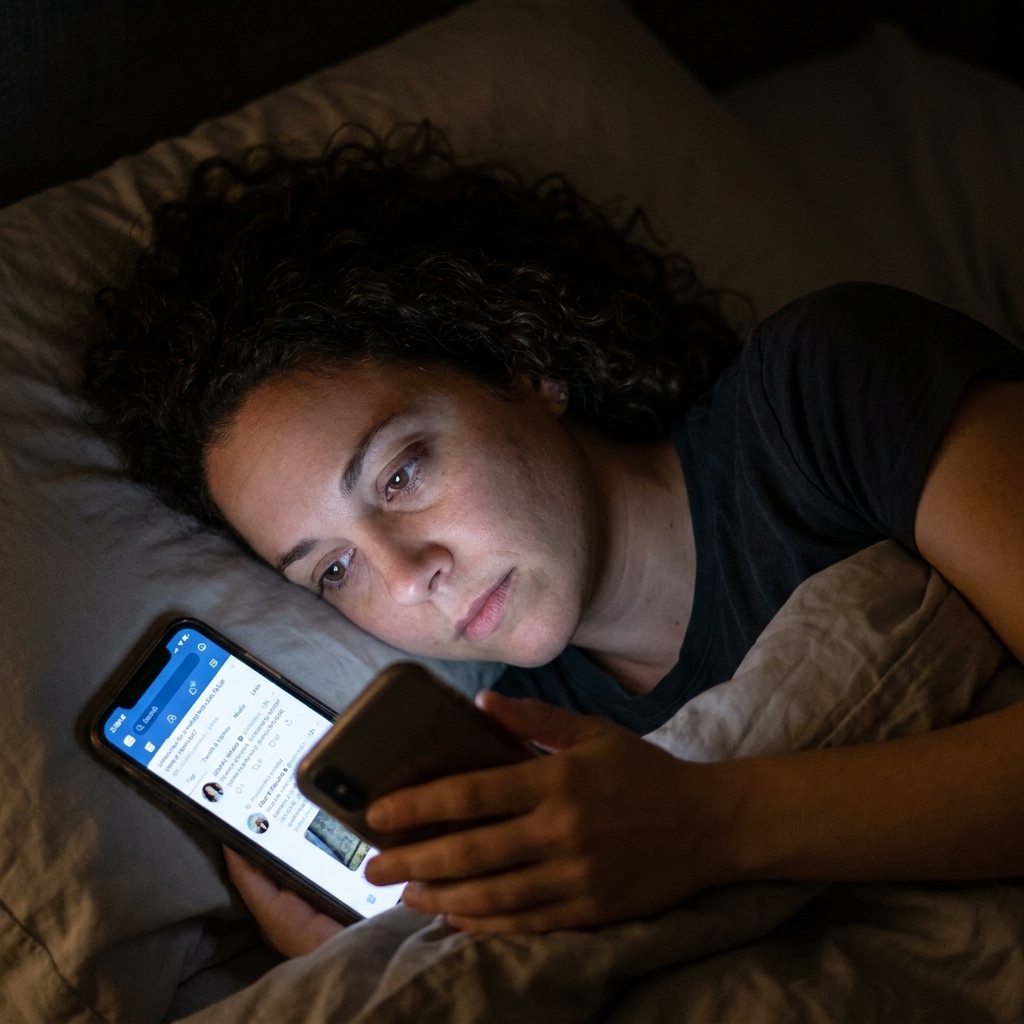
Scrolling can feel calming because it distracts you from the day. But biologically, it often creates a perfect storm for delayed sleep onset and lighter, more fragmented sleep, especially when it turns into “just one more minute” for an hour.
1) Light and circadian timing
Most phones emit short-wavelength (blue-leaning) light, which can suppress melatonin and nudge your circadian rhythm later. The magnitude depends a lot on brightness, duration, timing, and individual sensitivity.
Night Shift, blue-light filters, and warm color settings can help, but they do not fully remove the circadian signal. Both overall intensity (how bright the screen is) and melanopic content (the part of light most relevant to circadian biology) matter, and filters typically reduce rather than eliminate that stimulation.
2) Cognitive and emotional arousal
Social media, news, work email, and fast-cut video can keep your brain in an “on” state. Even fun content can raise arousal through novelty, social comparison, or emotional spikes. Higher arousal tends to increase sleep latency and can make the first part of the night lighter and more wake-prone.
3) Infinite feeds and variable rewards
Many platforms rely on variable rewards: a new post, a new message, a new clip. That unpredictability is powerful for attention and rough on sleep boundaries. It is one reason bedtime phone use so easily turns into “accidentally an hour.”
What about REM specifically?
The most consistent way phones affect REM is indirect:
- Later sleep onset reduces total sleep time, which can reduce time spent in REM later in the night.
- More fragmented sleep can interrupt REM periods and reduce sleep efficiency.
- Stressful or activating content can increase nocturnal awakenings and lighter sleep.
There is also research linking evening screen use to next-day sleepiness and differences in sleep architecture, but in everyday life, the biggest levers are still sleep duration and continuity.
Book vs. phone
| Pre-bed habit | Typical effect on sleep latency | Typical effect on sleep quality and REM time | Best use case |
|---|---|---|---|
| Print book in dim warm light | Often shorter | Can support earlier sleep onset and steadier sleep, which protects later-night REM | Many people, especially anxious or overstimulated sleepers |
| E-reader on low brightness, warm setting | Neutral to slightly better than phone | Often better than phone if notifications are off and brightness is low | Readers who prefer digital and can keep it truly “boring” and dim |
| Phone scrolling (social, video, news) | Often longer | More likely to delay bedtime and fragment sleep, reducing later-night REM time | Usually least ideal for most people, unless very limited and controlled |
If you cannot give up the phone
I am not going to pretend everyone can go cold turkey on bedtime scrolling. If your phone is the only thing that reliably distracts you from rumination, start with guardrails that reduce the biggest sleep hits.
Guardrail 1: Create a hard stop
- Set a timer for 10 to 15 minutes.
- When it ends, plug your phone in across the room or outside the bedroom.
Guardrail 2: Make the screen boring and dim
- Lower brightness as far as comfortable.
- Use Night Shift or a warm filter.
- Enable dark mode.
- Increase text size to reduce close-range strain.
Guardrail 3: Remove the slot-machine layer
- Turn on Do Not Disturb or Focus mode.
- Disable notifications for social and email at night.
- Avoid short-form video feeds, breaking news, and comment sections.
Guardrail 4: Choose content that downshifts
If you use your phone as a bridge to sleep, pick content that has a natural endpoint: a single essay you already saved, a calming audiobook, or a short guided relaxation. Avoid anything that invites reactive thinking. Audio-only can be a great option because you can turn the screen off, but if the podcast is too interesting, it can still keep you awake. Choose something intentionally dull.
A simple 30-minute wind-down
This is one of my favorite realistic routines for busy people, including the version of me who used to work late and collapse into bed wired.
Minute 0 to 5: Light and temperature cue
- Dim lights. If you can, switch to warm bulbs.
- Cool the bedroom slightly. Many people sleep best in a cool environment.
Minute 5 to 20: Read
- Choose a paper book or low-brightness e-reader.
- Pick something genuinely calming. High-stakes thrillers can be fun, but if your heart rate climbs, it is not a wind-down.
Minute 20 to 30: Close the loop
- Do a 2-minute brain dump: tomorrow tasks, worries, anything sticky.
- One relaxing cue: a brief stretch, slow breathing, or a warm shower earlier in the evening.
Then lights out. The goal is to shorten sleep latency and keep the first half of the night stable so your later REM periods have room to do their job.
Common questions
Is reading in bed bad because the bed should be only for sleep?
Stimulus control can be helpful for chronic insomnia, but it is not a strict rule for everyone. If reading helps you feel safe and sleepy, it can be a net positive. If you start associating bed with being awake for long stretches, it may be better to read in a chair and move to bed when drowsy. And if you are awake for about 20 minutes or more and feel yourself getting frustrated, it can help to get out of bed briefly and do something quiet in low light until you are sleepy again.
Does reading on my phone count as reading?
Sometimes, but it depends on the setup. If it is a dedicated reading app, brightness is low, the tone is warm, and notifications are off, it can be workable. The risk is that your “book” is one swipe away from email or social media, which can quickly raise arousal and delay sleep.
What if scrolling is the only thing that stops my anxious thoughts?
That is incredibly common. I would start by replacing scrolling with an audiobook, a sleep story, or a guided body scan, ideally without a bright screen in your face. If anxiety is persistent and sleep is suffering, it may also be worth discussing cognitive behavioral therapy for insomnia (CBT-I) with a clinician. It is one of the most evidence-based treatments we have.
Can phone use reduce REM directly?
The strongest, most practical link is indirect: phone use tends to delay bedtime, increase awakenings, and shorten total sleep time. Since REM expands later in the night, anything that cuts the back half of your sleep window can cut time spent in REM.
The takeaway
If you want a simple, evidence-aligned swap for better sleep latency and better odds of reaching the REM-rich part of the night, a book beats a scroll for many people.
Reading often supports a downshift in light exposure and mental activation. Scrolling often does the opposite, even when it feels relaxing in the moment. If you are not ready to quit the phone entirely, put guardrails around it so your nervous system can actually land.
Your brain does not need a perfect bedtime routine. It needs a repeatable one that helps you fall asleep without a fight and stay asleep long enough to get those richer REM stretches later in the night.