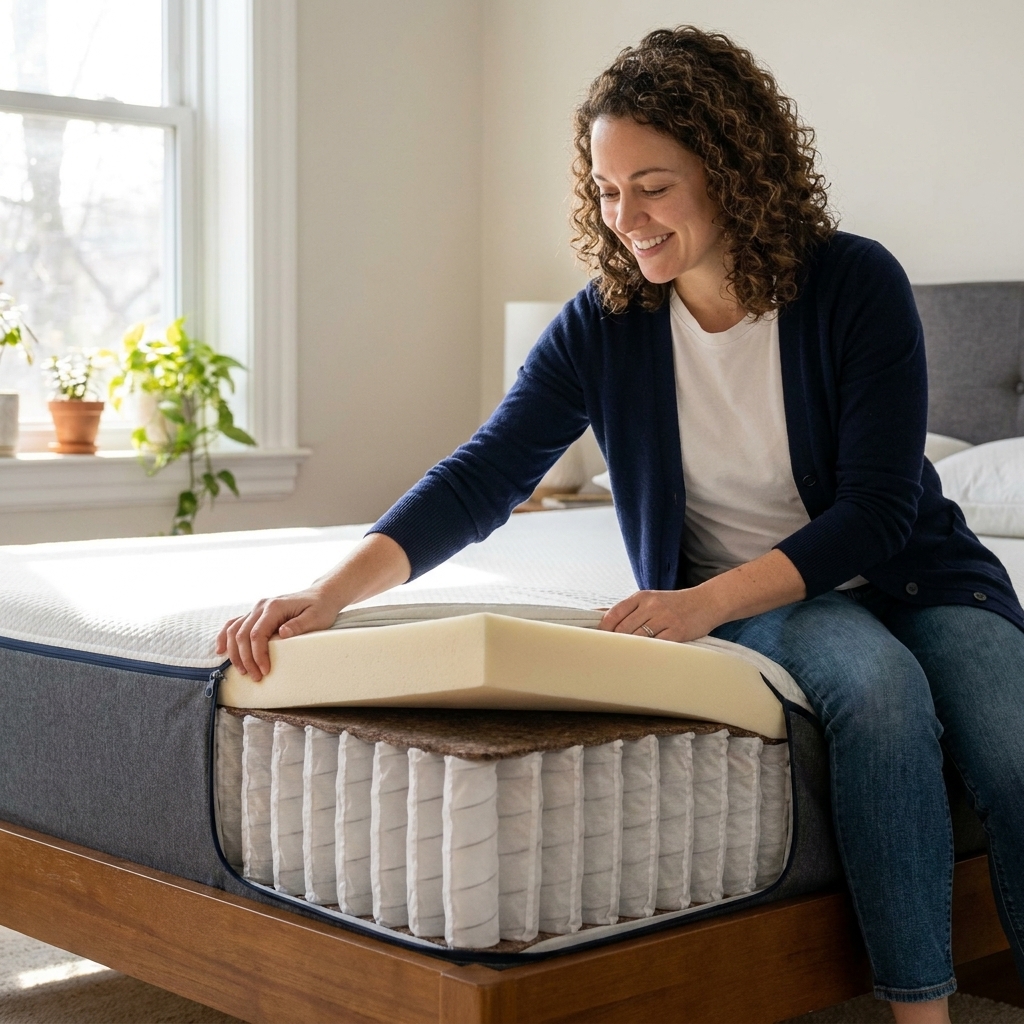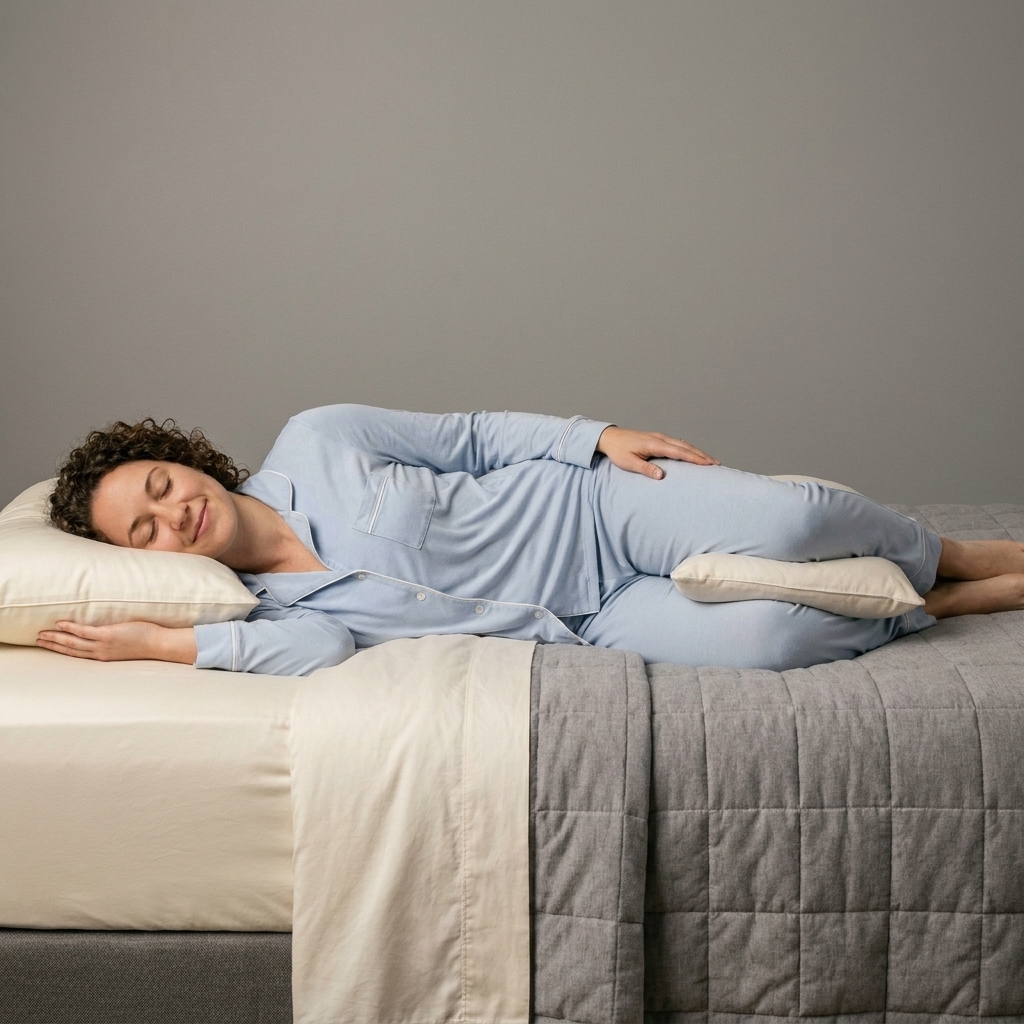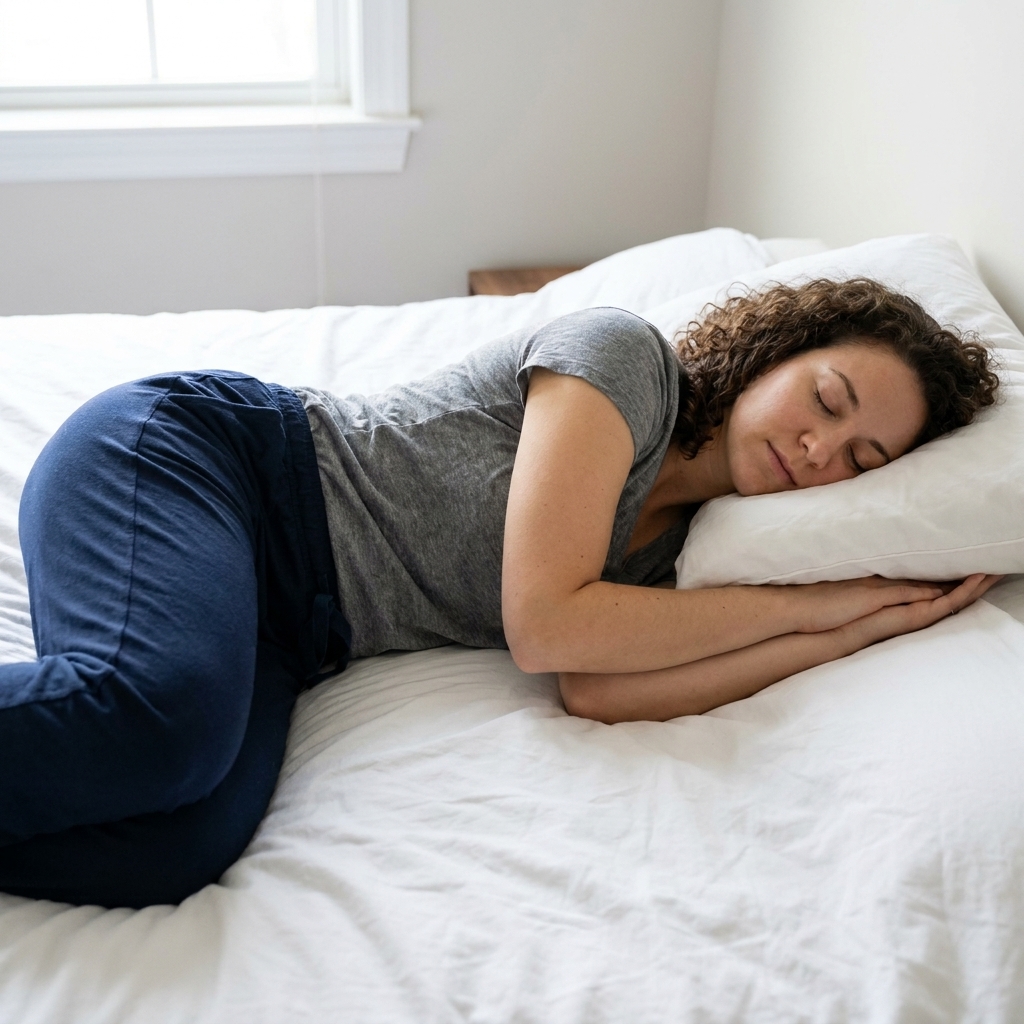
Firm, medium, plush: what actually supports your spine? Learn how to match mattress firmness to your weight and sleep position with a simple at-home testing ...
The Rest Pact
Updated October 18, 2026
Created October 18, 2026
When to Replace Your Mattress

Maya Caldwell
Maya Caldwell is a certified sleep science coach and the lead researcher at RestPact. After overcoming years of chronic insomnia, she dedicated herself to making evidence-based sleep strategies accessible, helping others build bedtime routines that lead to deep, restorative rest.
I used to treat my mattress like a “buy it once, forget it forever” item. Then I hit my chronic-insomnia breaking point and started paying attention to the unglamorous details that quietly sabotage sleep: micro-sags, heat traps, dust-mite buildup, and that slow creep of waking up sore for no obvious reason.
Practical truth: your mattress has a lifespan, but your sleep has an experience. And that experience is often where problems show up first.

Below is a checklist I use when I help people troubleshoot sleep and bedroom setup. If you recognize more than one sign, your mattress may be doing more harm than good.
When to replace a mattress
For most people, a good planning window is about every 7 to 10 years. That range shows up often in consumer testing and sleep-health guidance, but it is still an average, not a law of nature.
Two things are usually true at the same time:
- Materials break down from nightly compression, humidity, heat, and oxidation, even if a bed looks fine from across the room.
- Your needs change with age, weight fluctuations, injuries, pregnancy, perimenopause, and stress, all of which can shift what “supportive” feels like.
If you like a starting point, these are typical ranges often cited by manufacturers and consumer guidance:
- All-foam (memory foam or polyfoam): about 6 to 8 years, sometimes less with lower-density foam or hotter sleepers.
- Innerspring: about 5 to 8 years, especially if coils fatigue or you feel poke-through.
- Hybrid (foam plus coils): about 7 to 10 years, depending on foam quality and coil build.
- Latex: about 8 to 12 years, often longer with high-quality latex and a solid support core.
- Adjustable air bed: about 8 to 10 years for the comfort layers, with variable lifespan for pumps and air chambers.
If you are waking up worse than you went to bed, do not wait for a calendar anniversary. Use the signs below.
5 signs your mattress hurts sleep
1) New aches that fade later
This is one of the most telling patterns: morning pain that improves after you move around. It often points to overnight misalignment.
What it can mean:
- Hips sinking too far (common with softened foam), stressing the low back.
- Shoulders not sinking enough (too firm or compressed comfort layer), irritating the neck and upper back.
- Uneven support, so your spine spends hours in a slight twist.
A quick check: Lie on your side and have a partner look at your spine line from neck to tailbone. If it slopes like a hammock or kinks at the waist, the mattress may no longer be doing its job.
2) Foam feels packed down
Foam fatigue can be sneaky. Some mattresses do not show a dramatic crater, but the comfort layer can still lose resilience and pressure relief.
Signs of foam breakdown include:
- Body impressions that linger longer than a minute or two after you get up.
- A packed-down feel where the bed feels firmer and less forgiving than it used to.
- More tossing and turning because your pressure points are trying to find relief.
Why it matters for sleep: pressure discomfort can increase small, unremembered awakenings and make sleep feel lighter. You might not recall waking up, but your body still pays the price.

3) Allergies feel worse in bed
Even with clean sheets, mattresses can become a long-term reservoir for dust mites, pet dander, and other allergens. Add humidity, and it becomes a more welcoming environment for irritants.
Clues your mattress environment may be working against you:
- Congestion or sneezing that ramps up at night or first thing in the morning.
- Itchy eyes when you lie down, especially if you sleep with pets.
- Musty odors, which can sometimes point to trapped moisture or microbial growth.
What to try before replacing (if the mattress is not otherwise failing):
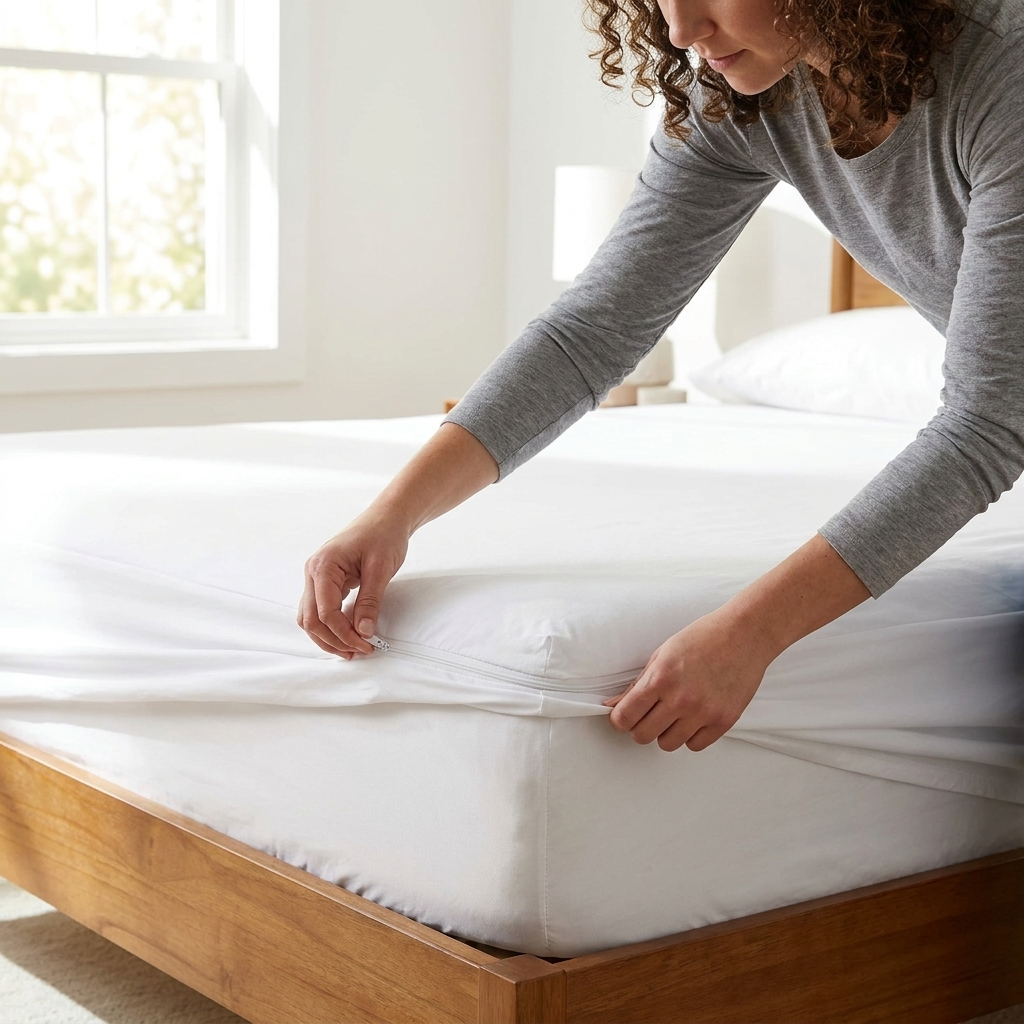
- Use a fully encased zippered mattress protector designed as an allergen barrier.
- Wash bedding weekly in hot water if the fabric allows.
- Keep bedroom humidity moderate. Many indoor air recommendations land around 30 to 50 percent relative humidity, and keeping it at or below about 50 percent is a common practical target to discourage dust mites and mold.
If symptoms persist and the mattress is older, replacement plus a protective encasement on the new one can be a meaningful upgrade for breathing and sleep continuity. If allergy or asthma symptoms are significant, it is also worth checking in with a clinician.
4) You are sleeping hotter
If you have started waking up sweaty or repeatedly kicking off covers, do not assume it is only stress or hormones. Sometimes the mattress is the heat trap.
Common mattress-related reasons for new overheating:
- Softened foam lets you sink deeper, reducing airflow around your body.
- Older foams can lose structure and ventilate less effectively over time.
- Non-breathable protectors or thick toppers can override cooling features.
Temperature matters because your body needs to cool slightly to fall asleep and stay asleep. If your bed blocks that natural dip, sleep can become more fragmented.

5) The bed feels unstable
Support is not only about firmness. It is also about stability. If your bed now feels wobbly, squeaky, or overly bouncy, sleep can suffer through subtle arousals.
Watch for:
- Squeaks or creaks when you roll over, often from aging coils or a stressed foundation.
- Motion transfer that wakes you when a partner moves.
- Edge collapse when sitting or sleeping near the perimeter, which can make you feel less secure and reduce usable space.
Do not skip the base check. Sometimes the real issue is a failing box spring, slats that are too far apart, or a frame with loose hardware. But if the mattress itself has lost integrity, a new foundation will not fully solve it.
Replace or troubleshoot
If you like clear decision rules, here is mine:
- Replace now if you have 2 or more of the signs above and your mattress is older than about 7 years.
- Troubleshoot first if the mattress is under 5 years old and the main issue is comfort, heat, or allergies without sagging.
Simple troubleshooting steps that can buy you time:
- Rotate the mattress (if the manufacturer allows it) to even out wear.
- Upgrade your pillow if neck pain is the primary complaint. Pillows often fail sooner than mattresses.
- Add a high-quality topper for pressure relief, but only if the support core is still solid. A topper cannot fix a sagging base.
- Replace the protector if it is plasticky and trapping heat, and choose a more breathable model.
Replace right away
Some situations are less about comfort and more about hygiene or safety. Consider replacing right away if your mattress has:
- Bed bugs or repeated infestations tied to the bed.
- Water damage that soaked into the mattress, especially if it was not dried quickly and thoroughly.
- Visible mold, a persistent musty smell after cleaning, or strong suspicion of microbial growth inside the mattress.
- Major bodily fluid contamination that penetrated beyond the protector.
In these cases, cleaning the surface often is not enough, because the core materials can hold moisture and debris. If mold is suspected or you are having respiratory symptoms, consider consulting a qualified remediation professional and a clinician.
What to look for next
When you replace, aim for a mattress that supports your body and your bedroom environment.
Support by sleep position
- Side sleepers: prioritize pressure relief at shoulders and hips, often a medium to medium-firm feel depending on body weight.
- Back sleepers: look for steady lumbar support and moderate contouring.
- Stomach sleepers: firmer support often helps prevent hip sink and lower-back strain.
Weight matters, too. In general, lighter bodies often do better with a bit more cushioning to avoid pressure points, while heavier bodies often need a sturdier support core and comfort layers that do not bottom out.
Durability basics
Durability often comes down to what you cannot see. When specs are available, ask about foam density (higher is often more durable) and the coil system details (gauge and build quality matter more than coil count marketing). If the brand will not share basic material specs, treat big longevity claims cautiously.
Allergens and moisture
If allergies are part of your sleep story, choose a mattress that is easy to protect with a zippered encasement, and keep humidity in check. In the Pacific Northwest, I consider a dehumidifier and a good mattress encasement just as practical as blackout curtains.
Warranty check
Before you replace, it is worth scanning your warranty terms. Many warranties only cover sagging beyond a specific depth, often around 1 to 1.5 inches, and they may require:
- Proof you used a proper foundation (correct slat spacing, center support, and so on).
- Photos or measurements of impressions with no weight on the bed.
- No stains, since stains can void coverage.
An easy at-home sag check: lay a straightedge (or a taut string) across the mattress surface and measure the deepest gap with a ruler. Do it with clean bedding removed and no weight on the bed.
If your mattress is within the warranty window and you have clear impressions or structural failure, a claim might be worth pursuing.
FAQ
Do I really need to replace a mattress every 8 years?
Not always, but it is a solid average. Some latex and well-built hybrids last longer, while lower-quality foam and innerspring beds may need replacement sooner. The more reliable guide is whether you have signs of lost support, pressure discomfort, overheating, or allergy flare-ups.
What if my mattress looks fine but my sleep is worse?
That is common. Foam can degrade without a dramatic visual sag, and increased motion transfer or heat retention can fragment sleep without leaving obvious evidence. Use how you feel in the morning as a key data point.
Can I fix a sagging mattress with a topper?
A topper can improve cushioning, but it cannot restore a failing support core. If the mattress is sagging or you feel misaligned, a topper typically delays the inevitable and may even worsen alignment by adding more sink.
Does flipping help?
Only if your mattress is designed to be flipped. Many modern mattresses are one-sided. Rotating head-to-foot can help distribute wear, but it will not reverse foam fatigue.
Next step
If you are debating replacement, try this: track how you feel for 7 mornings. Rate morning pain, stuffiness, and sleep quality from 1 to 10. If the numbers improve when you sleep elsewhere, or worsen consistently in your bed, you have your answer.
You deserve a mattress that supports your spine, your breathing, and your body’s ability to settle into deep sleep. If your current bed is getting in the way, replacing it is not indulgent. It is a practical investment in sleep.