A gentle, evidence-based guide to Progressive Muscle Relaxation (PMR) for stress insomnia, with step-by-step instructions, common mistakes, and a short bedti...
The Rest Pact
Updated October 18, 2026
Created October 18, 2026
Body Scan Meditation for Insomnia

Maya Caldwell
Maya Caldwell is a certified sleep science coach and the lead researcher at RestPact. After overcoming years of chronic insomnia, she dedicated herself to making evidence-based sleep strategies accessible, helping others build bedtime routines that lead to deep, restorative rest.
If your brain tends to sprint the second your head hits the pillow, you are not alone. Insomnia often comes with a specific kind of frustration: your body is exhausted, but your mind is still problem-solving, replaying conversations, or scanning tomorrow’s calendar.
A bedtime body scan meditation gives your attention a new job. Instead of chasing thoughts, you slowly move awareness through the body, noticing sensations and inviting muscles to soften. Over time, this practice can become a reliable bridge between “wired” and “sleepy.”

What it is and why it helps
A body scan is a guided attention practice where you bring awareness, in a steady sequence, to different parts of your body. You are not trying to force sleep. You are practicing noticing and releasing.
For insomnia, this matters because wakefulness is often fueled by two very normal processes:
- Cognitive arousal: worry, planning, rumination, “Why am I still awake?”
- Physiological arousal: tension in the jaw, shoulders, belly, hips, or legs, plus a stress response that makes the body feel alert
Body scans help by anchoring attention in physical sensation and gently signaling “it’s safe to downshift.” In plain language, you are practicing your body’s calming mode. Body scans are a core practice in structured mindfulness programs such as Mindfulness-Based Stress Reduction (MBSR), and they are often used alongside evidence-based insomnia care.
If you do a body scan and you do not fall asleep, that is not failure. You still practiced the skill that insomnia tries to steal: the ability to be in your body without spiraling in your mind.
Keep it simple
When you are building a sleep routine, the best plan is the one you will actually repeat when you are tired. Here is a beginner setup that works for most people.
Pick your timing
- Option A: Lights out. Do the scan as your final step, in bed.
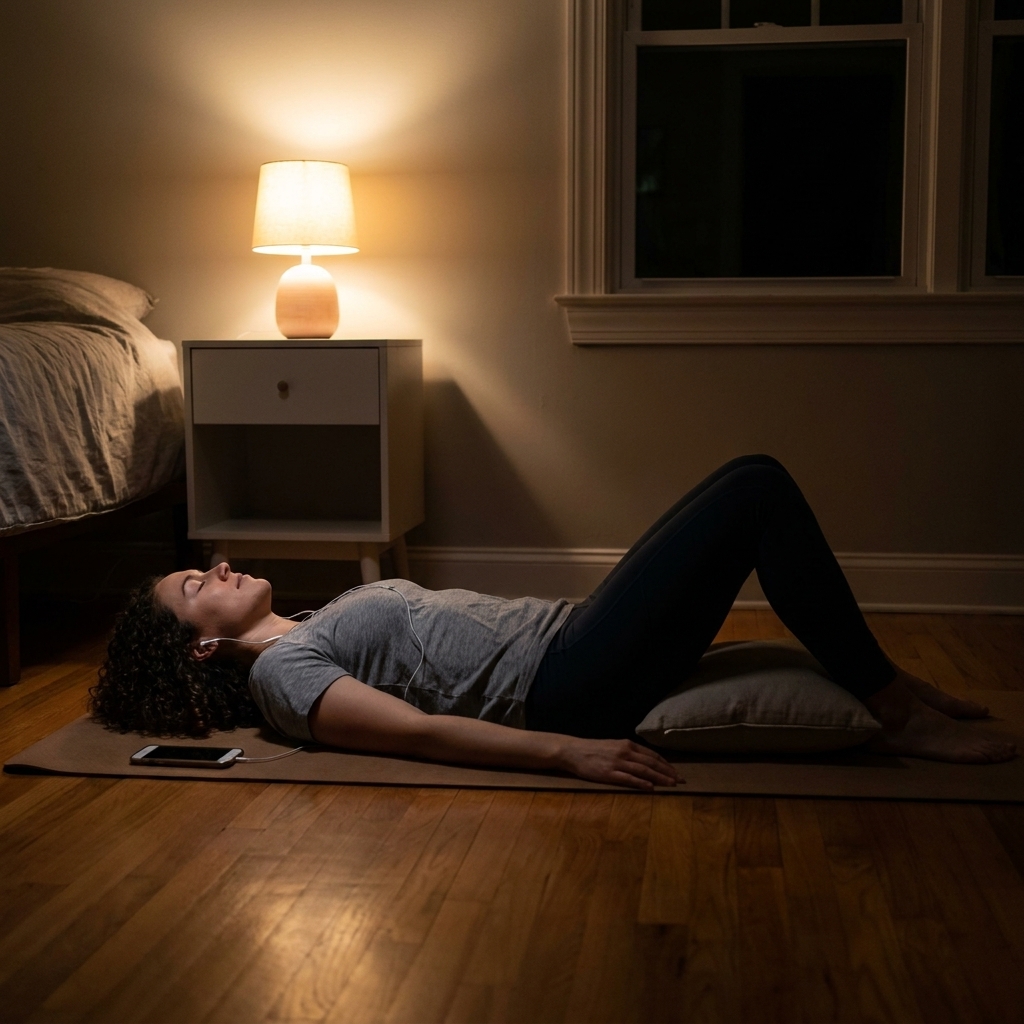
- Option B: Buffer zone. Do it 20 to 40 minutes before bed in a chair or on a yoga mat, then transition to bed.
- Option C: Middle-of-the-night reset. If you wake up, a shorter scan can help interrupt the “checking the clock and panicking” loop.
Lower stimulation
- Dim the room and keep screens out of reach.
- Set the bedroom slightly cool if you can.
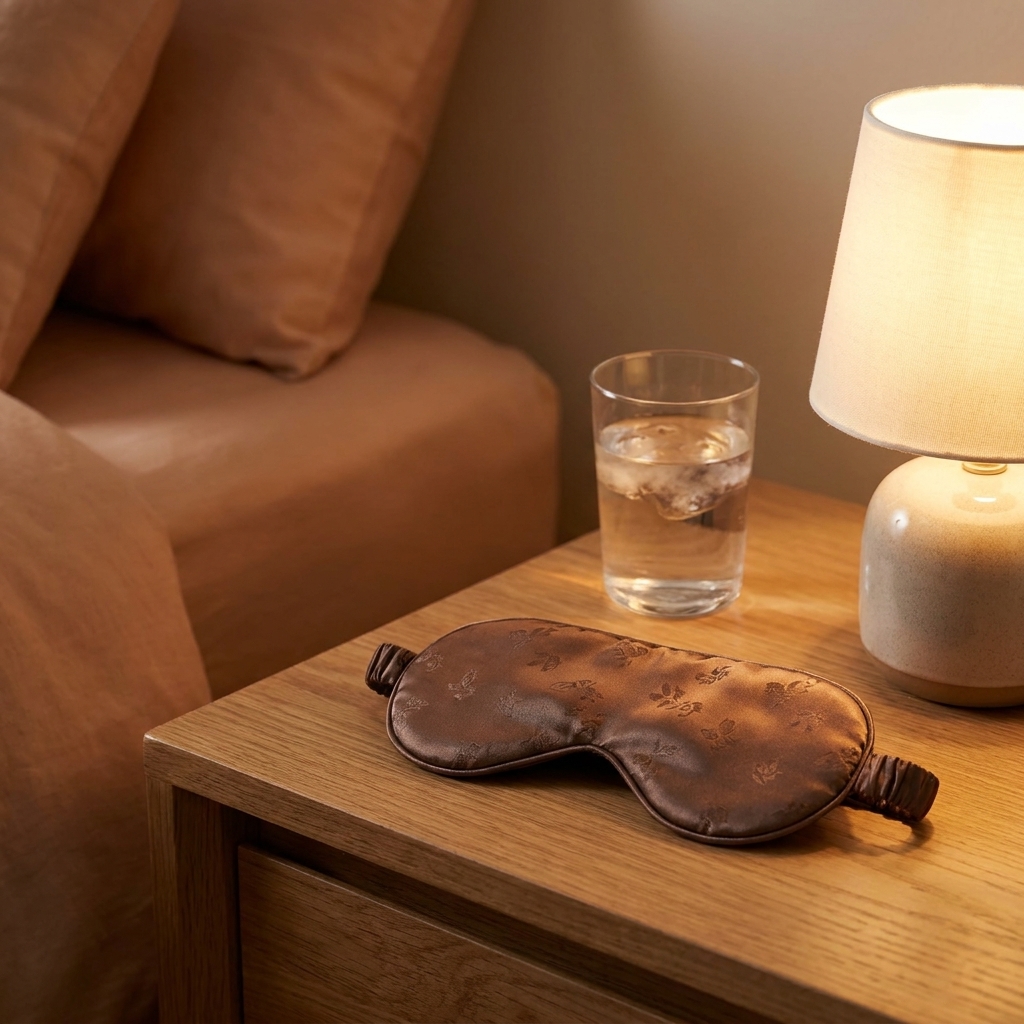
- If you are light-sensitive, use blackout curtains or a comfortable sleep mask.
- If silence makes your mind louder, consider steady background sound at a low volume.
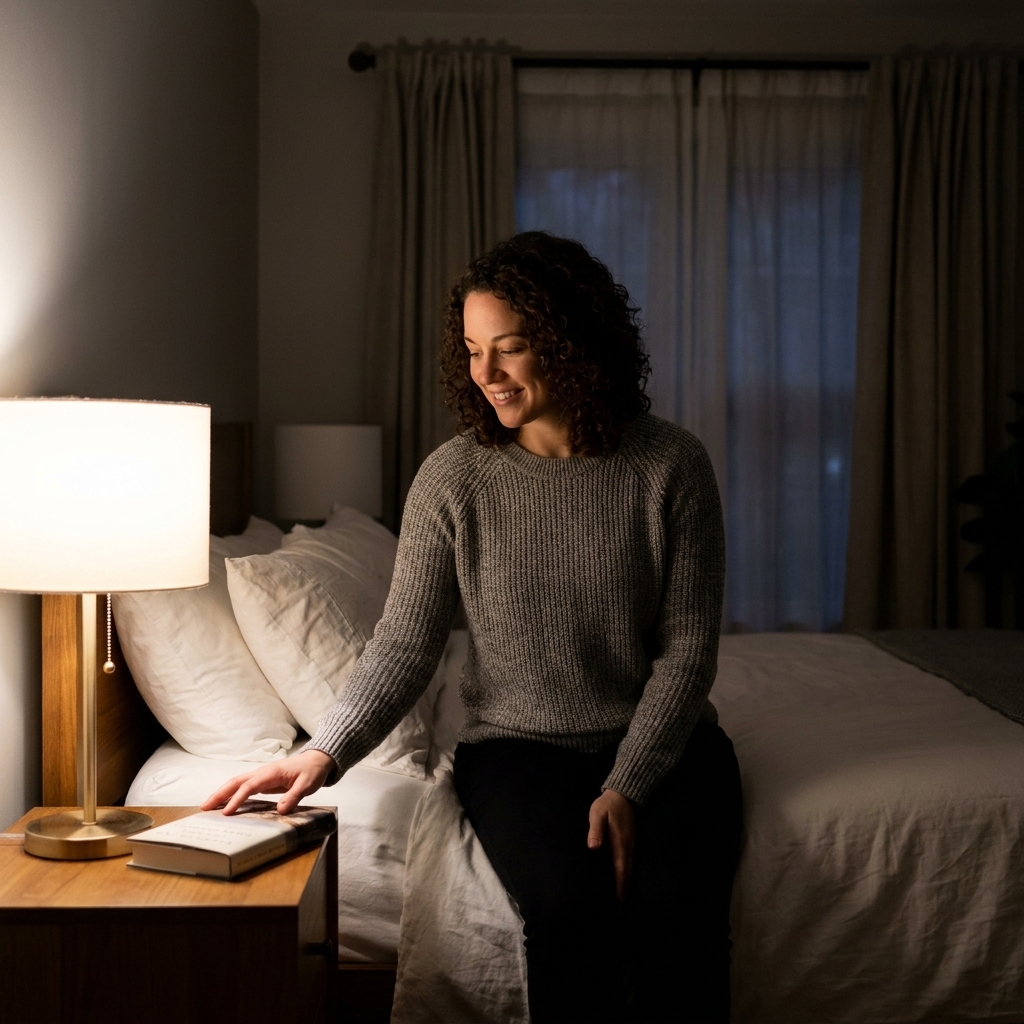
10-minute body scan script
You can read this once or twice, then rely on memory. If you prefer audio, record yourself reading it in a calm voice, or use a simple timer with no harsh alarm.
Step 1: Get comfortable (20 seconds)
Lie on your back or side. Let your arms rest where they naturally land. If it feels supportive, place a pillow under your knees (on your back) or between your knees (on your side).
Quietly say to yourself: “I am here. Nothing to solve right now.”
Step 2: Choose one anchor (30 seconds)
Bring attention to your breathing without changing it. Notice where you feel breath most clearly: nostrils, chest, or belly.
If breathing feels stressful, switch your anchor to a neutral contact point like your calves against the sheets or your head on the pillow.
Step 3: Scan from feet to head (7 to 8 minutes)
Move slowly. At each stop, do three things: notice, soften, and move on.
- Feet and toes: Notice warmth, coolness, tingling, pressure. Let the toes un-clench.
- Ankles and calves: Feel the weight of your legs. Invite the calves to soften.
- Knees and thighs: Notice any gripping. Let your thighs be heavy.
- Hips and pelvis: This is a common tension zone. Let the hips sink into the mattress.
- Lower back and belly: See if the belly can relax outward on the inhale and fall back on the exhale.
- Chest and ribs: Notice the gentle movement of breathing. No need to deepen it.
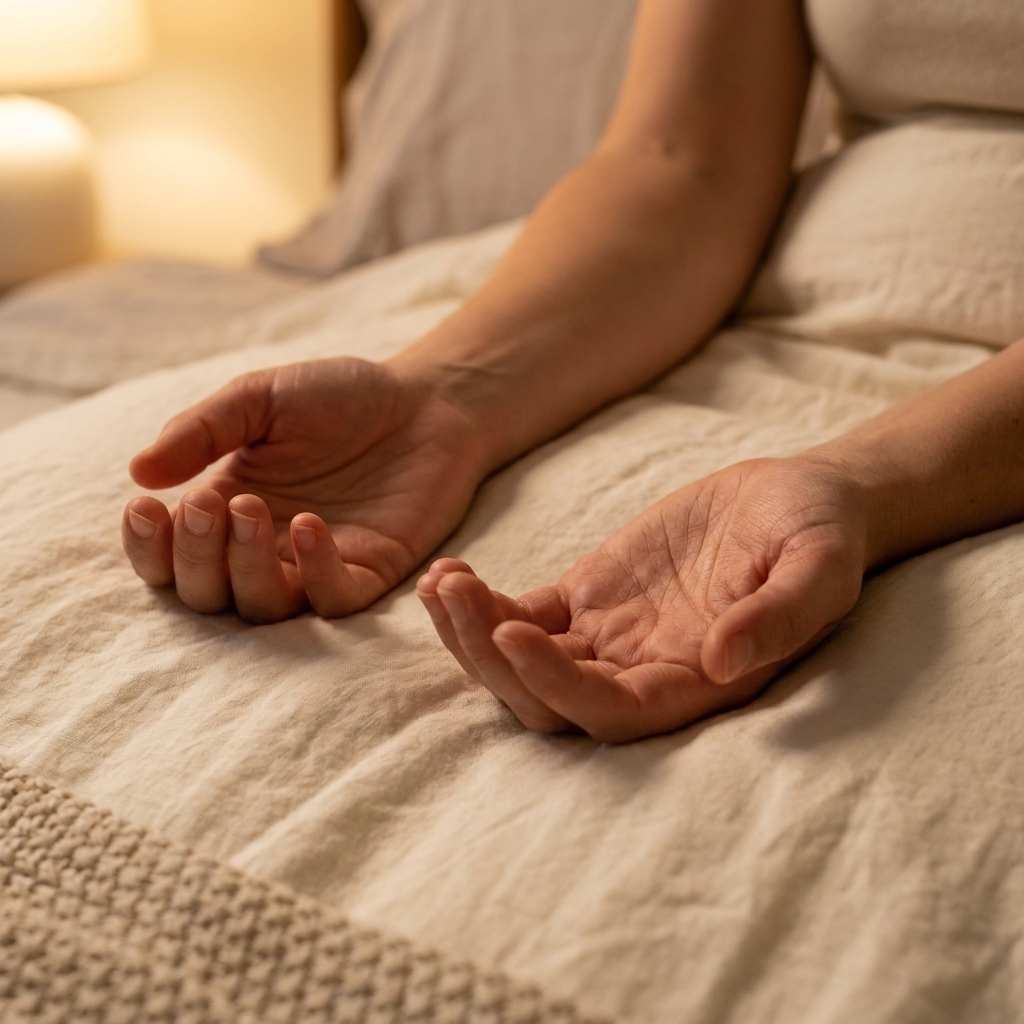
- Hands and arms: Uncurl the fingers. Let the forearms be heavy.
- Shoulders: If your shoulders creep up, imagine them melting away from your ears.
- Neck and throat: Soften the tongue. Let the throat be open and easy.
- Jaw and face: Unclench the jaw. Smooth the space between the eyebrows.
- Forehead and scalp: Let the scalp loosen, as if it could spread wide.
Step 4: Full-body release on the exhale (60 seconds)
Sense your body as one connected unit. On each exhale, imagine releasing 5 percent more effort.
If sleep arrives, let it. If it does not, you still did the practice.
When your mind wanders
Mind wandering is not a problem. It is the practice. Here is the exact reset I teach clients who feel discouraged:
- Label: “Thinking.” Or “Planning.” Or “Worrying.”
- Return: Gently bring attention back to the last body area you remember.
- Soften: Relax one small muscle group on purpose, like the tongue or eyebrows.
Keep the tone kind. The goal is to disengage from the content of thoughts, not to win an argument with them.
Common obstacles
“I get itchy or uncomfortable.”
This is surprisingly common, especially if you are already tense. Try scanning with a lighter touch:
- Spend less time on each body part, moving every 1 to 2 breaths.
- Focus on contact points (heel on sheet, shoulder on mattress) instead of internal sensations.
- Keep the room slightly cooler, since overheating can amplify restlessness.
“I keep trying to force relaxation.”
Instead of “relax,” aim for “allow.” For example: “Can this shoulder be 1 percent softer?” Tiny shifts add up.
“My anxiety gets louder in the quiet.”
Add gentle structure:
- Use a simple audio track with a calm voice.
- Pair the scan with steady white noise or a fan.
- Try a short phrase on the exhale: “soften” or “let go.”
“I fall asleep halfway through.”
That can be a good sign that the practice is helping you settle. If you want to complete the full scan for skill-building, practice once during the day too.
Safety and comfort notes
If focusing inward makes you feel worse, you are not doing it wrong. Body-based attention can be activating for some people, including those with trauma history, panic symptoms, or certain chronic pain patterns.
Try one of these gentler options:
- Use an external anchor: the sound of a fan, white noise, or a simple phrase you repeat on the exhale.
- Scan contact points only: heel on sheet, shoulder on mattress, hand on blanket.
- Keep your eyes slightly open and soften your gaze, rather than closing them fully.
If your distress spikes or stays intense, it is worth doing this with a therapist or clinician who understands anxiety, trauma, or pain.
How often to practice
Consistency matters more than duration. A realistic plan:
- Week 1: 5 minutes nightly in bed. Keep it easy.
- Week 2: 8 to 10 minutes nightly. Add the full-body release ending.
- Week 3 and beyond: Stay at 10 minutes, or use 5 minutes on busy nights.
Many people notice the first wins as less pre-sleep dread and fewer stress spikes when they wake at night. Falling asleep faster often follows once your brain starts associating the scan with safety and rest.
Variations
1) Breath-paired scan
Inhale as you arrive at a body part. Exhale as you soften it. This works well for people who like structure.
2) Progressive muscle release
Gently tense a muscle group for 3 to 5 seconds, then release. Move from feet upward. Skip this if you have cramping issues or it feels activating.
3) “Heavy and warm” scan
At each body part, silently repeat: “heavy” on one exhale, “warm” on the next. This can be soothing if your mind is busy.
If you are awake too long
If you have been awake for a while and you can feel frustration building, consider a CBT-I aligned reset: get out of bed briefly and do something quiet and low-stimulation in dim light (like reading a calm paper book). When you feel sleepy again, return to bed and try the scan.
This helps protect your bed as a cue for sleep, not for struggle.
When to get support
Body scans are a helpful tool, but they are not a substitute for comprehensive insomnia care. Consider extra support if:
- You have insomnia most nights for 3 months or longer.
- You rely on alcohol or sedatives to initiate sleep.
- You snore loudly, gasp, or wake with headaches or a dry mouth (possible sleep apnea).
- You have racing thoughts with panic symptoms that feel unmanageable alone.
For chronic insomnia, CBT-I (Cognitive Behavioral Therapy for Insomnia) is widely recommended as a first-line treatment in major clinical guidelines. Many people pair CBT-I skills with relaxation practices like body scans for a well-rounded approach.
Quick FAQ
Should I do this in bed or sitting up?
If your main goal is sleep, do it in bed. If you tend to doze off instantly and want to build the skill first, practice sitting earlier in the evening, then bring it to bed.
What if I can’t stop swallowing or adjusting?
Let small movements happen without commentary. If you need to swallow, swallow. If you need to adjust, adjust once, then resume the scan from the last body area you recall.
Can I use this at 3 a.m.?
Yes. Use a shorter version: feet, legs, belly, shoulders, jaw. Keep the lights off and avoid checking the time if you can.
Is it normal to feel emotional during a scan?
It can happen. When we finally get quiet, we sometimes notice how much we have been carrying. If emotions feel intense or persistent, consider working with a therapist alongside your sleep routine.
A gentle nightly promise
When I was surviving on four hours of sleep and too much coffee, I used to treat bedtime like an exam I was failing. What helped most was learning to replace “trying to sleep” with “practicing rest.” A body scan is one of the simplest ways to do that.
Tonight, aim for one thing only: move your attention through your body with kindness. Let that be enough. The more often you practice that downshift, the more familiar sleep can feel again.