A step-by-step, research-driven bedtime routine you can personalize. Learn the key levers that help your brain and body transition into deeper, more consiste...
The Rest Pact
Updated October 18, 2026
Created October 18, 2026
Pink Noise vs. White Noise

Maya Caldwell
Maya Caldwell is a certified sleep science coach and the lead researcher at RestPact. After overcoming years of chronic insomnia, she dedicated herself to making evidence-based sleep strategies accessible, helping others build bedtime routines that lead to deep, restorative rest.
When I was living on four hours of sleep and too much coffee, I treated sound like a blunt instrument. If the neighbor’s dog barked, I cranked up whatever noise track I could find and hoped for the best.
These days, I still love a good soundscape, but I use it more intentionally. The goal is not to knock you out. The goal is to create a steady auditory “anchor” that makes sudden disturbances less noticeable and gives your attention something gentle to rest on.
Two of the most common options are white noise and pink noise. They are both “color noises,” but they behave differently and they tend to feel different in the body. Let’s sort out what actually matters for mindful rest and better sleep.
What color noise means
Color noises are types of sound defined by how power is distributed across frequencies. You do not need to understand audio engineering to use them well, but one accurate sentence can save a lot of confusion.
- White noise: ideally has a flat power spectral density, meaning roughly equal power per Hz across the spectrum. Many people perceive it as brighter or more “hissy,” like TV static.
- Pink noise: roughly follows a 1/f slope, often described as equal power per octave. It has relatively less high-frequency content, so many people perceive it as softer and more “whooshy.”
In real bedrooms, labels are only the starting point. Speaker quality, placement, and your room’s surfaces shape what you actually hear, which is why two “white noise” tracks can feel totally different.
White noise for masking
White noise is popular for a reason. It is often effective at “masking,” which means it reduces the contrast between a quiet bedroom and a sudden sound, like a car door, a roommate shifting, or an apartment hallway conversation.
When white noise often works best
- Sharp, unpredictable disruptions: slamming doors, speech leaks, occasional barking.
- Light sleepers who wake easily when the environment goes from silent to suddenly active.
- Shared spaces where you cannot control every sound source.
When white noise can backfire
If you are sensitive to higher frequencies, white noise can feel edgy or irritating. For some people, it becomes something the brain keeps monitoring instead of ignoring, which is the opposite of restful.
Also, if you turn it up too loud, it can become its own stressor. Sleep is not just about overpowering the noise. It is about creating safety cues for your nervous system.
One more nuance that matters: white noise often masks mid and higher-frequency intrusions (like voices, squeaky floors, and doors) better than low rumbles or bassy thumps, at least at comfortable volumes.
Pink noise for settling
Pink noise often feels more like a steady “whoosh” than a hiss. Technically it places less emphasis on high frequencies, and subjectively it tends to feel less sharp than white noise.
When pink noise often works best
- Mindful relaxation: if you want a sound that is easy to rest attention on without feeling stimulated.
- People who find white noise harsh or “static-like.”
- Falling asleep: many people describe pink noise as cozier at bedtime.
Research on sound and sleep is nuanced. Some lab studies suggest pink noise, especially when it is timed or phase-locked to sleep rhythms in controlled settings, may support deeper or more stable sleep for some people. That is not the same thing as playing a generic “pink noise” track all night. A practical starting point is still simple: if white noise makes you feel more keyed up, pink noise is often the gentler option.
Sleep and sound basics
When people ask me whether pink noise or white noise is “better for sleep,” I ask a different question: What is disrupting your sleep?
Sleep architecture is the natural cycling between lighter sleep, deeper slow-wave sleep, and REM sleep. You do not need perfect, uninterrupted sleep to be healthy. But repeated micro-awakenings and environmental startles can fragment sleep and leave you feeling unrefreshed.
Noise can interfere by:
- Triggering brief arousals even if you do not fully wake up.
- Delaying sleep onset when your brain keeps scanning for threats.
- Reducing continuity, which can blunt the restorative feeling you want from the night.
The right soundscape aims to make the bedroom feel consistent and predictable so your brain stops “checking” the environment.
Use sound as an anchor
This is my favorite part, because it helps whether you choose pink noise, white noise, brown noise, a fan, or a simple nature track.
Mindful auditory focus is the practice of gently placing your attention on a steady sound, then returning to it when your mind wanders. It is not about forcing sleep. It is about giving your nervous system something repetitive and non-threatening to settle around.
A 2-minute sound anchor
- Pick one layer of the sound. In white noise, it might be the steady hiss. In pink noise, it might be the lower, rolling “whoosh.”
- Breathe normally and notice the sound’s texture: smooth, grainy, soft, broad.
- When thoughts pop in, acknowledge them and return to the sound without judging yourself.
- Let your attention widen to include your body: jaw unclenching, shoulders dropping, belly softening.
If your brain is busy, this can be more effective than trying to “empty your mind.” You are simply redirecting attention from problem-solving to sensing.
How to choose
If you only remember one thing, make it this: the best noise is the one you can ignore. You want it present enough to soften disruptions, but neutral enough that your brain stops evaluating it.
Try pink noise if you want
- A softer, warmer sound that feels less sharp
- A track that supports relaxation and mindful listening
- Something that feels closer to a steady “whoosh” than a hiss
Try white noise if you want
- Stronger masking for mid and higher-frequency disruptions
- A consistent blanket-like sound in a busy building or near conversation
- A familiar fan-like, static-like texture
What about brown noise?
Brown noise shifts even more emphasis into lower frequencies than pink noise, which some people find deeply soothing. It can feel like a low, steady rumble. If pink noise helps but you still want something “deeper,” brown noise is worth a test. If it feels boomy or distracting, go back to pink.
Volume and setup
Most “noise doesn’t work for me” stories are actually volume stories. The second most common issue is track or device quality. A tiny phone speaker playing “white noise” can sound thin, distorted, or looped, which your brain will keep noticing.
Settings that tend to be sleep-friendly
- Keep volume low: use the lowest level that still helps. A simple gut-check is this: if someone next to you can clearly make out the noise as a “sound,” not just a background, it may be too loud.
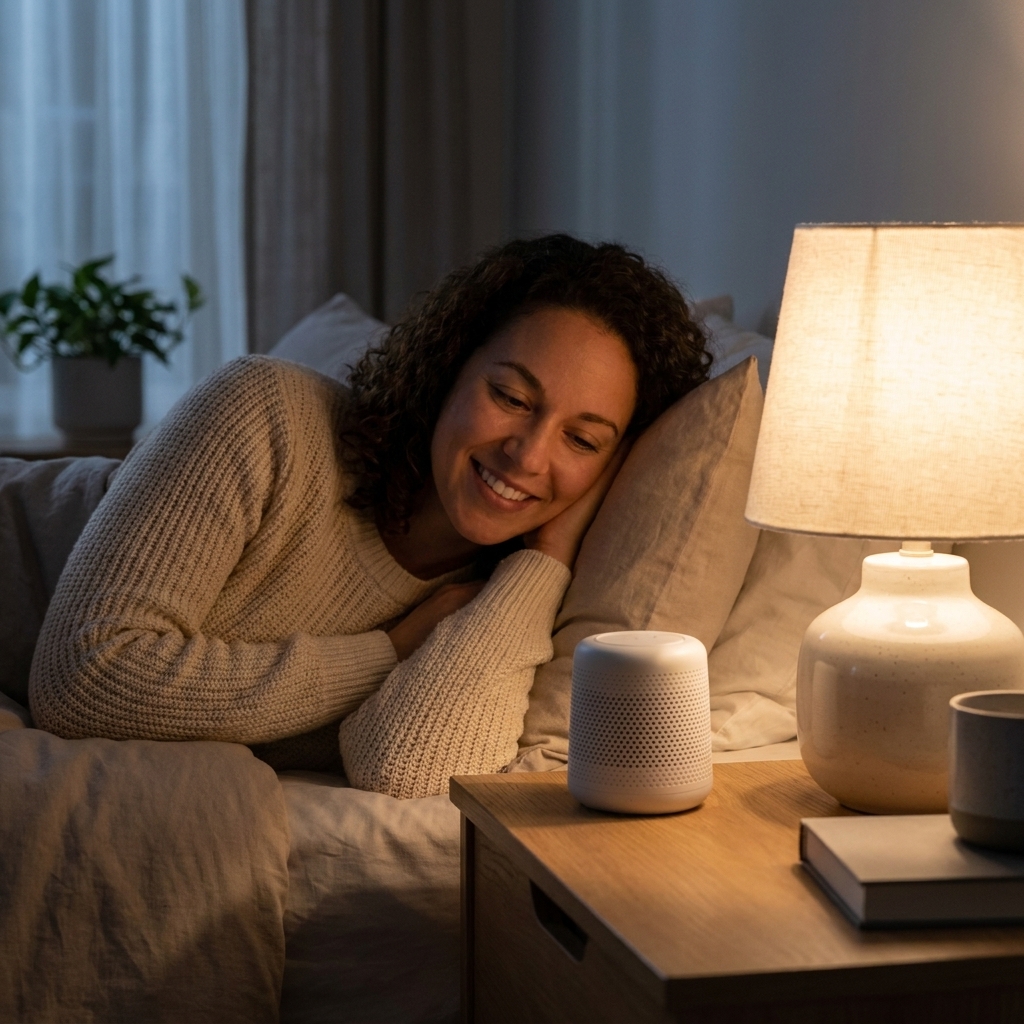
- Place the sound source across the room when possible, not right next to your head. This often feels less intrusive and more like a room tone.
- Use a consistent track: avoid soundscapes with sudden birds, chimes, ads, or noticeable loops. Predictability is the point.
- Consider a timer if you prefer silence later in the night. Some people fall asleep best with sound but sleep best without it.
- Pick the right tool: dedicated noise machines and fans often sound more natural than streamed tracks, and they avoid compression artifacts and abrupt cutoffs.
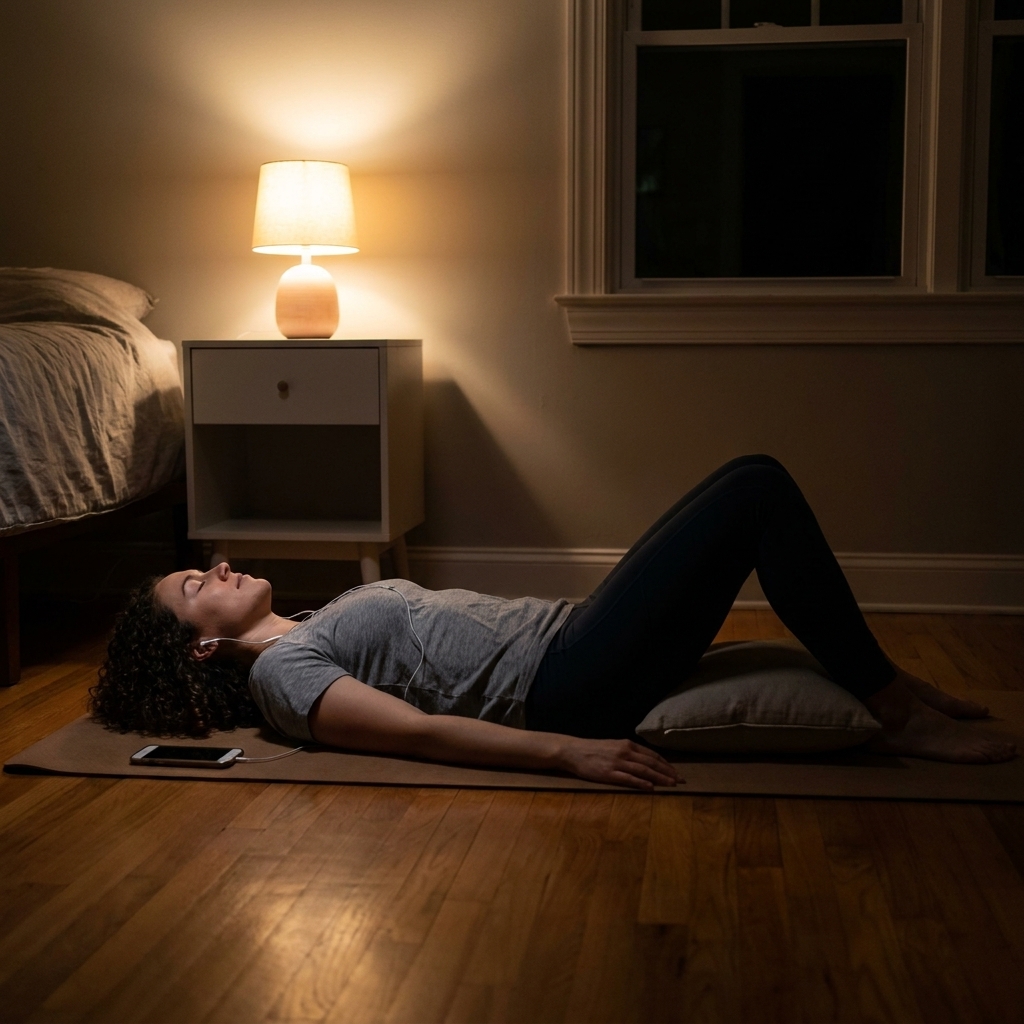
If you wear earbuds, be cautious. Comfort matters, and hearing safety matters. Keep the volume very low, avoid sleeping with anything that causes pressure or pain, and consider a bedside speaker instead if you find earbuds make you more aware of the sound.
Mindful rest, not perfection
I live in the Pacific Northwest, where a good blackout curtain and a steady soundscape can feel like a love language. But I still have nights when my brain tries to run tomorrow’s to-do list at 1:00 a.m.
On those nights, the “right” noise is the one that helps me come back to the present. Sometimes that is white noise because the world outside is chaotic. Often it is pink noise because my nervous system needs softness, not force.
If you are not sure, run a simple experiment for one week: alternate nights, keep volume and bedtime routine the same, and track two things only: time to fall asleep and how restored you feel in the morning. Your body will tell you what it prefers.
FAQ
Is pink noise better than white noise for sleep?
For some people, yes, especially if white noise feels harsh or stimulating. Pink noise often feels smoother and more relaxing. But if your main problem is sharp, higher-frequency disruptions like voices or doors, white noise is often the more effective masker.
Can noise improve sleep architecture?
Sound cannot replace healthy sleep habits, but it can protect sleep continuity by reducing how often you startle or partially awaken from environmental noise. Better continuity supports healthier sleep cycling over the night.
Should I play noise all night?
It depends. If the sound prevents wake-ups, keeping it on can help. If you only need it to fall asleep, a timer can be a good compromise. The best setup is the one that leaves you feeling most restored.
What if my partner hates the sound?
Try a lower volume, pink noise (often perceived as gentler), or place the speaker closer to the person who wants it. In some bedrooms, a small fan on one side works better than a loud central speaker.