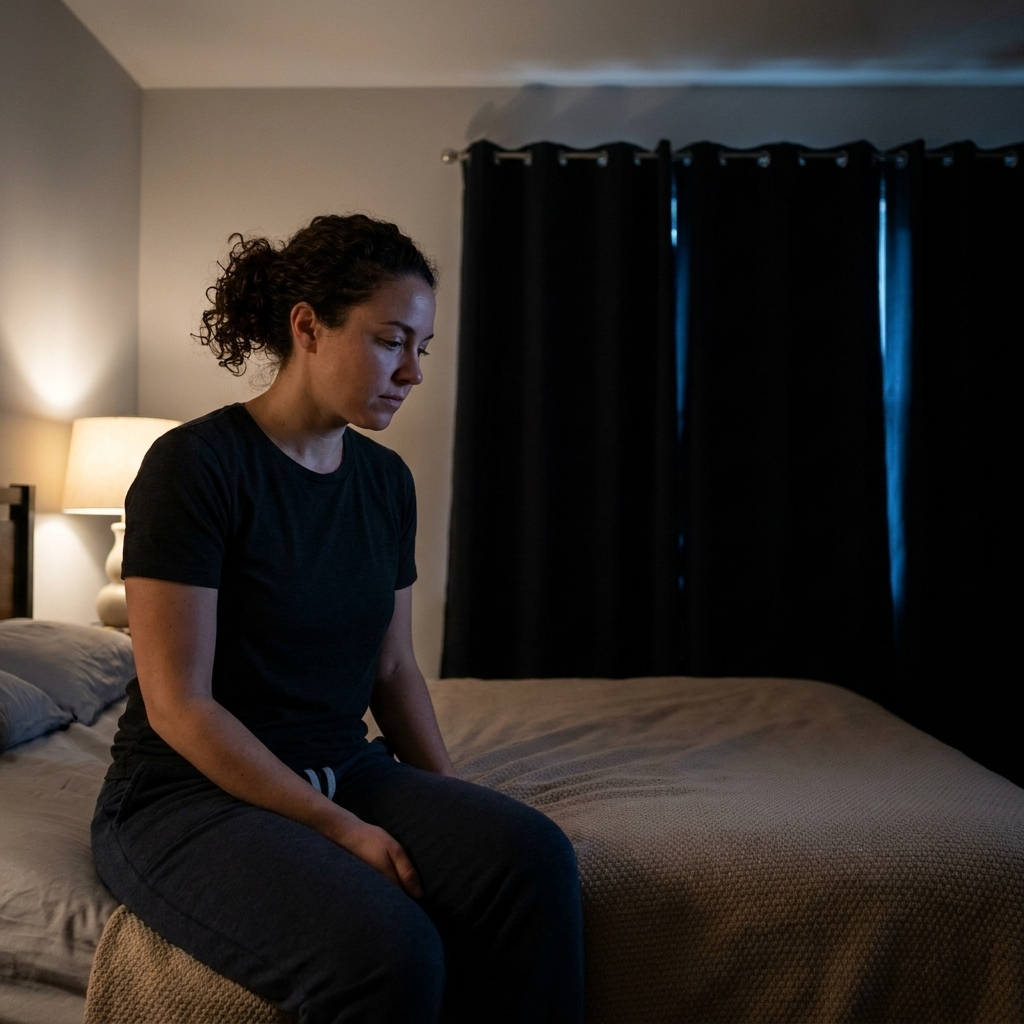
A gentle, evidence-based way to detach from scary bedtime thoughts so your body can do what it already knows how to do: sleep. Includes simple scripts and a ...
The Rest Pact
Updated October 18, 2026
Created October 18, 2026
CBT-I vs. Sleep Hygiene

Maya Caldwell
Maya Caldwell is a certified sleep science coach and the lead researcher at RestPact. After overcoming years of chronic insomnia, she dedicated herself to making evidence-based sleep strategies accessible, helping others build bedtime routines that lead to deep, restorative rest.
I used to treat insomnia like a personal failing with a checklist. No screens, magnesium, lavender, a perfect wind-down routine, a bedroom cold enough to store salmon. Some of it helped me feel healthier. None of it consistently helped me sleep.
If you are doing “everything right” and you are still awake, you are not broken. You are probably running into a truth sleep research has repeated for years: sleep hygiene is supportive, but it is not designed to treat chronic insomnia on its own. Cognitive Behavioral Therapy for Insomnia, or CBT-I, is.

This article breaks down the difference, what CBT-I actually involves, what a typical course looks like, and how to find qualified, reputable help without risky DIY sleep restriction.
Sleep hygiene: helpful, but limited
Sleep hygiene is the collection of habits and environmental tweaks that make sleep easier to come by. Think: consistent wake time, limiting late caffeine, dimming lights in the evening, keeping your bedroom quiet and cool, and reducing alcohol close to bedtime.
These are excellent foundations. They lower friction. They support circadian rhythm and reduce sleep disruptors.
But here is the catch: persistent insomnia is rarely just a “bad habits” problem. It is often a learned pattern involving:
- Conditioned arousal: your brain starts associating bed with frustration, alertness, and effort.
- Worry loops: “If I do not sleep, tomorrow is ruined,” which ramps up stress and makes sleep less likely.
- Safety behaviors: sleeping in, canceling plans, spending extra time in bed, or relying on substances or rituals that feel necessary to sleep, but keep the cycle going.
- Mismatched sleep opportunity: spending far more time in bed than you are actually sleeping can fragment sleep and train lighter, more broken nights.
Sleep hygiene can reduce aggravators. It usually does not retrain these patterns by itself.
CBT-I: first-line treatment for chronic insomnia
CBT-I is a structured, evidence-based treatment for insomnia that targets the behaviors and thoughts that keep insomnia alive. It is typically delivered by a trained clinician over multiple sessions, often weekly, with homework between visits.
Unlike general advice, CBT-I is individualized and data-driven. It uses your actual sleep patterns, not an idealized schedule you are “supposed” to follow.
CBT-I is widely recommended as a first-line treatment for chronic insomnia in major clinical guidelines, including those from groups like the American College of Physicians and the American Academy of Sleep Medicine.
It can be delivered in-person, via telehealth, and in some cases through structured digital CBT-I programs. Evidence quality varies a lot across products, so it helps to look for programs that publish clinical trial data and include screening and safety guidance. Some are offered through health systems, employers, or prescription-based platforms.
What CBT-I is not
- It is not just “relax more.” Relaxation can be one tool, but it is not the whole treatment.
- It is not a set of generic tips copied from the internet.
- It is not a promise of a cure. Many people improve substantially, but good care avoids guarantees and adapts to your situation.
- It is not meant to be an aggressive DIY sleep restriction plan. The scheduling piece should be guided and adjusted for safety and real life.
CBT-I vs. sleep hygiene
If sleep hygiene is like keeping your car maintained, CBT-I is what you do when the check engine light has been on for months and the usual fixes are not working.
| Topic | Sleep hygiene | CBT-I |
|---|---|---|
| Goal | Support healthy sleep | Treat insomnia mechanisms |
| Approach | General best practices | Structured, individualized protocol |
| Core targets | Light, caffeine, alcohol, environment, routine | Conditioned arousal, unhelpful beliefs, sleep timing and efficiency, bedtime behaviors |
| Tracking | Optional | Typically uses sleep diaries to guide decisions |
| Time frame | Ongoing lifestyle choices | Often a multi-week course with specific milestones |
| Outcomes | May reduce mild disruption | Often aims to reduce time awake in bed and improve sleep predictability and daytime function |
| Best for | Prevention, mild sleep issues, supporting other treatments | Chronic insomnia, frequent sleeplessness, insomnia with anxiety about sleep |
In real life, the two are not enemies. Most CBT-I programs keep the helpful parts of sleep hygiene and then go further by directly addressing the insomnia cycle.
What CBT-I includes
CBT-I is usually a bundle of evidence-based tools. Not every clinician uses every tool in the same way, but these are the common pillars.
1) Sleep education that changes choices
You will learn how sleep pressure, circadian rhythm, and hyperarousal interact. This is not trivia. It is used to reduce fear and to explain why certain changes help, even when they feel counterintuitive.
2) Stimulus control: making bed a sleep cue
When insomnia has been around a while, the bed can become a cue for wakefulness. Stimulus control is about re-conditioning the brain, gently but consistently.
This often includes practices like using the bed only for sleep and intimacy, keeping a consistent wake time, and getting out of bed when you are clearly awake for a while. Your clinician will tailor specifics to your mobility, safety, household setup, and stress load.
3) Cognitive strategies: loosening the fear grip
Insomnia loves catastrophic predictions. “I got 4 hours. I will fail tomorrow. This proves something is wrong with me.” CBT-I teaches you to identify and challenge these patterns in a practical way.
It is not about forced positivity. It is about reducing the mental activation that blocks sleep and replacing rigid rules with flexible, reality-based beliefs.
4) Sleep scheduling to improve sleep efficiency
Many CBT-I protocols include a structured way to align time in bed with your actual sleep ability, then gradually expand sleep opportunity as sleep becomes more consolidated.
This is the piece that is sometimes flattened online into “sleep restriction.” In actual CBT-I, it should be carefully monitored, adjusted based on your sleep diary, and modified for safety. If you do safety-sensitive work, drive long distances, have a history of bipolar disorder or seizures, are being evaluated for sleep apnea, or are managing pregnancy or other medical conditions that change fatigue risk, your clinician should tailor the plan and may coordinate with your medical team.
5) Relaxation: downshifting, not performing
Relaxation is often included to reduce pre-sleep arousal. Options may include diaphragmatic breathing, progressive muscle relaxation, imagery, mindfulness-based practices, or brief wind-down routines.
The goal is to make your nervous system less spiky at night, not to turn relaxation into another performance test.
6) Troubleshooting and relapse prevention
Good CBT-I includes planning for setbacks. You will talk through what to do when you have a bad week, a work deadline, a sick kid, hormonal shifts, or travel across time zones. Insomnia treatment that only works in perfect conditions is not real treatment.

What to expect
Most people do best with CBT-I when they know what the road looks like. A typical course often includes:
- Intake and screening: history, sleep patterns, medications, mental health, and red flags for other sleep disorders.
- Sleep diary tracking: usually 1 to 2 weeks to establish a baseline.
- Weekly or biweekly sessions: often over 4 to 8 weeks, sometimes longer depending on complexity.
- Between-session practice: CBT-I is active treatment. The “homework” is the treatment.
- Adjustments: schedules and strategies are tweaked based on your data and how you are functioning daytime.
It is common to see uneven progress at first. Some people notice improvement within a couple of weeks. Others need more time, especially if insomnia has been present for years or is intertwined with anxiety, depression, chronic pain, perimenopause, or shift work.
A gentle reality check: the goal is not perfect sleep every night. The goal is to reduce time awake in bed, reduce sleep-related fear, and make sleep more predictable and restorative over time.
When to level up
Sleep hygiene may be enough if
- Your sleep problem is new and clearly tied to a short-term disruption like travel, finals, a temporary schedule change, or a brief stressful event.
- You generally sleep well once you return to your usual rhythm.
- You do not dread bedtime or spend long stretches awake in bed.
Consider CBT-I if
- You have insomnia symptoms at least 3 nights per week for 3 months or more. (Definitions vary, and diagnosis is clinical, but this is a common threshold used in practice and research.)
- You take longer than 30 minutes to fall asleep or you are awake for long stretches during the night, and it is affecting daytime function.
- You feel anxious about sleep or you are doing a lot of “sleep effort” behaviors.
- You have tried consistent sleep hygiene and it has not moved the needle.
- You rely on alcohol, cannabis, or frequent sedating medications to initiate sleep.
If you are unsure, a qualified clinician can help you distinguish insomnia from other issues like sleep apnea, circadian rhythm disorders, restless legs syndrome, or medication-related sleep disruption. That distinction matters because the best treatment depends on the correct diagnosis.
When to see a clinician first
Insomnia is common, but a few situations call for medical evaluation sooner rather than later. Consider checking in with a clinician, sleep specialist, or urgent care (as appropriate) if you have:
- Loud snoring, witnessed breathing pauses, gasping, or severe daytime sleepiness (possible sleep apnea).
- Sudden, dramatic sleep change paired with other symptoms like unexplained weight loss, fever, chest pain, or new neurologic symptoms.
- Dangerous sleepiness while driving or at work.
- Severe depression, suicidality, mania, or psychosis, especially if insomnia is worsening it.
- Violent or risky sleep behaviors (possible parasomnia), or seizures at night.
- Withdrawal from alcohol, benzodiazepines, or other sedatives, which can be medically serious.
This is not meant to scare you. It is meant to make sure you land in the right lane. Treating “insomnia” when the real issue is sleep apnea or a medication side effect is like trying to fix a leak by repainting the ceiling.
How to find CBT-I help
Because “CBT-I” is sometimes used loosely in marketing, it helps to know what credentials and signals to look for.
Who to look for
- Behavioral sleep medicine specialists or clinicians trained specifically in CBT-I.
- Licensed psychologists, clinical social workers, counselors, or therapists with formal CBT-I training.
- Sleep medicine clinics that offer behavioral sleep services.
Where to search
- Society of Behavioral Sleep Medicine (SBSM) provider directory.
- American Academy of Sleep Medicine (AASM) directory for accredited sleep centers, then ask whether they offer CBT-I.
- Your primary care clinician can refer you, especially if insurance requires it.
Questions to ask
- “What training have you had specifically in CBT-I?”
- “Do you use sleep diaries to guide treatment?”
- “How many sessions is your typical CBT-I course?”
- “How do you screen for sleep apnea or circadian rhythm disorders?”
- “How do you modify treatment for safety if someone has a high-risk job or mental health history?”
Green flags and red flags
Green flags: they explain the structure, emphasize personalization, screen for other sleep disorders, and talk about safety and expectations.
Red flags: guaranteed outcomes, one-size-fits-all schedules, no assessment, or pushing aggressive restriction-style instructions without monitoring.

If you cannot access CBT-I yet
Access can be a real barrier. Waitlists are long in many places, and insurance coverage varies. If you are stuck in the gap, these options can still be meaningful:
- Ask about digital CBT-I: Some programs are structured and evidence-based, and may be offered through health systems or employers. If you go this route, look for programs that include screening, clear safety guidance, and a transparent evidence base.
- Work on low-risk foundations: consistent wake time, morning light exposure, and reducing long naps tend to be safer starting points than self-imposed restriction.
- Address comorbid factors: pain management, anxiety care, depression treatment, reflux control, and medication timing can all affect sleep.
- Get evaluated for sleep apnea if you snore loudly, gasp, have morning headaches, or feel unrefreshed despite enough time in bed.
If you are using sleep medication, do not stop or change it on your own. CBT-I can be done with or without medication, but any medication changes should be handled with the clinician who prescribes it.
Better together
I love a good routine. I am writing this from the Pacific Northwest, where blackout curtains are basically a spiritual practice in summer. Sleep hygiene is part of my daily life.
But when insomnia is persistent, routines alone can start to feel like you are politely negotiating with a smoke alarm. CBT-I is what teaches your system to stand down again, using a plan, data, and support.
If you are exhausted and discouraged, I want you to hear this clearly: needing more than sleep hygiene is not a failure. It is often the most logical next step.
FAQ
Is CBT-I just sleep hygiene with a new name?
No. Sleep hygiene is general lifestyle guidance. CBT-I is a structured clinical treatment that targets insomnia mechanisms like conditioned arousal, unhelpful beliefs about sleep, and fragmented sleep patterns, usually with sleep diaries and guided adjustments.
How long does CBT-I take to work?
Many CBT-I courses run about 4 to 8 weeks, though timelines vary. Some people notice changes within the first few weeks. Others need a longer course or additional support if there are complicating factors like chronic pain, perimenopause, anxiety, depression, or shift work.
Can I do CBT-I on my own?
Some CBT-I elements are available in books and digital programs, but it is important not to attempt aggressive sleep restriction without oversight. If you pursue self-guided support, choose options that emphasize screening, safety, and a structured program, and consider a clinician consult to tailor it.
Will CBT-I work if my insomnia is caused by stress?
Stress can absolutely trigger and maintain insomnia. CBT-I is specifically designed to treat the pattern that keeps insomnia going, even when stress is ongoing. Many people find it helps them sleep better during stressful seasons because it reduces the learned association between bed and alertness.
What kind of therapist provides CBT-I?
Look for a licensed clinician with specific CBT-I training, often listed as behavioral sleep medicine. Sleep centers and behavioral sleep medicine directories are good places to start.