Find a realistic pillow loft range and the best fill based on sleep position, shoulder width, and mattress firmness so you can wake up with less neck pain.
The Rest Pact
Updated October 18, 2026
Created October 18, 2026
Ergonomic Sleep Gear for Hip and Shoulder Pressure

Maya Caldwell
Maya Caldwell is a certified sleep science coach and the lead researcher at RestPact. After overcoming years of chronic insomnia, she dedicated herself to making evidence-based sleep strategies accessible, helping others build bedtime routines that lead to deep, restorative rest.
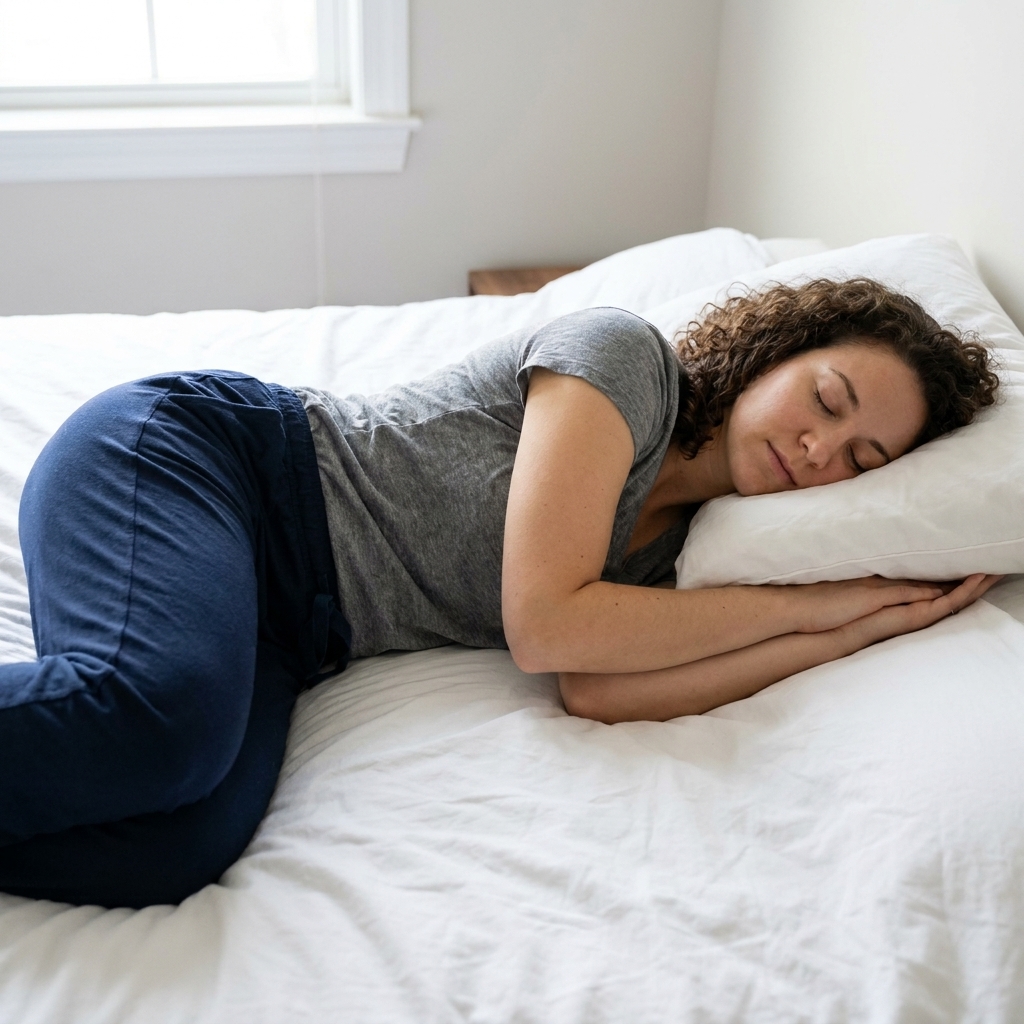
I know the particular kind of tired that comes from pain, not stress. You do everything “right” for sleep, yet you still wake up at 2:00 a.m. because your hip feels jammed into the mattress or your shoulder is buzzing with that numb, pins-and-needles ache.
When clients tell me they are waking up sore, I start with the least dramatic fixes first. Not because pain is “small,” but because small changes in alignment and pressure distribution can make a surprisingly big difference overnight.
Below are five pieces of ergonomic sleep gear that can reduce hip and shoulder pressure and help you move less during the night. Think of them as tools for better body mechanics, not fancy gadgets. I will also show you exactly how to use each one, because placement is where the payoff usually lives.
Why hips and shoulders complain
Hip and shoulder pressure at night is usually a mix of two things:
- Pressure points: Side sleeping concentrates your body weight onto a smaller surface area, especially at the outer hip and the shoulder joint.
- Joint alignment: When your pelvis rotates forward or your top knee collapses toward the mattress, the hip joint and low back can take the hit. When your pillow is too high or too low, your neck and shoulder often compensate.
Good ergonomic gear tends to do one of two jobs: it spreads pressure (so one spot is not carrying the load) or it reduces torque (so your joints are not twisted for hours).
Quick safety note: Persistent night pain, numbness or tingling that travels down an arm or into a hand, significant weakness, new bowel or bladder changes, fever, unexplained weight loss, recent trauma, or a history of cancer are all reasons to speak with a clinician promptly. Sleep gear can support comfort, but it cannot diagnose or treat injuries.
Tool 1: Knee pillow
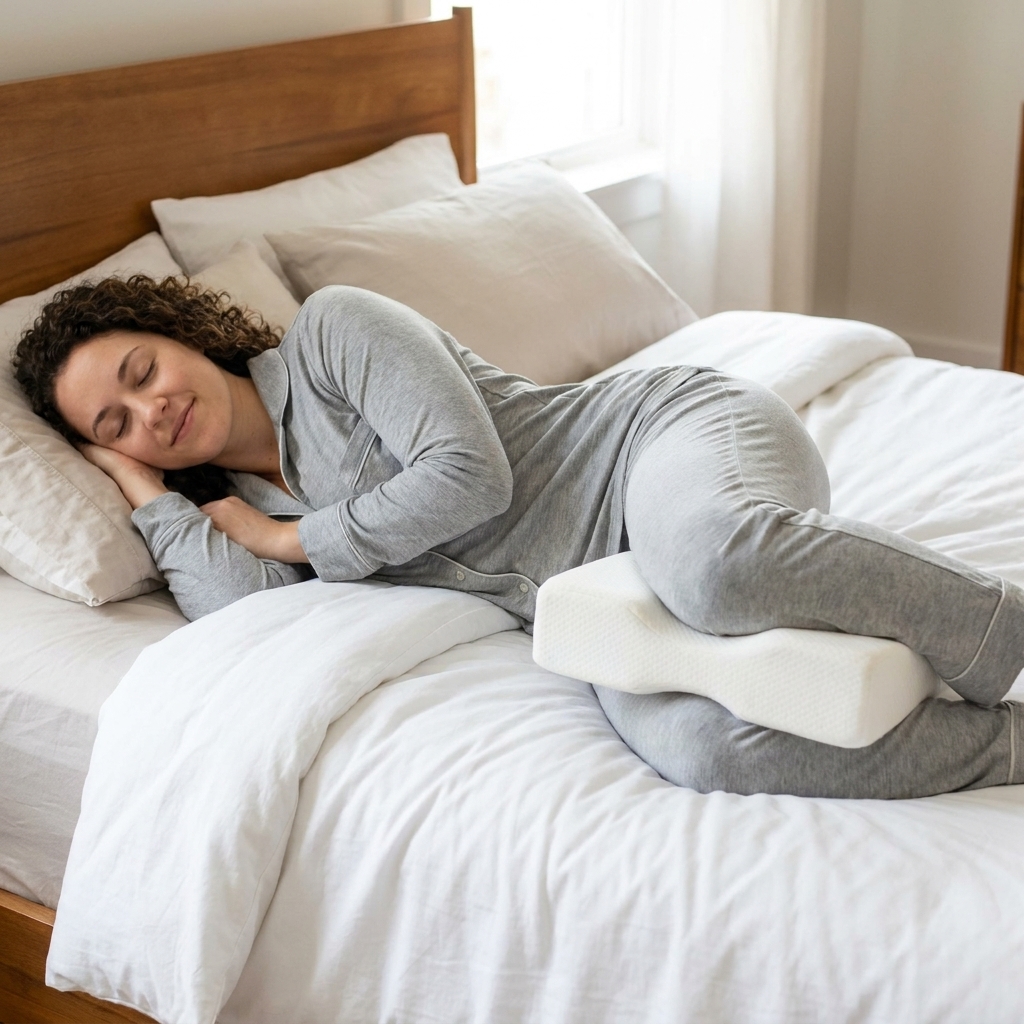
If you are a side sleeper with hip pressure, a knee pillow is often the highest impact, lowest cost fix. Its main job is to keep your pelvis closer to neutral so your top leg does not drag the hip and lower back into rotation.
Best for
- Side sleepers with hip soreness
- People who wake with low back stiffness
- Anyone whose top knee falls forward at night
What to look for
- Shape: An hourglass or contoured knee pillow tends to stay put better than a standard bed pillow.
- Firmness: Medium-firm is usually ideal. Too soft collapses and you lose alignment.
- Cover: Breathable, washable. If you run warm, a cooler surface may reduce restlessness.
How to use it
- Place it between your knees, not between your thighs only.
- Try sliding it slightly toward your ankles if your hip still feels twisted.
- If you have inner knee discomfort, choose a slightly thicker pillow so your knees are not pressing together.
My field note: If you have tried a knee pillow and hated it, it is often because it was too thin or too squishy. A pillow that collapses in 20 minutes is basically decorative.
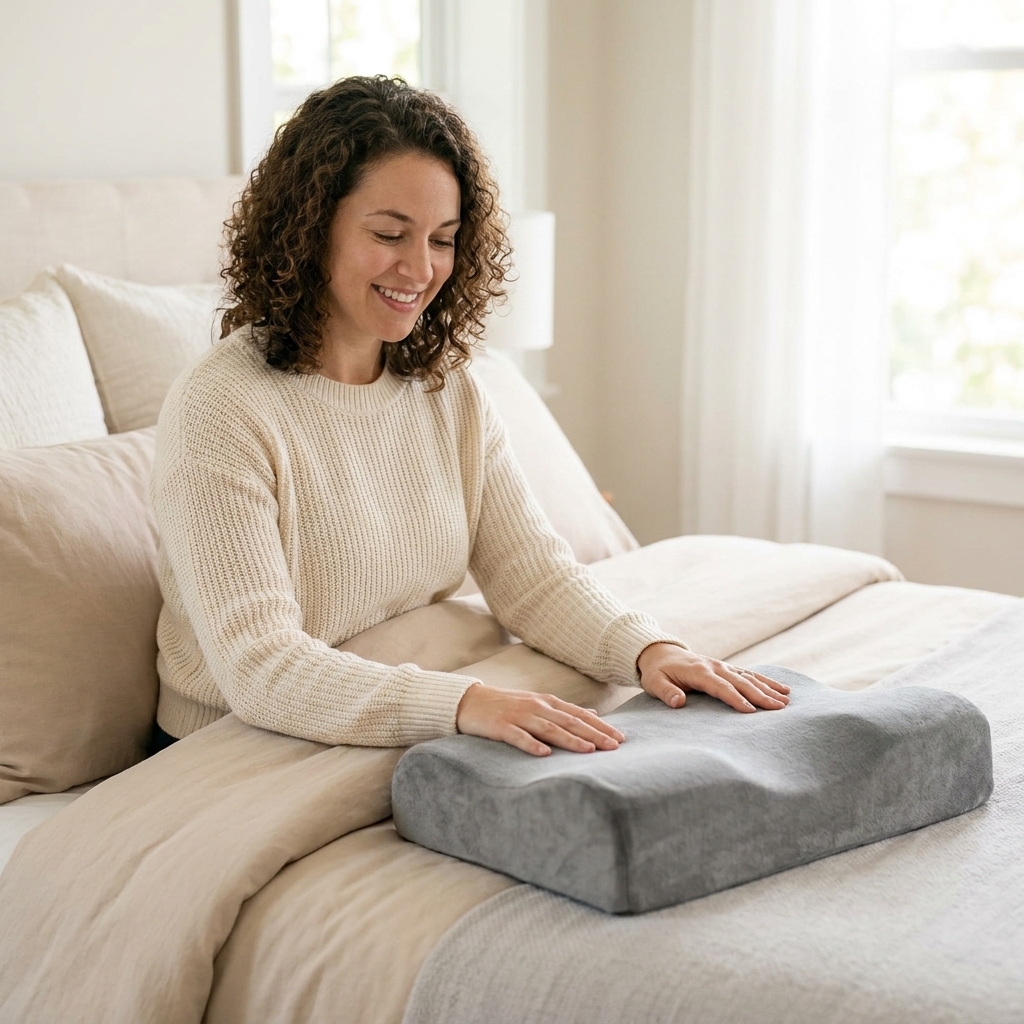
Tool 2: Shoulder-relief pillow
Shoulder pain in side sleepers is often influenced by pillow setup, even when the shoulder itself is also part of the story. If your pillow is too high, it can push your neck into side-bending. Too low, and your shoulder may take more compression as your upper body sinks searching for support.
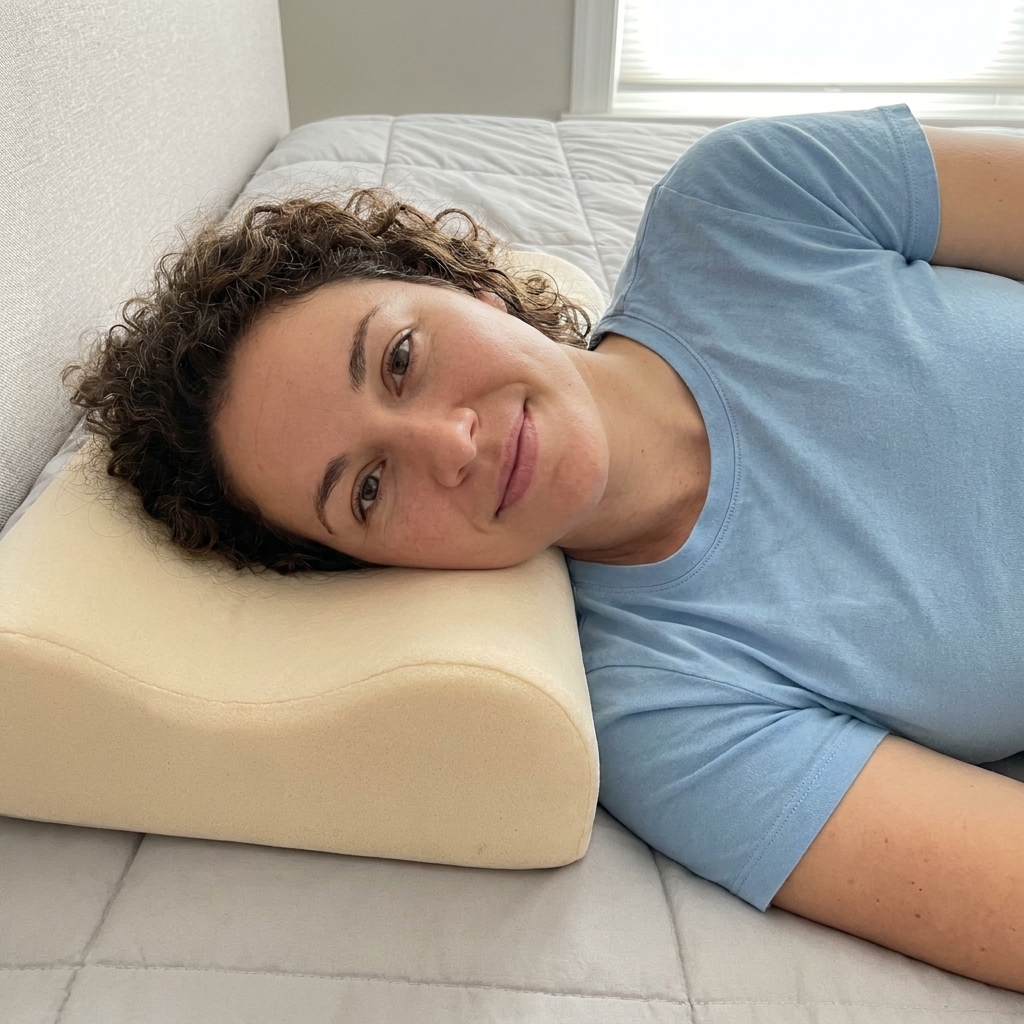
A shoulder-relief pillow is designed with a cutout or contour so your shoulder can “nest” while your neck stays supported.
Best for
- Side sleepers who wake with shoulder numbness or tingling
- People who feel like their shoulder is being shoved up toward their ear
- Neck and shoulder combo soreness
What to look for
- Loft options: Choose based on your shoulder width and mattress softness. Softer mattresses let your shoulder sink more, so you often need less pillow height.
- Material: Responsive foam or latex that supports without feeling like a brick.
- Cooling: If you run warm, prioritize airflow. Overheating can disrupt sleep for some people and lead to more position changes.
How to use it
- Line the cutout with your shoulder so your neck stays level and your head is not tilted down.
- Keep the lower edge of the pillow tucked close to your chest to prevent chin-tucking.
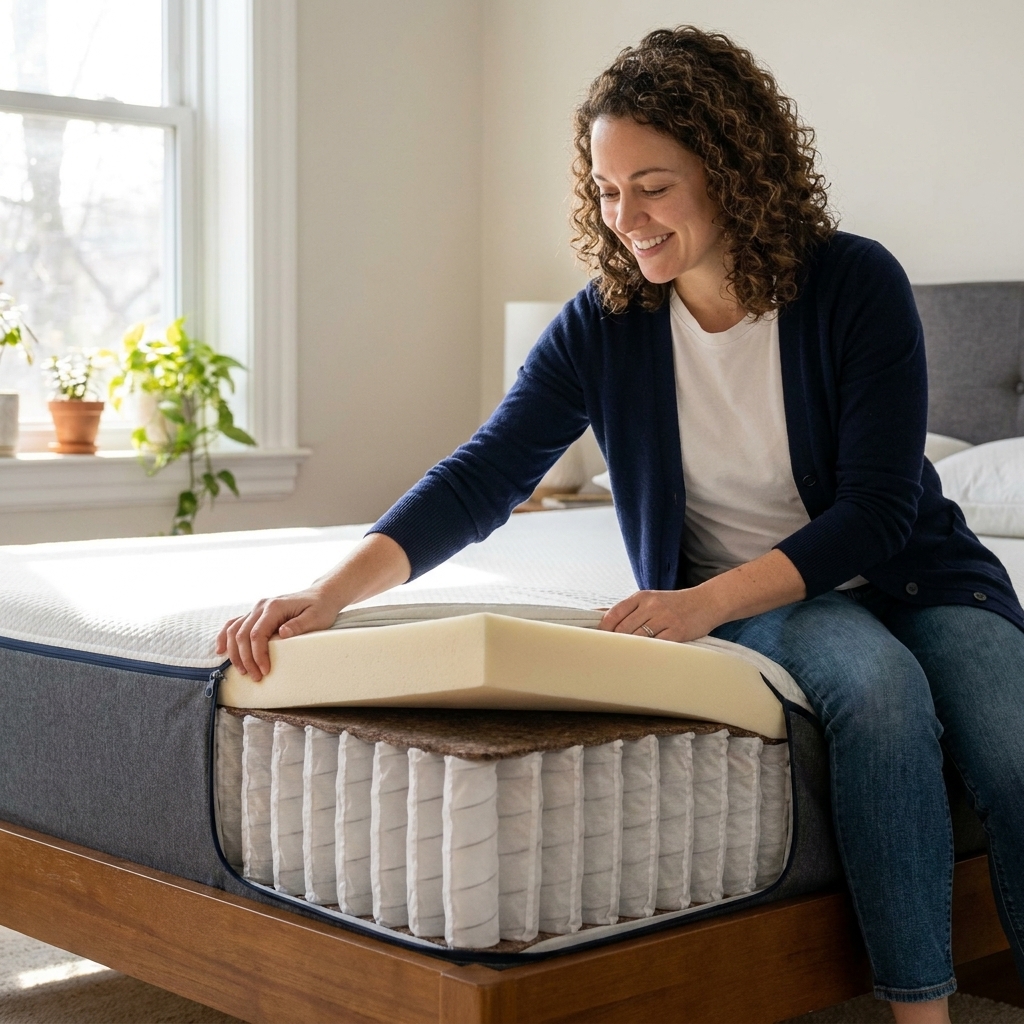
Tool 3: Mattress topper
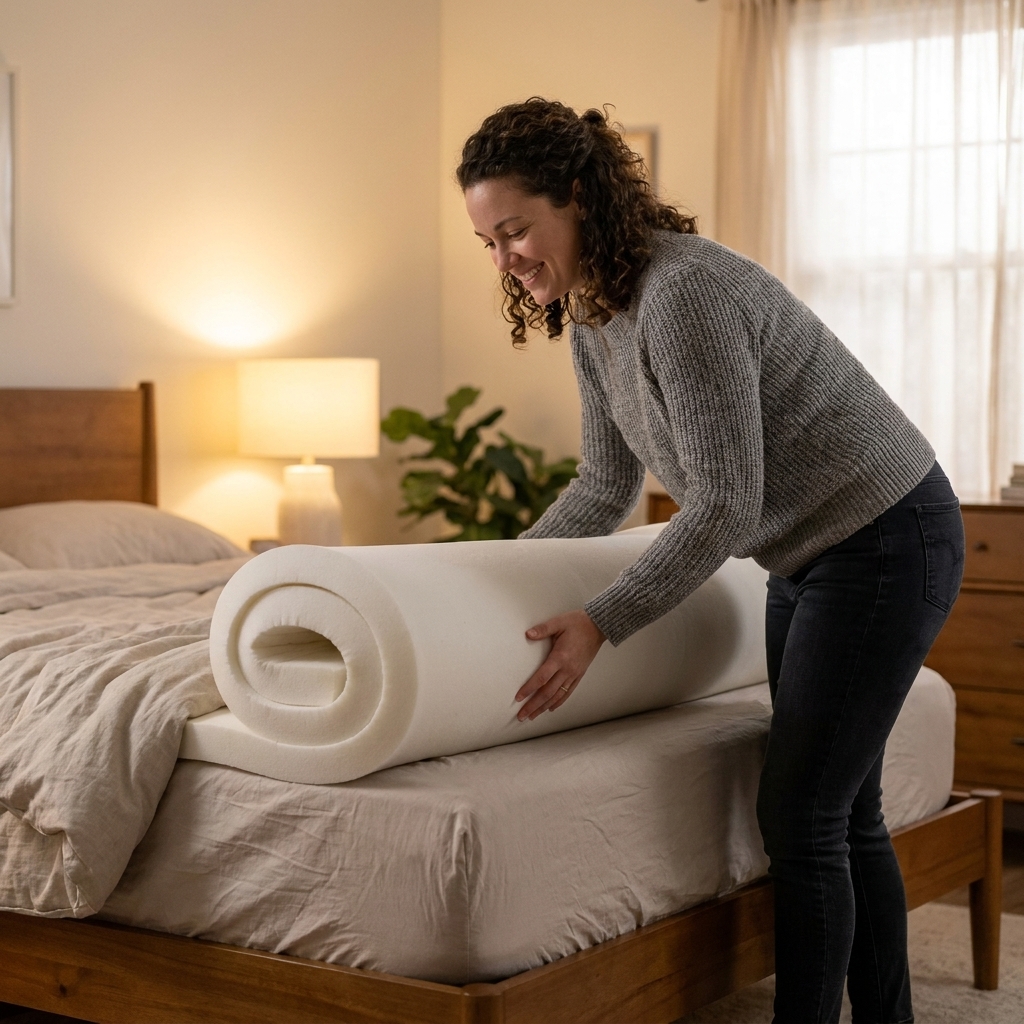
If your mattress is too firm for your body, pillow adjustments may help, but they do not always solve hip and shoulder pressure on their own. A well-chosen mattress topper can add the missing comfort layer that spreads load across more surface area.
This is especially helpful if you have a supportive mattress that is simply too unforgiving at the top, or if you are not ready to replace an entire bed.
Best for
- Side sleepers whose hips and shoulders feel “pointy” on the mattress
- People who fall asleep fine but wake up sore from sustained pressure
- Partners who want a comfort change without a new mattress
What to look for
- Thickness: 2 inches is a common sweet spot. 3 inches can help for sharper pressure points but may reduce ease of movement for some people.
- Material: Memory foam tends to excel at pressure relief. Latex tends to feel more buoyant and easier to move on.
- Heat management: Cooling features can help if you wake sweaty. Some people sleep more restlessly when they overheat.
How to use it
- Give your body a few nights to adapt. As a rule of thumb, 3 to 7 nights is enough to tell whether the pressure map is improving.
- If you wake with low back tightness after adding softness, your hips may be sinking too far. Consider a firmer topper or a thinner one.
One more check: Firmness is not the only mattress issue. If your mattress is sagging or has a body impression, it can pull your spine out of alignment no matter how many pillows you buy. A topper can sometimes mask this temporarily, but it does not reliably fix a worn-out support core.
Tool 4: Bed wedge
Pure side sleeping can be rough on sensitive shoulders. Pure back sleeping can be rough if you snore, deal with reflux, or simply cannot get comfortable.
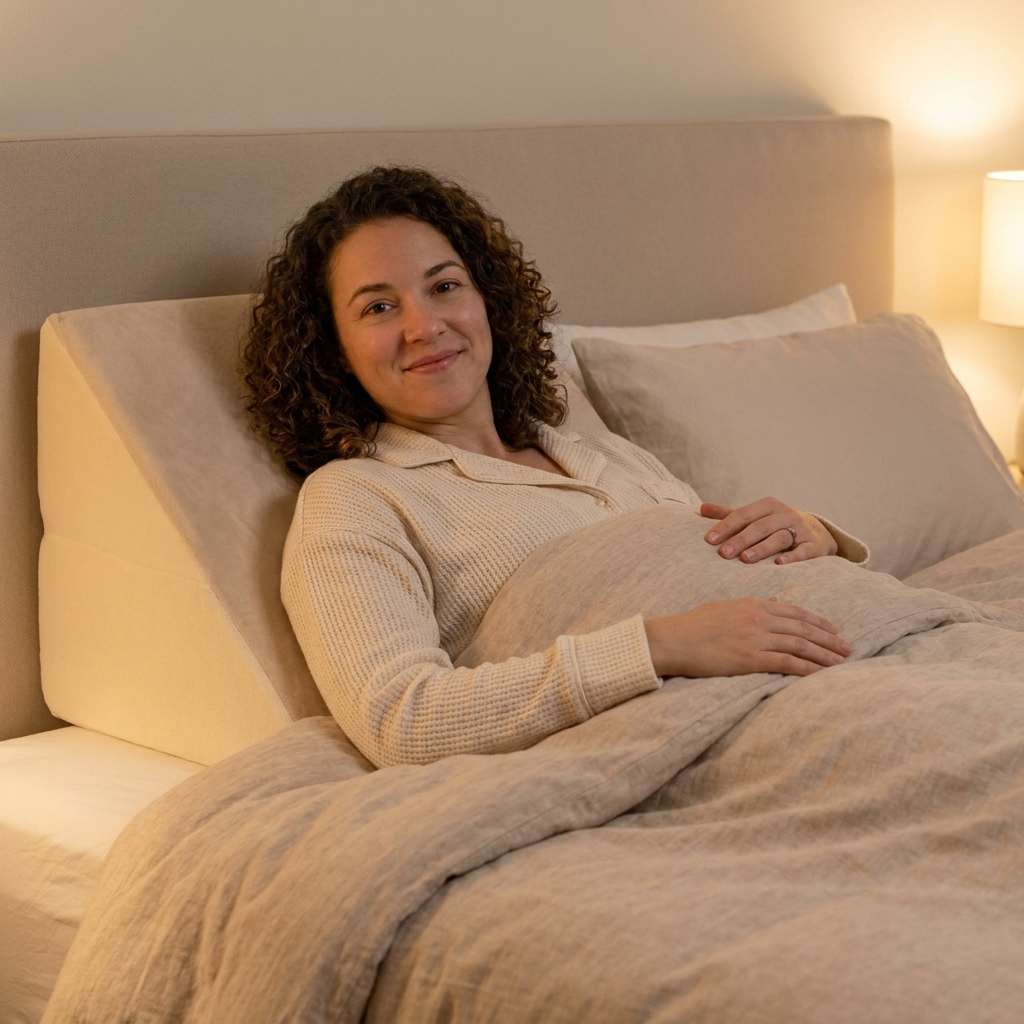
A wedge pillow, or an adjustable base if you have one, lets you sleep at a supported angle. For some people, that angle makes it easier to settle into a semi-side position so less body weight piles directly into one shoulder.
For hip discomfort, a wedge can also help you find a position where your pelvis feels less compressed, especially when paired with a small pillow under the knees.
Best for
- Shoulder pressure that worsens in full side sleeping
- People who do best in a slightly elevated, semi-side position
- Reflux-prone sleepers who also have shoulder discomfort
What to look for
- Angle: Gentle elevation is often enough. Very steep wedges can strain the low back or cause sliding.
- Length: Longer wedges support more of your torso and reduce hinging at the waist.
- Surface: A non-slip cover helps keep you in place.
How to use it
- Try a semi-side setup: torso slightly elevated, with a small pillow hugging your chest so your top shoulder stays relaxed.
- If you feel your low back arching, add a thin pillow under your knees.
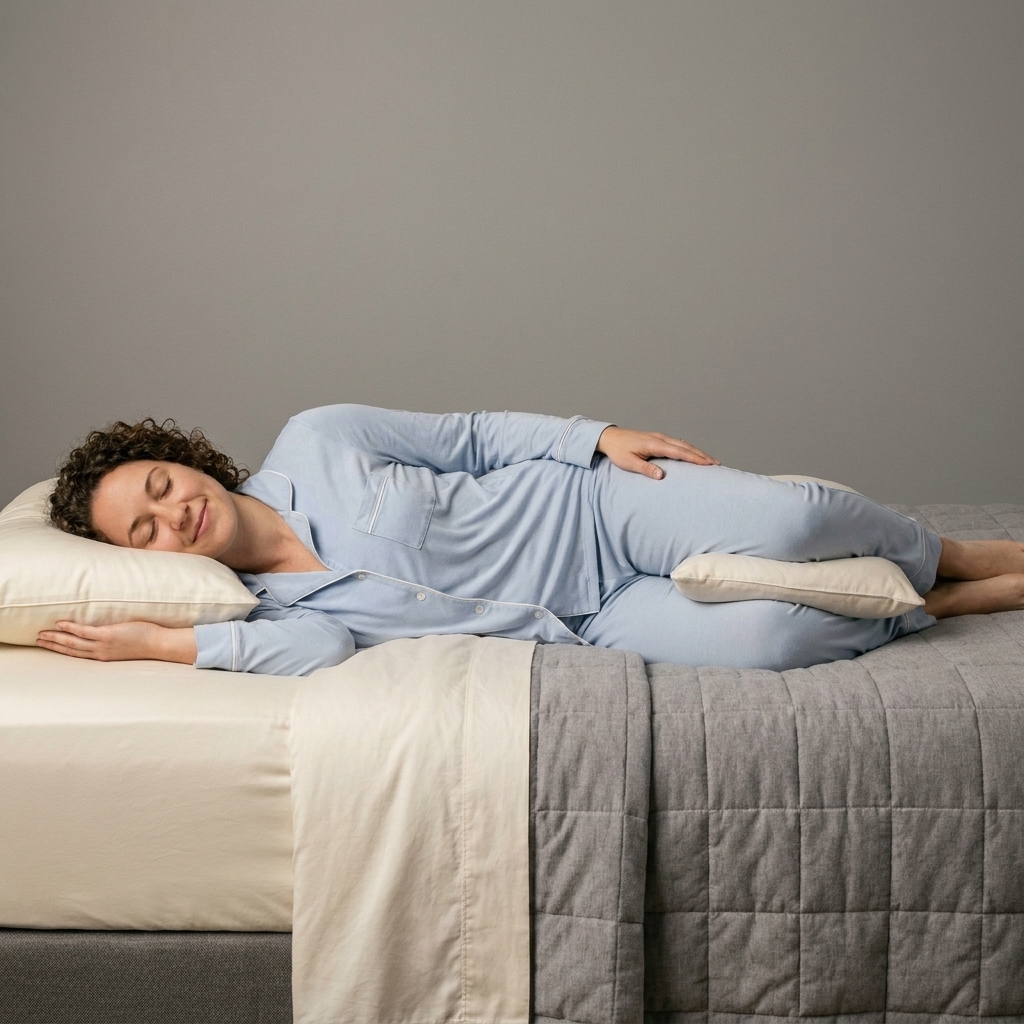
Tool 5: Body pillow
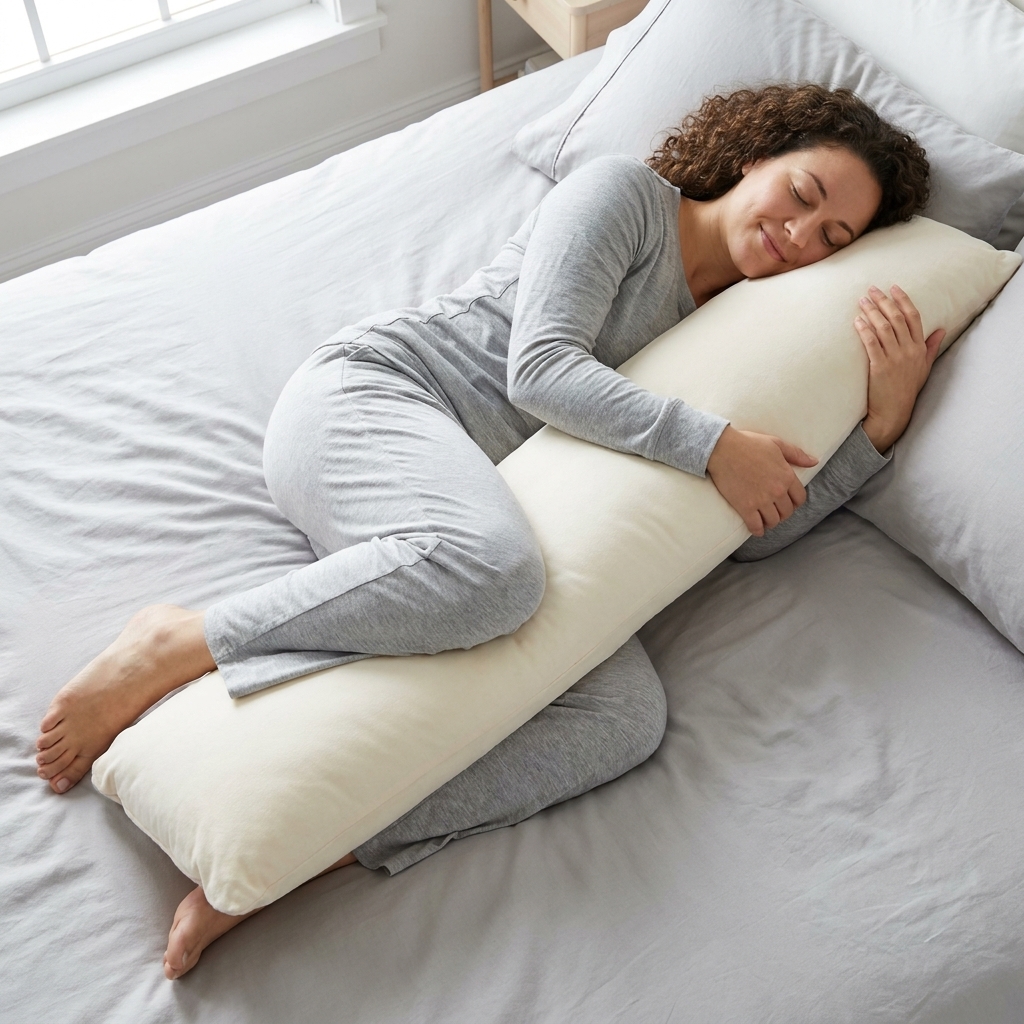
You do not need to be pregnant to benefit from a pregnancy pillow. A long body pillow, or a U-shaped or C-shaped pregnancy pillow, gives you contact points that can calm down nighttime micro-rolling and help keep your hips stacked.
This is one of my favorite tools for people who are exhausted from constantly trying to hold a good position, then waking up twisted anyway.
Best for
- Side sleepers who cannot keep a knee pillow in place
- Hip pain that improves with alignment but returns after you roll
- Shoulder discomfort that improves when you hug a pillow
What to look for
- Fill density: You want enough structure that your top leg does not sink all the way down.
- Length: Ideally from chest to ankles for true hip alignment support.
- Cover: Soft but not slippery.
How to use it
- Hug the pillow with your top arm to reduce shoulder strain and keep your upper back from rounding.
- Drape your top leg over the pillow so your knee and ankle are supported, not just your shin.
- If you use a U-shaped pillow, experiment with the open end at your feet versus at your head. Different bodies prefer different anchoring.
Choosing what to try
If you are not sure where to start, here is the decision shortcut I use in coaching sessions.
If your hip hurts most
- Start with a knee pillow.
- If you still feel sharp pressure on the outer hip, add a mattress topper for better pressure distribution.
- If you roll a lot and lose alignment, switch to a body pillow setup.
If your shoulder hurts most
- Start with a shoulder-relief pillow or a pillow height adjustment.
- Add a body pillow to hug, which often helps reduce shoulder rounding and hand or arm numbness from compression.
- If side sleeping is still too compressive, try a wedge for semi-side support.
If you hurt in multiple spots
That is often a sign your mattress comfort layer is not matching your body, or that the mattress is worn and no longer supporting you evenly. A topper can be the most global comfort change, then you can fine-tune with pillows.
A quick note on body shape
Broad shoulders, narrower hips, higher body weight, and softer mattresses usually mean you need less pillow loft under your head but more support between your knees. Narrow shoulders, firmer mattresses, and lower body weight often push you toward a slightly higher head pillow and a thinner knee pillow. Use those as starting points, not rigid rules.
Position options
Side sleeping is not the only way to get pressure relief. If your shoulder is flared up, a short-term change in position can buy your body a break.
- Back sleeping: Place a pillow under your knees to reduce low back arching. Some people also like a small towel roll under the small of the waist if there is a gap.
- Modified side: Use a wedge behind your back and a pillow in front of your chest so you are not fully stacked on one shoulder.
- Three-quarter prone: If you naturally roll forward, hug a body pillow and keep the top knee supported so your pelvis does not torque.
Pressure vs nerve signals
Pressure discomfort tends to feel local and achy, and it improves when you change positions. Nerve irritation is more likely to feel sharp, electric, burning, or like numbness and tingling that travels down an arm into a hand.
Sometimes an “asleep” arm is simply compression at the shoulder, but if it is frequent, worsening, or paired with neck pain or weakness, it is worth getting checked.
Setup tips
- Recheck pillow height after changing anything else. A topper that adds 2 inches can change how your head and neck align.
- Aim for stacked joints. Ears over shoulders, shoulders over hips, hips over knees. It does not need to be perfect. It needs to be sustainable.
- Prevent the midnight escape. If a knee pillow shoots out at 3:00 a.m., use a contoured style or upgrade to a body pillow for more contact and stability.
- Give it a little time. Your body adapts to new sleep positions. As a rule of thumb, try a setup for about a week before you decide it is not for you.
FAQ
Is a softer mattress always better?
Not always. Pressure relief often improves with softness, but too much sink can misalign your spine and irritate the low back or hips. The sweet spot is a surface that lets shoulders and hips sink just enough while keeping your waist supported.
What if I wake up with my arm asleep?
That is often compression plus positioning. Try a shoulder-relief pillow, then hug a body pillow so your top shoulder does not collapse forward. If numbness is frequent, persistent, worsening, or paired with weakness, check in with a clinician.
Can these tools help with arthritis or bursitis?
They can reduce nighttime aggravation by lowering pressure and improving alignment, which may help you sleep more comfortably. They do not replace medical care, but better positioning is a meaningful part of symptom management for many people.
How do I know if my mattress is the problem?
If you can get comfortable but wake up sore in the same places most nights, and if adding a topper improves things quickly, that is a strong hint your comfort layer is not right for you. Another clue is feeling better on a different bed. Also check for sagging, dips, or a worn-out spot where you sleep most.
A simple plan for tonight
If you want a low-effort experiment:
- Side sleeper hip pain: Put a firm pillow between your knees and ankles. Check that your top knee is not falling forward.
- Side sleeper shoulder pain: Adjust pillow height so your neck stays level, then hug a pillow to keep your chest from collapsing.
- Still sore: Consider a 2-inch topper, then reassess after about a week.
You deserve sleep that is not a negotiation with your joints. A few well-chosen supports can make your bed feel less like a pressure test and more like a place your body can finally let go.